
Reviewed · LOUVRE MUSEUM TOURS
Paris: Louvre Museum Guided Tour with Skip-the-Ticket-Line
The clever part of this Louvre tour is not simply getting inside faster. It gives you a clear route through a museum that can feel like a small city, with a guide explaining why the Mona Lisa, Venus de Milo, and Winged Victory matter. I like the small-group format and the fast-track admission, which save time and make it easier to hear the guide.
I also like that the tour gives you a useful first look rather than pretending to cover the entire Louvre in two hours. The main drawback is predictable: the Mona Lisa can still be surrounded by a slow-moving crowd, and two to two and a half hours is enough for the great hits, not the whole collection.
Key points at a glance
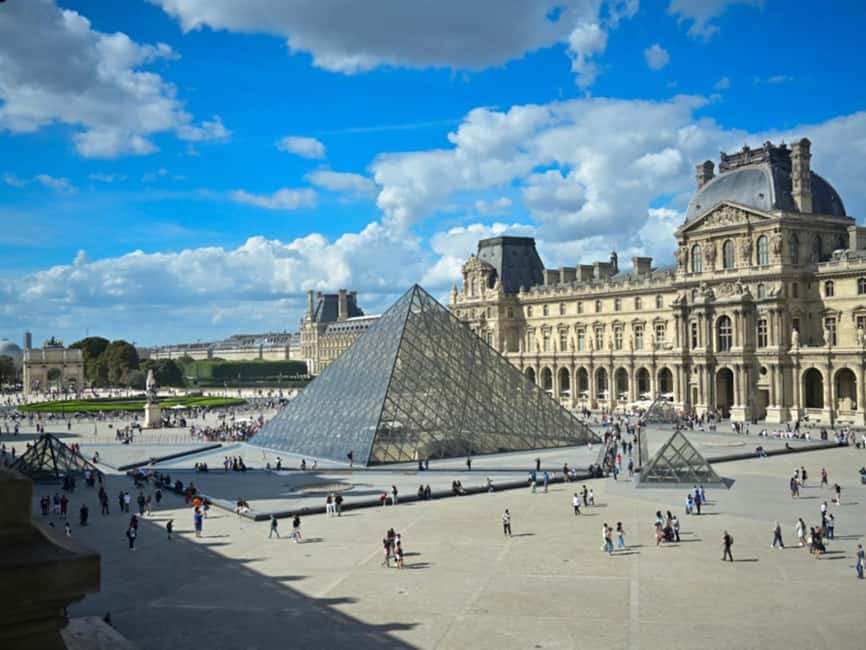
- Meet by the Louis XIV statue: Find the guide holding a The Tour Guy sign in front of the Louvre Pyramid.
- See the essential masterpieces: The route includes the Mona Lisa, Venus de Milo, Winged Victory of Samothrace, and Italian Renaissance works.
- Skip the ticket queue: Your admission is arranged in advance, although security can still take up to 20 minutes in busy periods.
- Expect useful storytelling: Guides including Joe, Avi, Martin, Will, and Astrid have been praised for clear explanations, humor, and thoughtful answers.
- Stay after the tour: Once the guided portion ends, you may continue exploring inside until closing time.
- Pack lightly: Large bags, luggage, umbrellas, tripods, and items over 55 by 35 by 20 centimeters are not allowed.
Why a guided Louvre visit helps
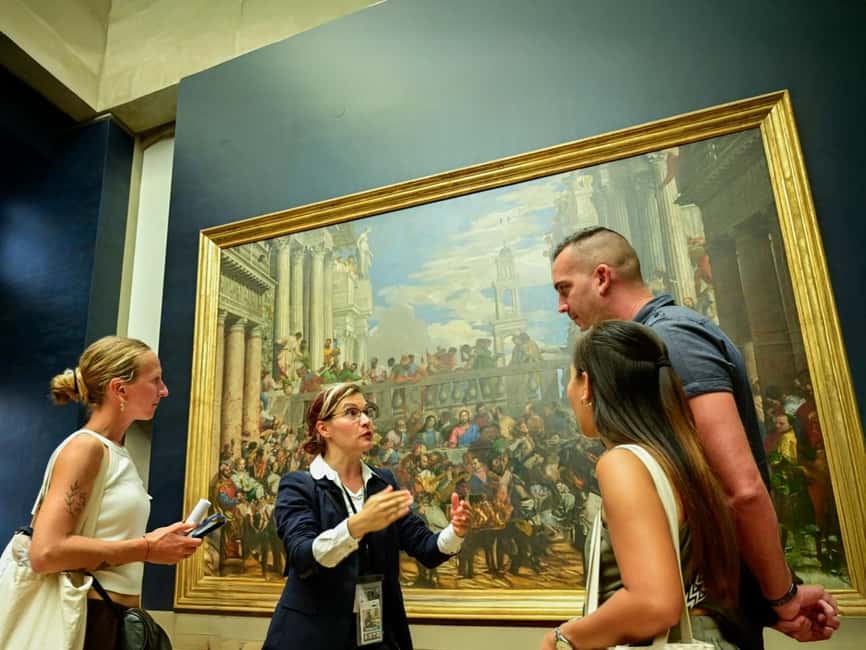
The Louvre is not a museum you casually wander through and understand in one pass. Its collections cover thousands of years and many countries, while the palace itself can pull you in several directions at once. Without a plan, you may spend much of your visit checking maps and hunting for famous names.
This tour gives you a practical first visit. The guide leads you to the museum’s best-known works, then adds the background that makes them easier to appreciate. You will hear about artists, patrons, symbols, and the changing role of the Louvre, rather than simply stopping in front of a painting for a quick photograph.
That matters most if you are visiting Paris for the first time, have only a morning or afternoon available, or are traveling with children. A guide can keep the pace moving and explain why a less famous work deserves a minute of your attention.
The tour is offered in English or Spanish, with private and small-group options available. The supplied rating is 4.6 from 1,407 reviews, and the most consistent praise focuses on guide quality, simple organization, and the chance to see the main works without feeling completely lost.
Other ways into the Louvre from Paris:
- Paris: Louvre Museum Timed-Entrance Ticket
★ 4.6 · 71,977 reviews - Paris: Louvre Guided Tour with Reserved Access & Boat Cruise
★ 4.3 · 16,353 reviews - Louvre Museum Masterpieces Guided Tour with Access
★ 4.5 · 12,023 reviews
Meeting at the Louvre Pyramid
The meeting point is the equestrian statue of Louis XIV in front of the Louvre Pyramid. Look for a guide holding a sign marked The Tour Guy.
Give yourself time to locate the statue and the correct guide before the start. The Pyramid is one of Paris’s busiest meeting areas, so arriving at the last second can add needless stress. You need your passport or ID card and comfortable shoes.
The Pyramid itself is mainly a photo stop here. The real benefit is what follows: you enter the museum with an organized group instead of first dealing with the regular ticket line. Fast-track access does not mean every delay disappears. Security screening remains mandatory, and in high season it can take as long as 20 minutes.
That distinction is important. You are skipping the ticket queue, not security. Even so, having admission handled in advance can make a big difference on a crowded day.
The first galleries and the Louvre’s story

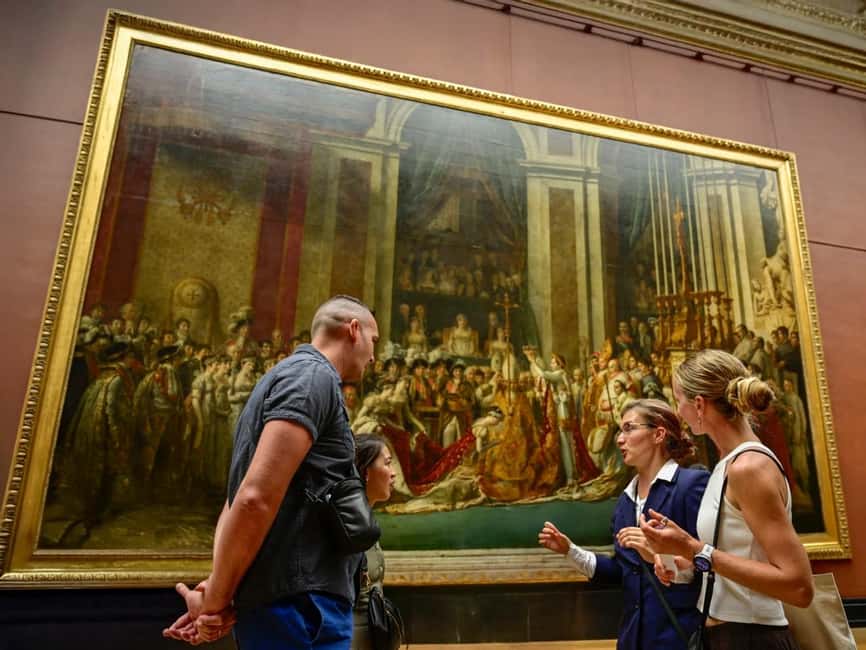
The guided visit lasts about two hours, though the overall experience may run to two and a half hours depending on the pace and crowd levels. Your guide leads you through selected rooms rather than attempting a room-by-room march through the entire museum.
One of the tour’s strengths is the wider story of the Louvre. The building began as a royal fortress and later became a palace before developing into a public museum. The precise path through the building can vary, but the tour places the art in the setting of the former royal residence.
This approach makes the museum easier to read. A painting is not just a framed object on a wall, and a sculpture is not simply something to photograph. The guide explains how art, religion, monarchy, politics, and changing ideas about public culture shaped the collection.
Joe has been praised for presenting the Louvre’s development across the centuries. Kevin’s historical presentation also helped connect the museum’s early role with its later life as an art museum. That kind of context is useful if you are not an art specialist, because it gives you a framework for what you are seeing.
Venus de Milo and Winged Victory
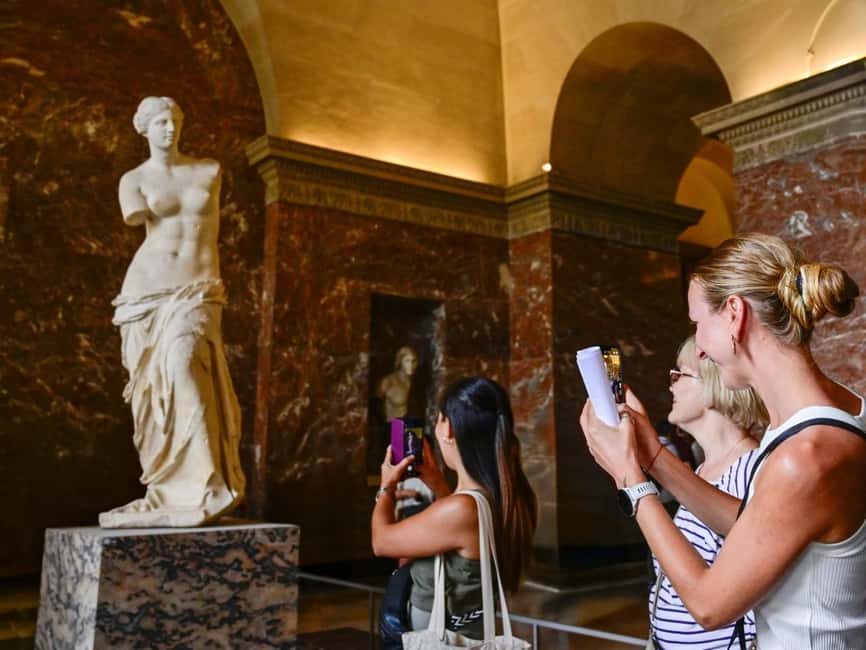
The Venus de Milo is one of the tour’s major stops. This ancient Greek statue has lost both arms, yet its incomplete state is part of its lasting appeal. Your guide discusses the sculpture’s place in ancient art and why it has inspired so many later artists.
The stop is not just about recognizing a famous silhouette. You can look at the figure’s balance, pose, clothing, and surface while the guide explains what scholars and artists find important about it. A good explanation helps you spend your limited museum time looking rather than merely standing in line.
The Winged Victory of Samothrace is another central stop. This Hellenistic statue of Nike, the Greek goddess of victory, is displayed at the top of a monumental staircase. Its missing head and arms do not lessen its force. The forward movement of the body, the wings, and the folds of the clothing create a sense of motion even though the marble is still.
Several people have singled out this statue as a favorite. That is easy to understand. It is one of the Louvre’s most dramatic sights, and the staircase gives it a setting that a guide can help you read. If you are visiting with children, the Goddess of Victory also offers a memorable story and a clear visual subject.
The route involves substantial walking and some stairs. Wear shoes you can manage for several hours, and remember that the tour is not recommended for people with mobility impairments. One guide has been praised for allowing extra time on stairs, but you should still consider the physical demands before booking.
More museums in Paris:
- Paris: Louvre Museum Entry Ticket With Host and River Cruise
★ 4.6 · 9,926 reviews - Les Invalides: Napoleon’s Tomb & Army Museum Entry
★ 4.6 · 9,185 reviews - Louvre Museum – Exclusive Guided Tour (Entry Included)
★ 5.0 · 6,296 reviews - Paris: Louvre Museum Hosted Entry and Mona Lisa Audioguide
★ 4.6 · 5,235 reviews
The Mona Lisa and the crowd around it
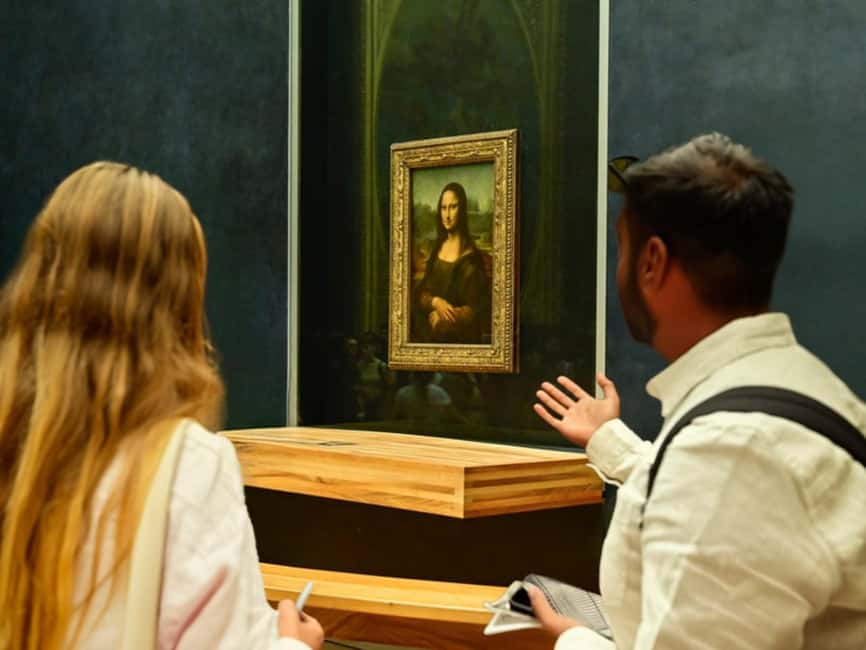
The Mona Lisa is the stop most people expect, but it is also the part of the tour most likely to test your patience. Leonardo da Vinci’s portrait of Lisa Gherardini is displayed behind crowd-control barriers, and the room can become very congested.
Fast-track admission does not give you a private viewing area or a way around the museum’s internal crowd. You may reach the room efficiently, yet still face a line or a tightly packed viewing space. Some visitors are able to see the painting only briefly and from a distance.
Your guide adds value here by explaining the painting’s story, its fame, and the long-running question about the subject’s expression. Is she happy, sad, or simply difficult to read? The point is not to settle the question, but to show why the portrait continues to attract such attention.
I recommend treating the Mona Lisa as one stop, not the entire reason for the tour. Get the look you can, listen to the explanation, and then pay attention to the other works nearby. The Louvre offers far more than one small portrait, even if the crowd sometimes suggests otherwise.
A useful detail: after the guide says goodbye, you may stay inside the museum until closing time. Once you leave the artwork area, however, you cannot re-enter. Plan your post-tour wandering before you exit.
Italian Renaissance works beyond the headline names
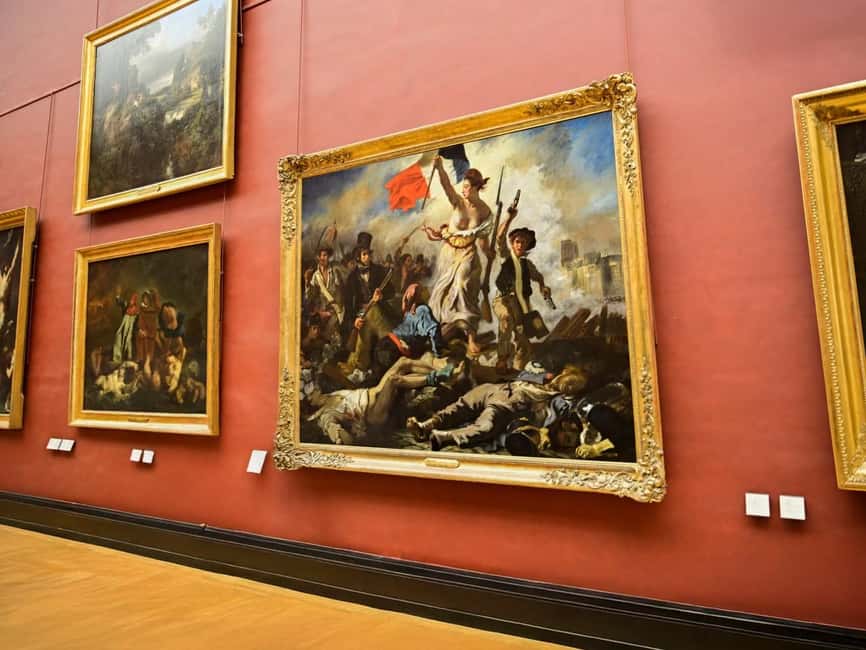
The tour also visits the Italian Renaissance collection, including works connected with Leonardo, Botticelli, Veronese, and Raphael. This section gives the visit more balance than a simple Mona Lisa route.
Your guide can point out how artists used gesture, color, perspective, light, and religious symbols. That is especially useful if you tend to look at old paintings and wonder what you are supposed to notice. A short explanation can turn a crowded gallery into a series of readable choices.
The Louvre has more than 38,000 works in its collection, so no two-hour route can represent everything. The guide’s job is to select works that show the collection’s range while keeping the visit manageable. The result is a sampler, not a full museum education.
That limited scope is both a strength and a weakness. You avoid exhaustion and get a coherent first visit, but you will leave with entire departments unseen. One person who enjoyed the tour still felt that it could have lasted longer, while another appreciated the scheduled length for a family visit.
If you already have a short list of lesser-known paintings or a particular department in mind, this may not be the right format for your entire Louvre visit. Use the guided route to cover the essential works, then return independently to the rooms that interest you most.
Guides who keep the visit moving

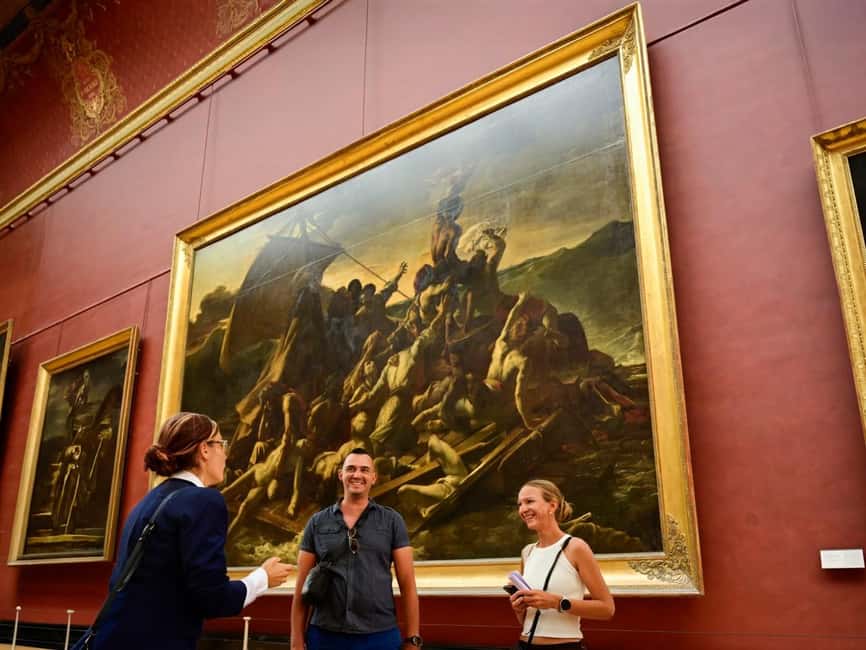
The guide can make or break a museum tour, and this experience has drawn repeated praise for clear explanations, humor, and good interaction with different ages.
Joe is repeatedly described as enthusiastic and strong at telling the stories behind the art. Avi is praised for mixing French history with humor and for keeping even an eight-year-old interested. Martin is noted for explaining the Louvre’s development and helping the group move through the major pieces without feeling cramped.
Astrid used treasure hunts and small facts to hold the attention of children aged six and four. Delly was also praised for engaging children, while one guide offered to walk a group toward the fashion section after the formal tour ended. These details suggest that the experience can work well for families, though the exact guide is not guaranteed.
Other names connected with positive feedback include Will, Flor, Zic, Carolina, Cosi, and Marianne. The common thread is not one particular personality. It is the ability to explain complicated art in ordinary language, answer questions, and keep the group moving through heavy crowds.
Small groups matter here. You are more likely to hear the guide without relying on earbuds, and it is easier to ask a question. Private and small-group formats are available, but group size and guide assignment can vary, so check the option you select.
What the $76 price buys you
At $76 per person, this is not the cheapest way to enter the Louvre. You are paying for admission, reserved access through the ticket queue, and a live English- or Spanish-speaking guide.
The value depends on your priorities. If you are comfortable studying a map, reading labels, and building your own route, a self-guided visit may cost less. If the idea of organizing one of the world’s largest museums feels tiring, the guide can save time and prevent you from missing the main works.
The strongest value comes on a crowded day. Saving even 30 minutes at the entrance can matter when your Paris schedule is tight. The guided route also saves the time you would spend deciding which staircase, corridor, and gallery to take next.
The price is easier to justify for a first visit, families, and anyone who wants context rather than a quick checklist. It is less compelling for repeat Louvre visitors who already know the collection and mainly want to focus on a specific department.
Food and drinks are not included. There is no need to plan a meal as part of the tour, but you should think about your schedule because the walking and concentration can be tiring.
Practical rules that affect your visit
Pack light. Large bags, backpacks, luggage, umbrellas, tripods, and anything larger than 55 by 35 by 20 centimeters are not allowed. The information for this tour also warns that there is no coat check on site and that the lockers are not accessible to the small group tour.
Leave oversized items at your accommodation. Do not assume you can solve the problem at the entrance, especially if you are arriving with a suitcase or large daypack.
Weapons, sharp objects, smoking, and baby strollers are not allowed. Photography and filming are strictly prohibited in temporary exhibition rooms, even though photography rules may differ elsewhere in the museum.
Wear comfortable shoes. The tour includes long walks through a huge building, stairs, standing, and time spent moving with a group. Bring identification, but keep everything else to a minimum.
The tour has free cancellation up to 24 hours before the start, and you can reserve now and pay later. Those options are useful if your Paris plans are still shifting, but check the exact booking terms for your selected time and group type.
Who should book this Louvre tour?
I would choose this tour if you are visiting the Louvre for the first time and want a sensible route through the major works. It is also a good fit if you have only a few hours, dislike navigating large museums, or want a guide to explain what makes the art important.
Families can benefit from the stories, questions, and child-focused activities some guides use. The small-group setting should also make it easier to keep children involved than a silent, self-guided march through the galleries.
I would think twice if you have mobility limitations, need to avoid stairs, or want a quiet, unhurried look at one department. I would also avoid building your entire decision around a close view of the Mona Lisa. The painting can still be difficult to approach because of the crowd.
For most first-time visitors, the best plan is to take the guided tour, see the essential works, and remain inside afterward to explore independently. That gives you both structure and freedom, which is a sensible way to handle the Louvre.
FAQ
How long does the Louvre guided tour last?
The tour lasts about 2 to 2.5 hours. The guided portion is listed as approximately two hours, with the total time depending on the route and conditions inside the museum.
What language is the tour offered in?
Live guiding is available in English and Spanish.
Where do I meet the guide?
Meet at the equestrian statue of Louis XIV in front of the Louvre Pyramid. Look for someone holding a sign marked The Tour Guy.
Does the tour include skip-the-ticket-line entry?
Yes. Admission and skip-the-ticket-line access are included. You still need to pass through security, and that wait can reach 20 minutes during high season.
Can I stay in the Louvre after the tour ends?
Yes. You may remain inside until closing after the guide says goodbye. Once you exit the area where the artwork is displayed, you cannot re-enter.
What should I bring?
Bring your passport or ID card and wear comfortable shoes. Large bags, luggage, umbrellas, tripods, and items over 55 by 35 by 20 centimeters are not permitted.
Is the tour suitable for people with mobility impairments?
The activity is not considered suitable for people with mobility impairments. The route involves extensive walking and stairs.
Should you book it?
Book this tour if you want the Louvre’s famous works explained by a strong guide, with entry arranged and a clear route through the museum. Joe, Avi, Martin, Astrid, and other guides have earned praise for making art understandable, funny, and engaging for both adults and children.
Skip it if you want to explore at your own slow pace or already know exactly which galleries you want. For a first Louvre visit, though, $76 buys more than a ticket. It buys a plan, useful context, and a better chance of leaving with something more memorable than a crowded photograph of the Mona Lisa.
Just added in Paris
- Paris : Painting experience in an art cafe★ 4.6 · 204 reviews
- Paris: Vallée Village Outlet Shopping Day★ 4.3 · 362 reviews
- Paris night out : Comedy in English ‘How to Become a Parisian ?’★ 4.5 · 373 reviews
- La Vallee Village Shopping Outlet by Luxury Transport from Paris★ 3.5 · 111 reviews
- Design Luxury and Personalized Jewelry in Paris le Marais★ 5.0 · 160 reviews
- Oh My God She’s Parisian! English Comedy Show in Paris★ 4.5 · 116 reviews
- Paris: Eiffel Tower Photo Shoot★ 5.0 · 420 reviews
- Photo Session in Paris – Photographer at the Eiffel Tower★ 5.0 · 422 reviews
Louvre Museum Tours, compared.


Louvre Guided Tour with Reserved Access & Boat Cruise
Read our review →
Louvre Museum Masterpieces Guided Tour with Access
Read our review →
Louvre Museum Entry Ticket With Host and River Cruise
Read our review →
Priority Access Louvre with Host -Direct to Mona Lisa
Read our review →
Mona Lisa & Louvre Masterpieces Tour with Reserved Access
Read our review →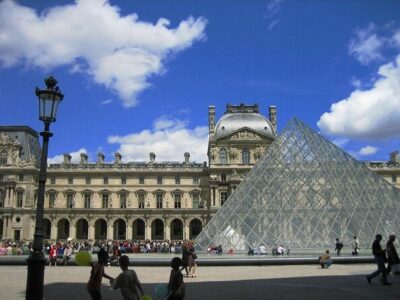
Louvre Museum – Exclusive Guided Tour (Entry Included)
Read our review →
Louvre Reserved Ticket and River Cruise Combo
Read our review →Browse the lists this tour appears in