
Reviewed · LOUVRE MUSEUM TOURS
Paris: Louvre Museum Tour Mona Lisa & Iconic Masterpieces
The Louvre’s biggest challenge is not finding the Mona Lisa. It is making sense of the enormous museum around her. This two-hour highlights tour gives you a route through the former royal palace, with stories that help the paintings, sculptures, and building fit together.
I like the reserved entry and the chance to stay inside after the tour. I also like the guides’ story-based approach, with Sophie, Gabriela, Megan, René, and others praised for making art approachable. The main drawback is pace: two hours can only cover a small slice of the Louvre, and summer crowds or a security wait can eat into your time.
Key points to know before booking
- The Mona Lisa is only one stop: You’ll also see the Venus de Milo, Winged Victory of Samothrace, Renaissance art, Greek relics, and the old castle foundations.
- Meet outside the museum: Find the colorful Kiosque des Noctambules opposite the Comédie Française, not the Louvre entrance.
- Groups can reach 20 people: Headsets help you hear the guide, but this is not a private or small-group visit.
- The route includes stairs: The tour is not suitable for wheelchair users or people with mobility impairments.
- You can continue after the guide leaves: You may stay in the museum, but once you leave the galleries and reach the pyramid area, you cannot go back into the rooms.
- The $79 price buys structure and time: It can be worthwhile when Louvre tickets are hard to find, though art lovers wanting a slower visit may want a longer or private tour.
Why a guided Louvre visit helps
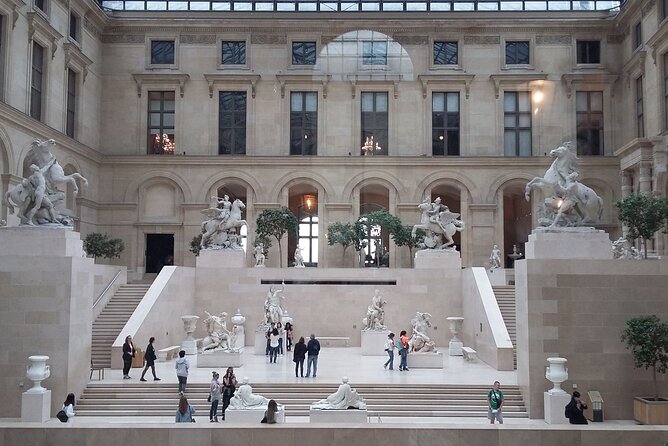
The Louvre is so large that a first visit can feel like being dropped into a department store with 35,000 objects and no map. You can walk for ten minutes and still not know if you are heading toward ancient Egypt, French painting, or the exit.
This tour gives you a clear path. The guide does not try to show you everything. Instead, you get the museum’s famous landmarks, a little of its architectural story, and selected works from ancient civilizations through the mid-19th century.
That focus matters. A guide can explain why a sculpture looks the way it does, point out details you might miss, and connect a work to the building around it. Several guides named in the feedback, including Gabriela, Sophie, Megan, and René, were praised for making the tour lively rather than turning it into a classroom lecture.
You should still think of this as an introduction, not a full Louvre visit. The museum deserves several visits if you want to see it carefully. This tour helps you get your bearings and gives you a useful first pass.
Other ways into the Louvre from Paris:
- Paris: Louvre Museum Timed-Entrance Ticket
★ 4.6 · 71,977 reviews - Paris: Louvre Guided Tour with Reserved Access & Boat Cruise
★ 4.3 · 16,353 reviews - Louvre Museum Masterpieces Guided Tour with Access
★ 4.5 · 12,023 reviews
Meeting at the Kiosque des Noctambules
Your meeting point is the Kiosque des Noctambules, a colorful structure decorated with Murano glass beads. It faces the Comédie Française and sits about a five-minute walk from the Louvre entrance.
Do not go straight to the museum. The guide arrives at the selected start time, not early, and will be holding a GetYourGuide flag. The nearest Metro stop is Palais Royal, Musée du Louvre, using the Place Colette exit.
Allow extra time to find the meeting point. One person had trouble because copying the address into a map led to the wrong place. I would locate the kiosk earlier in the day, then return for the tour. This is especially important because a late arrival can mean losing your reserved ticket. Since the booking is made for a group, the guide cannot simply issue another ticket after the group has entered.
The meeting point itself is a pleasant Paris detail. You begin beside the Comédie Française, among central Paris landmarks, rather than standing in a confusing line at the museum gates.
Entering through the Louvre pyramid
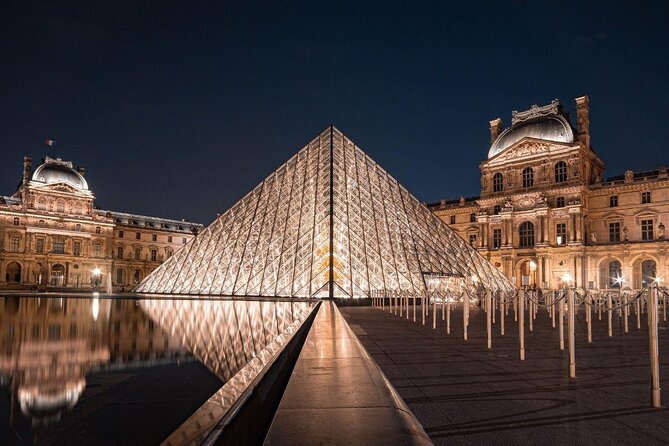
The tour uses a pre-reserved Louvre entry ticket, which is a major part of its value. The Louvre’s regular access process can be slow, especially in summer, and this arrangement avoids the ordinary ticket line.
It does not mean you walk straight through every checkpoint. Security still applies, and during busy periods there may be a wait of up to 20 minutes. Large bags, luggage, non-folding wheelchairs, electric wheelchairs, selfie sticks, and double baby strollers are not allowed.
Once inside, you will likely appreciate the guide’s headset. A group of up to 20 people is not tiny, and the Louvre’s grand rooms can be noisy. The headset lets you look at a sculpture or painting while still following the explanation instead of crowding around the guide.
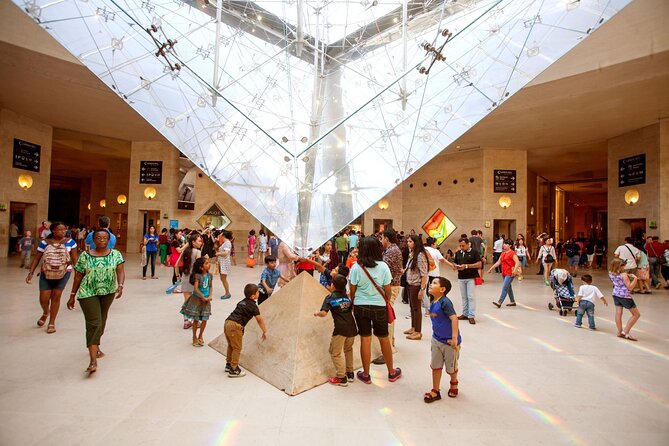
The famous glass pyramid is part of the experience, but it is also a practical orientation point. After the tour, you can remain in the museum and continue at your own speed. Pay attention to the exit rules: once you have left the gallery wings and are back under the pyramid, you cannot re-enter the rooms.
Following the highlights route
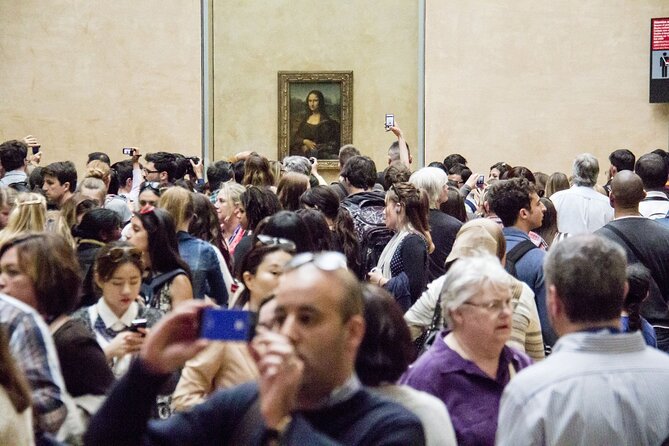
The exact order can change with museum conditions, but the route is built around the Louvre’s best-known works and its long development from fortress to palace to museum.
The first useful idea is scale. The Louvre was once a residence of French kings and now holds collections from ancient civilizations through the mid-19th century. You are not just entering an art gallery. You are walking through a building that changed purpose over centuries.
The route includes paintings from the 13th through the 19th centuries, Renaissance treasures, ancient Greek sculpture, and prints from the Royal Collection. The guide may also pause at less famous works that help explain the period or style of the better-known pieces.
This is where a good guide makes a difference. A list of room numbers tells you where to go. A story helps you understand why the work matters. Guides such as Gabriela were praised for giving plenty of information without making the experience feel like a lecture. Megan was noted for using questions and interaction, while René was praised for helping with practical matters such as lockers and a bathroom break before the tour.
Do not expect to stop for a long time at every object. The Louvre is busy, and the route has a schedule. If you find a painting that fascinates you, note its room and return to it after the tour.
More museums in Paris:
- Paris: Louvre Museum Entry Ticket With Host and River Cruise
★ 4.6 · 9,926 reviews - Les Invalides: Napoleon’s Tomb & Army Museum Entry
★ 4.6 · 9,185 reviews - Louvre Museum – Exclusive Guided Tour (Entry Included)
★ 5.0 · 6,296 reviews - Paris: Louvre Museum Hosted Entry and Mona Lisa Audioguide
★ 4.6 · 5,235 reviews
Venus de Milo and Greek sculpture
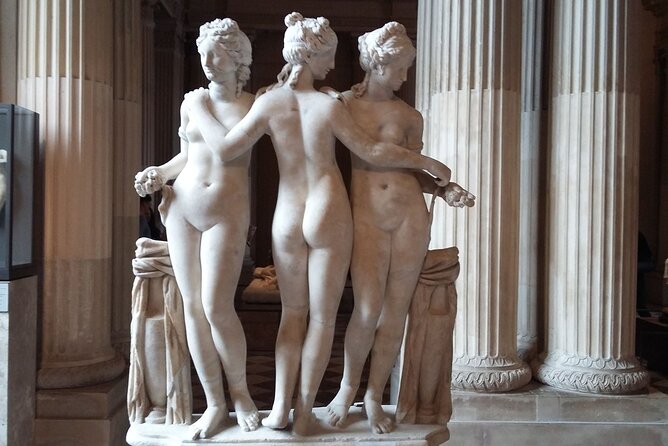
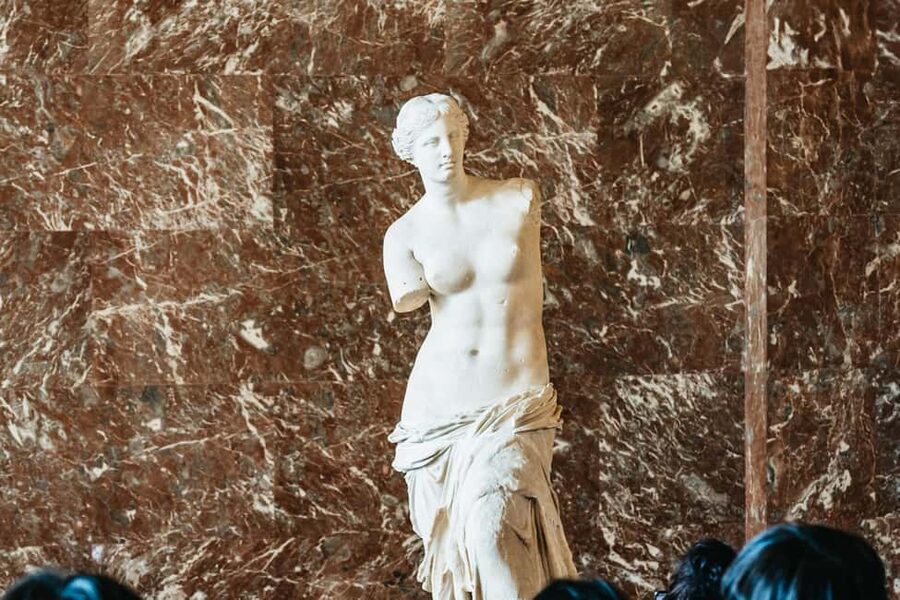
The Venus de Milo is one of the tour’s central stops. This ancient sculpture has influenced generations of artists, and seeing it in person gives you a sense of its scale and presence that a photograph cannot provide.
The useful part of seeing it with a guide is the context. You can learn how the sculpture fits into the wider story of Greek art and how artists represented the human body, movement, and ideal beauty. The guide also helps you look beyond the familiar name.
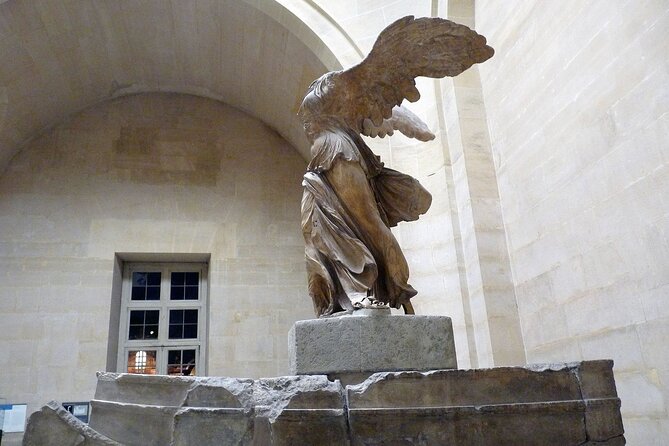
The Louvre’s Greek collection offers more than a single famous statue. You will also see the Winged Victory of Samothrace, a Hellenistic sculpture representing Nike, the Greek goddess of victory. It is displayed at the top of a grand staircase, and its placement makes it one of the museum’s most dramatic encounters.
These stops can be crowded. You may need patience to get a clear view, and the group may not have much time to stand in one place. Still, the guide’s explanation gives you something to carry with you when you return to the sculpture alone.
The Mona Lisa and the story behind the fame
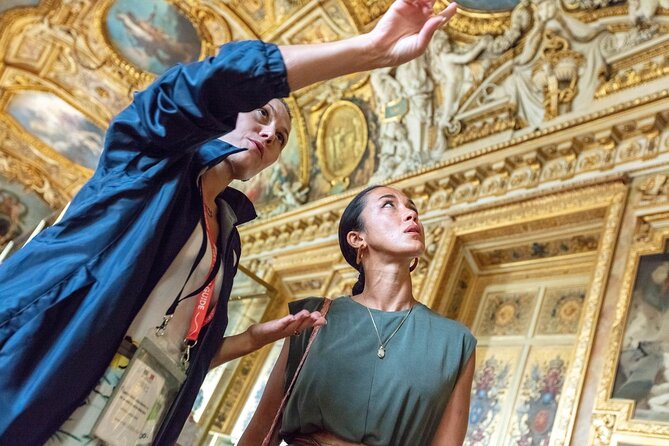
The Mona Lisa is the stop most people expect, but the story behind its fame is almost as interesting as the portrait itself. The painting’s theft in 1911 helped turn it into a worldwide celebrity.
Your guide will explain the portrait and its place in Renaissance art, while also helping you manage expectations. The painting is smaller than many first-time visitors imagine, and the room can be crowded. You should expect barriers and a short viewing opportunity rather than a quiet private encounter.
A highlight tour is particularly useful here because the guide can direct the group efficiently. One person described being brought near the front of the Mona Lisa viewing area, though crowd conditions vary. Your position will depend on the day and the number of people in the room.
Take your photograph, then look around you. The Mona Lisa is the headline, but the surrounding galleries hold many other works worth your attention. If you spend the entire museum visit focused on one portrait, you will miss much of what you paid to enter.
The Louvre’s castle foundations
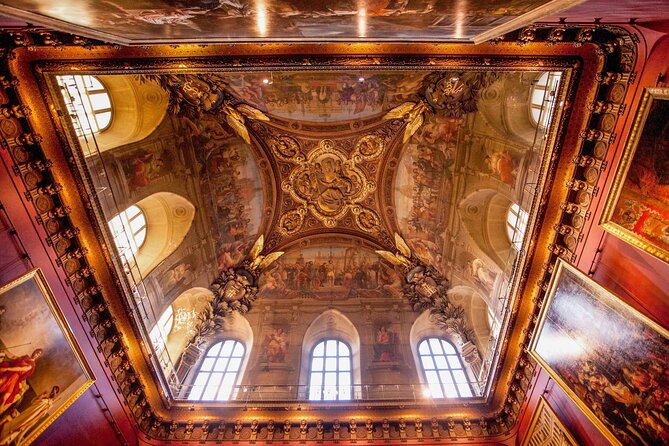
One of the more unusual parts of the route is below the Louvre Palace, where you can see foundations from the castle that once stood on the site.
This section adds needed perspective. The Louvre did not begin as a modern museum with endless galleries. Its earlier military and royal functions shaped the building you see today. The foundations make that change tangible.
For many people, this is the stop that turns the visit from a checklist of famous art into a lesson about Paris itself. You see how the museum’s past is built into its floors and walls. The drawback is that the Louvre includes many stairs, and the route can be tiring for anyone who has difficulty walking.
Two hours, then time on your own
Two hours is enough for a strong introduction, but not enough to explore the Louvre at a leisurely pace. Several people wished the tour lasted longer, especially when the guide was engaging. That is a fair criticism, but the shorter format also works well for a first visit or a packed Paris schedule.
After the guided portion, you can remain inside and look around on your own. This is where I would use the tour strategically. Follow the guide’s route first, then choose one area to explore slowly rather than trying to conquer the entire museum.
Wear comfortable shoes. You will walk, climb stairs, and spend time standing. Keep your belongings light, since luggage and large bags are not permitted and storage options may be limited.
The group size is capped at 20, which is manageable but not intimate. If you want to ask many questions or set your own pace, a private or small-group visit would suit you better. This option is designed for a shared route and a broad introduction.
Is $79 a fair price?

At $79 per person, this tour costs more than simply buying museum admission when an official ticket is available. The extra money pays for a reserved place, a licensed guide, the headset, and a planned route through a museum that can be confusing on your own.
The value is strongest in three situations. First, you are visiting the Louvre for the first time. Second, you have limited time and want the major works without spending an hour planning a route. Third, regular museum tickets are sold out or difficult to secure.
The price is less attractive if you already know the Louvre well, enjoy reading labels at your own pace, or want to spend a full day in one collection. In that case, a standard ticket and your own plan may be better.
There is also an optional upgrade that adds a morning tour of the Orsay Museum. That could suit an art-focused day, but it would make for a long schedule. The Louvre alone can be tiring, so think carefully before combining two major museums.
The booking information gives both a free cancellation policy up to 24 hours in advance and a separate warning that the tour is non-refundable and cannot be rescheduled. Because those terms conflict, confirm the exact conditions at checkout before paying.
Who should book this Louvre tour?
I would choose this tour for a first-time visitor who wants the essential Louvre works without feeling lost. It is also a sensible choice for a short Paris stop, especially when museum tickets are unavailable through the usual route.
It suits adults, families with children who can manage the walking, and people who enjoy hearing the story behind a work instead of simply taking a photograph. Children must have their own booking.
I would hesitate if you use a wheelchair, have a mobility impairment, or dislike fixed group schedules. The tour includes many steps and is specifically not suitable for wheelchair users. I would also hesitate if you want quiet time with individual paintings, since the group has to keep moving.
Final verdict: book it for structure and famous works
Book this tour if the Louvre feels overwhelming and you want a clear two-hour route through its famous art and royal past. The strongest features are the reserved entry, the guide’s storytelling, the Mona Lisa visit, and the time to keep exploring afterward.
Do not book it expecting an empty museum, a private experience, or a full survey of the collection. Arrive early at the Kiosque des Noctambules, wear good shoes, bring no large bags, and treat the tour as your introduction to a museum that deserves more time.
FAQ
How long does the Louvre tour last?
The guided tour lasts two hours. You can stay in the museum afterward and continue exploring on your own.
What famous artworks are included?
The route includes the Mona Lisa, Venus de Milo, and Winged Victory of Samothrace. It also covers Renaissance works, ancient Greek relics, paintings from the 13th through 19th centuries, and other selected pieces.
Where do I meet the guide?
Meet at the Kiosque des Noctambules, facing the Comédie Française. It is about a five-minute walk from the Louvre entrance.
Should I go directly to the Louvre entrance?
No. You must meet the guide at the Kiosque des Noctambules. The guide will hold a GetYourGuide flag and arrives at the selected start time.
What languages are available?
The tour is available in English and Portuguese.
How large is the group?
The standard group can have up to 20 participants.
Is museum entry included?
Yes. A pre-reserved Louvre Museum entry ticket is included, along with a licensed guide and headsets.
Can I stay in the Louvre after the tour?
Yes. You may continue exploring after the guided portion. Once you leave the gallery wings and are under the pyramid, you cannot re-enter the rooms.
Is the tour suitable for wheelchair users?
No. The tour includes many steps and is not suitable for wheelchair users or people with mobility impairments. Non-folding and electric wheelchairs are not permitted.
What should I bring?
Wear comfortable shoes. Do not bring luggage, large bags, selfie sticks, or double baby strollers, since these are not allowed in the Louvre.
Just added in Paris
- Design Luxury and Personalized Jewelry in Paris le Marais★ 5.0 · 160 reviews
- Oh My God She’s Parisian! English Comedy Show in Paris★ 4.5 · 116 reviews
- Paris: Eiffel Tower Photo Shoot★ 5.0 · 420 reviews
- Photo Session in Paris – Photographer at the Eiffel Tower★ 5.0 · 422 reviews
- Paris City Sightseeing Half Day Guided Segway Tour with a Local Guide★ 5.0 · 371 reviews
- Paris Create your Own Perfume Workshop with a Perfumer★ 4.5 · 275 reviews
- Paris: Oh My God She’s Parisian! English Comedy Show★ 4.7 · 257 reviews
- Paris: Create your Signature Scent Perfume Workshop★ 4.8 · 221 reviews
Louvre Museum Tours, compared.


Louvre Guided Tour with Reserved Access & Boat Cruise
Read our review →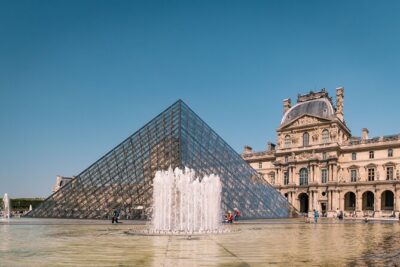
Louvre Museum Masterpieces Guided Tour with Access
Read our review →
Louvre Museum Entry Ticket With Host and River Cruise
Read our review →
Priority Access Louvre with Host -Direct to Mona Lisa
Read our review →
Mona Lisa & Louvre Masterpieces Tour with Reserved Access
Read our review →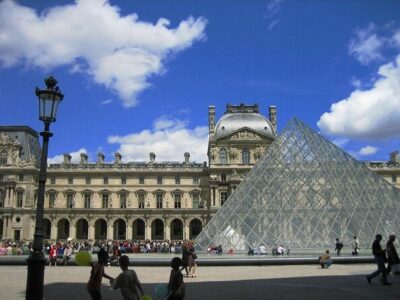
Louvre Museum – Exclusive Guided Tour (Entry Included)
Read our review →
Louvre Reserved Ticket and River Cruise Combo
Read our review →Browse the lists this tour appears in