
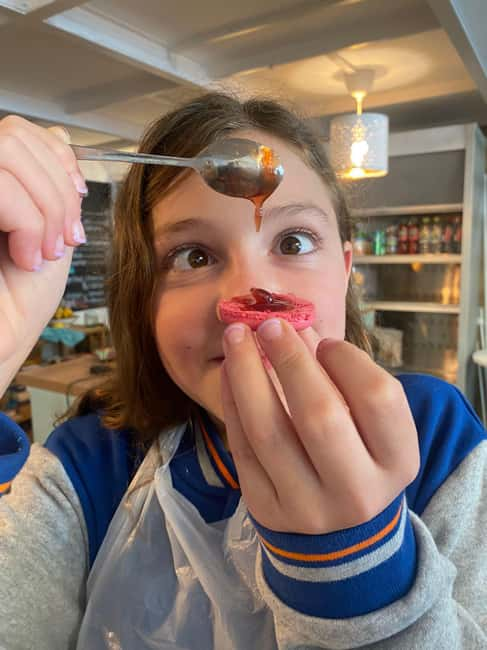
Reviewed · PASTRY & CHOCOLATE WORKSHOPS
Paris: Macaron Baking Class for Families and Kids
Making macarons is one of those Paris activities that sounds fancy until you try it. Here, the chef prepares the measurements, then you and your family mix, pipe, fill, and decorate the pastries yourselves. I like the hands-on format and the fact that children as young as five can take part, with tasks adjusted for their age.
I also like the small group of up to eight, which gives the instructor time to help with piping and answer questions. Guides including Nadia, Nelly, Clementine, Yasmine, and Jade have earned praise for their patience with children. The main caution is that everyone works from one shared batch, so the number of macarons you take home may vary with the group size.
Key points to know before booking
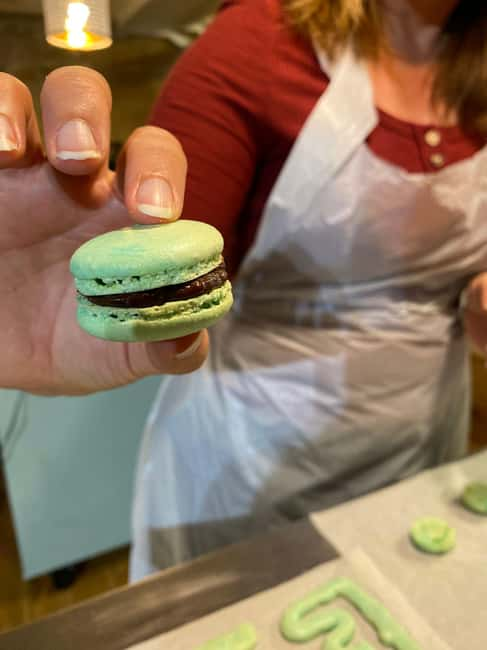
- A proper two-hour baking class: You mix, pipe, fill, and decorate instead of simply watching a demonstration.
- Built for mixed ages: Children, parents, grandparents, and beginners can all work on the same recipe.
- Small groups of up to eight: The format allows hands-on help without making the class feel crowded.
- Fresh macarons to take away: Your finished pastries are packed in a box for the journey back to your hotel.
- Useful Paris location: The workshop is at Baked in Paris, 31 Rue Buffon, near the Jardin des Plantes area.
- Important planning detail: Arrive on time, since a delay of more than 20 minutes can disrupt the class.
Why macarons make a good family activity in Paris
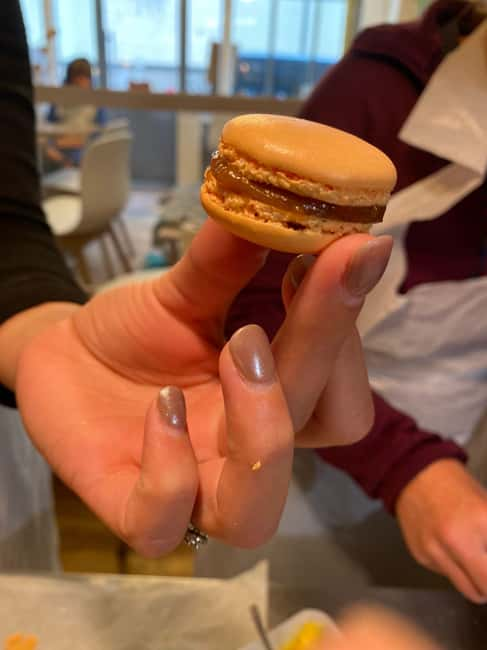
A museum can be wonderful, but after several days of paintings, churches, and city walks, children often need something they can touch and do. This macaron class gives your family a shared task, a sweet reward, and a story to bring home.
Macarons are also a good choice for a Paris cooking class because they look simple but involve real technique. The shells need the right consistency, the mixture must be handled carefully, and the pastries need to be piped in even rounds. You get a glimpse of why professional French pastry takes practice without signing up for a full-day course.
I especially like the way this class handles mixed ages. A five-year-old may help garnish or pipe with assistance, while an older child can take on more of the mixing and shaping. Adults do not get pushed to the side, either. The class is designed so grandparents, parents, and children can all participate.
One family completed the class with children aged five and seven and adults aged 79 and 84. That age range tells you more than the label family-friendly ever could. The activity is not built only for energetic school-age children. It can work for several generations traveling together.
Other pastry and chocolate sessions around Paris:
- Paris: Montmartre Cheese, Wine & Pastry Guided Walking Tour
★ 4.8 · 2,255 reviews - Award-Winning Paris French Bakery Experience — Le Marais, 4th Arr
★ 4.5 · 1,186 reviews - Paris: Entrance Ticket to the Chocolate Museum
★ 4.1 · 1,105 reviews
Arriving at Baked in Paris on Rue Buffon
The meeting point is the new Baked in Paris atelier at 31 Rue Buffon in the Île-de-France region. Look for the large blue door. The workshop is on the left, where the glass is frosted. Go inside and ask for the pastry chef.
That description is worth saving on your phone. One participant worried about finding the entrance, then found the directions clear once arriving. I would still allow a little extra time, especially if you are coming with children, bags, or a family member who walks slowly.
The space is described as a large, modern cooking atelier with two bathrooms and a top-of-the-line kitchen. That matters for a family class. You are not trying to squeeze around a tiny counter, and having bathrooms on site is useful with younger children.
The class location is also close to the Jardin des Plantes area, though the activity itself is the focus rather than a sightseeing tour. You can pair it with other nearby plans, but give yourself enough time to arrive calm and ready. A delay of more than 20 minutes can compromise your class because the chef and other families have a fixed schedule.
Free aprons are provided. Souvenir aprons are also available for purchase, but those are paid for in cash or with Venmo. You do not need to buy one to take part.
What you actually do during the two hours
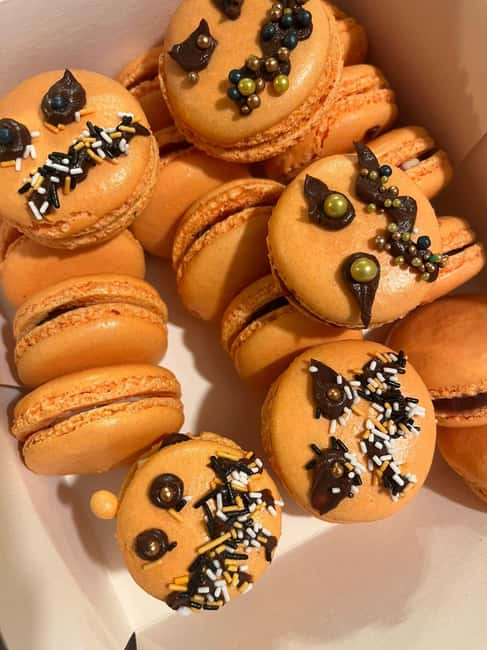
The class begins with ingredients already measured by the chef. That is a smart choice for a family activity. Precise weighing is one of the less exciting parts for children, and pre-measured ingredients leave more time for the parts everyone wants to try.
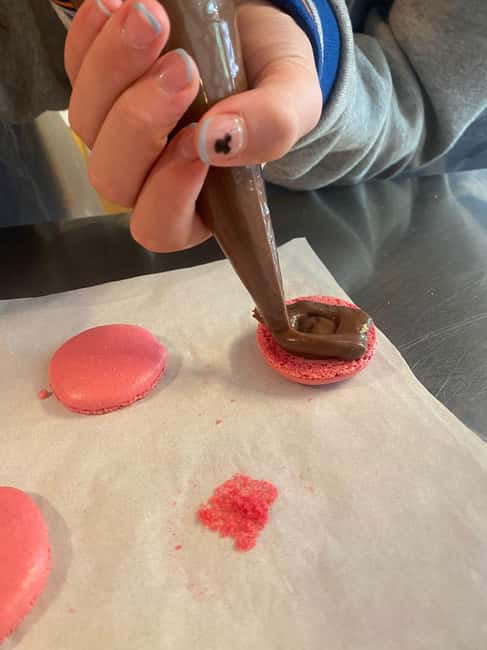
You will help mix the ingredients, then use a pastry bag to shape the macaron shells. This is where the class becomes properly hands-on. Piping even rounds takes some control, and the chef can guide you through the pressure and movement needed to create consistent shapes.
Next comes garnishing and filling. Depending on the pace of your group, the chef may show you how to prepare a ganache, custard cream, or another garnish. The exact option can depend on time and the instructor, so do not book this expecting a long menu of separate recipes. The main goal is to make one successful batch of macarons as a group.
Some classes offer a choice of as many as seven fillings. That adds a fun decision for children, who can help choose flavors and colors. It also lets your family create pastries that feel personal rather than identical from start to finish.
The chef explains the method step by step and offers tips for getting reliable results at home. One useful feature is that the less interesting preparation is completed in advance, while participants spend their time on mixing, shaping, and decorating. That keeps the pace moving and helps prevent children from losing interest.
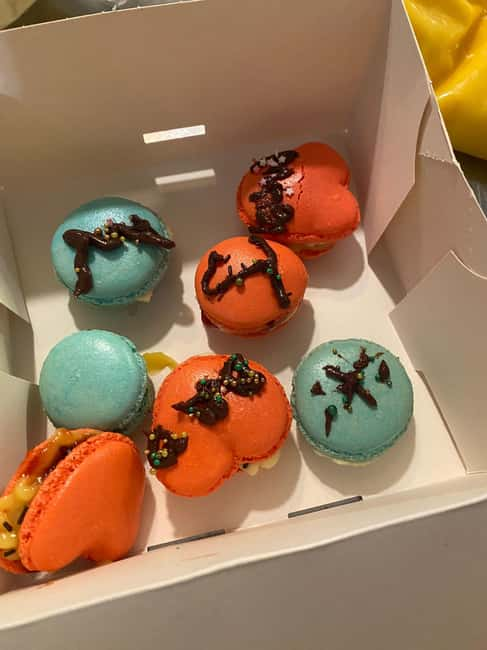
At the end, your production is boxed for you to take away. You leave with fresh macarons rather than only a recipe and a few photographs. Several families used the pastries as a treat for relatives back home, which is a practical bonus if you want a souvenir that does not sit on a shelf.
Why the instructor matters so much
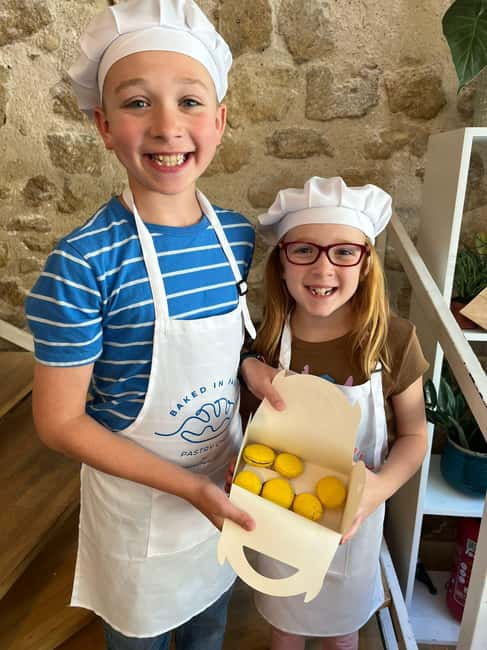
The recipe is important, but the instructor can make or break a children’s class. Macarons require attention to detail, yet young children do not want a lecture. The best guides adjust the level of explanation without making adults feel they are sitting through a children’s activity.
Nadia receives especially strong praise for making the process fun for young children while still explaining the baking details to adults and teenagers. Families with children from about five to thirteen found that she kept everyone occupied. Nelly is also described as patient and engaging with children, and Clementine has a gift for giving each age group a useful task.
Yasmine is praised for simple, clear instructions and for staying patient when children become chatty or need extra help. Tanishq, Jade, Caroline, and other instructors are also named as warm hosts who kept the class moving. The staff may vary, so you cannot select a particular chef unless the booking system confirms it, but the teaching style is clearly a major part of the experience.
I like that the class does not treat children as passive spectators. They are invited to do real steps, with an adult nearby to help when needed. At the same time, adults should expect to participate rather than simply take pictures. The experience works best when your family shares the bowl, piping bag, and decorating decisions.
Children under five must be watched by an adult. At least one adult per family must book a ticket and participate. Family members without tickets cannot stay inside just to watch, so count every person who plans to enter the atelier when you reserve.
Same base, a different kind of day:
- Paris: Louvre Museum Timed-Entrance Ticket
★ 4.6 · 71,977 reviews - Disneyland® Paris 1-Day Ticket
★ 4.6 · 49,412 reviews - Paris: Versailles Palace and Gardens Full Access Ticket
★ 4.6 · 41,579 reviews - Paris: Evening River Cruise with Music
★ 4.4 · 22,721 reviews
The shared-batch issue you should understand
There is one practical point that deserves clear attention. The group generally prepares one batch of macaron mixture together, then the finished output is divided among the participants. The oven can fit four trays, which may affect how many pastries each person or family takes home.
One parent noted that her family made up one third of the class but returned with about one quarter of the macarons. That is not a complaint about taste or teaching. It is simply the result of sharing one batch and dividing the baked pastries among the group.
Ask about the expected quantity when you arrive if taking home a large box matters to you. The class promises your production of fresh macarons, but the exact number is not stated. If you are booking mainly for the learning and family time, this is a minor concern. If your children are expecting a large personal haul, set expectations before the piping begins.
The shared-batch system has an upside, too. It gives your family a cooperative project and keeps the class within two hours. Making separate full batches for every family would require more oven time, more preparation, and probably a longer, more expensive session.
Is the $112 price good value?
At $112 per person, this is not a cheap snack stop. You are paying for a two-hour guided class, an English-speaking pastry chef, a modern kitchen, ingredients, equipment, and a box of finished macarons.
The value makes more sense if you compare it with a standard Paris attraction ticket plus a quick pastry purchase. Here, your family gets a structured activity that occupies a full two hours and gives children a real role. You also take home something you made together and learn a recipe you can try again.
For a family of four, the cost adds up quickly. I would choose this class for a special part of a Paris trip, not as an everyday activity. It is most worthwhile for families who already enjoy baking, children who want to work with food, or grandparents looking for an activity they can share with younger relatives.
The value is also stronger when you consider the small group. With a maximum of eight participants, you are not lost in a large demonstration. The instructor can watch your piping, correct mistakes, and keep the class moving. That personal attention is useful with a technical pastry.
If your family only wants to eat macarons, buy them at a pastry shop. If you want to understand how they are made and spend a memorable afternoon working together, the price is easier to justify.
Allergies, ages, and comfort
Macarons contain almonds and eggs. Tell the chef about allergies before the class starts. The supplied information does not promise substitutions, so do not assume the recipe can be changed.
All ages can participate, but children under five require adult supervision. The class can suit toddlers and preschoolers when an adult stays actively involved, though the youngest children may not manage every technical step independently.
The room may feel chilly. One participant found the space a little cold, so I would bring a light layer, especially in cooler weather. You will be working in a kitchen for two hours, and comfort matters when a child is expected to stay focused.
The class is taught in English. That makes it a practical choice for international families, and the instructors are used to explaining the steps clearly. The format is small-group rather than private, so you may share the session with another family.
How to prepare your family for the class
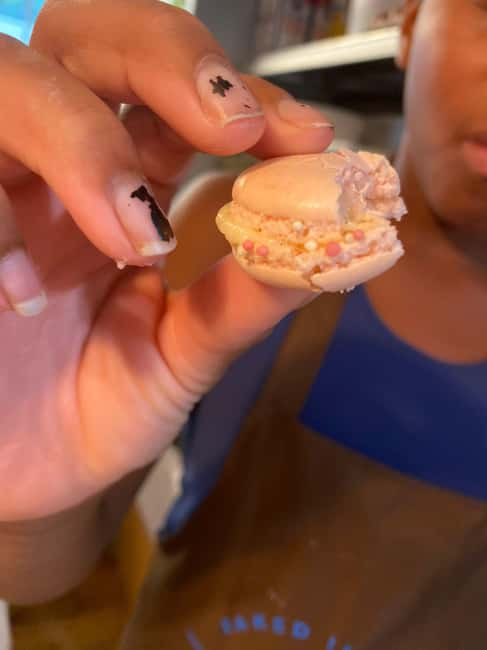
Tell children beforehand that the goal is not to make every shell perfect. Macarons can crack, spread, or come out uneven, and that is part of learning. The chefs help you recover from small mistakes, but the class is more enjoyable when nobody expects professional display-case results.
Arrive early enough to find the frosted-glass entrance and settle in. A late arrival of more than 20 minutes can interfere with the timing, and children generally do better when they are not rushed through the door.
Wear clothes that can handle a little flour or food coloring. Free aprons are provided, but an apron protects only the front of your clothes. If you want a souvenir apron, bring cash or use Venmo.
Plan your day around the two-hour session. The activity is not something to squeeze between two tightly timed attractions. Your family will get more from it if you can stay for the full explanation, piping, filling, and packing.
Who will enjoy this Paris pastry class most?
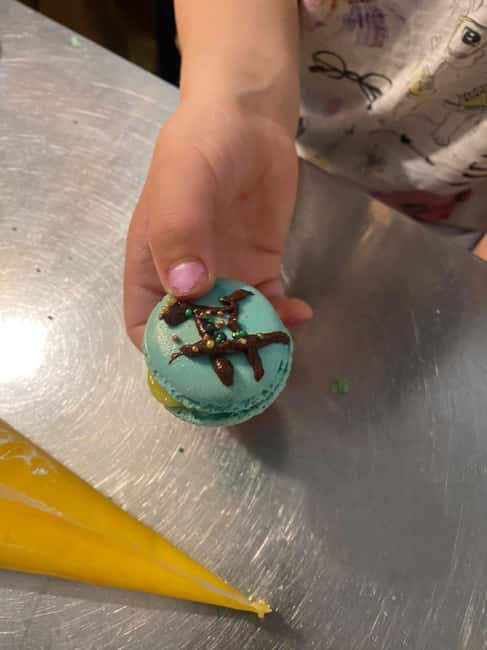
I would recommend it most strongly to families with children between about five and fourteen, especially when the children are curious about baking. The class also suits grandparents traveling with grandchildren, as shown by the wide age range that can work together at one table.
It is a good fit for beginners. You do not need prior pastry experience, and the chef prepares the measurements. Older children and adults who already bake may still enjoy the technical side, particularly the piping and the tips for repeating the recipe at home.
This is less suitable for anyone with almond or egg allergies unless the chef confirms a safe option in advance. It may also disappoint families who want a private class or a guaranteed large quantity of macarons for each participant. The group format is friendly and practical, but the output is shared.
Should you book it?
Book this class if you want a hands-on family memory rather than another sightseeing stop. The English instruction, small group, prepared measurements, child-friendly teaching, and box of finished pastries make it easy for beginners to join in.
I would book it with three points in mind: every participant who enters needs a ticket, children under five need an attentive adult, and the class may produce fewer macarons per person than your family expects. If those details work for you, the $112 price buys more than dessert. It gives your family two focused hours of making something together in Paris, then a sweet result to enjoy later.
FAQ
How long is the macaron baking class?
The class lasts two hours.
Where does the class meet?
It meets at Baked in Paris, 31 Rue Buffon. The atelier is on the left of the large blue door, where the glass is frosted. Go inside and ask for the pastry chef.
Is the class taught in English?
Yes. The instructor and pastry chef teach the class in English.
How many people can join the class?
The class is limited to eight participants.
Can young children take part?
Yes. All ages can participate, but children under five must be watched by an adult.
Do adults need to book a ticket?
At least one adult per family must participate with their own ticket. Family members without tickets cannot remain inside simply to watch the class.
What is included in the price?
The price includes the two-hour class, an English-speaking pastry chef, and your fresh macaron production packed in a box to take away. Free aprons are provided.
Do the macarons contain common allergens?
Yes. The macarons contain almonds and eggs. Tell the chef about any allergies before the class starts.
Just added in Paris
- Private Transfers in Paris★ 5.0 · 75 reviews
- Disneyland® Paris 1 Day Ticket with Transport from Paris★ 3.5 · 302 reviews
- Personalized Transport service from Disneyland to Paris★ 5.0 · 63 reviews
- CDG – Euro Disney – CDG Two Way Private Shuttle Transfer★ 5.0 · 233 reviews
- Monet’s Gardens & House-Private Giverny Tour From Paris★ 4.5 · 137 reviews
- Giverny Monet House and Gardens Skip the line Walking tour★ 4.0 · 217 reviews
- Guided tour Monet’s house and gardens/small group★ 4.5 · 68 reviews
- Monet’s House and Garden & Giverny Village★ 4.5 · 39 reviews
Pastry & Chocolate Workshops, compared.
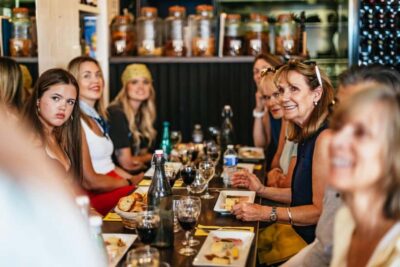
Montmartre Cheese, Wine & Pastry Guided Walking Tour
Read our review →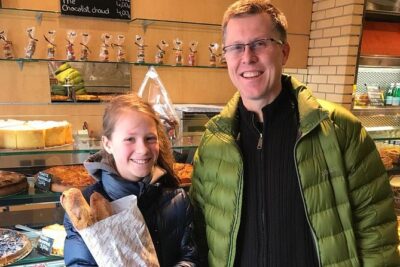
Award-Winning Paris French Bakery Experience — Le Marais, 4th Arr
Read our review →
Private Montmartre Food Tour with Wine, Cheese & Pastries
Read our review →
Paris French Sweets Tasting Tour with Pastries and Chocolates
Read our review →
Paris Croissant Small-Group Baking Class with a Chef
Read our review →

Browse the lists this tour appears in