

Reviewed · WALKING TOURS
Strasbourg: Private Walking Tour of the Historical Center
Strasbourg’s Grand Island gives this private walk a strong setting: canals, medieval churches, the Cathedral of Notre-Dame, and covered bridges all sit within a compact historic center. You’ll also get a quick look at the city’s French and German character, a useful theme in a place shaped by both cultures.
I like the private format and the choice of languages, especially if you want English, French, German, Italian, Spanish, Portuguese, or Japanese. I also like the chance to see the 13th-century covered bridges and quieter corners that a guide such as Regine may point out. The main drawback is that the cathedral visit is exterior only, and the guide cannot speak inside.
Key points to know before booking
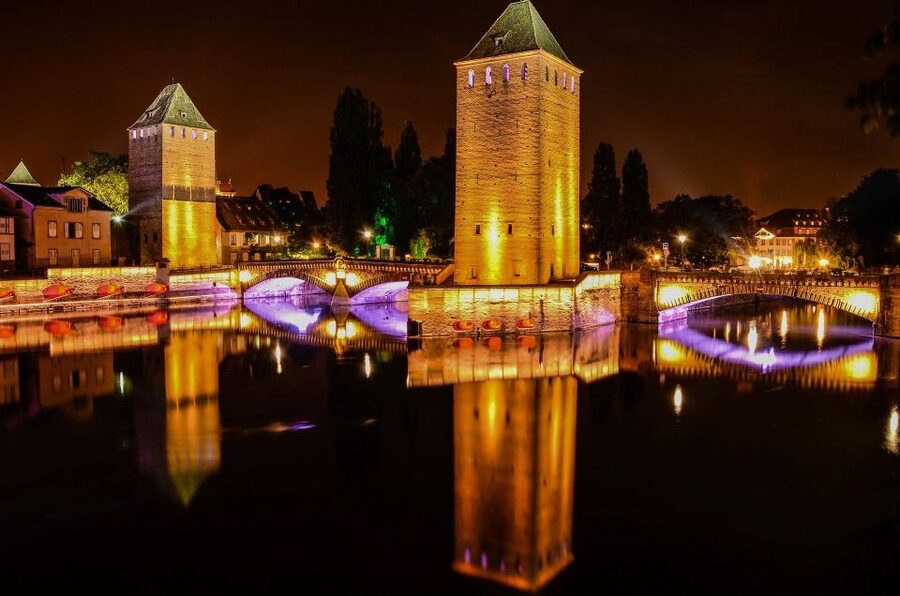
- The tour centers on Grand Island: Strasbourg’s historic core brings the cathedral, canals, churches, squares, and bridges into one walk.
- You get a private guide: Your group can ask questions and request more attention to architecture, local culture, or the French-German story.
- The covered bridges are the visual highlight: These well-preserved medieval structures offer some of the tour’s most memorable views.
- The cathedral stop is outside: You can admire Notre-Dame’s exterior, but talking inside the cathedral is prohibited and interior entry is not included.
- The guide’s style matters: Regine has led an informative, lively German-language walk, while another guide was praised for showing less obvious corners but giving too little explanation.
- Two hours keeps the walk manageable: It is enough for an introduction, but not enough for every church, museum, or interior visit in Strasbourg.
Why Grand Island makes a good walking route
I like Strasbourg best when the city is treated as a meeting point between France and Germany, not simply as a pretty old town. Its location near the German border helps explain the bilingual character of the area, while the European Parliament, Council of Europe, and European Ombudsman give the city a modern international role.
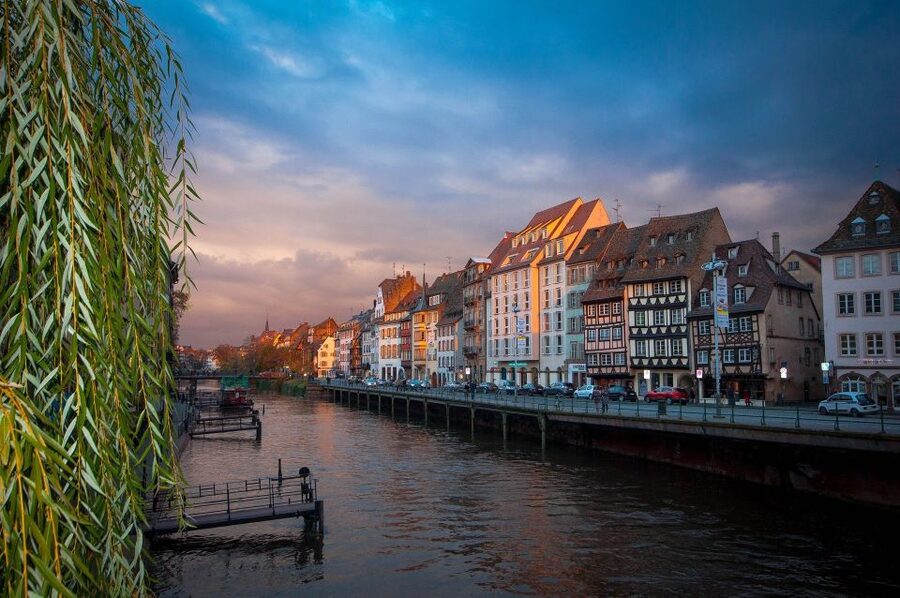
The historic center, known as Grand Island, is the natural place to begin. Much of the sightseeing here can be handled on foot, and the route connects several different moods: open squares, narrow old streets, canals, churches, and large views of the cathedral.
A guide can give those sights some order. Without one, you might see the cathedral, bridges, and Place Broglie as separate photo stops. With a good guide, you can connect them to Strasbourg’s changing identity, its local Alsatian culture, and its position between two national traditions.
The private arrangement is useful here because the city has several possible stories. You might want to focus on religious architecture, the local language, medieval defenses, French and German influence, or the European institutions. Tell your guide what interests you at the start. A two-hour walk goes quickly, and a private group should use that flexibility.
More walking tours in Strasbourg:
- Strasbourg: Walking Tour with a Local Guide
★ 4.3 · 607 reviews - Strasbourg: Walking Tour with Local Guide
★ 5.0 · 598 reviews - Strasbourg: Guided Historical Neighborhoods Walking Tour
★ 4.9 · 275 reviews
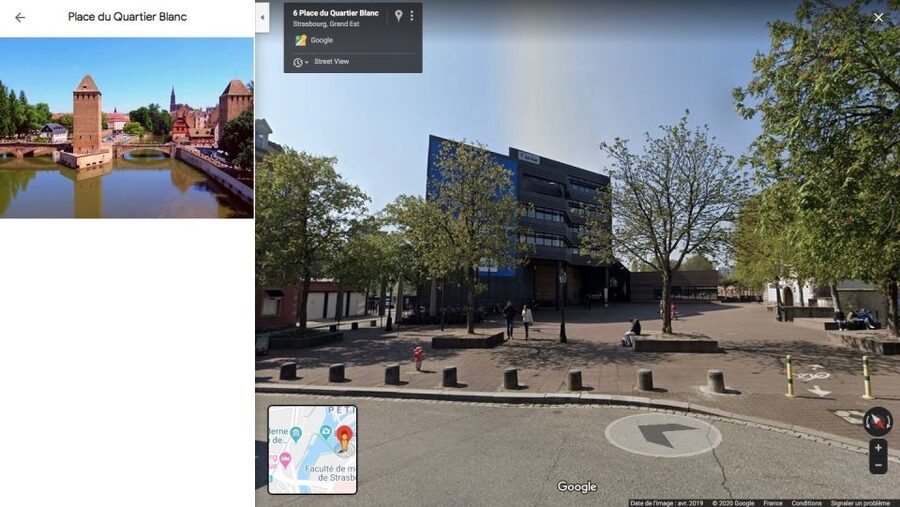
Starting at Place du Quartier Blanc
The meeting point is in front of the black building at 9 Place du Quartier Blanc, 67000 Strasbourg. This is a precise place to aim for, but you should allow a little time to identify the building and find your guide before the walk begins.
The tour returns to the same point after two hours. That is practical if you have another appointment, a meal planned, or a train connection to manage. Transportation is not included, so you need to make your own way to the meeting point.
The first stop is described as the white district square. The wording may feel a little unclear, so I would confirm the exact starting spot and ask the guide what the opening stop covers. This is also the best moment to mention children, mobility needs, or a particular interest.
The tour can accommodate wheelchair users if you tell the operator in advance. Strasbourg’s old center includes historic streets and public spaces, so advance notice gives the guide a chance to make the walk work better for your group.
Seeing the Cathedral of Notre-Dame from outside
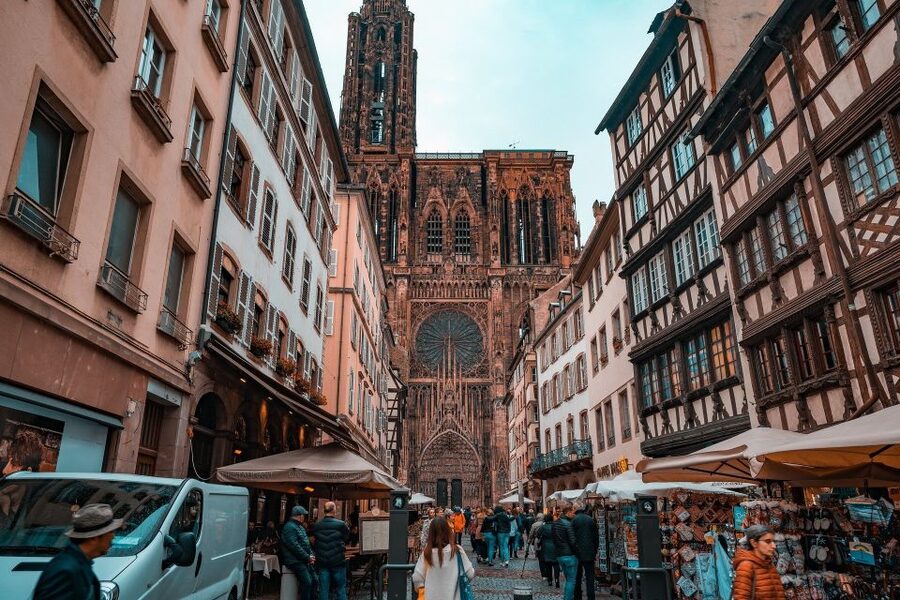
The Cathedral of Notre-Dame is one of the central sights on this walk. You can take in its exterior and hear about its place in Strasbourg’s story, but you should be clear about the limits: entrance tickets are not included, and the guide cannot talk inside the cathedral.
That rule matters. If you hope for a full cathedral visit with architectural commentary among the interior details, this experience will not provide it. You may be able to enter on your own, depending on the conditions at the time, but the guided portion is focused outside.
I would treat the cathedral stop as an architectural and orientation point rather than a complete church visit. The exterior gives the tour a major landmark, and the guide can place it within the surrounding historic center. If the interior is a priority, plan separate time for it and do not count on the two-hour walk to cover everything.
The no-talking rule also means you should listen carefully before entering, if you choose to go inside independently. Keep questions for outside, where the guide can speak freely.
Crossing the 13th-century covered bridges
The covered bridges are among the most appealing parts of the walk. These medieval structures date from the 13th century and show how Strasbourg used its waterways as part of its defense and daily life.
The name can create the wrong picture today, since the original roofs are no longer the main feature people associate with the bridges. What remains is the sense of an old fortified waterway, with stone, canals, and views that make the city feel very different from an ordinary modern street.
This is where a guide adds useful context. You can admire the bridges on your own, but a local explanation can help you understand why they were built and how they fit into the older defensive system. The route also gives you a chance to see Strasbourg from the water’s edge instead of only from its squares.
Bring comfortable shoes. The tour lasts two hours and includes a fair amount of walking through the old center. The description does not promise a slow pace, so anyone who needs frequent stops should mention that before starting.
Same base, a different kind of day:
- Strasbourg: Euro Guided Tour by Segway
★ 4.7 · 808 reviews - Colmar, Medieval Village & Castle Small Group from Strasbourg
★ 5.0 · 769 reviews - 2-Hour Strasbourg Euro Tour by Segway
★ 5.0 · 642 reviews - From Strasbourg: Best Of Alsace Historical Day Trip
★ 4.7 · 633 reviews
Place Broglie and the city’s open spaces
Place Broglie provides a change of scale after the narrower historic streets. It is one of the city’s important squares and gives you a chance to appreciate Strasbourg’s formal side, not just its medieval lanes.
I like having a square such as this included because it helps you read the city in layers. The covered bridges suggest medieval Strasbourg, while Place Broglie offers a more open civic setting. Together, they prevent the walk from becoming a single parade of old facades.
The visit is not designed as a long stop with free time. You should expect an explained viewing point as part of the route rather than a separate activity. If you want to linger for photographs, ask the guide how much time is available.
The tour also refers to Strasbourg’s medieval churches, including Église Saint-Thomas and Église Saint-Guillaume. These churches add another useful angle, especially if you enjoy religious buildings but do not want the visit to focus only on the cathedral.
Medieval churches and Alsatian identity
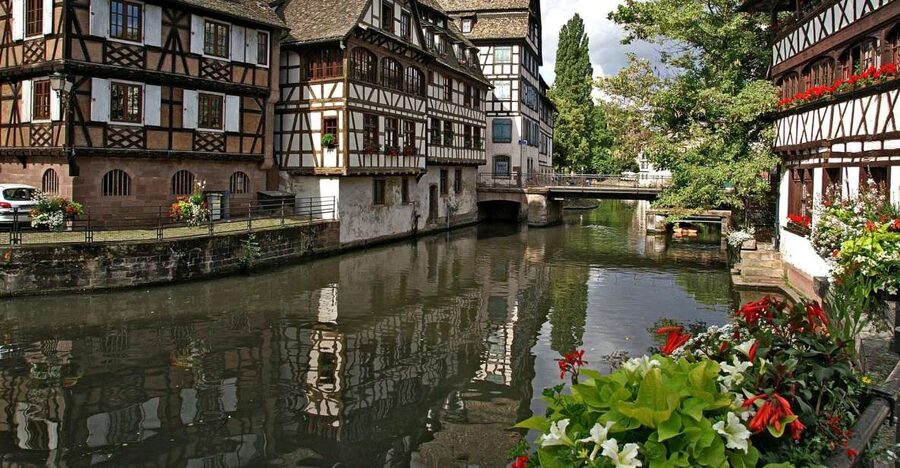
Saint-Thomas and Saint-Guillaume help widen the picture of Strasbourg’s religious past. You may not visit every church interior, since the tour is short and entrance tickets are not included, but the buildings can serve as important points along the walk.
The local Alsatian theme is worth discussing with your guide. One German-language guide, Regine, received praise for making the walk lively and informative, while also focusing strongly on Alsatian culture and language. That focus will suit you if you want more than architecture and enjoy learning how local identity developed between French and German influence.
It may not suit every group equally well. A family with a ten-year-old found that the guide did not adapt enough to the child, so I would be direct about the ages and interests in your party. A private tour should allow room for that conversation, but you need to start it.
Another guide was praised for finding pleasant less obvious corners but was considered too light on explanation. That tells me something important about this experience: the route can be good, but the quality depends heavily on how the individual guide uses the two hours.
What the private format is really worth
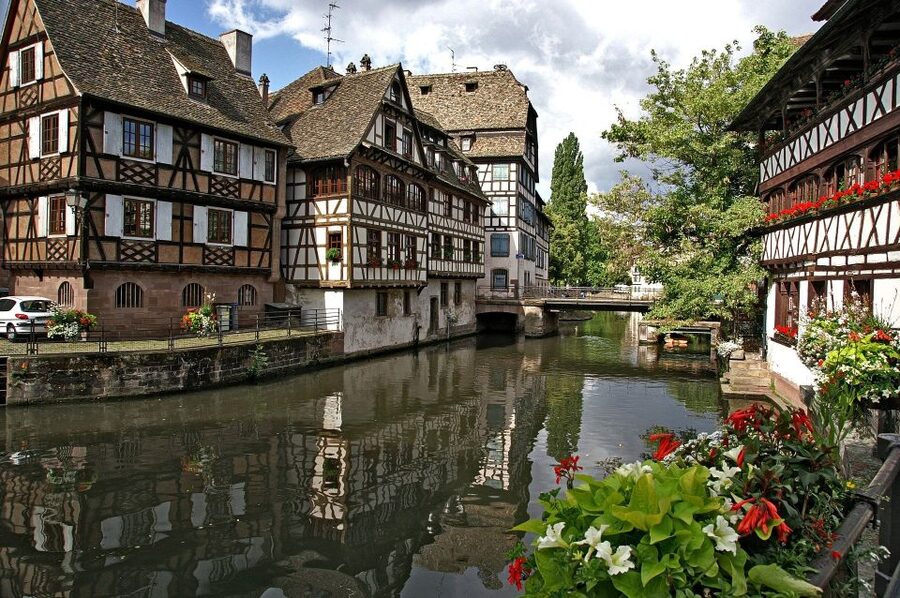
At $235 per person, this is not a budget introduction to Strasbourg. The price makes the most sense for a small private group that values a dedicated guide, a choice of eight languages, and the ability to ask questions during the walk.
For one person or a couple, the cost is harder to justify if you only want to see the main landmarks. You can walk around Grand Island independently, admire Place Broglie, and view the cathedral exterior without paying for a guide.
The private format becomes more useful for families, mixed-age groups, or people who want a specific language. It can also be worthwhile if you have limited time and want a local introduction that connects the cathedral, churches, bridges, and squares in one route.
The value depends on conversation. Ask for the topics you care about, and tell the guide if you prefer architecture, local culture, or the French-German relationship. If the walk becomes a general overview with little explanation, the price will feel high.
The published score is 4.2 out of 5 from 107 ratings, which suggests a generally positive but not flawless experience. The praise is strongest for guides who are lively, amusing, and well prepared. The main criticism concerns a lack of detail or insufficient attention to children, so expectations and communication matter.
Languages, group needs, and guide style
The tour is available in English, French, German, Italian, Spanish, Portuguese, and Japanese. That range is a practical strength, particularly in a city where French and German both matter to the local story.
If you book in German, Regine is a name worth asking about, since her walk was described as both entertaining and informative. You cannot assume a specific guide will be assigned, but requesting a language and explaining your interests should help set the tone.
I would also tell the operator about children before the day of the tour. The private format sounds family-friendly, but one guide did not engage much with a ten-year-old. That is a useful warning, not a reason to dismiss the experience. It simply means you should ask for a guide who is comfortable adjusting explanations for younger people.
The same advice applies to accessibility. Wheelchair users can be accommodated if the operator is informed beforehand. Since no transport is included, you should also consider how your group will reach the meeting point.
How to use your two hours well
The best approach is to arrive with a short list of priorities. You cannot cover every church, square, canal, and interior in two hours, so decide what you most want from the walk.
If you want the main visual sights, place the cathedral and covered bridges at the top of your list. If you are more interested in local identity, ask for time on Alsatian culture, language, and the city’s French-German connections.
I would also ask whether the route includes a close look at Saint-Thomas or Saint-Guillaume, or whether those churches will be viewed from outside. That distinction matters if you are hoping to enter a church.
Keep the guide talking outdoors, since conversation is prohibited inside the cathedral. Take photographs at the larger squares and waterways, but do not let the camera turn the walk into a race. The value of a private guide is the chance to stop when an explanation becomes useful.
The tour returns to Place du Quartier Blanc, which makes planning easier. Still, I would avoid scheduling something immediately afterward. A two-hour tour can finish on time, but walking groups may need a few extra minutes to gather, ask final questions, or find their next destination.
Who should book this Strasbourg walk?
I would recommend it to first-time visitors who want a quick framework for Strasbourg’s old center. It is also a good fit for small groups that need a particular language or want to shape the conversation around Alsatian culture and the city’s divided French-German past.
Families should book with a request for a guide who works well with children. Older visitors and wheelchair users should notify the operator in advance so the route can be handled more comfortably.
I would hesitate if your main goal is to explore the cathedral interior or spend a long time inside medieval churches. Those are not included as guided interior visits, and entrance fees are separate.
Should you book this private tour?
Book it if you value personal attention, need one of the eight available languages, and want a compact introduction to Strasbourg’s bridges, cathedral exterior, churches, and squares. The two-hour length is easy to fit into a city visit, and the private format gives you more control than a large group walk.
Skip it if $235 per person feels too high for a basic orientation or if you mainly want to enter the cathedral. You can see several of the headline sights independently.
For the best result, contact the operator with your group’s ages, mobility needs, language, and interests. Ask for a guide who will explain rather than simply point out landmarks. That small step may be the difference between a pleasant walk and a genuinely useful introduction to Strasbourg.
FAQ
Where does the Strasbourg walking tour begin?
The guide meets you in front of the black building at 9 Place du Quartier Blanc, 67000 Strasbourg, France.
Where does the tour end?
The two-hour tour returns to the starting point at 9 Place du Quartier Blanc.
How long does the walking tour last?
The guided walk lasts two hours.
Is the tour private?
Yes. This is a private group tour with a dedicated guide.
Which languages are available?
The tour is offered in English, French, German, Italian, Spanish, Portuguese, and Japanese.
Is entry to Strasbourg Cathedral included?
No. Entrance tickets are not included, and the guided visit focuses on the cathedral exterior. Talking inside the cathedral is prohibited.
What sights are included on the route?
The route includes the historic center on Grand Island, the Cathedral of Notre-Dame exterior, the 13th-century covered bridges, Place Broglie, and medieval churches such as Église Saint-Thomas and Église Saint-Guillaume.
Can wheelchair users join?
Yes, the tour can accommodate wheelchair users if you inform the operator beforehand.
Can I cancel for a full refund?
Yes. You can cancel up to 24 hours in advance for a full refund. You can also reserve now and pay later.
More history tours in Strasbourg
- Strasbourg: Historic Center Walking Tour
★ 4.7 · 88 reviews - Paris: Louvre Museum Entry with History of Mona Lisa
★ 3.9 · 2,823 reviews - Paris: Dark History and Ghostly Guided Walking Tour
★ 4.7 · 1,000 reviews - Vieux Lyon Cultural & Historical Walking Guided Tour (English)
★ 5.0 · 942 reviews
Just added in Strasbourg
- Strasbourg: Private custom tour with a local guide★ 4.6 · 120 reviews
- Strasbourg : Street-Art Tour★ 5.0 · 37 reviews
- Strasbourg: 1.5-Hour Guided Segway Tour★ 4.8 · 383 reviews
- Strasbourg: 2-Hour Gourmet Walking Tour★ 4.1 · 39 reviews
- Strasbourg: 90-Minute Sightseeing Tour by Pedicab★ 4.9 · 85 reviews
- Strasbourg: Guided Walking Tour★ 4.7 · 127 reviews
- Strasbourg: Historic Center Walking Tour★ 4.7 · 88 reviews
- Strasbourg Food Tour : Gourmet private Tour with tastings★ 4.7 · 58 reviews
Walking Tours, compared.
Paris Top Sights Half Day Walking Tour with a Fun Guide
Read our review →
Montmartre Hidden Gems and Scenic Highlights Walking Tour
Read our review →
Montmartre Hill French Gourmet Food and Wine Tasting Walking Tour
Read our review →
Paris Île de la Cité and Notre-Dame Walking Tour With Crypt
Read our review →
Montmartre Cheese, Wine & Pastry Guided Walking Tour
Read our review →
Paris in a Day: Louvre or Orsay, Eiffel Tower, City Walk & Cruise
Read our review →
Montmartre Highlights Walking Tour with a Local Guide
Read our review →
Browse the lists this tour appears in