
Reviewed · WALKING TOURS
Strasbourg: Walking Tour with a Local Guide
Strasbourg reveals itself best on foot, and this two-hour route covers the city’s grandest sights without turning the day into a history lecture. You’ll move from Place Gutenberg through the cathedral area, canal-side Petite France, the Tanners’ Quarter, and Place Kléber, with a local guide filling in the stories between the buildings.
I like the easy pace and the practical advice. You get help finding good photo angles, plus suggestions for eating and exploring after the tour. The main thing to consider is that tours can be multilingual, so English-speaking visitors may share time with German-speaking participants.
Key points to know before you book
- The route links Strasbourg’s essential sights: You’ll see the cathedral, Petite France, Place Gutenberg, the Tanners’ Quarter, and Place Kléber in two hours.
- Local guides add personal detail: Guides including Alex, Natalie, Emmy, and Catalina have been praised for their warmth, city knowledge, and storytelling.
- The cathedral is viewed from outside: Entry tickets are not included, so plan a separate visit if you want to see the interior.
- Photo help is part of the experience: Your guide points out useful places for pictures in the cathedral area and Petite France.
- The route is easy to fit into a short stay: At $28 per person, it works well as a first look at Strasbourg before exploring on your own.
- Language setup matters: Tours are offered in English and German, and a single tour may include both languages.
Why this Strasbourg walk works well as a first introduction
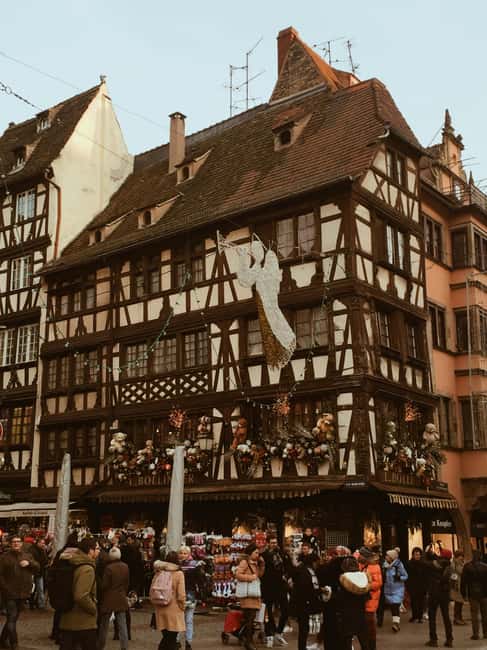
Strasbourg’s historic center, the Grande Île, is compact enough to explore on foot but full of details that are easy to miss. Old houses, narrow streets, canals, bridges, and important squares sit close together, yet each area has a different character.
I like this tour because it gives you a clear map of the center in just two hours. You are not left to guess how Petite France connects with the cathedral or where Place Kléber fits into the city’s layout. By the end, you should know which streets deserve a second look and where you want to return for a meal or more photographs.
The guide’s role is especially useful here. Strasbourg’s past includes important figures, changing political influences, working neighborhoods, and architectural clues. You will hear about the people who lived in the old quarters, the purpose of major squares, and the city’s connection with printing, trade, and public life.
The quality depends partly on the individual guide. Alex has been singled out for his command of local architecture and history, while Natalie’s enthusiasm for Strasbourg has made a strong impression. Emmy and Catalina have also led warm, engaging tours, often answering questions and switching between English and German when needed.
More walking tours in Strasbourg:
- Strasbourg: Walking Tour with Local Guide
★ 5.0 · 598 reviews - Strasbourg: Guided Historical Neighborhoods Walking Tour
★ 4.9 · 275 reviews - Strasbourg: Traditional Food Walking Tour with Tastings
★ 4.8 · 219 reviews
Meeting at Place Gutenberg
The tour begins at Place Gutenberg, near the statue and the tree. Look for a guide wearing a blue company badge marked UTG Experience. This is a useful meeting point because the square sits in the historic center and introduces one of Strasbourg’s important historical connections right away.
The square is named for Johannes Gutenberg, associated with the invention of the printing press. Your guide explains why Gutenberg matters to Strasbourg and how the square fits into the city’s story. This first stop gives the tour an early sense of purpose rather than beginning with a random walk through pretty streets.
Expect roughly 15 minutes of guided explanation around this part of the route. It is not a long stop, but it helps you notice that Strasbourg is more than attractive half-timbered buildings. The city has also been a place of ideas, commerce, religion, and political change.
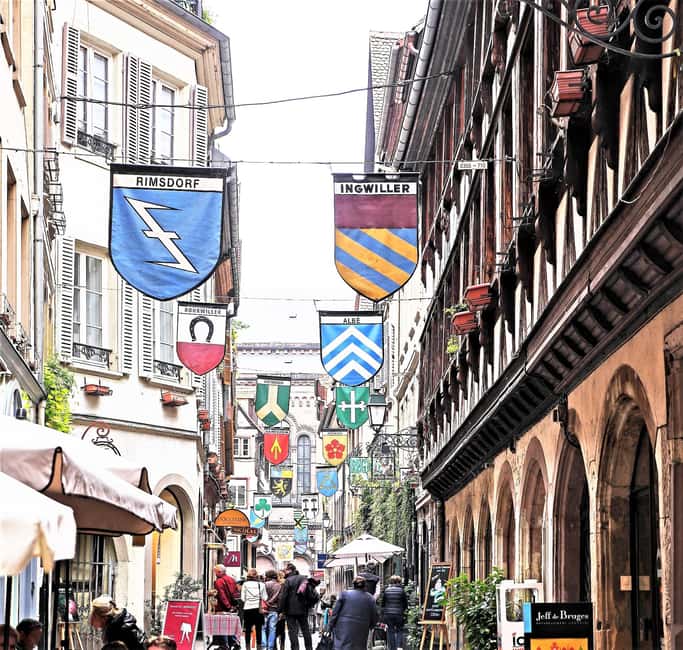
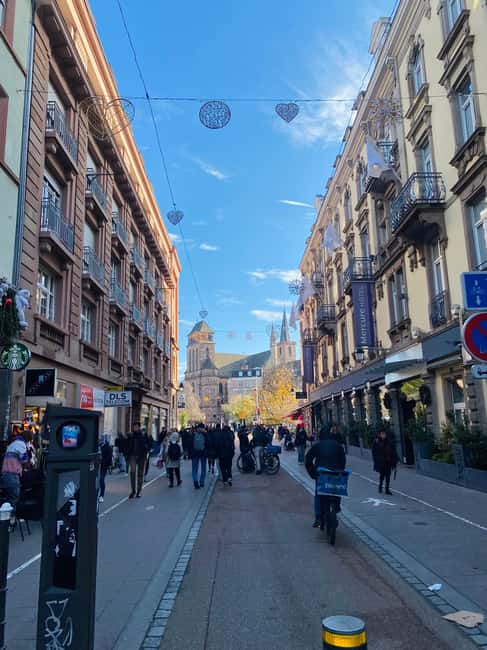
From here, the route leads through the Grande Île. You will walk among old houses and narrow streets, with the guide pointing out details that can disappear when you are focused only on reaching the next major sight.
Strasbourg Cathedral and the limits of the visit
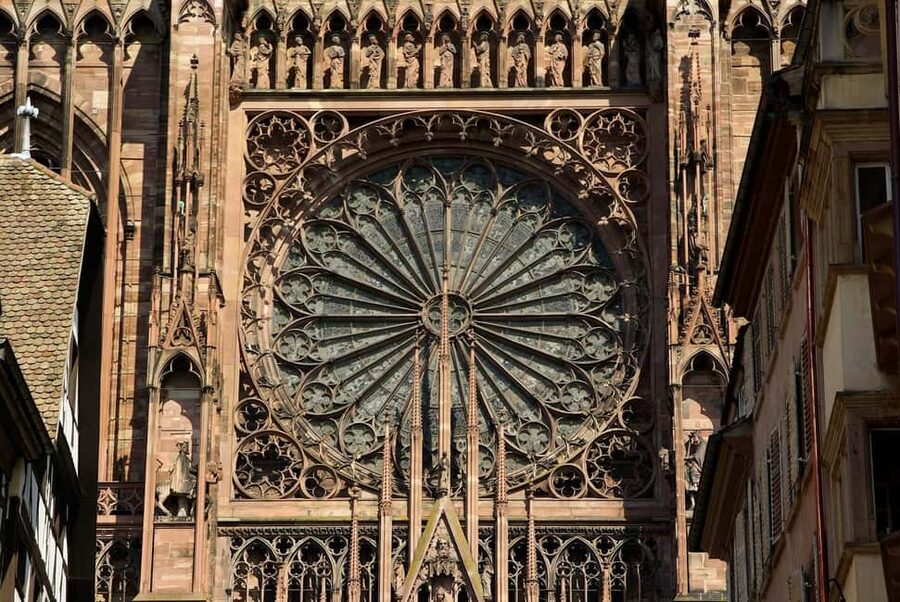
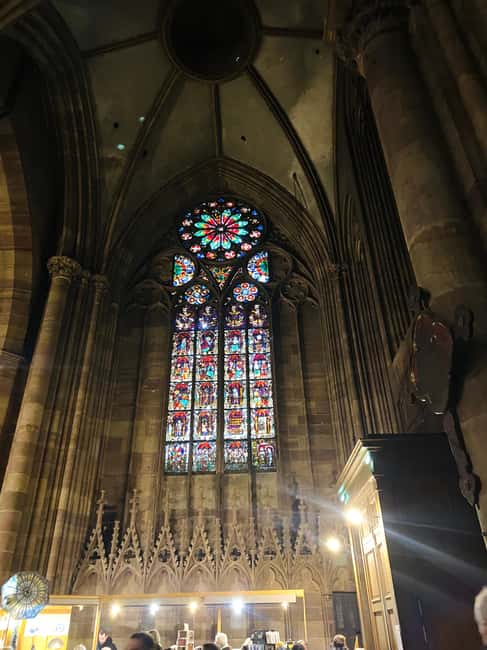
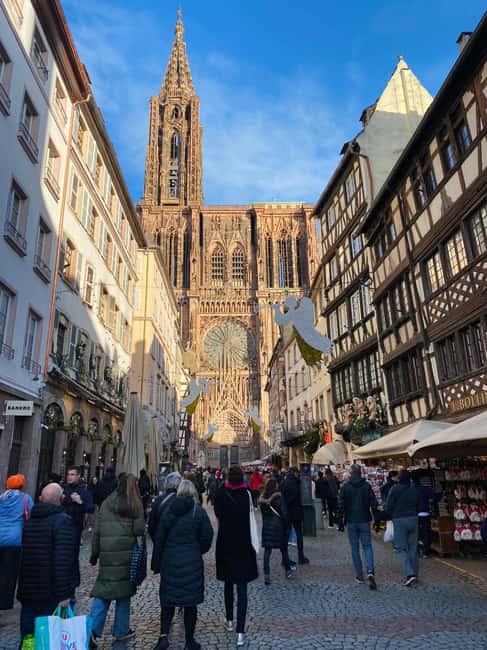
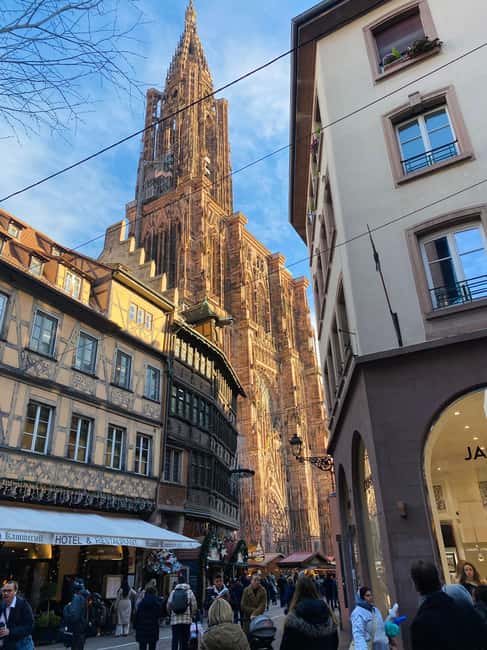
The cathedral is the tour’s most famous landmark and one of the city’s essential photo stops. Your guide shares facts about the building, draws attention to its detailed decoration, and helps you find better angles for photographs.
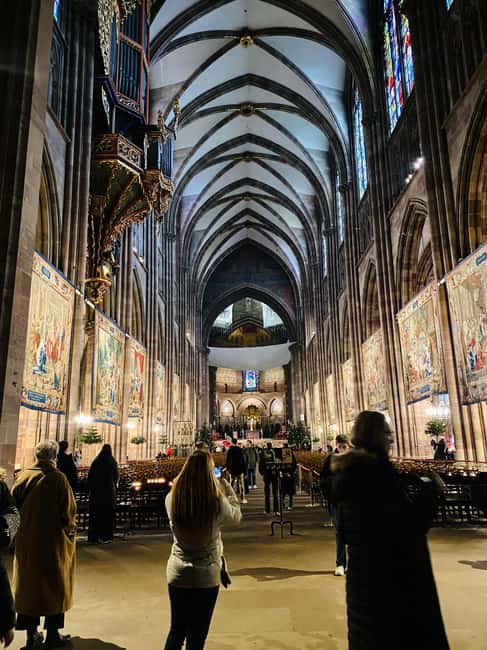
The itinerary allows about 15 minutes around Notre Dame Cathedral. That is enough for an introduction and exterior views, but it is not a full cathedral visit. Entry tickets are not included, and the description presents the cathedral as a pass-by stop, so you should arrange separate time if you want to go inside.
This distinction matters. If you are hoping to study the interior, spend time in prayer, or see every architectural feature, do not expect the walking tour to provide that experience. Instead, use the tour to understand the cathedral’s place in Strasbourg and to decide how much more time you want to give it later.
The cathedral area can also be one of the busiest parts of the route. A guide helps keep the group moving and gives you context without requiring you to plan the best approach yourself. The photo advice is a welcome extra, especially if you want more than the usual straight-on picture from the square.
One hour through Petite France
Petite France receives the longest portion of the tour, about one hour, and that is sensible. This is the most atmospheric part of the route, with canals, bridges, colorful houses, and old streets that reward a slower walk.
Your guide explains who lived and worked in this part of Strasbourg. That background changes the way you see the neighborhood. Instead of treating Petite France as a pretty backdrop, you begin to notice it as a working quarter shaped by ordinary residents, local trades, and the waterways running through the district.
This is also where the tour’s photo guidance should be most useful. You will be shown places with good views of the canals, bridges, and façades. The area offers many attractive angles, but a local guide can save you from stopping randomly in the middle of a crowded passage.
The hour is long enough to make Petite France feel like more than a quick postcard stop. At the same time, the route remains a walking overview, not a detailed architectural seminar. One four-star assessment found the guide highly informed but wished the stories had been more vivid than a string of dates and facts. That is a fair point to keep in mind: the experience works best if you want a lively orientation, not an academic lecture.
You may also find the walking pace varies by guide. Alex slowed down after one participant explained that the original pace was too quick. If you walk slowly or need more time on uneven historic streets, tell the guide early. The tour is described as wheelchair accessible, but a comfortable pace still matters for everyone.
Same base, a different kind of day:
- Strasbourg: Euro Guided Tour by Segway
★ 4.7 · 808 reviews - Colmar, Medieval Village & Castle Small Group from Strasbourg
★ 5.0 · 769 reviews - 2-Hour Strasbourg Euro Tour by Segway
★ 5.0 · 642 reviews - From Strasbourg: Best Of Alsace Historical Day Trip
★ 4.7 · 633 reviews
The Tanners’ Quarter and local food advice
The route continues through the Tanners’ Quarter, an area associated with restaurants, bars, and the city’s old working life. This part of the walk connects Strasbourg’s past with its present-day dining scene.
I value this kind of stop because it gives you a practical reason to remember the neighborhood. You are not only hearing about what the quarter once was. You are also learning where people go to eat and relax now.
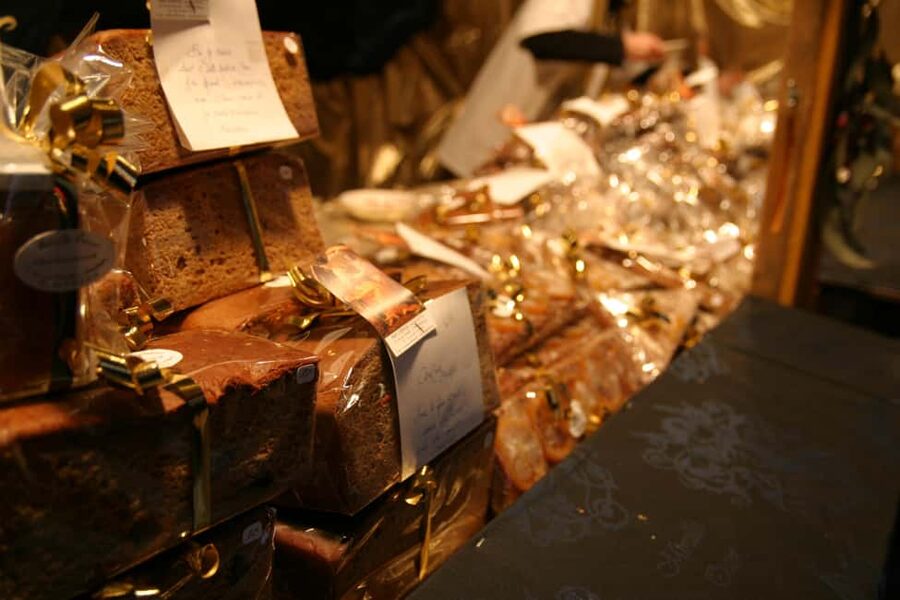
Food and drinks are not included in the $28 price. Still, the guide’s recommendations can help you make better use of your own budget after the tour. One guide-led route has included opportunities to notice local delicacies and shops, but you should treat the experience as a walking tour rather than a food tour. Bring water, and plan to buy any food separately.
If you want lunch or dinner advice, ask specific questions. Your guide can point you toward areas worth exploring, but the activity does not promise restaurant reservations, tastings, or a dedicated meal stop.
Place Kléber and the city’s public face
The final major square is Place Kléber, Strasbourg’s main public square. The tour allows about 30 minutes here, giving your guide time to discuss Jean-Baptiste Kléber and his connection with the French Revolution.
This stop helps broaden the tour beyond medieval lanes and picturesque canals. Place Kléber is a larger civic space, and its story brings in military and revolutionary history. It also gives you a practical reference point for later shopping and independent walks.
I like ending in a central square because you finish with a useful orientation point rather than being left in a tucked-away corner. From here, you can continue exploring the center, return to Petite France, look for a meal, or revisit the cathedral.
The route does cover a lot in two hours. That is its strength, but also its limit. You receive a broad picture of Strasbourg’s major areas rather than long stops at each one. If you want detailed treatment of every building, you may need a specialist architectural tour or extra time on your own.
What the $28 price delivers
At $28 per person, this tour offers good value if you are new to Strasbourg and want a guided introduction without committing half a day. The route covers several of the city’s most important areas, and the guide’s local suggestions can help shape the rest of your visit.
The value comes less from entry access and more from interpretation. You are paying for the route, the explanations, photo help, and the chance to ask questions while you are standing in the places being discussed. The cathedral entrance is extra, and food and drinks are also your responsibility.
For a short stay, the timing is particularly useful. You can take the walk early in your visit, then return to the cathedral or Petite France with a better sense of what you are seeing. You can also use the guide’s food and sightseeing suggestions to avoid spending your limited time choosing at random.
The price is less compelling if you already know Strasbourg well or prefer to explore entirely on your own. The Grande Île is walkable, and independent visitors can see the same main areas without a ticket. The tour earns its keep through the stories and local guidance, so choose it for context, not transportation or admission.
Language, pace, and group experience
The tour is offered in English and German, and multilingual departures are possible. This is the most important practical point to check before booking.
A multilingual tour can work well when the guide manages both languages clearly. Several guides have translated or explained information in English and German during the same walk. But the arrangement may mean that explanations take longer or that each language receives less detail. One participant specifically preferred a single-language tour, while another felt the English content was shorter than the German presentation.
If you want the fullest English explanation, confirm the language arrangement before you pay. The booking information says the tour can be multilingual, so you should not assume that an English reservation guarantees an English-only group.
The guides themselves receive strong praise for being friendly, positive, and willing to answer questions. Alex is often described as particularly strong on architecture and local history. Natalie’s enthusiasm, Emmy’s entertaining manner, and Catalina’s warm approach have also made the walk feel personal rather than mechanical.
Bring comfortable shoes, water, a hat, sunscreen, and a camera. Strasbourg can be hot in summer, and one participant found the weather challenging even though the guide kept the tour interesting. In cold weather, there may not be a formal break for a hot drink or a comfort stop, so plan ahead.
Who should book this walking tour?
I would choose this experience if you are visiting Strasbourg for the first time, have only a day or two, or want a friendly orientation before exploring alone. It also suits anyone who likes to combine major sights with local stories and practical food advice.
It works well for:
- First-time visitors who want the main historic areas explained
- Couples and families seeking a short, manageable city walk
- Photographers who appreciate help finding useful views
- Visitors who want restaurant and sightseeing suggestions
- People comfortable with a guide speaking English, German, or both
You may want something else if you need a slow, highly detailed tour focused on architecture. You should also think twice if a multilingual group would frustrate you or if you want a cathedral interior visit included.
The tour is wheelchair accessible according to the activity information. Even so, tell the guide if you need a slower pace or extra time. The route is two hours, and historic-center walks can feel more demanding in hot or cold weather.
Free cancellation is available up to 24 hours before the start for a full refund, and you can reserve now while paying later. Those options are useful if your Strasbourg plans may shift.
Should you book it?
Book this tour if you want a well-priced first look at Strasbourg with a local guide, especially if Petite France, the cathedral, and the Grande Île are new to you. The strongest benefit is the combination of clear sightseeing coverage and personal advice for the rest of your stay.
Before booking, check the language setup and remember that the cathedral is viewed from outside. If those points suit you, $28 is a reasonable price for two hours of orientation, history, photographs, and local recommendations.
FAQ
How long is the Strasbourg walking tour?
The tour lasts two hours.
Where does the tour meet?
Meet at Place Gutenberg in Strasbourg, near the statue and the tree. The guide wears a blue company badge marked UTG Experience.
Which languages are available?
The tour is offered in English and German. The group may be multilingual.
Is entry to Strasbourg Cathedral included?
No. The cathedral is visited as a pass-by stop, and entry tickets are not included.
Is the tour wheelchair accessible?
Yes, the activity information states that the tour is wheelchair accessible.
What should I bring?
Bring comfortable shoes, a hat, a camera, sunscreen, and water.
Just added in Strasbourg
- Alsace Wine Route Small Group Half-Day Tour with Tasting from Strasbourg★ 4.5 · 291 reviews
- Alsace Wine Route Wineries & Tasting Small Group Guided Tour from Strasbourg★ 5.0 · 229 reviews
- Alsace Half-Day Wine Tour from Strasbourg★ 4.8 · 346 reviews
- From Strasbourg: Medieval Villages & Wine Tasting Day Trip★ 4.8 · 329 reviews
- Strasbourg: Traditional Food Walking Tour with Tastings★ 4.8 · 219 reviews
- Strasbourg: Guided Historical Neighborhoods Walking Tour★ 4.9 · 275 reviews
- Strasbourg: Walking Tour with Local Guide★ 5.0 · 598 reviews
- Strasbourg Food Tour – A Taste of Tradition by Do Eat Better★ 5.0 · 614 reviews
Walking Tours, compared.
Paris Top Sights Half Day Walking Tour with a Fun Guide
Read our review →
Montmartre Hidden Gems and Scenic Highlights Walking Tour
Read our review →
Montmartre Hill French Gourmet Food and Wine Tasting Walking Tour
Read our review →
Paris Île de la Cité and Notre-Dame Walking Tour With Crypt
Read our review →
Montmartre Cheese, Wine & Pastry Guided Walking Tour
Read our review →
Paris in a Day: Louvre or Orsay, Eiffel Tower, City Walk & Cruise
Read our review →
Montmartre Highlights Walking Tour with a Local Guide
Read our review →
Browse the lists this tour appears in