
Reviewed · FOOD & DRINK
Aÿ-Champagne: Pressoria Champagne Museum with Tasting
Pressoria turns Champagne into a five-senses lesson. You follow the drink from the chalky soil beneath Aÿ to the final bottle, then taste two local Champagnes while looking across the vineyards. I like the hands-on technology, which keeps the subject lively, and the self-guided pace, which lets you linger over the parts that interest you most.
The main drawback is that this is not a guided cellar tour with a named expert leading a group. You are on your own inside the museum, and the ticket does not include food. One practical disappointment for Champagne shoppers: the museum shop has souvenirs, but Champagne is not sold there.
Key points to know before you go
- Follow Champagne from soil to bottle: The displays explain the vineyard, grape picking, pressing, fermentation, aging, and bottling.
- Taste two local Champagnes: The tasting comes at the end, giving the museum visit a pleasant finish.
- Expect a self-guided visit: You can move at your own speed rather than follow a fixed group.
- Bring the family: Interactive displays work for children as well as adults.
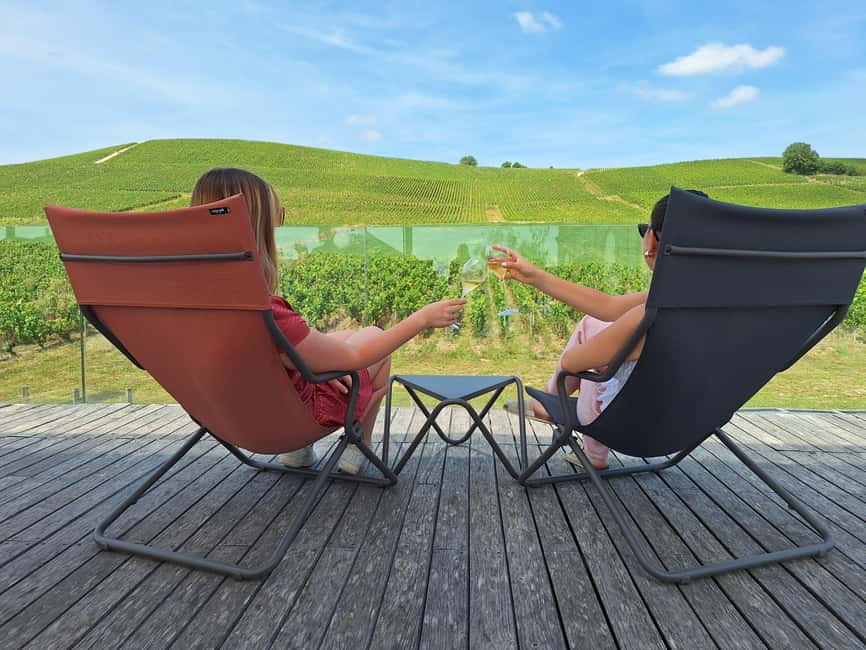
- Look for the vineyard view: The tasting may be served on a balcony or terrace overlooking the vines.
- Allow for the practical limits: Food and a personal guide are not included, though lockers and wheelchair access are available.
Why Pressoria is different from a standard Champagne visit
Many Champagne stops focus on one producer, its cellar, and its brand story. Pressoria takes a wider view. It explains how the whole region works, from the ground under the vines to the bubbles in your glass.
That makes it a useful first stop in Aÿ-Champagne. You get the vocabulary and basic method before visiting a house or tasting more widely. Instead of simply hearing that Champagne is special, you learn how climate, soil, grapes, yeast, time, and bottle work together.
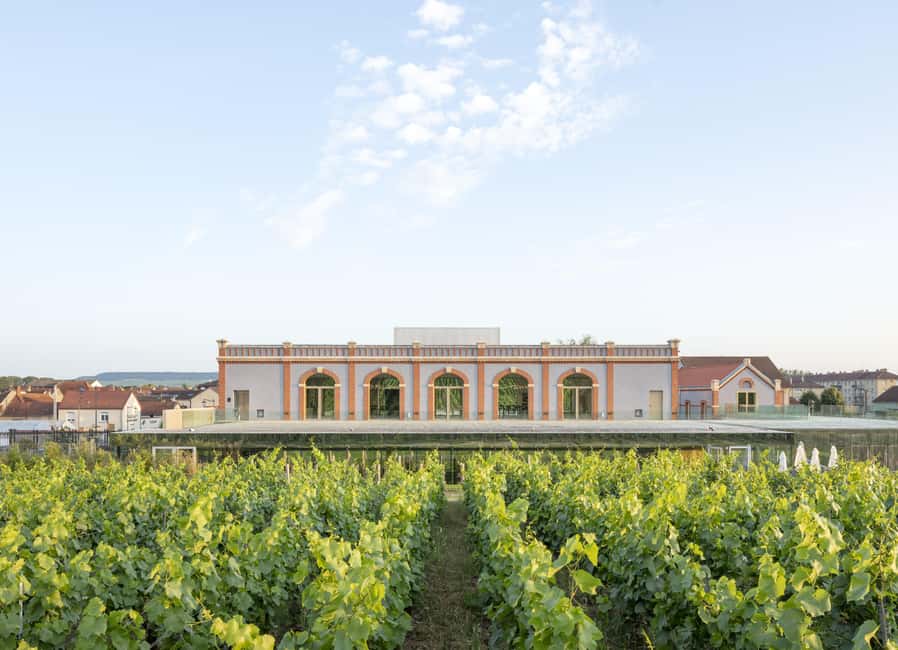
The museum sits at the foot of a hillside in the commune of Aÿ-Champagne, a place included within the Champagne region’s UNESCO World Heritage designation. The setting matters. You are not learning about vineyards in an isolated city gallery. You can look out toward the vines and then connect the display to the real rows of grapes outside.
I especially like that the visit does not treat Champagne as a luxury product only. It gives attention to the physical work behind it. You see why the grape harvest matters, why pressing must be handled carefully, and why a finished bottle represents much more than a quick pour at a celebration.
More food and drink in France:
- Paris: Seine Cruise & Crepe Tasting near the Eiffel Tower
★ 4.4 · 11,231 reviews - Authentic Parisian Gourmet Food Tour with 10 Local Dishes & Wines
★ 5.0 · 4,754 reviews - Bordeaux: Cité du Vin Entry Ticket and Wine Tasting
★ 4.6 · 3,885 reviews
Start with the land beneath Aÿ-Champagne
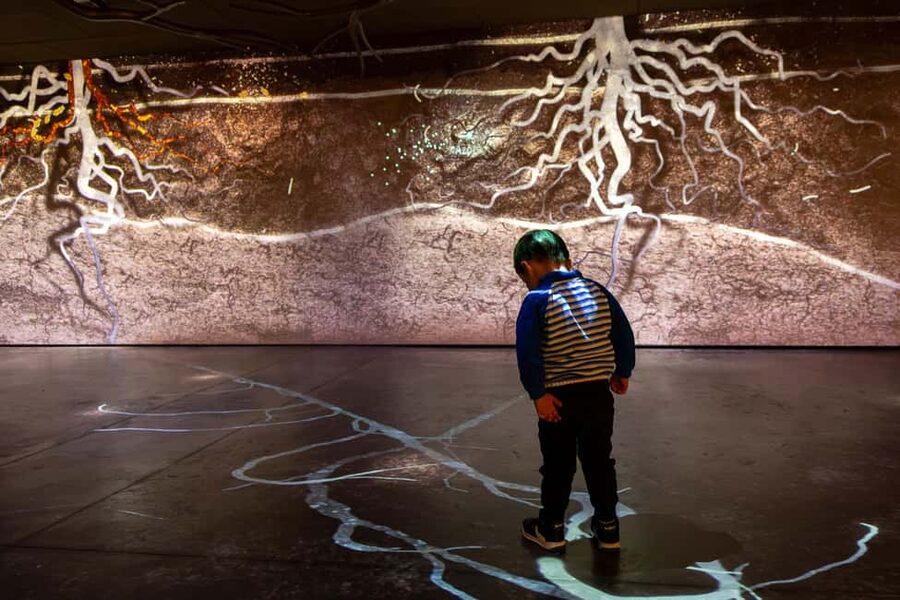
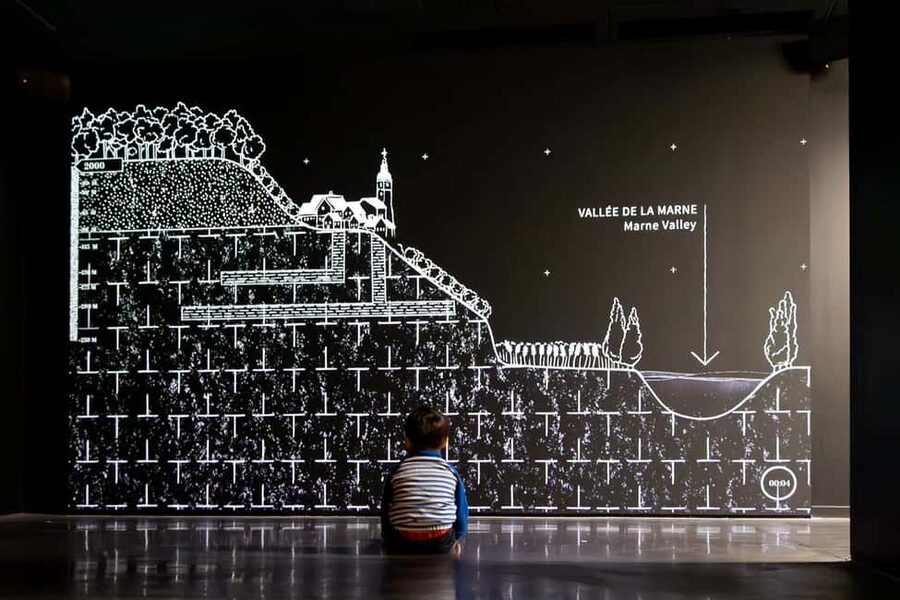
The first part of the visit takes you below the surface, at least through the museum’s displays. Pressoria asks you to think about the soil and subsoil before you think about the bottle.
That order is useful because Champagne can seem mysterious when you only encounter it in a flute. Here, the story begins with the place. The surrounding hills, vineyard rows, and underground layers all help explain why this region produces a wine with such a distinct identity.
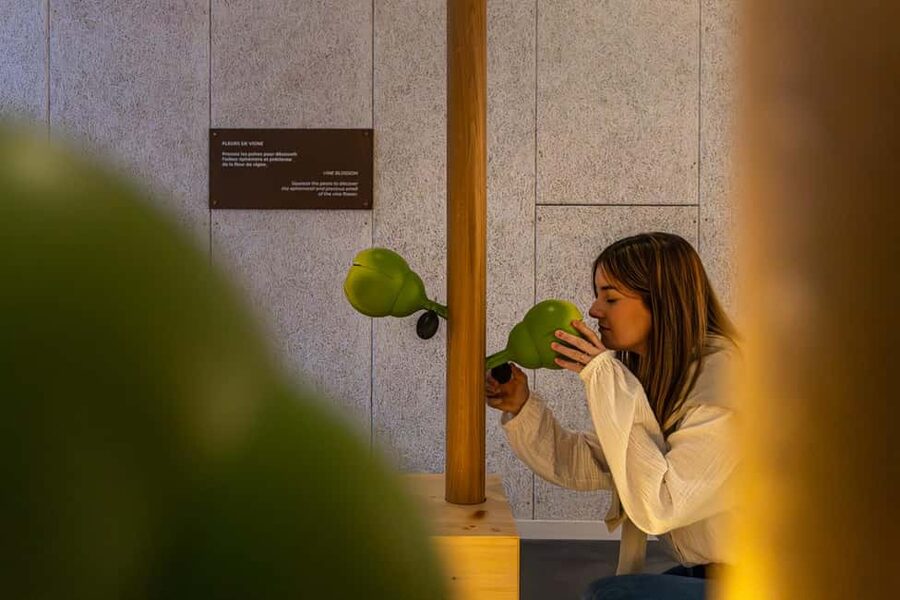
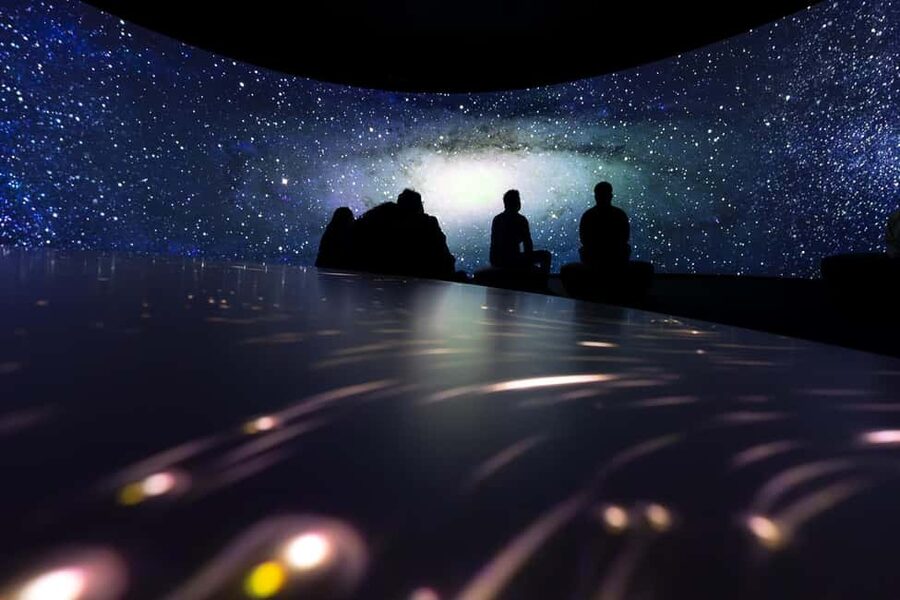
You do not need prior wine knowledge. The exhibits are designed to explain the subject in clear stages, and the sensory approach gives you more than blocks of text to read. You may hear, see, touch, or otherwise interact with displays as you move through the rooms.
This is also where the museum works well for families. Children do not have to sit through a long lecture about grape varieties. The interactive format gives them something to do, while adults can pick up the more technical points about production and flavor.
Still, keep your expectations in check. This is a museum experience, not a walk through an operating vineyard with a grower. The vineyard setting adds context, but the main learning takes place through the exhibits.
Follow the grapes from harvest to press
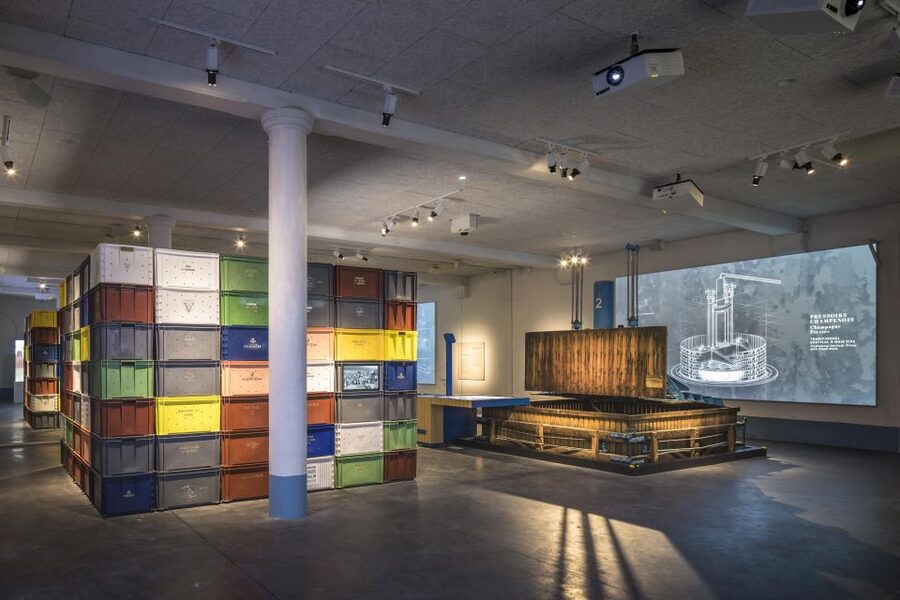
The next stage follows the grapes themselves. You learn how grapes are picked and pressed, two steps that sound simple until you consider how much care goes into protecting the juice.
The displays explain the path from bunches on the vine to the liquid that will eventually become Champagne. This is a good moment to notice the difference between the raw material and the finished drink. Champagne does not begin with bubbles. It begins with grapes, juice, and decisions made during production.
Pressing is especially important because the aim is not simply to crush grapes as quickly as possible. The juice must be handled in a way that supports the style and quality of the final wine. Pressoria gives you the basic framework without requiring specialist knowledge.
I find this section valuable for anyone who has visited a Champagne house and felt that the cellar tour moved too quickly. Large producers often explain their own methods while guiding you toward their brand. Pressoria takes more time to show the general process, so you can understand what is common across Champagne rather than hearing only one company’s version.
The self-guided design helps here. If you already know how grapes are harvested, you can move on. If this is your first close look at wine production, you can take your time and use the interactive material to build a clearer picture.
See how fermentation, aging, and bottling shape the wine
After the grapes are pressed, the museum follows the wine through fermentation, aging, and bottling. This is the technical heart of the visit, and it explains why the drink in your glass has layers of flavor instead of tasting like simple grape juice with added fizz.
You learn how each phase contributes to the final result. Fermentation changes the juice. Aging adds time and development. Bottling requires careful handling. The museum presents these steps as a connected chain, so you can see how one decision affects the next.
This section is likely to interest adults who want more than a pretty tasting. It gives you a better way to pay attention when you drink Champagne later. You can think about freshness, texture, aroma, and the way bubbles carry flavor across your palate.
The visit also explains how the character of Champagne is constructed. That phrase may sound grand, but the idea is practical: flavor does not appear by accident. It builds through the grapes, the production method, and the time spent before the bottle reaches you.
One useful feature of Pressoria is that it does not assume you are already a connoisseur. You are encouraged to notice the drink with all five senses, not to memorize complicated wine terms. That makes the museum approachable for a first-time Champagne visitor while still offering enough detail for someone who has already visited a few vineyards.
More museums in France:
- Paris: Louvre Museum Timed-Entrance Ticket
★ 4.6 · 71,977 reviews - Louvre Museum Masterpieces Guided Tour with Access
★ 4.5 · 12,023 reviews - Paris: Louvre Museum Entry Ticket With Host and River Cruise
★ 4.6 · 9,926 reviews - Les Invalides: Napoleon’s Tomb & Army Museum Entry
★ 4.6 · 9,185 reviews
The interactive rooms keep the subject moving
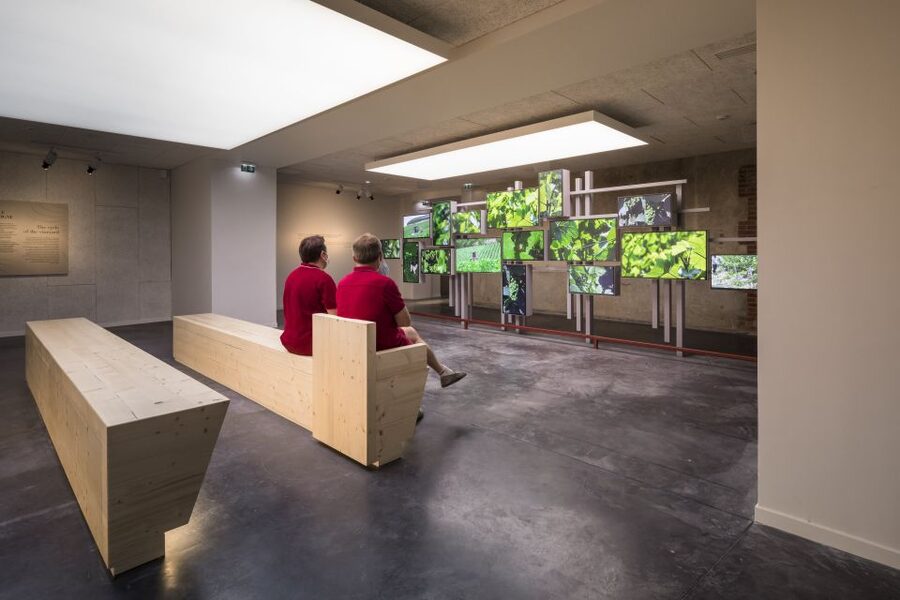
Pressoria is technology-driven, but the screens and effects are not there just for decoration. They help turn a production process into something you can experience at your own speed.
You move through rooms built around different parts of Champagne making. The exhibits use a mix of visual and sensory material, allowing you to absorb information in short sections rather than face one long wall of text.
That format has two clear advantages. First, you can stay engaged even if wine production is not usually your main interest. Second, children can take part instead of waiting quietly while adults read.
The museum is also a good rainy-day choice in the Champagne region. You can spend time indoors, then step outside for the vineyard setting and tasting view. It gives you a fuller outing than a quick shop visit, though you should remember that there is no food included.
The technology will not suit everyone. If you prefer a traditional cellar, old equipment, and a producer telling personal stories, Pressoria may feel more modern than intimate. It is designed as an educational museum, not as a small family winery tour.
That tradeoff is worth considering before you book. The museum’s strength is breadth and clarity. Its weaker point is that you do not get a personal guide tailoring the explanation to your questions.
Finish with two Champagnes and a vineyard view
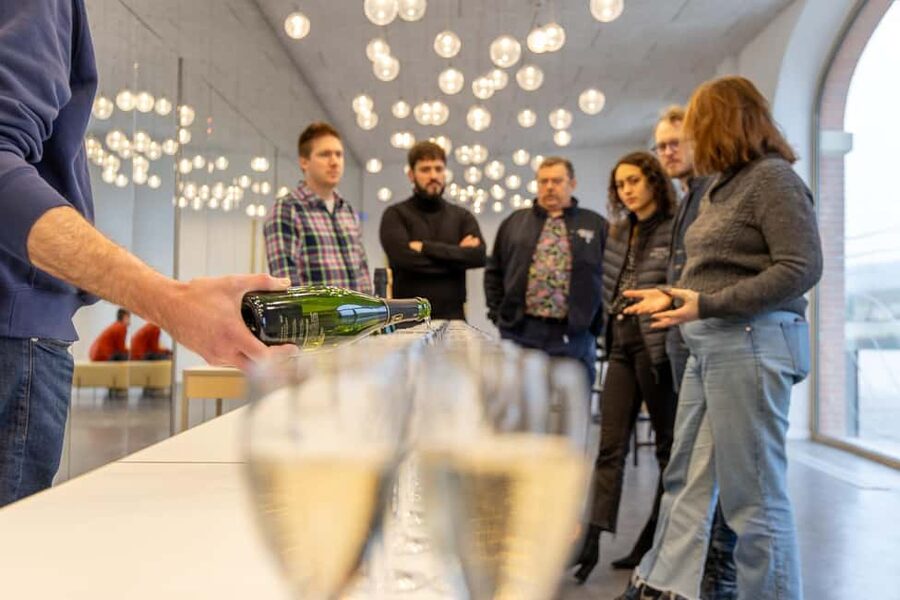
The tasting comes after the museum, which is the right order. By then, you have learned how Champagne begins and develops, so you can pay closer attention to the two local Champagnes in front of you.
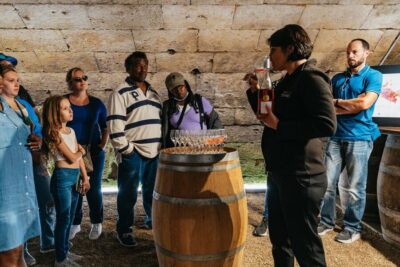
The ticket includes two tastings. This is not a full meal or an open-ended tasting session, but two samples are enough to connect the museum lesson with the real drink.
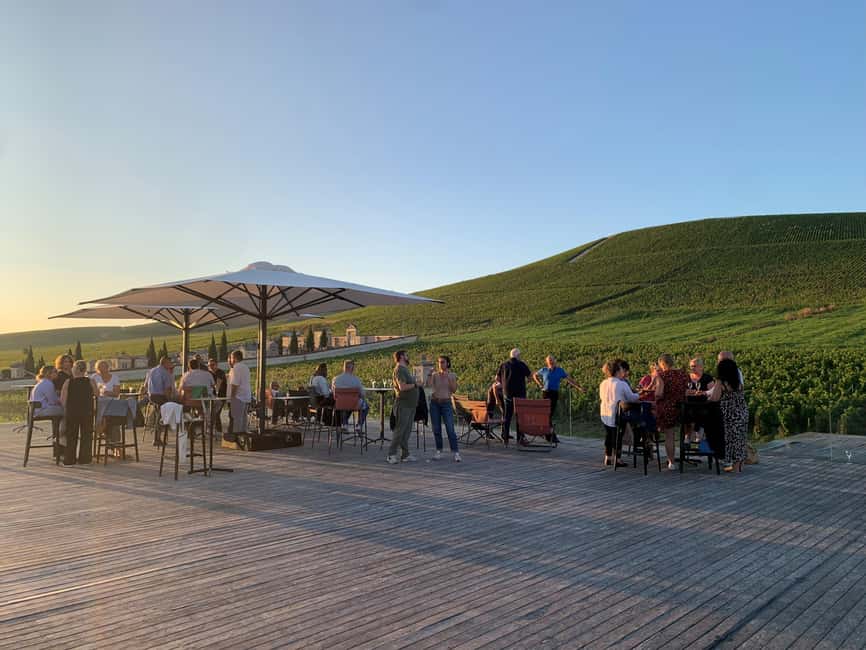
The setting adds a lot. The tasting is described as taking place on a lovely balcony or terrace overlooking the vineyards. You can look across the vines while tasting, a simple detail that makes the final part feel connected to the place you have just studied.
I suggest taking this part slowly. Notice the bubbles first, then the aroma, acidity, texture, and finish. You do not need to produce clever tasting notes. The point is to understand how the details discussed inside show up in the glass.
The two pours also give you a chance to compare. Even without detailed technical information, you can ask yourself how they differ in aroma, weight, freshness, or length. That comparison is one of the best reasons to visit a museum like Pressoria before a larger Champagne tasting.
Do not expect a large tasting flight or a full producer visit. Two Champagnes are a modest inclusion, but they are built into the $21 price and provide a clear ending to the experience.
Is the $21 ticket good value?
At $21 per person, Pressoria offers good value if you want an organized introduction to Champagne production rather than only a tasting. The ticket covers museum entry, the interactive exhibits, two Champagnes, and locker use.
The value becomes stronger for families. Children can take part in the museum even though they will not be tasting Champagne, and the technology gives the visit a broader appeal than a cellar explanation aimed only at adults.
It is also a sensible choice for anyone staying in or passing through the Champagne region who wants context before spending more money at a major Champagne house. You can learn the basic process here, then decide which producer visits or tastings deserve your budget.
The price is less compelling if your only goal is to drink Champagne. Two tastings alone will not satisfy someone looking for a long wine session, and food is not included. It is best to think of the ticket as an educational museum visit with a tasting attached, not as a tasting tour with a museum attached.
The lack of Champagne sales in the souvenir shop is another practical limit. If you find a bottle you love, you will need to buy it elsewhere. The shop may still have souvenirs, but it is not the place to stock up for the journey home.
Who will enjoy Pressoria most?
I would recommend Pressoria to first-time visitors who want a clear explanation of Champagne without committing to a full day of formal wine appointments. It gives you a useful foundation and lets you set your own pace.
Families are another strong match. The museum’s interactive design is meant to hold the attention of both children and adults, and the tasting gives parents a pleasant finish after the exhibits.
It also suits curious wine drinkers who already know the basics but want to connect the drink with the region. The emphasis on soil, vineyards, and production makes the visit more than a simple lesson in tasting words.
You may prefer another type of activity if you want a personal guide, a working cellar, or extensive producer contact. Pressoria is self-guided, so your experience depends on how much time and attention you give the displays.
The museum is wheelchair accessible, and hosts or greeters can assist in French or English. That makes it easier for international visitors, though the information provided does not specify the exact languages used in every exhibit.
Planning your visit in Aÿ-Champagne
You should park on Boulevard Pierre Cheval, then walk to the museum identified as Pressoria, Voyage sensoriel au coeur du Champagne. Parking is available around the building, which makes this an easy stop by car.
The ticket is valid for one day, with available starting times shown when you check. The supplied details do not give a fixed visit length, so plan your schedule with some flexibility rather than trying to squeeze it between two tightly timed appointments.
Because the museum is self-guided, you do not need to match the pace of a group. That is useful if you are visiting with children or if one person in your party wants to read every explanation while another prefers to move quickly.
Lockers are included. That small detail helps if you are carrying bags or making Pressoria one stop during a larger day in the region.
You can cancel up to 24 hours before the activity for a full refund, and you can reserve now while paying later. Those terms are useful if your Champagne plans depend on weather, transport, or a changing road trip schedule.
Pressoria or a traditional cellar tour?
Choose Pressoria when you want the big picture. It explains the full route from soil to bottle and uses interactive rooms to make the subject accessible. It is especially helpful before you visit an individual Champagne producer.
Choose a traditional cellar tour when you want the story of one house, underground storage spaces, production buildings, and a guide answering questions in real time. Pressoria does not replace that experience, but it can prepare you for it.
I like the fact that Pressoria avoids making the visit depend on a single brand. You learn about Champagne as a regional product, then taste two examples at the end. That broader approach helps you compare what you see later at wineries and Champagne houses.
The compromise is atmosphere. A self-guided museum cannot offer the same human connection as a grower or cellar master explaining family methods. If personal storytelling matters most to you, keep that in mind.
Should you book Pressoria?
Book Pressoria if you want an informative, family-friendly introduction to Champagne with a beautiful vineyard setting and two tastings included. The museum is well suited to first-time visitors, curious adults, and anyone who prefers to explore at an unhurried pace.
I would be less eager to book it as your only Champagne activity if you want a long tasting, food, a private guide, or the chance to buy bottles on site. But as a regional overview at $21, it offers a useful balance of education, technology, scenery, and tasting.
The best plan is to visit Pressoria early in your Champagne stay, then use what you learn when you tour a producer or order your next glass. That is where the museum earns its place: it helps you taste with more attention and understand why this particular corner of France has become so closely tied to the drink.
FAQ
Where is Pressoria located?
Pressoria is in Aÿ-Champagne, in France’s Grand Est region. Park on Boulevard Pierre Cheval and walk to the Pressoria, Voyage sensoriel au coeur du Champagne museum.
What does the ticket include?
The ticket includes museum entry, two Champagne tastings, and access to lockers.
Is food included?
No. Food is not included in the ticket.
Is the visit guided?
No. Pressoria is designed as a self-guided museum visit. A host or greeter is available in French or English.
Is Pressoria suitable for children?
Yes. The museum has interactive and family-friendly exhibits that children can enjoy alongside adults. The Champagne tasting is for adults.
Is the museum wheelchair accessible?
Yes. The activity is listed as wheelchair accessible.
How many Champagnes do you taste?
You taste two local Champagnes as part of the experience.
Can I cancel my booking?
Yes. You can cancel up to 24 hours in advance for a full refund. You can also reserve now and pay later.
Just added in France
- From Beaune: Full-Day Bicycle and Wine Tour in Burgundy★ 4.9 · 95 reviews
- From Aix: Cassis Boat Ride & Provence Wine Tasting Day Tour★ 4.8 · 103 reviews
- From Avignon: Châteauneuf du Pape Half-Day Wine Tour★ 4.7 · 365 reviews
- From Lyon: Golden Stones Beaujolais Wine Tasting Tour★ 4.7 · 387 reviews
- From Marseille: Provence Sightseeing Tour and Wine Tasting★ 4.7 · 195 reviews
- Montpellier: Pic Saint-Loup Wine Tour★ 4.9 · 243 reviews
- From Strasbourg: Medieval Villages & Wine Tasting Day Trip★ 4.8 · 329 reviews
- Marseille: Tailored Wine Tasting Experience in Top Wine Shop★ 5.0 · 106 reviews
Food & Drink, compared.
Seine Cruise & Crepe Tasting near the Eiffel Tower
Read our review →
Authentic Parisian Gourmet Food Tour with 10 Local Dishes & Wines
Read our review →
Normandy D-Day Small-Group Day Trip with Omaha Beach, Cemetery & Cider Tasting
Read our review →
Illuminated Evening River Cruise & Waffle Tasting
Read our review →
Montmartre Hill French Gourmet Food and Wine Tasting Walking Tour
Read our review →
Loire Valley Castles Day Trip With Wine Tasting
Read our review →Browse the lists this tour appears in