

Reviewed · MUSEUMS
Paris: Paradox Museum Entrance Tickets
The most interesting thing about Paradox Museum Paris is that it turns optical illusions into something you can physically test. You do not just look at strange pictures on a wall. You step into rooms, follow marked photo points, and work out why your eyes and brain disagree.
I like the hands-on design and the clear explanations beside each exhibit. I also like that the museum works for a mixed-age group: a seven-year-old can enjoy the tricks, while adults can pause over the science. The main drawback is crowding. If several groups reach the same illusion together, taking turns for photos can slow the visit.
Key points to know
- Ninety optical illusions: Follow a one-way route through a large collection of paradox-based exhibits.
- About 84 to 90 minutes: The advertised duration is 84 minutes, while the usual visit takes around 90 minutes.
- Photo-friendly layout: Marked spots show you where to stand for the best effect.
- English and French help: Staff can explain exhibits and assist with group photos when available.
- Café and boutique included: You can browse paradox-themed gifts and stop for refreshments before leaving.
- Important health note: This experience is not suitable for people with epilepsy.
What Paradox Museum Paris actually feels like
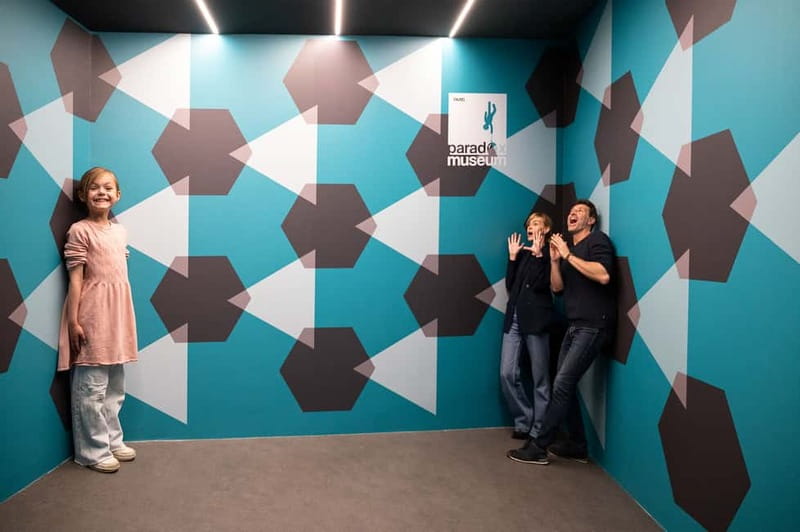
Paradox Museum Paris is a playful indoor attraction built around a simple idea: your senses can give you the wrong answer. The museum uses rooms, props, mirrors, angles, visual patterns, and perspective tricks to make ordinary space behave in surprising ways.
You follow a one-way flow through the exhibits. That matters because it keeps the visit easy to follow. You do not need to study a map or decide which room to visit next. Just follow the signs, try each display, and move onward when you are ready.
The experience is more active than a standard art museum. You will likely pose, point, turn, crouch, or ask someone to take a photo. Many displays are designed around the camera, with a marked place showing where the photographer should stand. That small detail saves time and helps you get the intended effect.
The route includes 90 different illusions. Some are made to trick your sense of scale. Others challenge your sense of direction, balance, depth, or movement. The exact effect varies from exhibit to exhibit, but the common thread is that you are part of the display rather than simply looking at it.
More museums in Paris:
- Paris: Louvre Museum Timed-Entrance Ticket
★ 4.6 · 71,977 reviews - Louvre Museum Masterpieces Guided Tour with Access
★ 4.5 · 12,023 reviews - Paris: Louvre Museum Entry Ticket With Host and River Cruise
★ 4.6 · 9,926 reviews
Starting the one-way route through 90 illusions
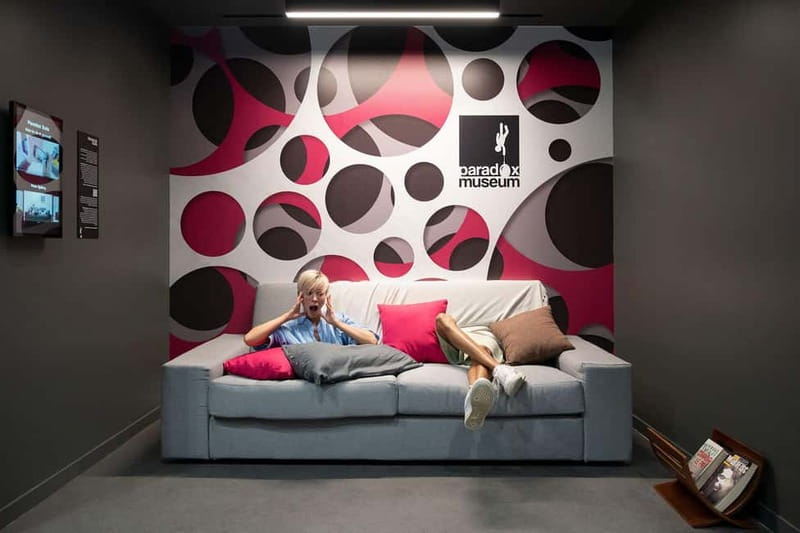
After check-in, follow the signs into the museum. The route is set up as a maze, but it is not the sort of maze where you can get lost. The one-way system moves you from one optical illusion to the next in a sensible order.
At each stop, look for the short instructions explaining what to do. A second explanation tells you what is happening and why the effect works. You can also scan QR codes for more information, which gives the visit an educational side without turning it into a lecture.
I like this balance. You can move quickly if your children are eager to see the next room, or pause and read if you want to understand the science. That flexibility helps the museum appeal to families with different attention spans.
Some displays work best with two people. Others make more sense when you place yourself at a marked point and let someone else take the picture. If you are visiting alone, you may need to ask a staff member or another person for help with certain photos. Staff are available, but they are not necessarily stationed beside every exhibit.
Why the photo points matter
The marked photo points are one of the most practical features here. Optical illusions often depend on a precise angle. Stand too far to the side, and the trick may look ordinary. Stand in the right spot, and the image captures the effect much better.
You should expect to take plenty of photos and short videos as you go. The displays are built for memorable pictures, so bring a phone with enough battery and storage. That is practical advice rather than a museum rule, but you will appreciate it once you start stopping at each photo station.
The best approach is to let one person pose while another takes the picture, then switch roles. If you are with a family or small group, plan on repeating some displays so everyone gets a turn.
Crowding is the one clear weakness of this format. A group can only use one photo point at a time, and a popular illusion may create a short wait. A Sunday afternoon can be fairly calm, but busy periods can lead to more waiting and less time spent examining the explanations.
You do not need to rush through the museum, but it helps to keep moving when you have finished with a display. That keeps the route flowing for the people behind you and gives you more room at the next stop.
The science behind the tricks
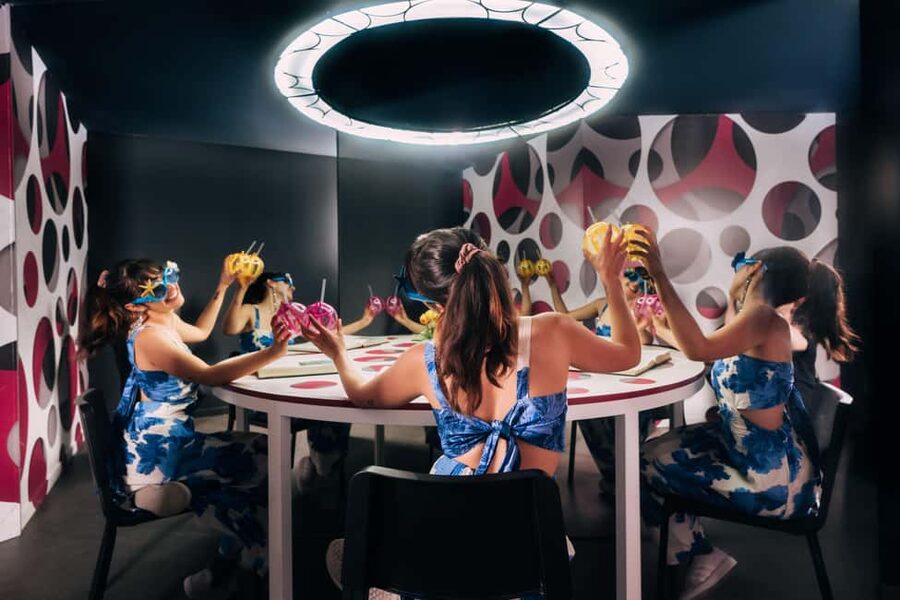
The museum is not only about posing for pictures. Each exhibit includes information about the reason the illusion works. You might read about how your brain interprets depth, how perspective changes what you see, or why two parts of an image appear to conflict.
The explanations are short enough for a casual visit. You can read them as you go without turning the experience into a formal class. The QR codes provide another layer for anyone who wants more information.
I find this especially useful with children. Instead of simply saying that a room looks strange, you can ask what their eyes are telling them and what their brain is trying to correct. The museum gives you something to talk about after the photo is taken.
Adults who enjoy puzzles, perception, design, or visual science will have plenty to consider. Still, the displays do not require specialist knowledge. You can enjoy the effect first and understand the explanation afterward.
That mix is part of the appeal. The museum lets you be playful without making the visit empty. You leave with photos, but you also have a better sense of how easily perception can be misled.
Same base, a different kind of day:
- Disneyland® Paris 1-Day Ticket
★ 4.6 · 49,412 reviews - Paris: Versailles Palace and Gardens Full Access Ticket
★ 4.6 · 41,579 reviews - Paris: Evening River Cruise with Music
★ 4.4 · 22,721 reviews - Paris: Eiffel Tower Entry Ticket with Optional Summit Access
★ 4.4 · 20,035 reviews
A good choice for families and mixed ages
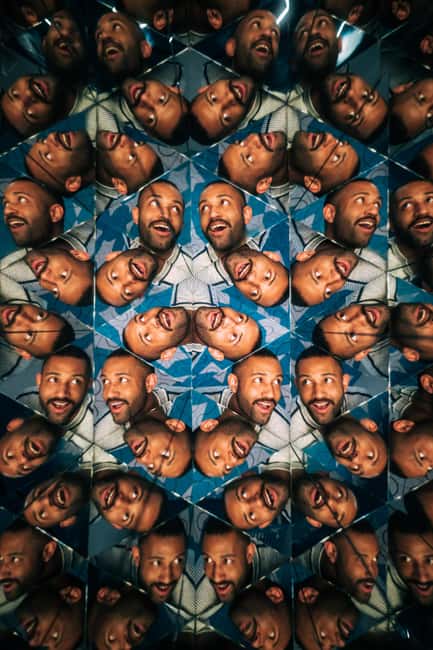
The experience suits families particularly well because it does not depend on long periods of quiet concentration. A young child can react to the visual tricks, older children can experiment with the photo angles, and adults can read the science panels.
The attraction is also useful when a group cannot agree on a traditional museum. One person can enjoy the visual spectacle, another can focus on the explanations, and everyone has a reason to participate.
A seven-year-old can find plenty to enjoy, and the museum is larger than you might expect from a quick attraction. That means you should not treat it as a ten-minute stop between major sights. Allow around 84 minutes as the stated duration, or about 90 minutes for a relaxed visit through all 90 exhibits.
The route is wheelchair accessible, which makes the physical layout easier for more people to use. The available host or greeter support is in English and French. Staff can answer questions and may help with group photos, though you should not assume someone will be waiting at every display.
The experience is not suitable for people with epilepsy. That warning matters because optical illusion attractions can include visually intense effects. Consider this carefully before booking.
How the timing affects your visit
The museum gives you a set route, but it does not feel like a guided tour with a guide speaking to the whole group. You receive instructions at each exhibit and explore at your own pace.
The small-group format is limited to 10 participants, according to the activity details. That can make the visit feel more manageable than a large organized group, but the individual exhibits still have limited space. A small booking group does not prevent other people from being in the museum at the same time.
Last entry is at 6 p.m., two hours before closing. Do not arrive at the very end of the day and expect to squeeze in a complete visit. Since the route takes about an hour and a half for many people, an earlier start gives you more breathing room for photos and explanations.
If you want the smoothest experience, choose a time when you can move without pressure. You cannot guarantee an empty museum, but avoiding the busiest period should reduce waits at the photo stations.
The Paradox Boutique and café
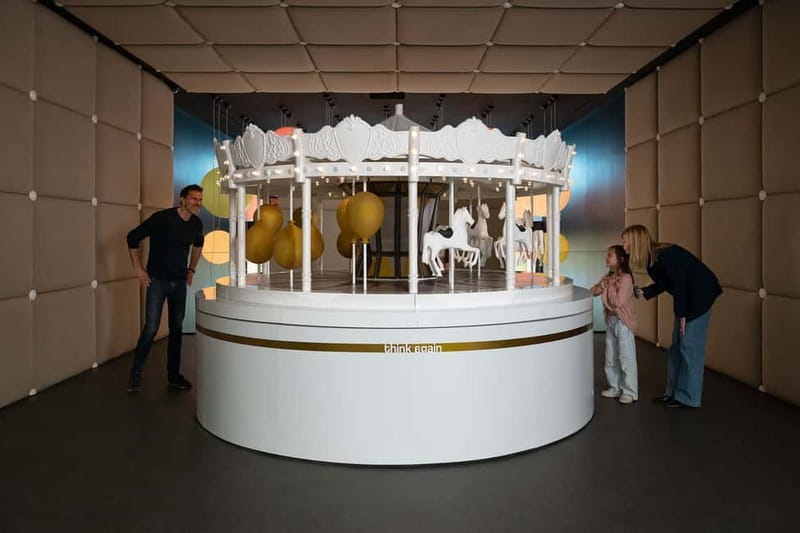
The route ends at the Paradox Boutique, where you can return to normal reality with a souvenir. The shop carries games, clothing, accessories, and other items with a paradox theme.
I like having the store at the end rather than at the start. You first see the exhibits, then decide if one of the ideas is worth taking home. A small game or visual puzzle can make sense as a gift, especially for a child who enjoyed the interactive parts of the museum.
The activity also includes access to the café. The provided information does not give a food menu or specific café prices, so I would treat it as a useful finishing point rather than plan a meal around it.
The boutique is not simply a compulsory exit through a shop. You can browse, but the museum visit itself includes access to the store and café. That gives you a little time to slow down after the quick pace of the exhibit route.
Is the $33 price good value?
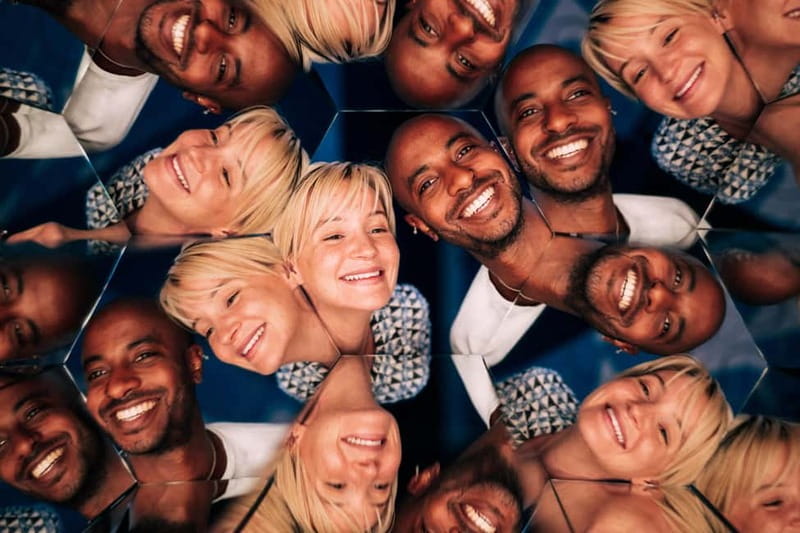
At about $33 per person, this is not a bargain basement attraction. Its value depends on how much you enjoy interactive displays and taking photos.
For that price, you get access to 90 exhibits and roughly 84 to 90 minutes inside the museum. You also get the science explanations, QR code content, café access, and boutique access. Compared with a short photo stop, that is a substantial visit.
I think the price makes the most sense for families and pairs who will actively use the exhibits. If you and your companions enjoy trying each trick, taking turns with the camera, and reading at least some of the explanations, the visit can feel worthwhile.
It is less convincing for someone who wants a quiet art collection or a traditional museum with original historical objects. This is a modern experiential attraction. Its value comes from participation, surprise, and the resulting photos, not from rare artifacts.
The positive side is that the gift shop is not described as unusually expensive, so you do not need to budget for a costly souvenir to enjoy the visit. You can simply leave after the café or browse without buying anything.
Free cancellation up to 24 hours before the visit and the option to reserve now and pay later also make the booking less rigid. Those policies are helpful if your Paris schedule is still changing.
Who should book this Paris attraction?

I would recommend Paradox Museum Paris to:
- Families looking for an activity that keeps children involved
- Couples or friends who want unusual photos together
- Anyone interested in optical illusions and the science of perception
- Groups with different ages and different levels of patience for museums
- Visitors needing an indoor activity with a clear route and wheelchair access
I would be more cautious if you dislike posing for pictures, waiting briefly for popular displays, or moving through a set one-way route. The museum is not designed for a long, quiet look at individual artworks.
I would also avoid it if you have epilepsy, since the attraction is specifically marked as unsuitable. That is not a minor footnote.
Practical tips for getting more from the visit
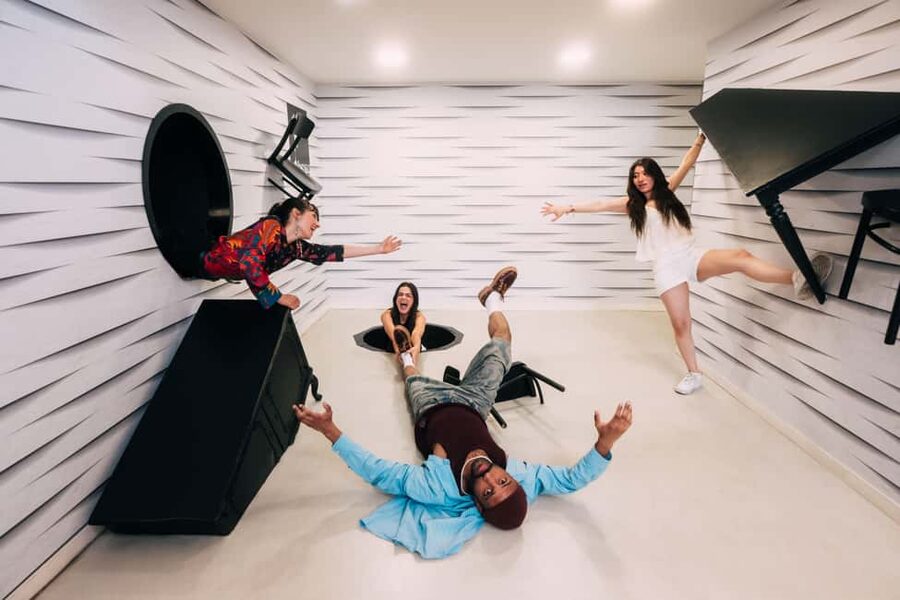
Read the instruction at each exhibit before stepping into it. The effect is often strongest when you use the recommended position rather than trying to invent your own angle.
Give everyone a turn behind the camera. A child may enjoy being the subject first, while adults can take the picture and then swap roles.
Do not assume every display will have a staff member beside it. If you want a particular group photo, be ready to ask for help when staff are nearby.
Plan for a full 90 minutes, even though the listed duration is 84 minutes. That gives you time to stop, take photos, scan a QR code, and handle a short wait.
Keep the end of your schedule flexible. Last entry is at 6 p.m., and the museum takes about an hour and a half for a normal visit. Booking too close to another important activity could make the experience feel hurried.
Should you book Paradox Museum Paris?
Book it if you want an active, photo-friendly Paris stop rather than a traditional museum. The 90 illusions, marked camera positions, short science explanations, and family-friendly format give you plenty to do for about an hour and a half.
At $33, it is best for people who will take part fully. If you treat it as a quick walk-through, the price may feel high. If you enjoy testing each illusion, helping with group photos, and learning why your eyes get fooled, it offers a solid indoor activity with broad age appeal.
Choose an earlier time if possible, especially if your group wants many photos. And check the epilepsy warning before booking. For families, couples, and curious minds who like playful science, this is a sensible addition to a Paris schedule.
FAQ
How long does the Paradox Museum Paris visit take?
The listed duration is 84 minutes, and the usual visit takes around 90 minutes to pass through all 90 exhibits.
How many optical illusions are at the museum?
The museum has 90 different optical illusion exhibits based on paradoxes.
Is the museum available in English?
Yes. Hosts or greeters are available in English and French, and the activity information is provided in both languages.
Is Paradox Museum Paris wheelchair accessible?
Yes, the experience is wheelchair accessible.
Can I take photos inside the museum?
Yes. The exhibits include marked photo points that show you the best angle for taking pictures and videos.
What time is the last entry?
Last entry is at 6 p.m., two hours before closing.
Is the experience suitable for people with epilepsy?
No. The activity is specifically marked as not suitable for people with epilepsy.
Just added in Paris
- Paris: Vallée Village Outlet Shopping Day★ 4.3 · 362 reviews
- Paris night out : Comedy in English ‘How to Become a Parisian ?’★ 4.5 · 373 reviews
- La Vallee Village Shopping Outlet by Luxury Transport from Paris★ 3.5 · 111 reviews
- Design Luxury and Personalized Jewelry in Paris le Marais★ 5.0 · 160 reviews
- Oh My God She’s Parisian! English Comedy Show in Paris★ 4.5 · 116 reviews
- Paris: Eiffel Tower Photo Shoot★ 5.0 · 420 reviews
- Photo Session in Paris – Photographer at the Eiffel Tower★ 5.0 · 422 reviews
- Paris City Sightseeing Half Day Guided Segway Tour with a Local Guide★ 5.0 · 371 reviews
Museums, compared.
Louvre Museum Masterpieces Guided Tour with Access
Read our review →
Louvre Museum Entry Ticket With Host and River Cruise
Read our review →
Les Invalides: Napoleon’s Tomb & Army Museum Entry
Read our review →
Louvre Museum – Exclusive Guided Tour (Entry Included)
Read our review →
Louvre Museum Hosted Entry and Mona Lisa Audioguide
Read our review →
Louvre Museum Tour Mona Lisa & Iconic Masterpieces
Read our review →
Browse the lists this tour appears in