
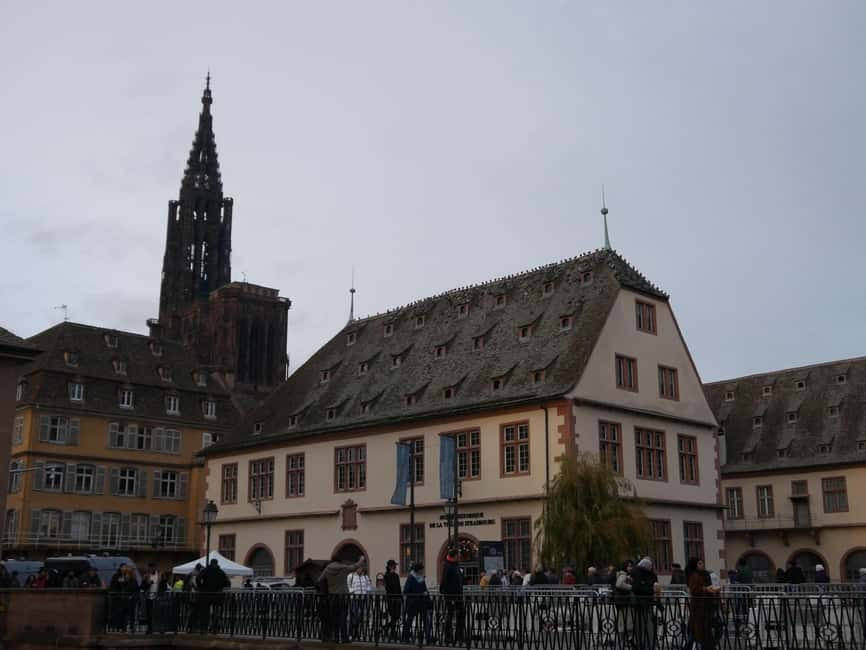
Reviewed · TOURS IN STRASBOURG
SECRETS FROM STRASBOURG
Strasbourg’s best stories are often found outside the grand postcard views. This private walk links Place Kléber, Neustadt, the Covered Bridges, and lesser-noticed façades with tales about generals, national anthems, architecture, food, and local customs. Guide Mathieu leads in English, French, German, or Portuguese, and can shape the route around what interests you.
I like the personal feel and the practical advice. You get restaurant and food hints, photo suggestions, souvenir ideas, and a list of things to see after the walk. I also like that the tour moves at a comfortable pace and can be adjusted for your group. The main limitation is simple: you stay outside, so this is not a substitute for museum or cathedral entry tickets.
Key points to know before booking
- Mathieu’s flexible guiding style: The route can be fine-tuned around your interests, from food and architecture to local stories.
- A useful mix of famous and lesser-known sights: You’ll see major squares and the Covered Bridges, along with unusual façades and overlooked city details.
- Stories tied to real places: Learn how Jean-Baptiste Kléber became a general and how La Marseillaise connects with Strasbourg.
- Good practical value: The price includes food hints, sightseeing advice, questions after the walk, and a small souvenir.
- A private two-hour format: Your group gets a more personal pace than a large public tour.
- Easy for multilingual groups: Mathieu speaks English, French, German, and Portuguese fluently.
A two-hour walk built around Strasbourg’s stories
At $47 per person, Secrets from Strasbourg is not the cheapest way to spend two hours in the city. It is a private tour, though, and that changes the calculation. You are paying for a guide who can answer questions, adjust the route, and give advice that remains useful after the tour ends.
The walk begins in front of the Sofitel Strasbourg Grande Île at Place Saint Pierre Le Jeune. The meeting point is central and easy to identify, but allow a few minutes to find the exact spot in front of the hotel. From there, the route covers central Strasbourg and the Neustadt district, with three broad sections of about 30 minutes each.
I would think of this as a city orientation with character. It is not a long list of monuments delivered at speed. The value comes from connecting places with stories, traditions, food, and small details you may otherwise pass without noticing.
Mathieu’s style appears especially suited to people who prefer conversation over a fixed script. He is described as friendly, professional, and willing to adapt the walk to his group. That matters in Strasbourg, where one person may want architecture, another may want food, and someone else may be interested in the city’s French and German connections.
Other trips people book in Strasbourg:
- Strasbourg: Euro Guided Tour by Segway
★ 4.7 · 808 reviews - Colmar, Medieval Village & Castle Small Group from Strasbourg
★ 5.0 · 769 reviews - 2-Hour Strasbourg Euro Tour by Segway
★ 5.0 · 642 reviews
Starting with Place Kléber and the Egyptian House
One early stop is the Egyptian House, whose façade is the attraction. You view it from outside, so this is a quick architectural pause rather than an interior visit. That makes it a good example of the tour’s approach: look closely at an ordinary street scene, then learn why it deserves your attention.
Place Kléber follows, and it is one of the most important public spaces in central Strasbourg. The focus here is Jean-Baptiste Kléber, the military figure who gave the square its name. You learn about his progress toward becoming a general, which gives the place a personal story instead of leaving it as just a large open square.
I like this stop because it gives you a useful anchor near the start of the walk. You are not only learning a name for a future photograph. You are also getting a piece of Strasbourg’s political and military past tied to the pavement beneath you.
The square is also a practical orientation point. From here, you can better understand how the central city fits together and where to return for further exploring. The guide’s food and sightseeing suggestions are likely to be most useful at this stage, before you decide where to eat or what to visit later.
Do not expect an extended historical lecture at each location. The tour lasts two hours and includes several parts of the city. You get focused stories, not a full biography of Kléber or an exhaustive study of every building around the square.
Reading the Neustadt district through its buildings
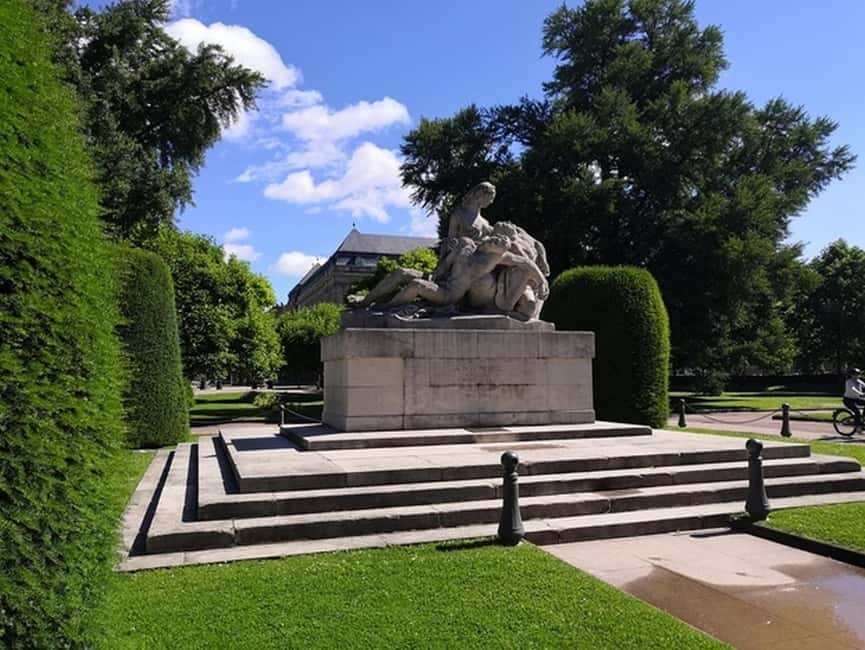
The next section leads into Neustadt, the large district added to Strasbourg’s city center during the period of German administration. The tour visits Place de la République, where the central statue, the Rhine Palace, and surrounding buildings provide the setting for a talk about the district’s design and its place on the UNESCO World Heritage list.
This is one of the strongest parts of the walk for architecture fans. Strasbourg is often introduced through its older center, but Neustadt shows another side of the city. The broad spaces and formal buildings tell a different story from the medieval streets and canals.
The useful part is the explanation of why particular buildings and areas received UNESCO recognition. Instead of simply telling you that a district is important, Mathieu can point out the reasons behind its selection and connect the buildings to the city’s changing identity.
You should expect an outside visit only. There is no entry to the Rhine Palace or any other building included in the price. That is not a problem if your goal is to understand the city’s architecture from the street, but it matters if you hoped to tour interiors.
The pace also sounds comfortable rather than hurried. That is helpful in Neustadt, where you need a little time to look up at façades and take photographs. A private group can usually pause for questions without holding up a large line of people.
Medieval defenses at the Covered Bridges
The Covered Bridges, or Ponts Couverts, bring a medieval note to the walk. Their towers and defensive design show how the waterways around Strasbourg once helped protect the city. The tour explains their original function and the surrounding area.
This stop adds variety. After the broad, formal spaces of Neustadt, you move toward older defensive structures with a more compact, fortified appearance. The towers are particularly useful for understanding that the bridges were not built only for crossing water. They formed part of the city’s protection system.
I would place this stop high on the list for photographers. The towers provide strong shapes, and the area helps explain why Strasbourg’s waterways matter to its appearance and past. The tour’s promise of advice on the best photo spots is valuable here, since a guide can direct you toward better angles rather than leaving you to take the same standard picture as everyone else.
Again, the stop is outside. You are learning about the bridges, towers, and their purpose without entering a museum or paying an additional admission. If you want a deeper look at medieval military architecture, you would need to arrange that separately.
The route also gives you a chance to ask practical questions. Mathieu is available to help with other sights and plans in Strasbourg, so this is a good point to ask what deserves more of your time after the walk.
Same base, a different kind of day:
- From Strasbourg: Best Of Alsace Historical Day Trip
★ 4.7 · 633 reviews - Strasbourg Food Tour – A Taste of Tradition by Do Eat Better
★ 5.0 · 614 reviews - Strasbourg: Walking Tour with a Local Guide
★ 4.3 · 607 reviews - Strasbourg: Walking Tour with Local Guide
★ 5.0 · 598 reviews
The National Opera and the city’s performance spaces
The National Opera is another exterior stop, this time focused on the building’s appearance, style, and role in the city. You learn about productions and the sense of theater created by the building itself.
This part will suit you if you enjoy architecture but do not necessarily want to attend a performance. The guide helps you read the building from the outside and understand why it is more than a handsome façade.
The opera stop also keeps the tour from becoming only a history walk. Strasbourg’s public life includes music and performance, and this building offers a way to talk about that side of the city. Since no admission is included, the emphasis remains on the exterior and on the stories connected with it.
If you plan to attend a production, use the walk to ask about the building and its setting, but do not assume that the tour includes tickets or backstage access. The activity is designed as a city walk, not a performance package.
La Marseillaise and the Banque de France
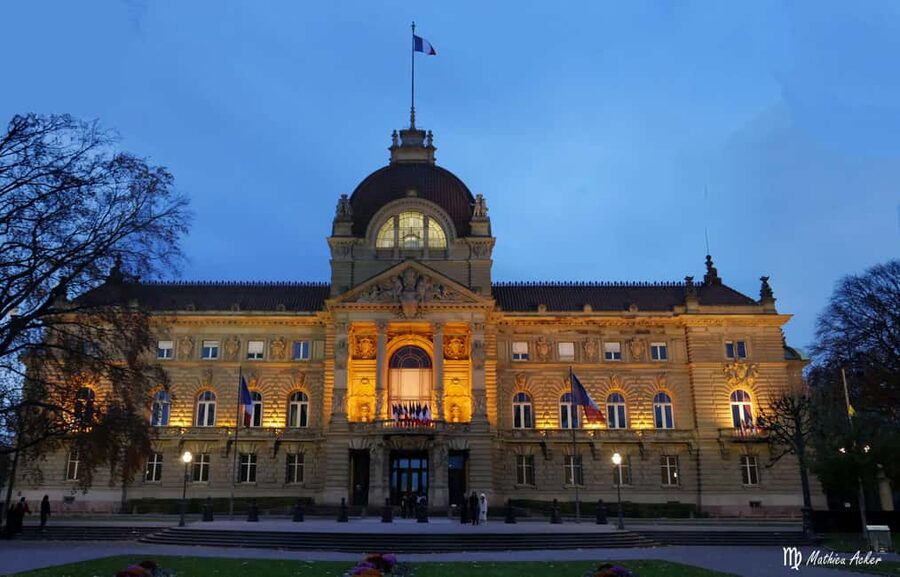
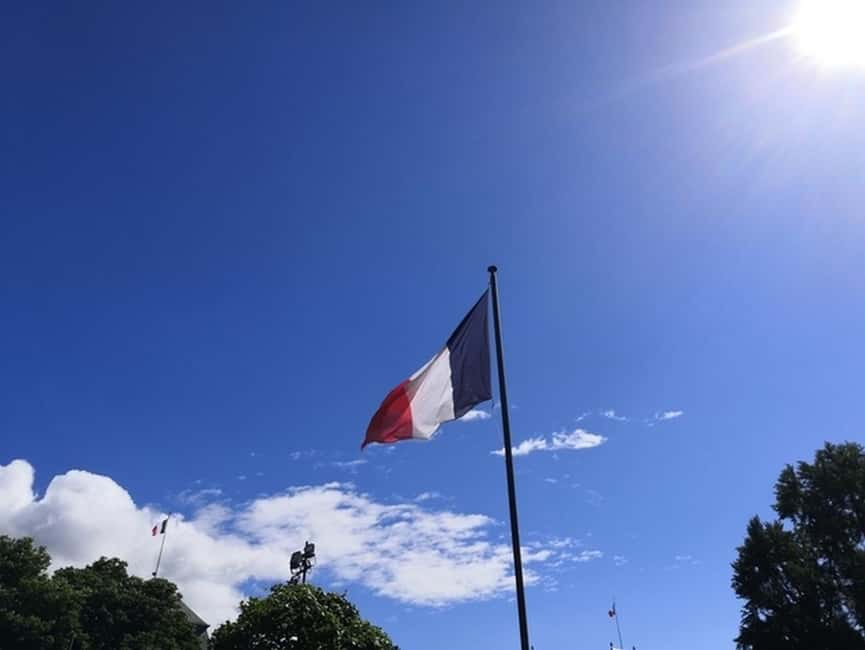
The Banque de France provides one of the tour’s most unusual stories. The stop connects the building with La Marseillaise, the French national anthem, and explains how the anthem was created and how Strasbourg’s mayor became involved.
This is exactly the kind of detail that can change how you see a familiar national symbol. Instead of treating La Marseillaise as something that belongs only to national ceremonies, the tour places its origin in a real Strasbourg setting.
I find this kind of stop especially valuable because it links local and national history. You are not simply looking at a bank building. You are standing near a place associated with an event that reached far beyond the city.
The story should also appeal to people who do not normally choose history tours. It is short, specific, and tied to a recognizable piece of French culture. If your group includes mixed interests, a stop like this can keep the walk lively.
As with the other locations, you view the Banque de France from outside. The point is the story and the setting, not an interior tour of the bank.
Food advice at Chez Christian
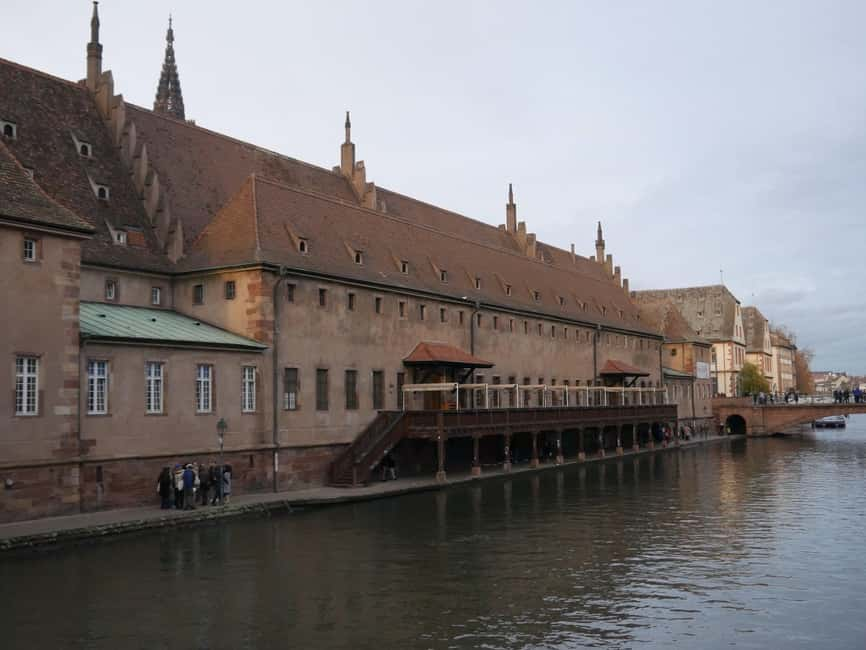
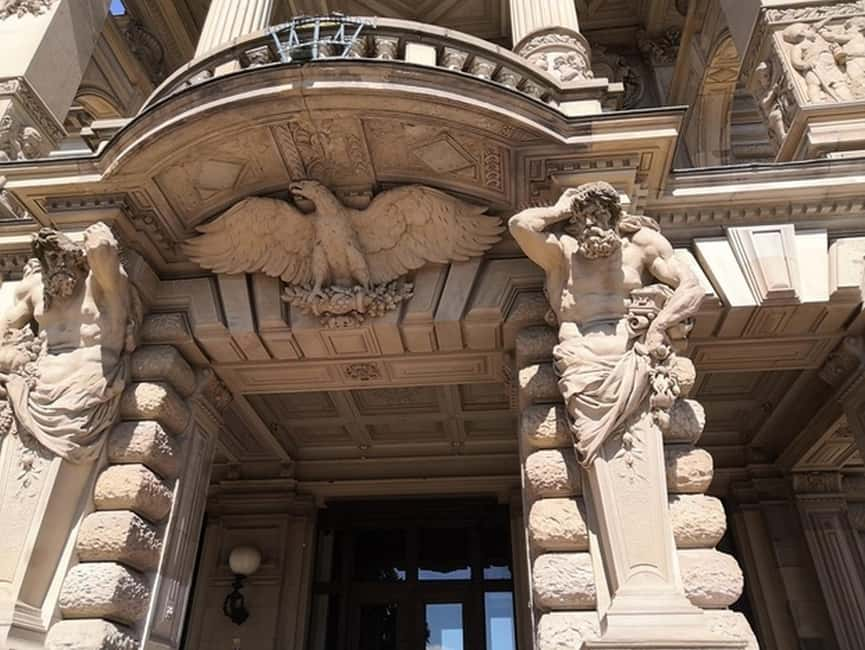
Chez Christian is included for its striking façade and the food associated with the place. The guide explains the story behind the building and what to eat there.
This is where the tour’s practical side becomes most useful. You are not just collecting historical facts. You are getting a suggestion for what to look for when choosing something to eat in Strasbourg.
The supplied information does not name specific dishes, so I would ask Mathieu directly for his current recommendation. He can also help you sort out which food tips fit your budget and schedule. That personal exchange is one of the reasons the private format can be worth more than a standard sightseeing circuit.
The façade itself also fits the tour’s focus on photographs and souvenirs. You may want to note the location for a later visit, especially if you prefer to eat after the walk rather than stop immediately.
Food advice is not the same as a meal. The price does not include drinks, including hot wine, and it does not include food purchases. Treat this as a guided introduction to local eating options, not a tasting tour.
What makes the private format worthwhile
The strongest feature here is the ability to ask for a tour that fits your group. The route includes several named sights, but it is not presented as rigid. You can signal interest in architecture, food, history, photo locations, or traditions and receive more attention in that direction.
A private group also makes the walk easier for people who need a slower or more comfortable pace. The activity is wheelchair accessible, and comfortable closed-toe shoes are recommended. Strasbourg is a walking city, so sensible footwear matters even though the tour lasts only two hours.
The language choice is another practical advantage. Mathieu speaks English, French, German, and Portuguese fluently. That can help mixed-language families or couples avoid splitting up for separate tours.
The activity includes a list of recommendations, support for questions, and a gift or souvenir. These extras are modest, but they improve the value if you plan to stay in Strasbourg for more than one day. A good list can save you time when choosing what to see next.
The tradeoff is that a private tour depends heavily on your guide and your group’s interests. If you want a large, highly structured tour with a fixed lecture and many formal stops, this may feel too conversational. If you prefer a flexible walk with room for questions, it is a better match.
How the $47 price works for your trip
At $47 per person, I would judge the price by the group size and the value of personal advice. For a couple, family, or small private party, two hours with a multilingual guide can be reasonable, particularly if you make good use of the questions and recommendations.
The tour does not include museum entry, food, or drinks. You should budget separately for any sites you choose to visit later and for anything you eat at Chez Christian or elsewhere.
The value is strongest if this is your first time in Strasbourg. You get an overview of central areas, learn which places deserve a return visit, and receive suggestions for meals, photographs, souvenirs, and other sights.
It may be less appealing if you already know the city well or only want a quick visit to the cathedral and Petite France. Those specific priorities are not the focus here. This experience is about connections between places and the smaller stories that help the city make sense.
Who should book this Strasbourg walk?
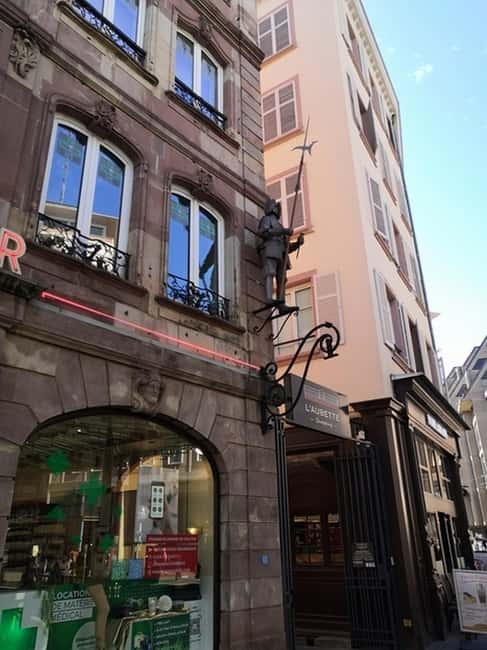
I would recommend it to first-time visitors who want orientation without a dry lecture. It also fits couples, families, and private groups with different interests, since the route can be adjusted.
Food-focused visitors should book if they value practical recommendations rather than a formal tasting. Architecture fans will enjoy the contrast between Neustadt, the Egyptian House, the Opera, and the older Covered Bridges.
It is also a sensible choice for multilingual groups. Mathieu can guide in English, French, German, or Portuguese, and the private format allows your group to ask questions freely.
You should think twice if you want interior access, museum visits, or a full meal included. Nothing in the tour price covers those extras. People who do not walk comfortably should also consider the city walking format, even though the activity is wheelchair accessible.
Free cancellation is available up to 24 hours before the tour, and you can reserve now and pay later. Starting times vary, so check availability when choosing your date.
Should you book Secrets from Strasbourg?
Book this tour if you want local context, useful food advice, and a flexible private walk rather than a checklist of major monuments. Mathieu’s friendly manner, comfortable pace, language skills, and willingness to adapt are central to the experience.
Skip it if your priority is going inside monuments or joining a food tasting. For the right visitor, though, $47 buys more than two hours of walking. It gives you a better sense of where Strasbourg’s stories live, what to photograph, where to eat, and which places deserve a closer look later.
FAQ
Where does the tour meet?
You meet in front of the Sofitel Strasbourg Grande Île at Place Saint Pierre Le Jeune. The listed address is 10 Rue du Général Rapp, 67000 Strasbourg, France.
How long does Secrets from Strasbourg last?
The tour lasts two hours. The route is organized around Strasbourg, Neustadt, and a lesser-known stop, with about 30 minutes of guided time in each broad part.
What languages does the guide speak?
Mathieu speaks English, French, German, and Portuguese fluently.
Is this a private tour?
Yes. The activity is arranged for a private group rather than a large shared group.
Can the route be changed?
The tour can be fine-tuned for your visitors and interests. You can ask for more attention to food, history, architecture, traditions, photographs, or other city questions.
Are museum entries included?
No. The tour includes outside visits only, and museum admission is not included.
Are food and drinks included?
No. Food purchases and drinks are separate. Hot wine is not included.
Is the tour wheelchair accessible?
Yes, the activity is listed as wheelchair accessible. Comfortable closed-toe shoes are recommended for the walk.
Just added in Strasbourg
- Strasbourg : Street-Art Tour★ 5.0 · 37 reviews
- Strasbourg: Private custom tour with a local guide★ 4.6 · 120 reviews
- Strasbourg: 1.5-Hour Guided Segway Tour★ 4.8 · 383 reviews
- Strasbourg: Private Walking Tour of the Historical Center★ 4.2 · 107 reviews
- Strasbourg: 2-Hour Gourmet Walking Tour★ 4.1 · 39 reviews
- Strasbourg: 90-Minute Sightseeing Tour by Pedicab★ 4.9 · 85 reviews
- Strasbourg: Guided Walking Tour★ 4.7 · 127 reviews
- Strasbourg: Historic Center Walking Tour★ 4.7 · 88 reviews
Tours in Strasbourg, compared.

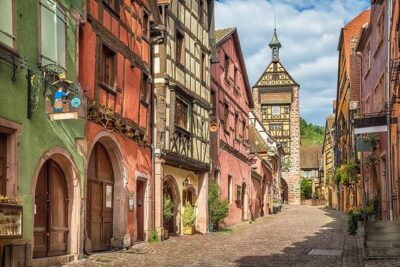
Colmar, Medieval Village & Castle Small Group from Strasbourg
Read our review →
Strasbourg Food Tour – A Taste of Tradition by Do Eat Better
Read our review →

Browse the lists this tour appears in