
Reviewed · TOURS IN BAYEUX
Canadian DDAY Sites Full Day Tour from Bayeux
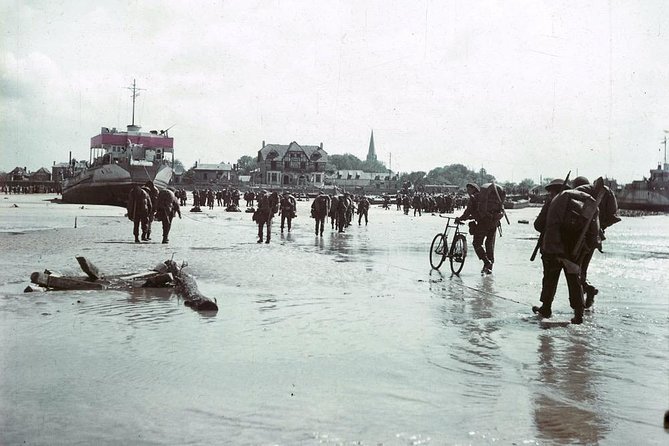
Canada’s D-Day story comes into focus on this full-day trip from Bayeux. You move from the shoreline at Juno Beach to the cemetery at Beny-sur-Mer, then inland to sites linked with the fighting around Caen and Carpiquet. The route gives you both the broad military picture and quiet places where individual soldiers become easier to remember.
I like the small group of no more than eight and the way the tour stays focused on Canadian operations. I also like the guides’ personal approach. Eric, Kate, and Alex have been praised for answering questions, recalling individual soldiers, and, when possible, adjusting the day for family connections.
The main drawback is the pace. Eight or nine hours covers several sites, but lunch is not included, and some stops last only 20 or 30 minutes. If you want long museum visits or time to wander alone, this may feel brisk.
Key points to know before you book
- Canada’s Juno Beach route: Visit Saint-Aubin-sur-Mer, Bernières-sur-Mer, and Courseulles-sur-Mer, three places tied closely to the Canadian landing.
- A useful small-group format: The vehicle is air-conditioned, and the group is limited to eight people.
- A strong mix of sites: You see beaches, a museum, a war cemetery, a former abbey, and the airfield at Carpiquet.
- Guides who personalize the day: Eric, Kate, and Alex have been praised for clear explanations and for helping connect the battlefield to family stories.
- Plan for your own lunch: Food and soft drinks are not included in the $167.76 price.
- Simple Bayeux logistics: Meet at Place du Québec at 8:30 a.m. and return there after the tour.
Following the Canadian route from Bayeux
The day begins at Place du Québec in Bayeux at 8:30 a.m. That central meeting point keeps the morning simple, especially if you are staying in town. From there, you ride in an air-conditioned vehicle through the Normandy countryside toward the coast.
The trip lasts about eight to nine hours. That is long enough to link the Canadian landing beaches with inland objectives, but short enough to fit into a busy Normandy visit. I would set aside the full day rather than planning another major activity afterward.
The maximum group size is eight. That matters here. Battlefield sites often raise specific questions about family units, landing sectors, villages, and military movements. A small vehicle gives you a better chance to ask those questions than a large coach would.
Your guide may be Eric, Kate, or Alex. The strongest praise for the guides centers on passion, clear explanations, and attention to personal stories. One guide helped connect a family member with the place where a father had landed. Another made an extra stop at a cemetery outside the planned route, and a different guide took advantage of access to a normally closed church and a house on Juno Beach.
Those extras cannot be promised, so I would not book the tour expecting a private detour. Still, they show the sort of human attention that can make a military tour more than a sequence of photographs.
Other trips people book in Bayeux:
- Normandy American D-Day Beaches Full Day Tour from Bayeux
★ 5.0 · 2,103 reviews - Normandy American D-Day Experience – Group tour from Bayeux
★ 5.0 · 1,566 reviews - Normandy Beaches Half-Day Afternoon Trip from Bayeux (A2)
★ 4.5 · 1,116 reviews
Saint-Aubin-sur-Mer and the North Shore Regiment
The first stop is Saint-Aubin-sur-Mer, part of the Juno Beach sector. You spend about 30 minutes here, with attention to the North Shore Regiment.
This is a good opening stop because it puts you at the coast before the day moves inland. Your guide can explain the Canadian presence through a specific regiment rather than treating Juno as one large, anonymous beach. That sharper focus helps you picture the operation at unit level.
The stop is brief, so expect an outdoor orientation rather than a long visit. Bring a jacket or rain layer, even in warmer months. Normandy weather can change quickly, and the tour is built around moving between several sites.
I find this kind of first stop useful because it starts with place. You are not only hearing dates and objectives. You are seeing the shore connected to the Canadian units that came ashore.
Bernières-sur-Mer and the Queen’s Own Rifles
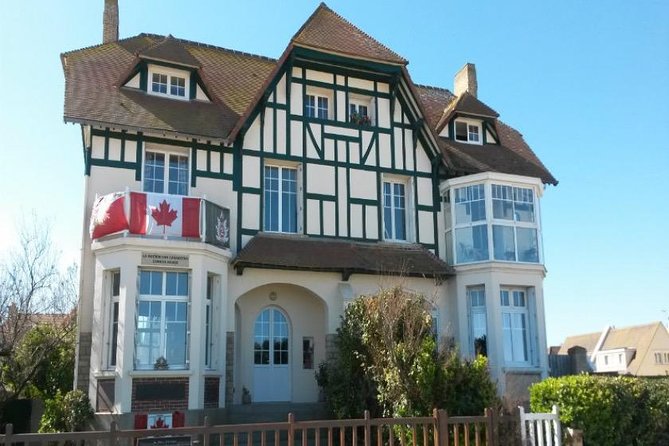
Next comes Bernières-sur-Mer, with about 30 minutes devoted to the Queen’s Own Rifles. Like Saint-Aubin-sur-Mer, this is a focused stop rather than a long museum visit.
The value lies in the contrast between a general account of Juno Beach and the story of a particular regiment. Your guide can connect the wider landing to the actions of Canadian troops in this village and surrounding area.
For me, this is where a good guide makes a real difference. A map or a list of dates can tell you what happened, but a skilled guide can explain how the stops relate to one another. Eric and Kate have been praised for explaining strategy, setbacks, and achievements without losing sight of the people involved.
You should expect some time outside and on your feet. The tour is not described as a walking tour, but the beach and village stops are best appreciated when you can get out, look around, and listen.
Courseulles-sur-Mer and the Juno Beach Centre
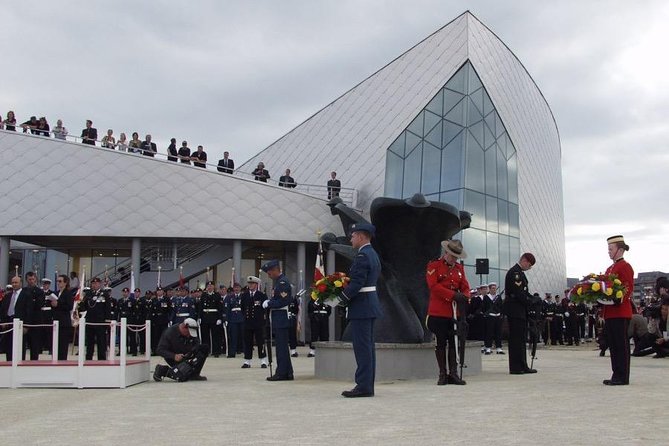
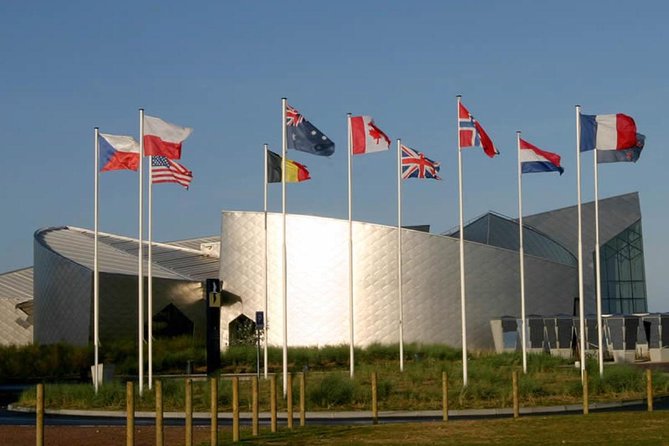
Courseulles-sur-Mer brings the longest scheduled stop of the morning, one hour at the Juno Beach Centre. This gives you more time to place the Canadian landings in their wider setting.
The museum stop balances the outdoor locations. At the beaches, your attention naturally goes to the shore, roads, houses, and open ground. At the Juno Beach Centre, you can spend more time with exhibits and explanations. The result is a better mix than a day made up only of brief roadside pauses.
One hour is useful, but it is not unlimited. If you like reading every panel and examining every display, you may want more time than the schedule allows. The tradeoff is that you still get to visit the cemetery, Abbey of Ardennes, and Carpiquet on the same day.
This is also a good point to ask your guide questions. The small group makes that easier, and the guides are praised for handling detailed questions. I would write down any family names or units you want to investigate before leaving Bayeux.
Same base, a different kind of day:
- Omaha and Band Of Brothers Full Day Tour
★ 5.0 · 1,104 reviews - Omaha Beach D-Day Experience – Afternoon group tour from Bayeux
★ 5.0 · 1,088 reviews - Omaha and Utah beaches
★ 5.0 · 1,085 reviews - Normandy Battlefields Tour – American Sites (A3)
★ 5.0 · 876 reviews
Beny-sur-Mer Canadian War Cemetery
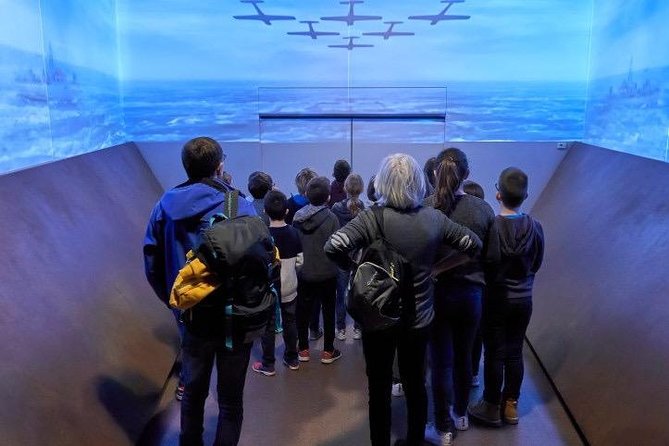
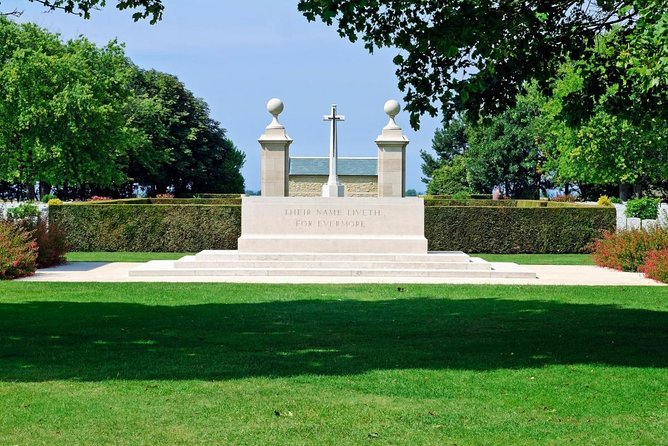
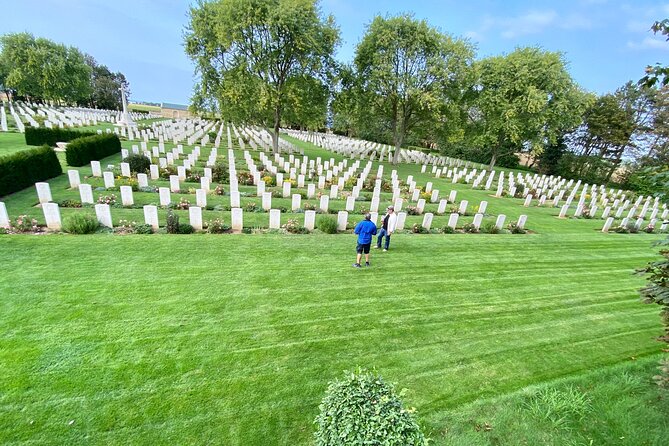
At Beny-sur-Mer Canadian War Cemetery, you have about 30 minutes. The stop is quiet and direct, with no need for a large presentation to make an impression.
Cemeteries can change the tone of a battlefield day. Earlier stops deal with landings, positions, and movement. Here, the scale becomes personal. The names and dates on the headstones remind you that the operation was carried out by individuals, many of them very young.
Thirty minutes is enough for a respectful visit, though it may feel short if you want to find a particular grave. If you have a family connection, bring the name and details with you. One guide has helped connect a family story to a landing place, and another made an extra cemetery visit for a family group. Again, extra time or a detour depends on the day and should not be assumed.
This stop is one of the tour’s strongest reasons to book. You get more than military geography. You get a place for remembrance.
The Abbey of Ardennes near Caen
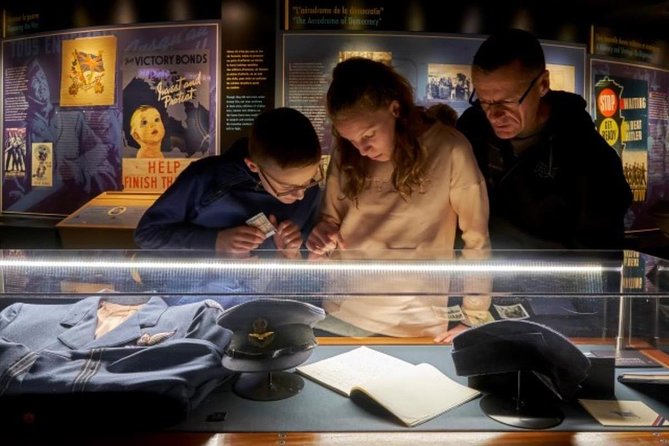
The route then turns inland toward Caen and the Abbey of Ardennes. The planned visit lasts about 30 minutes.
The abbey adds a different setting to the day. It is not another beach or museum, and it helps show that the Canadian campaign moved through villages and inland positions after the landings. Your guide can connect the site to the fighting around Caen and the events that followed D-Day.
The stop is short, so you should expect a focused explanation rather than a long architectural visit. The emotional weight of the location also means that the guide’s tone matters. The best parts of this tour seem to come from guides who honor the subject without turning every moment into a lecture.
This is a useful stop for anyone who wants to understand the weeks after June 6, not only the first hours on the sand. The Canadian role was not finished when the landing ended, and the inland route makes that clear.
Carpiquet and the Canadian push inland
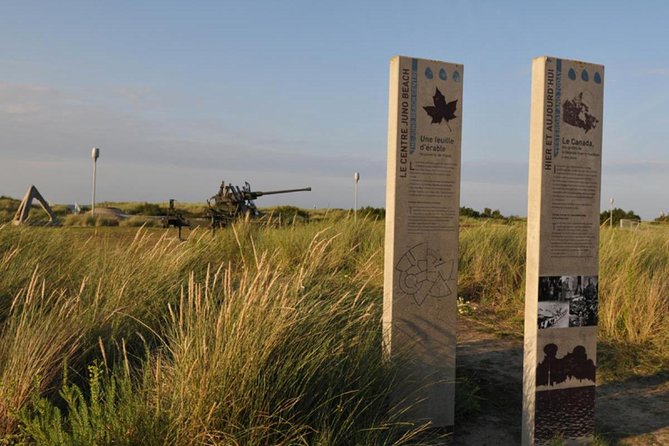
The final listed stop is Carpiquet, where you learn about the airport liberated by Canadian forces. The visit lasts about 20 minutes, making it the briefest stop of the day.
Carpiquet helps complete the movement from coast to inland objectives. By this stage, you have seen the landing sector, a museum, a cemetery, and the abbey. The airfield gives the day another military goal to consider.
Twenty minutes is enough for a concise explanation, but not for a long exploration. I would treat this as a final battlefield briefing rather than a major standalone attraction. Its value comes from how it completes the route.
The return to Place du Québec brings the day back to Bayeux. Since the activity ends where it starts, you can plan your evening without arranging a separate pickup.
What the $167.76 price really covers
At $167.76 per person, this is not the cheapest way to see Normandy. The price makes more sense if you value a small group, an English-speaking guide, and a full route that would be awkward to organize independently in one day.
You are paying for the vehicle, the guide, and the structure of the day. Admission is listed as free at each stop, so the main value is not bundled entrance tickets. It is the local interpretation and the time saved moving between places.
A rental car could cost less for a group, but you would need to plan the route, understand the Canadian sectors, find the sites, and provide your own explanations. You would also lose the chance to ask Eric, Kate, or Alex about units, family connections, and the relationship between each location.
The price is harder to justify if you want long museum visits, a relaxed lunch, or an unhurried day. Lunch and soft drinks are not included, and the schedule is full. Bring money or food for the midday break, since no meal is supplied.
The guides make the difference
The most important part of this experience is not the vehicle. It is the guide.
Eric has been praised for making the events feel real, answering questions, sharing individual soldier stories, and honoring the Canadian contribution. Kate has been praised for explaining strategy, successes, and setbacks clearly. Alex has shown a willingness to connect the tour to a family member’s wartime story.
Those strengths matter because D-Day tours can become a blur of dates and place names. A guide who explains why a site mattered, who fought there, and how it fits the next stop gives the day shape.
I would still keep expectations realistic. You cannot choose your guide from the information provided, and special access or extra stops are not guaranteed. But the company’s guides have shown a strong pattern of personal, serious presentation.
The tone is also worth noting. This is a tour about a terrible period, but the guide does not need to make it cold or grim. The best experience will give you room for emotion while still explaining the military choices and consequences.
Who will get the most from this day
I would recommend this tour most strongly if you are Canadian, have a family connection to the Normandy campaign, or want a focused introduction to Canada’s part in D-Day.
It also suits anyone based in Bayeux who does not want to drive. The route covers several villages and inland locations, and the air-conditioned vehicle keeps the day practical.
The tour is a good fit for people who like context. You will not simply stop for a photo and move on. The goal is to understand how Juno Beach connects to the campaign around Caen, the cemetery, the abbey, and Carpiquet.
It may not suit you if you want a broad tour covering every Allied beach. This is specifically centered on Canadian sites. It may also disappoint if you prefer to spend half a day inside one museum or visit each cemetery at length.
Most people can participate, service animals are allowed, and the meeting point is near public transportation. The small group should help keep the day manageable, but the itinerary still involves several stops and time outside.
Practical choices before departure
Wear comfortable shoes and prepare for changing weather. The schedule includes coastal and inland stops, with several short visits where you will want to step out, listen, and look around without fuss.
Plan your questions in advance. If you know a relative’s regiment, landing area, or cemetery, bring those details. The guides have shown that they can make the subject more personal when you provide a clear family link.
Keep your lunch plans flexible. Since food is not included, carry something or be ready to arrange food during the day. The supplied details do not promise a set restaurant stop.
The tour is offered in English and uses a mobile ticket. Confirmation arrives at booking. Free cancellation is available until 24 hours before the start time, but changes or cancellations inside that window are not accepted for a refund. The activity also requires a minimum number of participants, and if that number is not reached, you are offered another date, another experience, or a full refund.
Should you book the Canadian D-Day tour?
Book it if you want a concentrated Canadian route with a small group and a guide who can put personal stories beside military facts. The combination of Juno Beach, the Juno Beach Centre, Beny-sur-Mer, the Abbey of Ardennes, and Carpiquet gives you a solid full-day picture of Canada’s role.
Skip it if your priority is free time, a long lunch, or a slow museum visit. The schedule is busy, and the short stops mean you must accept a little structure.
For most people staying in Bayeux, I think the value is strongest in the guide and the connections between sites. You can see beaches on your own, but understanding how those beaches link to the inland battle is harder. This tour gives you that thread in one practical day.
FAQ
Where does the Canadian D-Day tour begin?
The tour begins at Place du Québec, Place du Québec, 14400 Bayeux, France.
What time does the tour start?
The scheduled start time is 8:30 a.m.
Where does the tour end?
The activity ends back at the meeting point in Bayeux.
How long does the tour last?
The full-day experience lasts approximately eight to nine hours.
How many people can join the tour?
The tour has a maximum of eight participants.
Is lunch included?
No. Lunch and soda or other soft drinks are not included.
Is the tour offered in English?
Yes. The experience is offered in English.
Can I cancel for a full refund?
Yes, if you cancel at least 24 hours before the experience start time. Cancellations or changes made less than 24 hours beforehand are not accepted for a refund.
Just added in Bayeux
- Small Group Guided D-Day Tour and Mémorial de Caen Museum★ 5.0 · 237 reviews
- Private Day Tour including Normandy Landing Beaches & Battlefields from Caen★ 5.0 · 53 reviews
- Normandy: Private tour D-Day landing beaches American sector★ 5.0 · 62 reviews
- Guided Tour in an Old Convertible Car on the Côte de Nacre★ 5.0 · 66 reviews
- Mémorial de Caen Museum Admission and Guided Tour of D-Day Sites★ 4.5 · 275 reviews
- WW2 Jeep or Dodge truck tour of the Omaha Beach site★ 5.0 · 51 reviews
- 2- to 6-hour sidecar excursion on the D-Day Landing Beaches★ 5.0 · 131 reviews
- Private American landing beaches tour from Bayeux★ 5.0 · 36 reviews
Tours in Bayeux, compared.
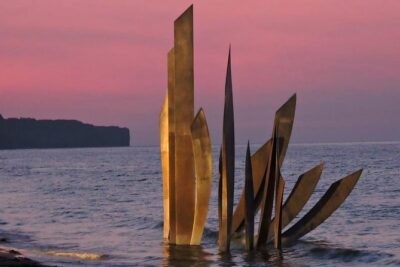
Normandy American D-Day Beaches Full Day Tour from Bayeux
Read our review →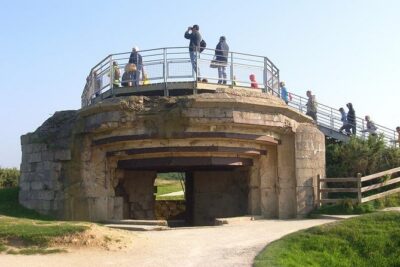
Normandy American D-Day Experience – Group tour from Bayeux
Read our review →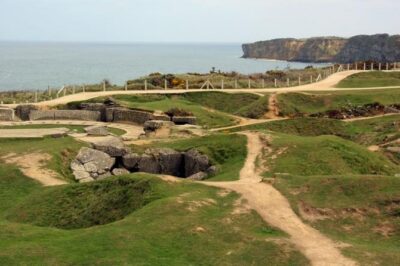
Normandy Beaches Half-Day Afternoon Trip from Bayeux (A2)
Read our review →
Omaha Beach D-Day Experience – Afternoon group tour from Bayeux
Read our review →
Normandy Battlefields Tour – American Sites (A3)
Read our review →
American D-Day Sites in Normandy Half-Day Tour
Read our review →Browse the lists this tour appears in