
Reviewed · NORMANDY D-DAY TOURS
Omaha Highlights Tour with a DDAY expert from Bayeux
Pointe du Hoc, Omaha Beach, and the American Cemetery tell three different parts of the D-Day story in a single morning or afternoon. You begin with the cliff assault, move to the beach where American troops faced intense fire, then finish among the white crosses overlooking the Channel. The sequence gives you a clear sense of how the operation unfolded.
I like the small maximum of eight people, which gives your guide room to answer questions and adjust the discussion to your interests. I also like the mix of guided explanation and quiet time, since you are not rushed from one photo stop to the next. The main drawback is simple: four hours can only introduce Normandy’s landing beaches. If you want museums, German defenses, British and Canadian sectors, or a slower study of the battle, you need a full-day tour.
Key points to know before you book
- Pointe du Hoc gives you the most dramatic setting, with bomb craters, cliff edges, and a clear explanation of why the site mattered to the Allied plan.
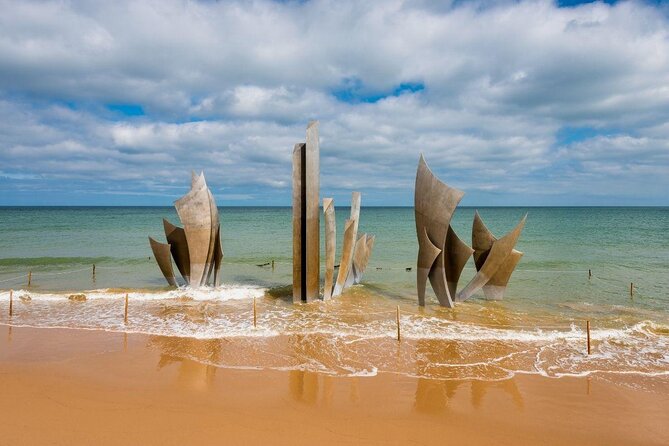
- Omaha Beach puts the battle at ground level, where your guide explains the landing of the 1st and 29th American Infantry Divisions.
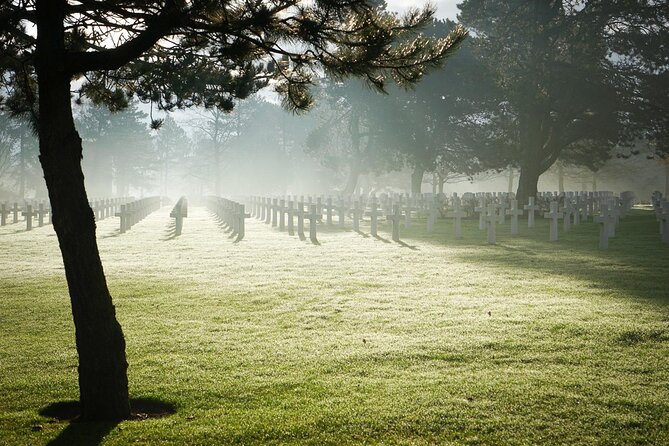
- The American Cemetery is the emotional center, with time to read names, walk among the graves, and look down toward Omaha Beach.
- The eight-person limit matters, especially if you want to ask about a relative, a particular unit, or a detail that catches your attention.
- Guides vary, but the strongest names in the feedback include Eric, Arthur, Julie, Victor, and Adrien, each praised for clear explanations and personal storytelling.
- At $102.58 per person, the tour offers a practical introduction when your time in Bayeux is short, but it is not a substitute for a full day in Normandy.
Why this half-day route works
The tour leaves from Parking Québec-Orangerie at Place du Québec in Bayeux and returns there. You spend about four hours on the road and at the sites, with roughly 45 minutes at Pointe du Hoc, 45 minutes at Omaha Beach, and one hour at the American Cemetery.
That order makes sense. Pointe du Hoc gives you the military problem first: an armed German position on high ground above the coast. Omaha then shows the human cost of reaching shore. The cemetery offers a quiet place to consider what the operation cost.
I like this structure because you are not trying to absorb every Normandy site at once. You get three strong images that fit together. Your guide supplies the links between them, explaining what commanders needed, what soldiers faced, and what followed.
The vehicle is described as comfortable and air-conditioned, and the group size is capped at eight. That is a useful middle ground. You get the efficiency of shared transport without the feel of a large coach group. Several guides also use maps, visual aids, and prepared material, which can help you understand distances and positions that are hard to picture from the ground.
Still, keep your expectations in check. This is a highlights outing, not a military seminar. You will not have time for every bunker, museum, battery, or beach sector. The short format is its strength if you have limited time, and its limit if Normandy is the main purpose of your trip.
Other days on the landing beaches from Bayeux:
- Normandy American D-Day Beaches Full Day Tour from Bayeux
★ 5.0 · 2,103 reviews - Normandy American D-Day Experience – Group tour from Bayeux
★ 5.0 · 1,566 reviews - Normandy Beaches Half-Day Afternoon Trip from Bayeux (A2)
★ 4.5 · 1,116 reviews
Pointe du Hoc and the cliff assault
Pointe du Hoc is the tour’s most striking physical stop. It is the one place on this route where the landing took place beneath a cliff, making the terrain part of the story. Your guide explains why this position mattered to Operation Overlord and what the Allied forces hoped to accomplish there.
Allow yourself time to look beyond the headline facts. The craters and broken ground help you understand how heavily the site was attacked. The cliff edge gives you a strong sense of the challenge faced by the men who had to climb under fire.
This is where a guide adds real value. On your own, you can see the setting, but it is harder to know which features mattered, how the position fit into the wider plan, or why success here was considered important. Guides such as Eric and Arthur are praised for using clear explanations and relevant stories rather than simply naming dates.
You have about 45 minutes here. That is enough for an introduction and a walk around the main area, but not enough for a leisurely study of every detail. Wear shoes suitable for uneven ground, and do not assume that a short stop means effortless walking. The site is outdoors, and weather can change your comfort quickly.
Pointe du Hoc also sets the tone. This is not a polished memorial built to soften the past. It is a scarred military site. The rough ground and open views make the tactical story easier to grasp, but they can also make the visit feel exposed in poor weather.
Omaha Beach at ground level
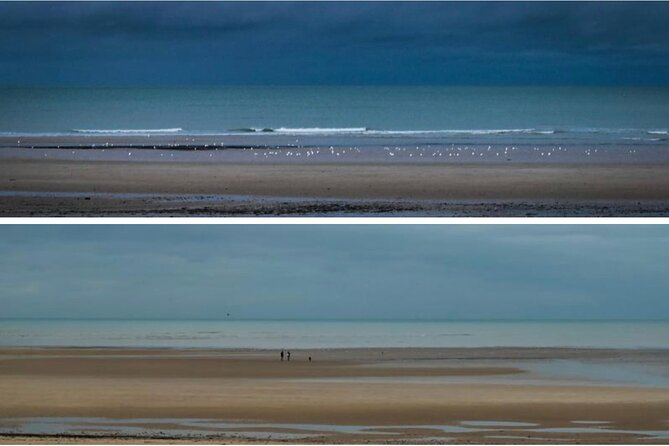
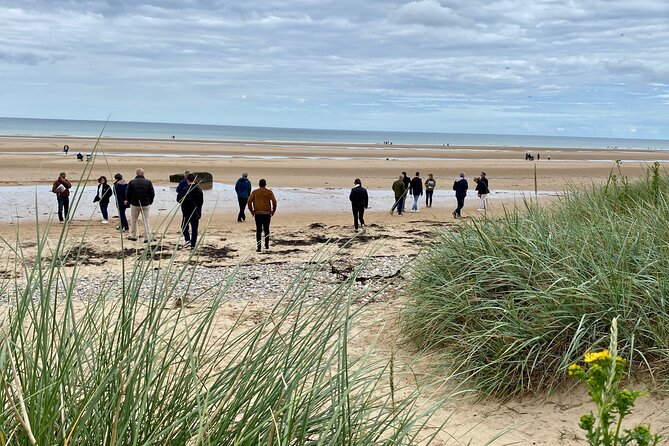
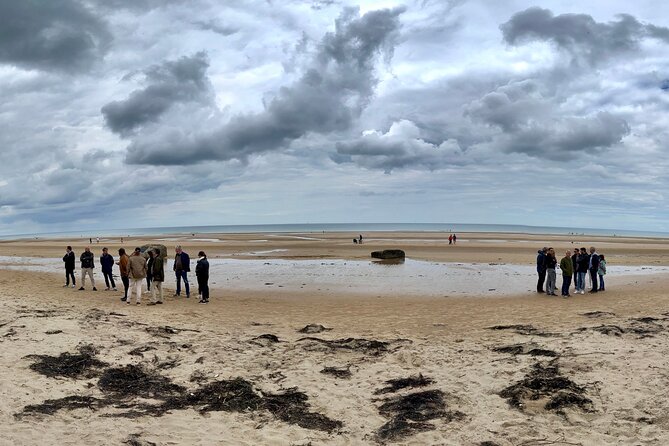
Omaha Beach is where the tour moves from the high ground to the shoreline. On June 6, 1944, troops from the 1st and 29th American Infantry Divisions landed here. The beach later became known as Bloody Omaha because of the heavy losses suffered during the assault.
Your guide explains what the soldiers faced and how the beach functioned within the invasion. That context matters. Without it, Omaha can look like a peaceful stretch of coast. With the battle explained, the wide sand and open approach become part of the lesson.
I would pay close attention here to the distance between the water and the higher ground. Your guide may use visual aids or maps to make the battle positions easier to follow. Several guides are praised for bringing the events to life through individual stories, not just broad military movements.
The planned stop lasts about 45 minutes. That gives you time to stand on the beach, take in the view, and listen without turning the visit into a long beach walk. In rain, the experience may be less comfortable, although one guide, Arthur, is specifically praised for continuing the explanation outdoors while also offering dry alternatives.
This is also the point where the short tour may feel most limited. Omaha deserves time, and the human scale of the assault can raise many questions. You may leave wanting to know more about particular units, the German defenses, or the French civilians who lived through the occupation. The guide can provide a useful starting point, but you will need another tour or museum visit for a fuller account.
The American Cemetery at Colleville-sur-Mer
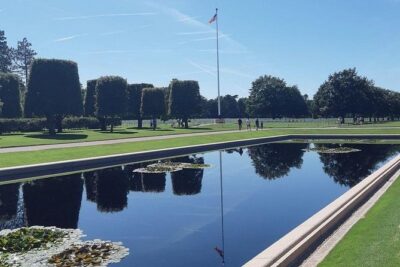
The American Cemetery is the longest stop, at about one hour, and it is likely to be the most affecting. It overlooks Omaha Beach and is designed as a place of remembrance rather than a battlefield walk. The setting links the graves to the shore below without turning the cemetery into a spectacle.
Your guide helps you notice the symbolism and explains how the cemetery connects to the landing. You have time to read the names of missing soldiers and walk through the grounds. That personal scale matters. A list of casualty figures can feel abstract, while a name on a wall or a row of crosses makes the cost easier to face.
Timing can matter here. One guide helped a group reach a memorial ceremony that included Taps and the lowering of the flag, an especially moving moment when it occurs within your visit. The exact ceremony timing is not promised, so do not book this tour solely for that possibility. Treat it as an added benefit if the schedule lines up.
The cemetery is also a good place to slow down. At Pointe du Hoc and Omaha, your attention is pulled toward terrain and tactics. Here, you can step away from the military plan and think about individual lives. If you have a family connection to the Second World War, tell your guide early. Guides such as Victor and Arnold are praised for adapting explanations to personal interests.
You should also remember that this is a working place of remembrance. Keep your voice low, follow site rules, and give other people space. The guide’s role is useful, but the cemetery should not feel like a classroom every minute.
Same base, a different kind of day:
- Omaha and Band Of Brothers Full Day Tour
★ 5.0 · 1,104 reviews - Omaha Beach D-Day Experience – Afternoon group tour from Bayeux
★ 5.0 · 1,088 reviews - Omaha and Utah beaches
★ 5.0 · 1,085 reviews - Normandy Battlefields Tour – American Sites (A3)
★ 5.0 · 876 reviews
The guides make the difference
The company uses several guides, so your exact style will depend on who leads the outing. Eric is praised for prepared presentations, strong knowledge of the sites, and an ability to adjust the visit to the group. Arthur is described as professional, personable, and patient in wet weather. Julie is praised for combining humor with stories about the people affected by the invasion.
Other guides bring a more personal connection. Adrien grew up in Normandy, and his family story includes a great-grandfather who was taken prisoner during the Second World War and brought to Spain. Arnold is part of a multigenerational Normandy family. These details can give the discussion a local angle, though you should not assume every guide will tell the same stories.
Victor is a useful choice for families. A family group brought a 17-month-old child and a seven-year-old, and the company provided a car seat and booster seat. That does not mean every family need will be covered automatically, but it shows that the small vehicle format can work for parents with young children.
One point deserves a fair warning. A guide who talks constantly may leave little room for conversation among the group. One guest felt the tight schedule made it hard to discuss the French civilian experience under occupation. If that subject matters to you, ask about it directly. The tour focuses most strongly on the American military story and the sites connected to it.
Is $102.58 good value?
At $102.58 per person, this is not the cheapest way to see the Normandy beaches. You are paying for transport from Bayeux, a specialist guide, a small group, and an efficient route through three important locations.
I think the price makes sense if you have only half a day. Hiring separate transport or trying to connect these sites on your own can take more planning, and you would lose the guide’s maps, stories, and explanation of how the locations relate. The value is strongest when your schedule is tight and you want the main American D-Day sites handled in one outing.
The value is weaker if you already have a car, several days in Normandy, and a strong background in the invasion. In that case, a full-day option may give you better use of your time. You could see more sectors and spend longer at Omaha and the cemetery.
The tour is also booked about 71 days ahead on average, which suggests you should not leave it until the last moment if your dates are fixed. Confirmation arrives at booking, and the activity is offered in English.
Who should choose this tour?
This outing suits you if you are staying in Bayeux, have roughly four hours, and want a clear introduction to the American landing sites. It is especially useful for first-time visitors, military history fans, and anyone tracing a family member’s service.
It also works well for families who want a focused visit rather than a full day of battlefield stops. The vehicle format, small group, and reported provision of child seats can make the outing easier, though you should confirm any specific needs when booking.
You may want another option if your main interest is the British, Canadian, or German side of the campaign. The route is tightly centered on Pointe du Hoc, Omaha Beach, and the American Cemetery. It also may not suit you if you prefer to spend hours at one site instead of moving between three.
The outdoor setting calls for practical clothing. Bring comfortable shoes and a rain layer. Most people can take part, and service animals are allowed, but the information provided does not promise that every path or vehicle step is easy for every mobility level. One person specifically suggested a step tool for getting into the van, so ask about access if that is important to you.
Booking, timing, and cancellation
The meeting point is Parking Québec-Orangerie, Place du Québec, 14400 Bayeux. The tour returns to the same point, and it is near public transportation.
You can cancel for a full refund up to 24 hours before the local start time. Changes or cancellations inside that 24-hour window are not accepted for a refund. The tour also requires a minimum number of people. If that minimum is not reached and the company cancels, you will be offered another date or experience, or a full refund.
Check your date carefully before booking. A mistaken date is not covered by the cancellation terms, and one missed booking resulted in no refund. That is an easy problem to avoid with a quick calendar check.
Should you book it?
Book this tour if you want the strongest three-stop introduction to American D-Day sites from Bayeux, especially when time is short. The route is sensible, the eight-person limit is valuable, and the cemetery gives the outing a memorable final note.
Skip it if you need a full account of Normandy or want to explore several landing sectors at a slow pace. For everyone else, this is a practical and serious half-day choice. You will leave with a clearer sense of the ground, the plan, and the human cost, even if you later decide that Normandy deserves another full day.
FAQ
Where does the Omaha Highlights Tour begin?
It begins at Parking Québec-Orangerie, Place du Québec, 14400 Bayeux, France.
Where does the tour end?
The activity ends back at the meeting point in Bayeux.
How long does the tour last?
The tour lasts approximately four hours.
Which sites are included?
The tour visits Pointe du Hoc, Omaha Beach, and the American Cemetery at Colleville-sur-Mer.
How much time is planned at each stop?
The schedule allows about 45 minutes at Pointe du Hoc, 45 minutes at Omaha Beach, and one hour at the American Cemetery.
How many people can join the tour?
The tour has a maximum of eight participants.
Is the tour offered in English?
Yes. The experience is offered in English.
Are service animals allowed?
Yes, service animals are allowed.
Can I cancel for a full refund?
Yes, if you cancel at least 24 hours before the experience start time. Cancellations or changes made less than 24 hours before the start are not refunded or accepted.
Just added in Bayeux
- Small Group Guided D-Day Tour and Mémorial de Caen Museum★ 5.0 · 237 reviews
- Private Day Tour including Normandy Landing Beaches & Battlefields from Caen★ 5.0 · 53 reviews
- Normandy: Private tour D-Day landing beaches American sector★ 5.0 · 62 reviews
- Guided Tour in an Old Convertible Car on the Côte de Nacre★ 5.0 · 66 reviews
- Mémorial de Caen Museum Admission and Guided Tour of D-Day Sites★ 4.5 · 275 reviews
- WW2 Jeep or Dodge truck tour of the Omaha Beach site★ 5.0 · 51 reviews
- 2- to 6-hour sidecar excursion on the D-Day Landing Beaches★ 5.0 · 131 reviews
- Normandy U.S. D-Day Sites Half Day Tour From Bayeux★ 5.0 · 325 reviews
Normandy D-Day Tours, compared.

Normandy D-Day Sites & Cemetery Day Trip from Paris with Lunch
Read our review →
Normandy D-Day Small-Group Day Trip with Omaha Beach, Cemetery & Cider Tasting
Read our review →
Normandy D-Day Beaches and American Cemetery Day Trip from Paris
Read our review →
Normandy American D-Day Beaches Full Day Tour from Bayeux
Read our review →
Normandy American D-Day Experience – Group tour from Bayeux
Read our review →
Normandy Beaches Half-Day Afternoon Trip from Bayeux (A2)
Read our review →
Omaha Beach D-Day Experience – Afternoon group tour from Bayeux
Read our review →Browse the lists this tour appears in