
Reviewed · TOURS IN BAYEUX
Guided Tour in an Old Convertible Car on the Côte de Nacre
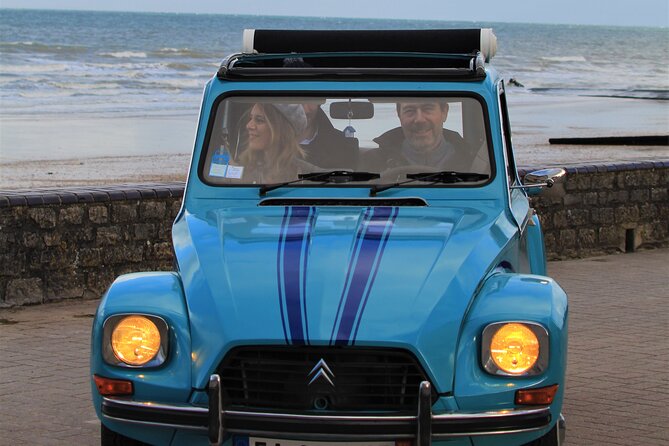
The best part of this tour is the car. A polished, open-top Citroën Dyane turns a simple drive along Normandy’s coast into a slow, friendly outing where the breeze, old villas, village lanes, and sea all become part of the experience. Bernard, the guide, adds the stories that give each stop a purpose.
I like the small-scale private format, since you travel only with your own group and can ask questions as you go. I also like the mix of architecture, coastal scenery, and wartime history rather than a single narrow theme. The main consideration is the price, $108.61 per person, and the open car: the ride is weather-dependent in feel, and the three-hour route may seem too leisurely if you want a major museum or battlefield tour.
Key points to know before booking
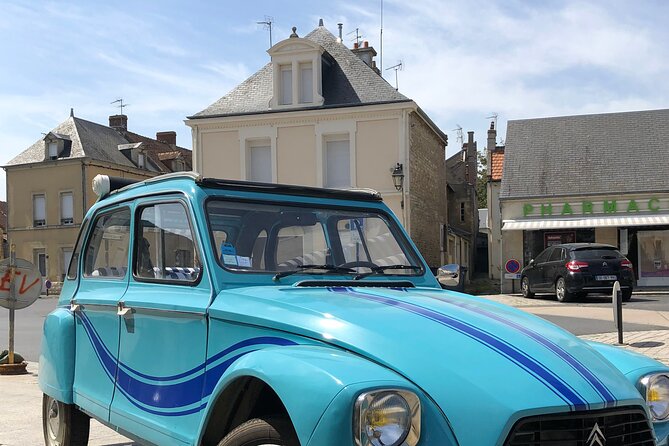
- A classic Citroën Dyane leads the experience: The car is comfortable, carefully maintained, and part of the attraction.
- Bernard guides the afternoon: His approach combines local stories, architecture, Second World War connections, and conversation.
- You cover many coastal communities: Colleville-Montgomery, Hermanville-sur-Mer, Luc-sur-Mer, Langrune-sur-Mer, Lion-sur-Mer, and Saint-Aubin-sur-Mer all appear on the route.
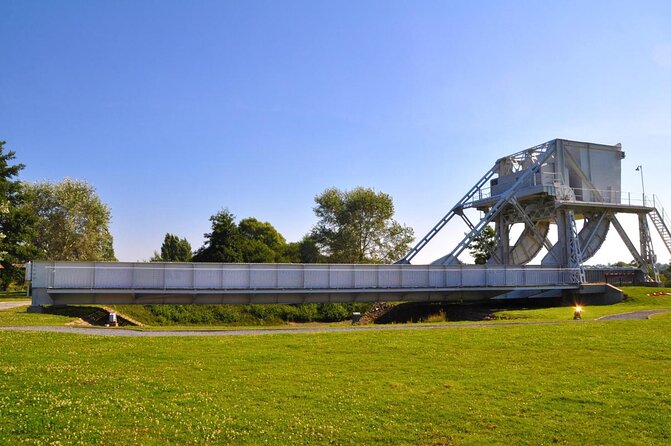
- Pegasus Bridge is included: You cross the bridge and pass the Gondrée café during a short stop.
- This is a private three-hour outing: Only your group participates, with the tour beginning and ending in Ouistreham.
- The focus is discovery, not monument collecting: Several stops involve slow drives, short walks, village streets, sea walls, and close looks at old houses.
Why the Citroën Dyane makes this coast feel different
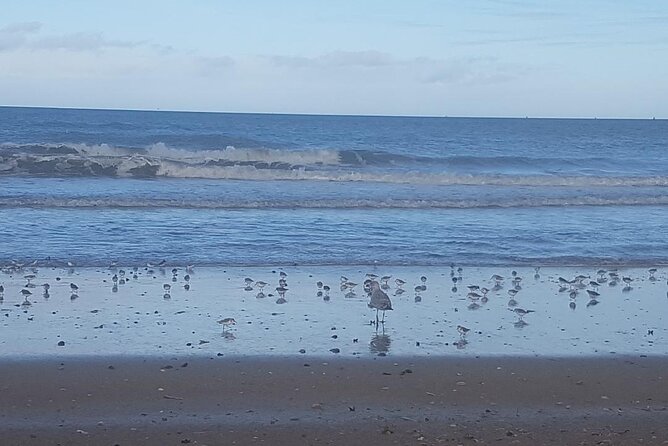
You can see the Côte de Nacre by bus, taxi, rental car, or bicycle. The Dyane gives you a different pace. It is small enough for village streets and open enough to make the coast feel immediate. You hear the road and feel the air. The car itself also gives Bernard an easy way to explain how older vehicles, local roads, and everyday French travel fit into the character of the outing.
The car is not just decoration. It shapes the whole mood. The ride feels more like a personal excursion than a standard sightseeing circuit. One past outing even included the chance to open the roof during the ride, though you should confirm what is possible on your own date.
I would not book this for speed. The route takes about three hours and covers ten listed stops, so much of the time is spent moving between places, listening, and looking. That is the point. You get a broad introduction to the coast rather than a long visit inside one attraction.
The private setup matters here. Bernard can respond to your questions and adjust the conversation toward architecture, local life, or the Second World War. A private ride also avoids the awkwardness of keeping up with a large group in narrow streets or waiting for strangers to finish taking pictures.
Other trips people book in Bayeux:
- Normandy American D-Day Beaches Full Day Tour from Bayeux
★ 5.0 · 2,103 reviews - Normandy American D-Day Experience – Group tour from Bayeux
★ 5.0 · 1,566 reviews - Normandy Beaches Half-Day Afternoon Trip from Bayeux (A2)
★ 4.5 · 1,116 reviews
Starting at Saint-Samson in Ouistreham
The meeting point is at 2 Place Albert Lemarignier in Ouistreham, with a 2:00 pm start. The experience begins near Eglise Saint-Samson, where Bernard presents the car, explains the afternoon, and gives instructions for the ride.
This opening is useful because you get your bearings before setting off. You can learn how the car works, settle into the seating, and ask any immediate questions. The church also places you in the old part of Ouistreham, a fitting setting for an outing built around local buildings and coastal history.
The first presentation lasts about 15 minutes. Do not expect a long church tour based on the information provided. Think of it as the welcome and orientation before the real circuit begins.
Colleville-Montgomery and Hermanville-sur-Mer
The first coastal stop is Colleville-Montgomery, where the route focuses on remarkable villas and the sea wall. The villas are an early clue to the tour’s style. Bernard is not simply pointing out beaches. He is helping you read the built environment, including the way homes face the shore and how seaside towns developed.
You have about 15 minutes here. That is enough for a quick look and explanation, but not a lengthy architectural study. If you enjoy photographing facades, keep your camera ready and listen for the details that make one villa different from another.
Hermanville-sur-Mer gets about 30 minutes, the longest stop on the early part of the route. Here the emphasis shifts to Art Nouveau, Baroque, and Anglo-Norman architecture. That combination gives the stop real range. You can compare decorative design, older regional forms, and buildings shaped by changing tastes.
I especially like this part for visitors who usually walk past old houses without knowing what to notice. The tour encourages you to look at details, proportions, and styles. You may leave with a sharper eye for the villas you see later along the coast.
The smaller seaside towns from Luc-sur-Mer to Saint-Aubin
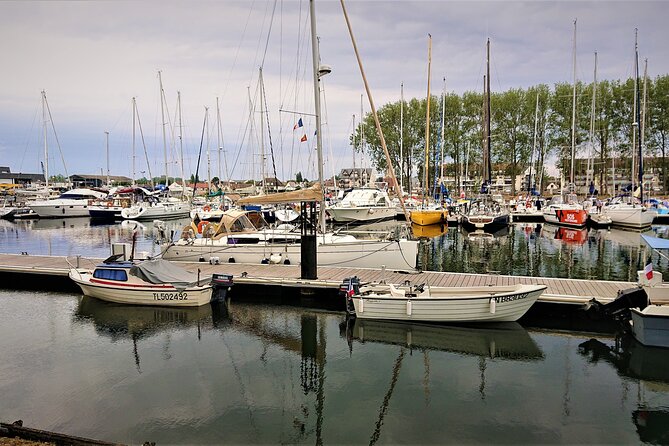
Luc-sur-Mer offers 20 minutes through picturesque lanes and along the sea wall. The route slows down here, letting you see how the town works away from the main road. The sea wall gives you a direct coastal view, while the smaller streets show a more domestic side of the resort.
Langrune-sur-Mer is a shorter 10-minute passage through lanes, near Tournebu Castle, and along the sea wall. This is a quick introduction rather than a full stop with time for a long walk. The appeal lies in the sequence: one village flows into the next, and you begin to understand the Côte de Nacre as a chain of distinct communities rather than one continuous resort.
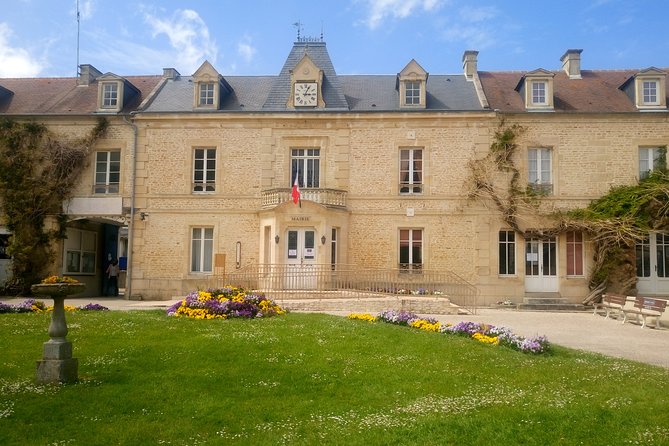
Lion-sur-Mer receives about 20 minutes. You pass through small streets, see the town hall, and go by the castle. Again, the value is in the connection between public buildings, grand homes, and ordinary streets. Bernard’s commentary helps turn a drive into a lesson in how these communities were built.
Saint-Aubin-sur-Mer is a 10-minute stop centered on houses by the sea. It is brief, but the theme is clear. Coastal architecture is not only about grand villas. The relationship between homes and the water tells you something about local life, resort development, and the changing use of the shoreline.
The short timings are both a strength and a limitation. You see many places in one afternoon, which is useful if you have limited time in Normandy. You will not have the freedom to wander deeply in every town. If you prefer long café stops or independent exploration, this route may feel tightly scheduled.
Same base, a different kind of day:
- Omaha and Band Of Brothers Full Day Tour
★ 5.0 · 1,104 reviews - Omaha Beach D-Day Experience – Afternoon group tour from Bayeux
★ 5.0 · 1,088 reviews - Omaha and Utah beaches
★ 5.0 · 1,085 reviews - Normandy Battlefields Tour – American Sites (A3)
★ 5.0 · 876 reviews
Douvres-la-Délivrande and the stories behind its buildings
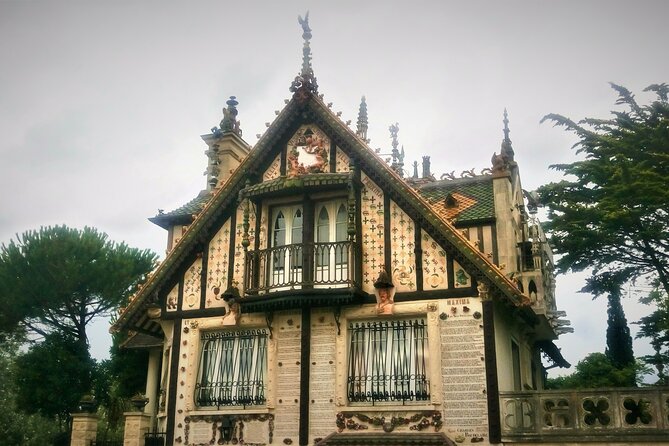
Douvres-la-Délivrande takes about 20 minutes and shifts the focus inland. The stop includes notable architecture, the stories connected to it, and the barony.
This is an important change of scene. The tour is not only a seaside drive. It also shows how the coast connects with nearby inland communities. You get another chance to compare buildings and hear how local history is tied to particular places.
The stop is especially useful for anyone who enjoys context. A building becomes more interesting when you know why it was built, who used it, or how it fits into the town. The supplied details do not promise entry into the barony, so expect an exterior-oriented visit unless Bernard tells you otherwise.
Pegasus Bridge and the Second World War connection
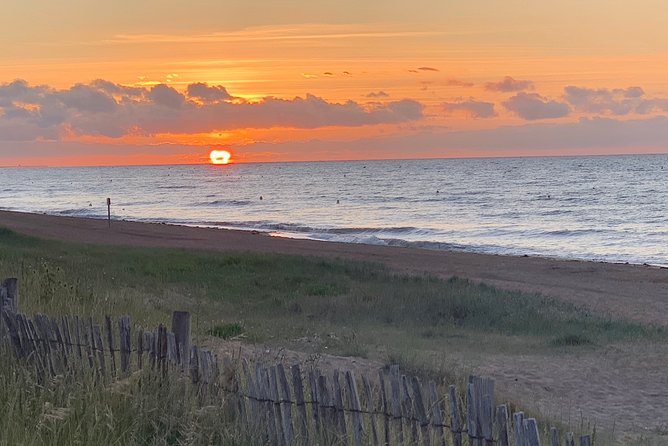
Pegasus Bridge is the route’s clearest wartime reference. You cross the bridge and pass in front of the Gondrée café, with about 10 minutes allocated to this section.
That is enough to connect the bridge with the wider history of the area, but it is not a museum visit. You should not expect an extended stop at the Pegasus Bridge museum or a full military-history lecture. The tour works better as a coastal and architectural circuit that includes an important Second World War site.
Bernard’s background in the region allows the wartime story to sit beside the architectural one. This balance is one of the tour’s strongest features. You can ask about the D-Day connection while still paying attention to the villages and houses around you.
If Pegasus Bridge is your main reason for coming to Normandy, I would choose a dedicated museum or battlefield tour instead. If you already plan to visit the major D-Day sites, this short crossing adds a useful local connection without taking over the afternoon.
Returning through Ouistreham’s old quarter
The return to Ouistreham takes about 20 minutes. The route follows the Orne, passes near the lighthouse, crosses the vehicle locks, and returns to the old district.
The final walk includes fishermen’s houses and Saint-Samson church. This gives the afternoon a satisfying shape. You begin near the church, travel through the coast and nearby villages, then return to the old quarter with a better sense of how the town relates to the water.
The Orne and the locks add a working-waterfront note to the seaside scenery. The route is not limited to holiday architecture. You also see signs of fishing, navigation, and the practical movement of boats and vehicles.
Because the activity ends back at the meeting point, you do not need to arrange a second pickup. That makes it easy to continue exploring Ouistreham afterward, though the provided details do not specify the exact end time beyond the approximate three-hour duration.
What $108.61 means in practical terms
At $108.61 per person, this is not a bargain transport service. You are paying for a private outing, a dedicated guide, the unusual car, and a route that links many towns in one afternoon.
The value is strongest for two people or a small group that wants personal attention. A standard rental car could cost less per person, but it would not provide Bernard’s commentary or the same easy access to local stories. You would also need to plan the route, drive, park, and interpret the architecture yourself.
The price is harder to justify if you only want a quick scenic drive. It is also less attractive for someone focused on one major site, such as Pegasus Bridge. For a couple marking a special occasion, an architecture fan, or a visitor who likes old cars and conversation, the cost makes more sense.
Group discounts are available, so check the final price for your party size. The tour is offered in English, and confirmation is sent at booking.
Who will enjoy this ride most
I would choose this experience if you like:
- Old cars with a real sense of character
- Quiet coastal roads and small towns
- Architecture explained in plain language
- Private tours where you can ask questions
- A light connection to Normandy’s wartime past
- Seeing places beyond the most famous stops
It suits couples, families, and small groups who want a relaxed afternoon. The open car also makes it memorable for a birthday, anniversary, or gift. One couple used it during a 30th anniversary trip, and the guide adapted well when their arrival was delayed.
You should think twice if you need a fully indoor activity, want a long museum visit, or dislike spending several hours in a compact vintage vehicle. The listing says most people can participate, and service animals are allowed. It is also near public transportation, but exact transport directions are not supplied.
Weather is worth considering. A convertible is part of the charm, but wind or rain can affect comfort. Bring a light layer, and confirm arrangements with Normandy Classic Tour if the forecast looks poor.
The guide makes the difference
Bernard is central to the experience. His role is not limited to naming towns. He connects architecture, local stories, coastal development, and the effects of the Second World War. His style also appears to be conversational, giving you room to exchange ideas rather than simply listen to a fixed script.
That matters on a route with many short stops. Without a guide, the villages might blur together. With clear explanations, the changes in architecture and town layout become easier to notice.
The most useful approach is to arrive with a few questions. Ask about the villas, the barony, the bridge, the locks, or the way D-Day affected the towns. The private format gives you a better chance to shape the discussion around your interests.
Should you book the Côte de Nacre Dyane tour?
Book it if you want a personal, unusual way to see Normandy’s coast and you value local explanation as much as famous sights. The classic Dyane, Bernard’s friendly guidance, the string of small seaside towns, and the return through old Ouistreham create an experience that feels more personal than a standard coach excursion.
Skip it if you want extended time at Pegasus Bridge, a full military-history program, or the lowest possible sightseeing cost. At $108.61 per person, the tour earns its price through the private setting, the guide, and the car. For the right person, the open-top ride and the chance to notice Normandy’s overlooked details are the whole point.
FAQ
Where does the tour begin?
It begins at 2 Place Albert Lemarignier, 14150 Ouistreham, France.
What time does the tour start?
The scheduled start time is 2:00 pm.
Where does the tour end?
The activity ends back at the meeting point in Ouistreham.
How long does the experience last?
The tour lasts approximately three hours.
Is the tour private?
Yes. Only your group participates in the activity.
Is the tour offered in English?
Yes, English is listed as an available language.
What vehicle is used?
The experience uses a classic open-top Citroën Dyane, also referred to as a Dyane or Diane in the supplied descriptions.
Does the route include Pegasus Bridge?
Yes. The route crosses Pegasus Bridge and passes in front of the Gondrée café.
Are service animals allowed?
Yes, service animals are allowed.
What is the cancellation policy?
You can cancel up to 24 hours before the start time for a full refund. Cancellations or changes made less than 24 hours before the start time are not accepted for a refund.
Just added in Bayeux
- Small Group Guided D-Day Tour and Mémorial de Caen Museum★ 5.0 · 237 reviews
- Private Day Tour including Normandy Landing Beaches & Battlefields from Caen★ 5.0 · 53 reviews
- Normandy: Private tour D-Day landing beaches American sector★ 5.0 · 62 reviews
- Mémorial de Caen Museum Admission and Guided Tour of D-Day Sites★ 4.5 · 275 reviews
- WW2 Jeep or Dodge truck tour of the Omaha Beach site★ 5.0 · 51 reviews
- 2- to 6-hour sidecar excursion on the D-Day Landing Beaches★ 5.0 · 131 reviews
- Private American landing beaches tour from Bayeux★ 5.0 · 36 reviews
- Private tour landing beaches from Bayeux★ 5.0 · 82 reviews
Tours in Bayeux, compared.
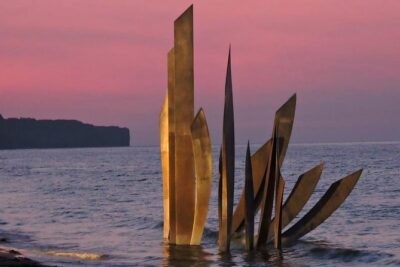
Normandy American D-Day Beaches Full Day Tour from Bayeux
Read our review →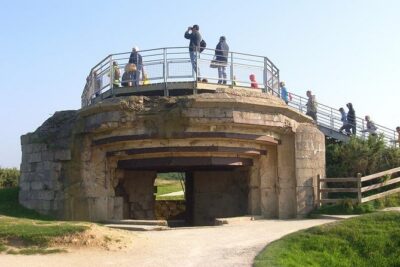
Normandy American D-Day Experience – Group tour from Bayeux
Read our review →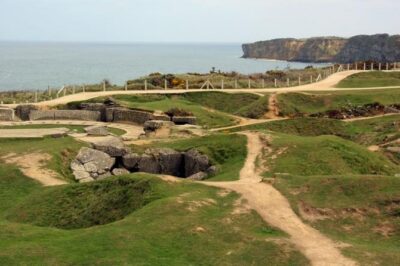
Normandy Beaches Half-Day Afternoon Trip from Bayeux (A2)
Read our review →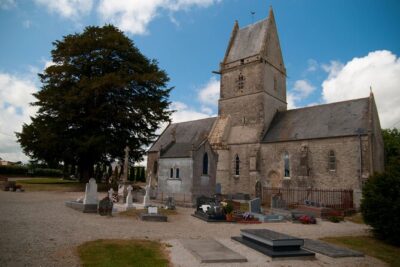
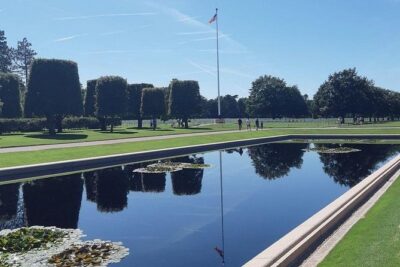
Omaha Beach D-Day Experience – Afternoon group tour from Bayeux
Read our review →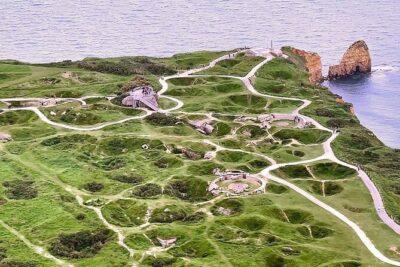
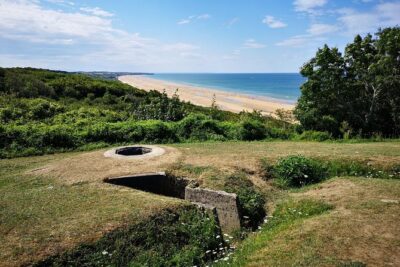
Normandy Battlefields Tour – American Sites (A3)
Read our review →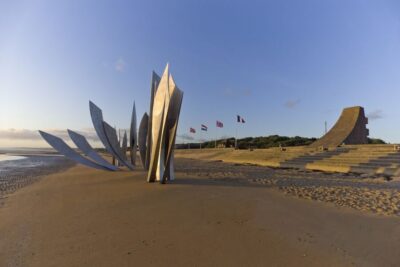
American D-Day Sites in Normandy Half-Day Tour
Read our review →Browse the lists this tour appears in