
Reviewed · BATTLEFIELD & WWII TOURS
Carcassonne During World War 2
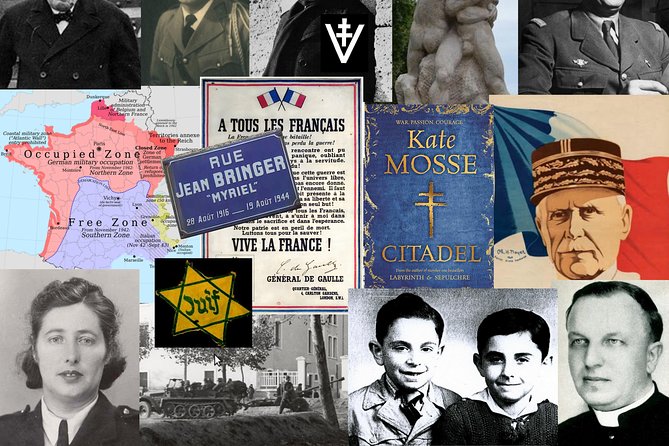
Carcassonne’s medieval walls draw the crowds, but this tour turns your attention to the less famous wartime story of the town below them. Paul leads you through Carcassonne between 1939 and 1945, using old black-and-white photographs to connect ordinary streets with resistance, repression, collaboration, and liberation.
I like the local focus and the way national events are tied to real people from Carcassonne. I also like the period photographs, which give you something concrete to look at instead of asking you to remember a string of dates. The main caution is group size: one outing had 23 people, making narrow streets and quiet listening more difficult, so it is worth confirming the expected number before booking.
Key points to know before you book
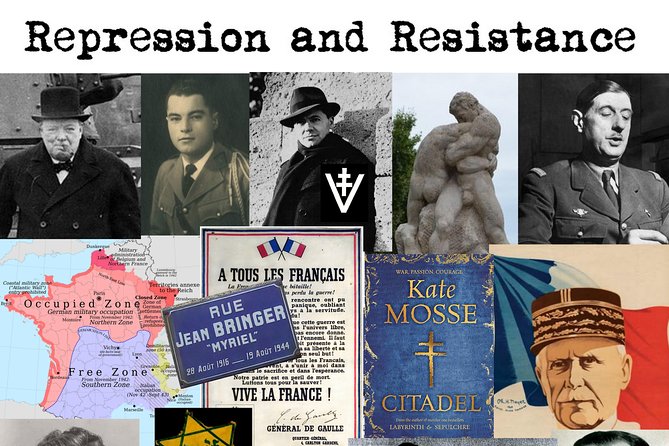
- Local World War II stories: Learn how Carcassonne and its residents faced occupation, Vichy rule, resistance, and liberation.
- Paul’s visual approach: Period photographs and historical material help you compare the wartime town with the streets you see today.
- A walk through La Bastide: The route gives attention to the lower town, an area often passed over by people heading straight to La Cité.
- A serious but human tone: The tour covers heroic acts, betrayal, repression, and the difficult choices made by ordinary people.
- Good value at $24.19: For about two hours and 15 minutes of guided history, the price is modest, especially for people interested in World War II.
- Morning start: Meet at Brasserie à 4 Temps at 9:30 a.m. and finish at the Resistance memorial at Square Gambetta.
Carcassonne beyond the medieval walls
Most first visits to Carcassonne follow an obvious route: admire La Cité, walk along the fortifications, take photographs, and perhaps stop for lunch. That is worthwhile, but it can leave the modern town’s wartime story untouched.
This walking tour takes a different path. It focuses on Carcassonne between 1939 and 1945, with particular attention to the streets, people, and memorials of the lower town. You are not simply given a general lesson about France in World War II. You are shown how national events affected one particular place.
That local scale is the tour’s strongest feature. The Fall of France, the division between occupied and non-occupied zones, and the later invasion of the Free Zone can sound like textbook headings. Here, those events become the setting for decisions made by local men and women.
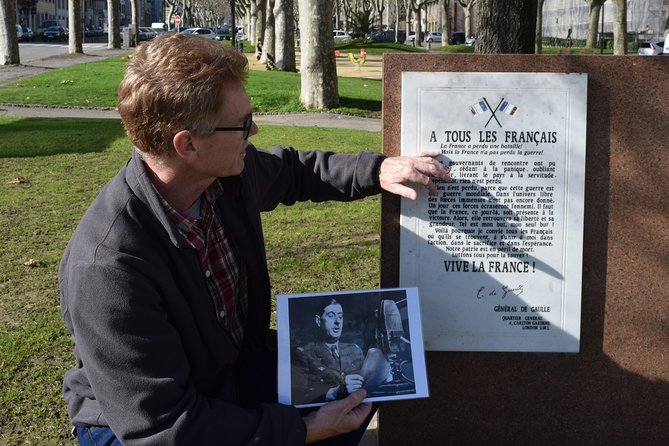
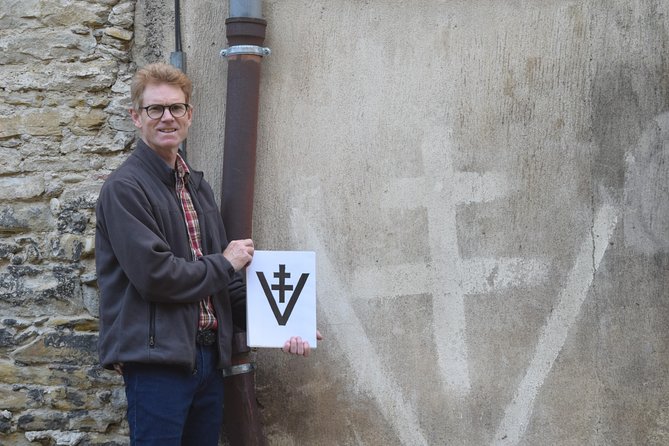
Paul’s method is simple and effective. He explains the history while showing black-and-white photographs from the period. The contrast between old images and present-day streets helps you picture Carcassonne as it was during the war. You may also be asked to look closely at places or details connected with the story, which keeps the walk active rather than turning it into a long speech.
Other battlefield and wartime sites reachable from Toulouse:
- Normandy Battlefields Tour – American Sites (A3)
★ 5.0 · 876 reviews - Somme Battlefields Small-Group Day Trip with John Monash Centre from Paris
★ 4.5 · 270 reviews - Normandy Battlefields D-Day Private Trip with VIP Services from Paris
★ 5.0 · 240 reviews
Starting at Brasserie à 4 Temps at 9:30 a.m.
The meeting point is Brasserie à 4 Temps, at 2 Boulevard Barbès. The tour begins at 9:30 a.m., a useful time if you want to fit other sightseeing into the afternoon.
Starting in the morning also suits the subject. You have two hours and 15 minutes ahead of you, so this is not a quick orientation stroll. The pace is described as steady, with time to listen, ask questions, and look at photographs. One account also notes that Paul allowed time for a coffee stop, although you should not treat that as a guaranteed scheduled feature.
The route is a walking tour, so sensible shoes matter. You will be on town streets, including narrower areas where a large group can be hard to manage. Most people can take part, and the meeting point is near public transportation, but the experience is still best for anyone comfortable standing and walking for roughly two hours.
The advertised highlights refer broadly to Carcassonne’s medieval setting, while the detailed route and guest feedback place much of the attention on La Bastide, the lower town. That distinction matters. If your main aim is a guided tour inside La Cité and its fortifications, this is not the best match. If you want to understand the town beyond the famous walls, the route makes much more sense.
From the Fall of France to the occupied and free zones
The opening historical section places Carcassonne in the national crisis of 1940. France’s defeat was not an isolated event for Paris or the battlefields. It changed daily life in towns across the country, including who governed, what people could buy, and how safely they could speak.
You will hear about the division between the occupied zone and the non-occupied zone, followed by the invasion of the Free Zone. These points help explain why life in southern France was not static throughout the war. Control shifted, pressure increased, and choices became harder as German power spread.
This background is useful because the rest of the walk depends on it. Without understanding Vichy France and the changing occupation, it is difficult to grasp why some forms of cooperation were official, why resistance took different shapes, or why local people could be caught between several authorities.
Paul also links the national story to local anecdotes. His approach is not to bury you under military detail. Instead, he sets the wider events around the people of Carcassonne and the surrounding area. That makes the tour suitable for someone with a strong interest in World War II, but also for someone whose knowledge is limited to the basic outline of the period.
Rationing, the Milice, and the S.T.O.
The tour does not treat wartime life as a simple contest between heroes and villains. Rationing is one example. Food shortages and official controls shaped ordinary life, and the subject helps show how war reached beyond soldiers and battlefields.
You also learn about the Milice, the French paramilitary force linked to collaboration, and the S.T.O., the compulsory labor service that sent French workers to Germany. These topics show the pressure placed on civilians and the difficult line between following orders, protecting family, helping others, and resisting authority.
This is where the tour gains its human scale. The route includes stories of local heroes, lesser-known figures, collaborators, and people whose actions were less easy to judge. You are encouraged to think about the choices available at the time rather than fitting everyone into neat categories.
The tone can be sombre. The subject includes repression, betrayal, and the consequences of resistance. Still, the presentation is not described as gloomy from beginning to end. Paul uses humor when appropriate and keeps the discussion open and conversational. That balance helps the two hours pass quickly without making light of the subject.
Same base, a different kind of day:
- Toulouse: Carcassonne Day Trip by Coach with Audioguide
★ 4.4 · 580 reviews - Toulouse Food & History Tour with a Chef (in English)
★ 5.0 · 503 reviews - Toulouse: Albi and Cordes/Ciel Day Trip with Audio Guides
★ 4.5 · 486 reviews - Toulouse Victor Hugo Market Small Group Tasting Tour
★ 5.0 · 337 reviews
Resistance and collaboration on the streets of Carcassonne
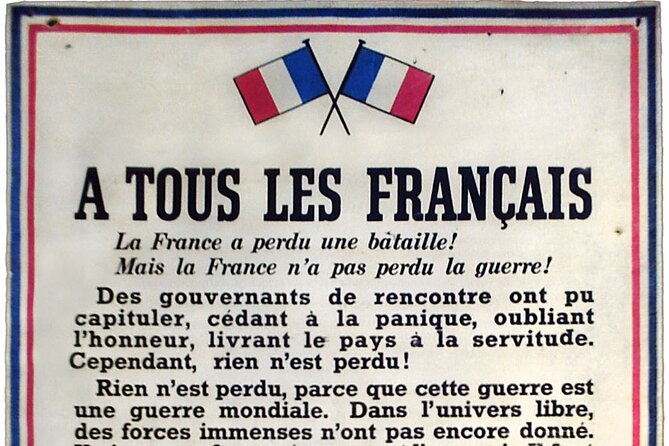
The main focus is the range of resistance activity in and around Carcassonne. The tour covers both national heroes and local or forgotten heroes, giving attention to people whose names may not appear in standard accounts of the war.
That local emphasis is valuable. You may already know the broad story of the French Resistance, but seeing how it affected one town adds detail that a general museum display often cannot provide. The walk explains how people responded to occupation and repression, and how resistance was not one single movement with one simple role.
Collaboration receives attention, too. This is important for an honest account of the period. A tour that only celebrates resistance can leave you with a polished but incomplete picture. By discussing the spectrum of collaboration alongside the spectrum of resistance, Paul gives you a more difficult and useful understanding of wartime France.
The personal stories are the heart of the route. You hear about men and women, brave actions, questionable choices, and people who have largely been forgotten. One especially valuable feature is the way the guide connects a person’s story to a place. You are not just hearing a name. You are standing in the town where the story unfolded.
Photographs that connect past and present
The black-and-white photographs are more than decoration. They are a practical tool for understanding the walk.
A street can look ordinary today. A photograph from the war years can show how it appeared under occupation, who used it, or what changed around it. When Paul holds up an image near the place it depicts, the history becomes easier to picture.
The photographs also help maintain attention during a long walking explanation. Instead of listening while staring at an unrelated building, you have visual evidence in front of you. This is especially useful if you do not already have a strong background in French wartime history.
Paul is also described as well prepared, clear, and passionate about the subject. He answers questions and adjusts his delivery to suit different levels of prior knowledge. That matters on a private or small-group experience, where you can ask about a local name, a national event, or a detail in a photograph without holding up a large scheduled group.
Liberation and the difficult aftermath
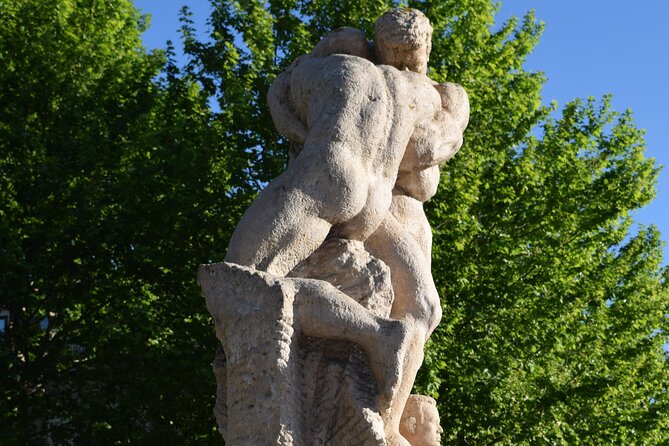
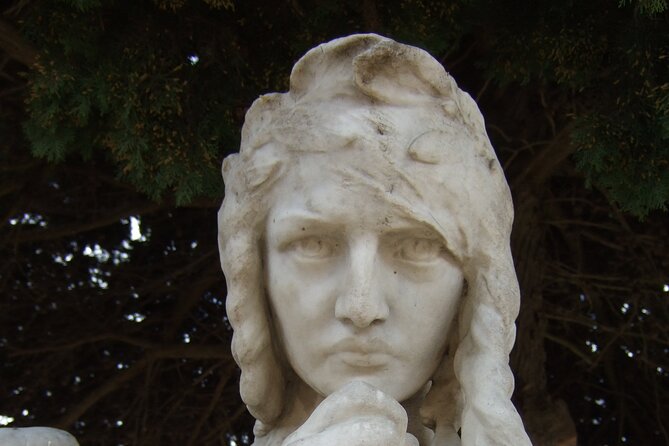
The walk continues through liberation and the post-war purges. Ending the story with liberation alone would be tempting, but incomplete. The aftermath brought celebration, judgment, punishment, and difficult questions about who had collaborated and who had resisted.
The inclusion of post-war purges gives the final part of the tour a more thoughtful edge. Wartime behavior was not always clear while events were taking place, and the end of German control did not erase the tensions left behind. This section asks you to consider how communities dealt with blame and justice once the war was over.
The route ends at the memorial to the Resistance at Square Gambetta, listed at 16 Avenue Arthur Mullot. That is a fitting final point. You finish not with a restaurant or a shopping street, but at a place of remembrance connected to the people and events discussed during the walk.
Because the tour ends there, you can continue exploring the lower town afterward or arrange your next stop from that point. The start and end locations are different, so do not expect to return to Brasserie à 4 Temps.
How much history fits into two hours?
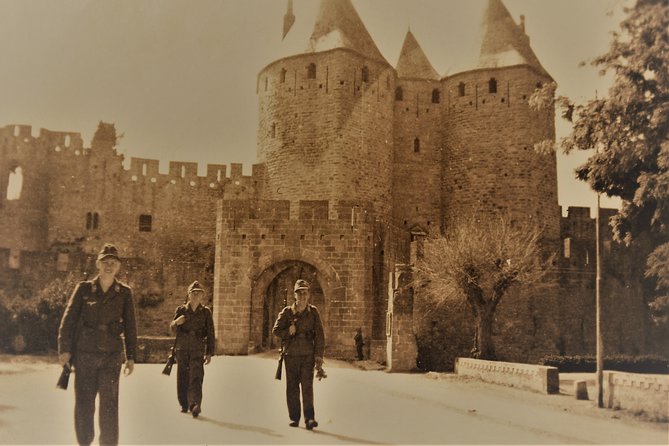
The advertised duration is about two hours and 15 minutes. That is long enough to move beyond a quick list of plaques and dates, but short enough to fit into a morning in Carcassonne.
The route covers a lot: the Fall of France, the occupied and non-occupied zones, the invasion of the Free Zone, rationing, the Milice, the S.T.O., resistance, collaboration, liberation, and post-war purges. The benefit is scope. You get a connected account rather than a narrow story about a single building or one famous person.
The tradeoff is that no two-hour walk can explain every organization or event in full. One point raised about the experience was that there could have been more detail on the SS and Gestapo in the city. If those groups are your main interest, ask Paul about them during the walk or check how much attention the current route gives them.
The delivery appears to be the key to making the schedule work. The guide uses local anecdotes, photographs, questions, and a measured pace instead of rushing through a crowded checklist. You still need to be comfortable with a serious history lesson on foot, but the format is more engaging than reading the same material in a brochure.
Price, group size, and practical value
At $24.19 per person, this is a strong value for a guided experience lasting about two hours and 15 minutes. You are paying for a specialist subject, a prepared route, visual material, and access to local stories that you are unlikely to find simply by walking around on your own.
The value is highest if you have already seen the main sights of Carcassonne or want something more focused than a standard city orientation. It is also useful if you have read about the French Resistance, Vichy France, or the war in southern France and want to connect those subjects with actual places.
The group-size point deserves attention. The experience is described as private, with only your group taking part, but one recorded outing had 23 people. The guide acknowledged that this was too large and considered setting a limit of 12. A smaller group would make it easier to hear, ask questions, stay together, and find safe places to stand on narrow streets.
Before you book, confirm the current group arrangement. If you are expecting a truly private walk for two or four people, do not assume the word private guarantees that without checking. This is the one practical issue that could noticeably affect the experience.
The tour is offered in English, and confirmation is sent within 48 hours, subject to availability. Free cancellation is available up to 24 hours before the start time. The tour needs good weather and a minimum number of people, so a weather or minimum-booking cancellation can result in another date or a full refund.
Who should book this Carcassonne WWII tour?
I would choose this tour if you have a real interest in World War II, the French Resistance, Vichy France, or the way ordinary communities lived under pressure. It also suits readers of historical fiction who want to place wartime events in a real French town.
You do not need to be a specialist. The presentation is built to provide context, explain unfamiliar terms, and bring the subject back to local people. If your companion knows little about the period, the photographs and personal stories should help keep the walk accessible.
I would be less likely to recommend it to someone who wants only medieval architecture, fortress views, or a light introduction to Carcassonne. The subject is serious, and much of the route concerns repression, collaboration, forced labor, and loss.
Should you book it?
Book it if you want to see Carcassonne through a modern historical lens rather than only through its medieval walls. The combination of local stories, period photographs, and a guide who has clearly spent time researching the subject gives the walk purpose.
At $24.19, it offers plenty of material for the money. Confirm the group size, wear comfortable shoes, and allow the full morning rather than treating it as a quick add-on. If you want to understand how Carcassonne and its people negotiated the years from 1939 to 1945, this is one of the more worthwhile specialist walks in town.
FAQ
Where does the Carcassonne World War II tour start?
The tour starts at Brasserie à 4 Temps, 2 Boulevard Barbès, 11000 Carcassonne, France.
Where does the tour end?
It ends at the memorial to the Resistance at Square Gambetta, listed at 16 Avenue Arthur Mullot, 11000 Carcassonne.
What time does the tour start?
The listed start time is 9:30 a.m.
How long does the walking tour last?
The experience lasts approximately two hours and 15 minutes. The detailed itinerary describes about two hours of guided walking.
Is the tour offered in English?
Yes. The tour is offered in English and includes an English-speaking guide.
Can I cancel for a full refund?
Yes, if you cancel at least 24 hours before the experience start time. Cancellations or changes made less than 24 hours before the start are not refunded. If poor weather or an insufficient minimum number of participants causes the tour to be canceled, you are offered another date or a full refund.
Just added in Toulouse
- Lourdes, Guided Walking Tour in the Sanctuary★ 4.0 · 70 reviews
- Private guided tours of Lourdes / Walking tour★ 5.0 · 56 reviews
- Half-day sailing on the Gave de Pau★ 5.0 · 180 reviews
- Private guided tour of the city of Carcassonne★ 5.0 · 58 reviews
- Medieval Carcassonne: Interactive Ghost Story & City Game★ 3.5 · 33 reviews
- Cité de Carcassonne Guided Walking tour. Private tour.★ 5.0 · 42 reviews
- Carcassonne ‘s Medieval Walls: A Self-Guided Tour★ 4.5 · 43 reviews
- Toulouse Food & History Tour with a Chef (in English)★ 5.0 · 59 reviews
Battlefield & WWII Tours, compared.
Normandy Battlefields Tour – American Sites (A3)
Read our review →
Somme Battlefields Small-Group Day Trip with John Monash Centre from Paris
Read our review →
Normandy Battlefields D-Day Private Trip with VIP Services from Paris
Read our review →
Somme Battlefields from Paris with Australian memorial & Amiens Cathedral
Read our review →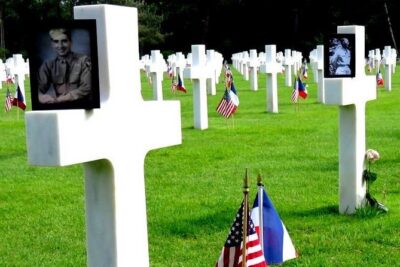
Full-Day US Battlefields of Normandy Tour from Bayeux (A3LST)
Read our review →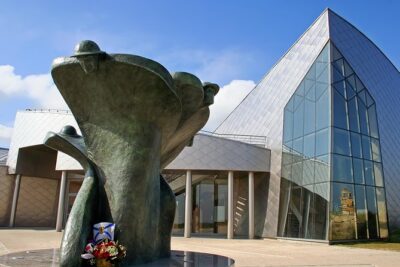
Full-Day Canadian Battlefields & sites Normandy Tour from Bayeux
Read our review →
Private Day Tour including Normandy Landing Beaches & Battlefields from Bayeux
Read our review →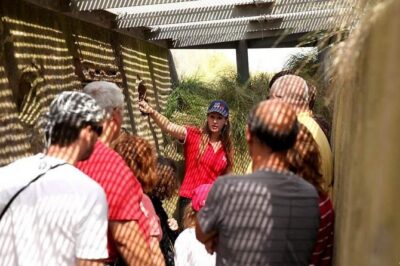
Normandy Battlefields Half Day Tour – Canadian World War II Sites
Read our review →Browse the lists this tour appears in