
Reviewed · COOKING CLASSES
Tuscan Cooking Class – Traditional 5 course menù
The main event here is not just eating pasta in Tuscany. You spend roughly five hours at Farmhouse Le Caggiole preparing seven separate dishes, then sit down to a five-course meal with wines chosen to match each savory course. Chef Giacomo, a trained sommelier, leads the work, while Cristiana and the family help give the class its home-style feel.
I like the focus on organic, farm-to-table ingredients and the useful lessons that go beyond one recipe. You learn how to select ingredients, handle pasta, whisk eggs, use a knife, and match food with wine. I also like the small maximum of eight people, which makes it easier to ask questions and work at the counter.
The main caution is that this is a serious, hands-on class, not a casual cooking demonstration. You will stand during the preparations, follow hygiene rules, arrive on time, and work at Giacomo’s pace. That structure suits an eager home cook, but it may feel demanding if you want a loose, laugh-first afternoon.
Key points to know before booking
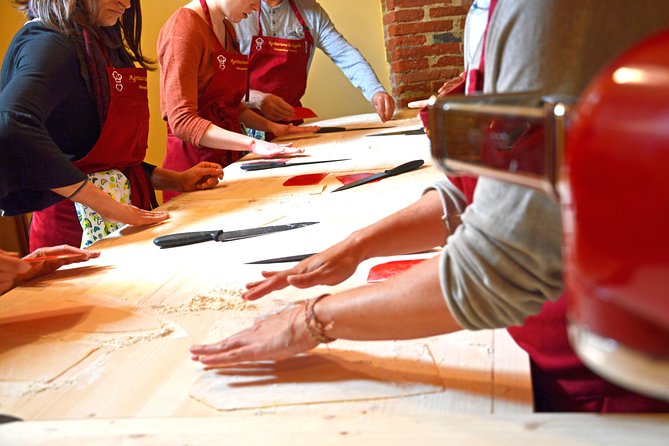
- Seven preparations, five courses: You help make bruschette, gnocchi, pappardelle, a Chianina beef main course, tiramisu, and related sauces and sides.
- Giacomo leads the class: He is both the chef and sommelier, so the lesson includes practical cooking instruction and four wine pairings.
- Small group setting: The class accepts no more than eight people, and solo visitors should contact the provider before booking.
- A real meal at the end: You eat the food prepared during the class, with dessert served on the terrace.
- Come ready to work: Comfortable clothes and shoes matter because you remain standing during preparation.
- Strict practical rules: No rings, large bracelets, or artificial nails are allowed, and allergies must be reported before booking.
What makes this Montepulciano cooking class different
Many Italian cooking classes give you a pasta lesson followed by lunch. This one aims for a full Tuscan menu, from starter to dessert. The work includes seven preparations, while the meal itself is served as five courses.
That difference matters. You are not learning one isolated dish and then watching someone else finish the meal. You take part in a connected menu, where ingredients, sauces, pasta shapes, meat, vegetables, and dessert all have a place.
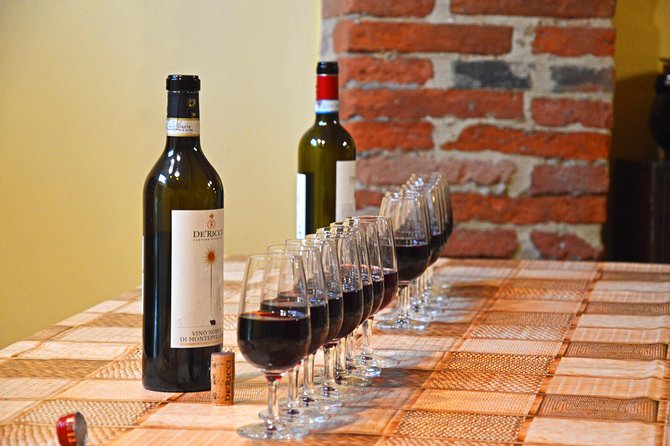
Giacomo’s role as chef and sommelier adds another useful layer. With each savory course, you taste a selected local wine and learn why that wine works with the food. You are not simply handed a glass. The idea is to give you a working base for making better food and wine choices at home.
The tone is intended to be friendly and social, with cooking, tasting, demonstrations, and conversation sharing the afternoon. Still, Giacomo clearly takes technique and hygiene seriously. He expects punctuality and asks you to wash your hands as needed. If you appreciate clear instruction, that is a benefit. If you want to wander in late and cook casually, it is a drawback.
More cooking classes in France:
- Paris Cooking Class and Lunch with Wine plus Market Visit Option
★ 5.0 · 1,024 reviews - Paris Croissant Small-Group Baking Class with a Chef
★ 5.0 · 910 reviews - Paris: French Croissant Baking Class with a Chef
★ 4.9 · 712 reviews
Arriving at Farmhouse Le Caggiole
The meeting point is Traversa di Montepulciano, 12, 53045 Montepulciano SI, Italy. The experience begins at 3:00 pm and ends back at the same meeting point after about five hours.
The provider does not offer a transfer or shuttle service. You need to arrange your own way there, and the meeting point deserves attention before the day of the class. Build in enough time to arrive promptly. Giacomo has made it clear that punctuality matters because the class runs on a shared schedule rather than as a private lesson.
The farm setting is part of the appeal. You cook at a historic family property with views across the Tuscan countryside, then move to the terrace for dessert. This gives the afternoon a sense of place that a town-center kitchen would not provide.
The class is conducted in English. Solo visitors are asked to contact the provider before booking so they can be placed into an already scheduled small group. That is a useful step, since the experience is designed around a small number of people working together.
Starting with Tuscan ingredients and bruschette
The class begins with the foundations of Tuscan cooking: choosing good ingredients and treating them simply. The emphasis is on organic and locally sourced products, with discussion of how to judge ingredients before you start cooking.
That lesson is more valuable than it may sound. Tuscan food often depends on restraint. Good bread, fresh produce, quality meat, and a few well-handled ingredients matter more than a long list of complicated additions.
The starter is traditional bruschette, along with a typical Tuscan appetizer. Expect this opening course to introduce the basic approach of the kitchen: straightforward food, careful preparation, and flavors that are allowed to remain clear.
This is also when the social part of the class begins. You work alongside the other participants, share tasks, and get to know the people around the table. The maximum group size of eight helps keep the setting personal, although the amount of individual hands-on time can still depend on the group and the pace of the lesson.
Making gnocchi and family-style sauce
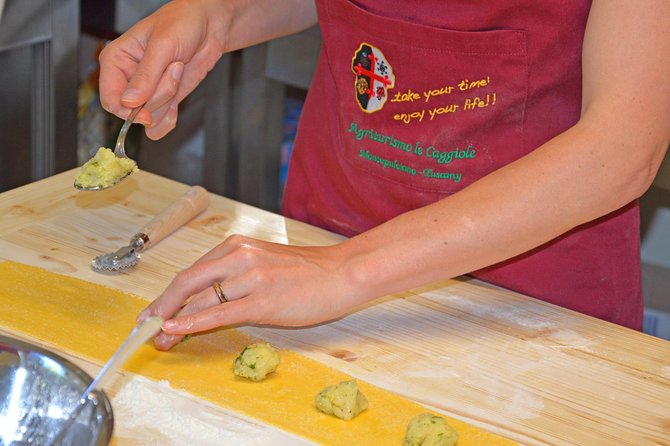
Gnocchi is one of the main pasta preparations. The class includes a traditional sauce, with Giacomo explaining the methods needed to produce a good result rather than simply handing you a finished recipe.
The strongest benefit here is transferability. You are learning a process you can repeat at home, not just copying a dish once. The instruction covers practical habits such as handling ingredients, working with the right texture, and paying attention to how a sauce comes together.
You should not expect a relaxed cooking show where you sit back with a glass of wine while the chef does everything. The program combines a cooking demonstration with active preparation. Some people will find the structured approach reassuring, especially if they have little experience. More confident cooks may appreciate the chance to sharpen basic techniques.
Same base, a different kind of day:
- Paris: Louvre Museum Timed-Entrance Ticket
★ 4.6 · 71,977 reviews - Disneyland® Paris 1-Day Ticket
★ 4.6 · 49,412 reviews - Paris: Versailles Palace and Gardens Full Access Ticket
★ 4.6 · 41,579 reviews - Paris: Evening River Cruise with Music
★ 4.4 · 22,721 reviews
Rolling pappardelle with a traditional sauce
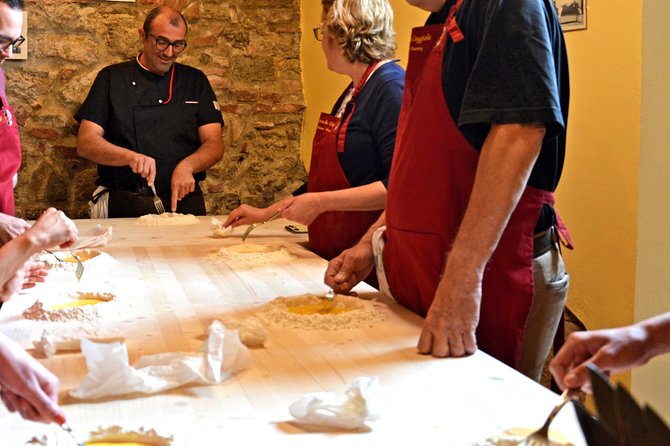
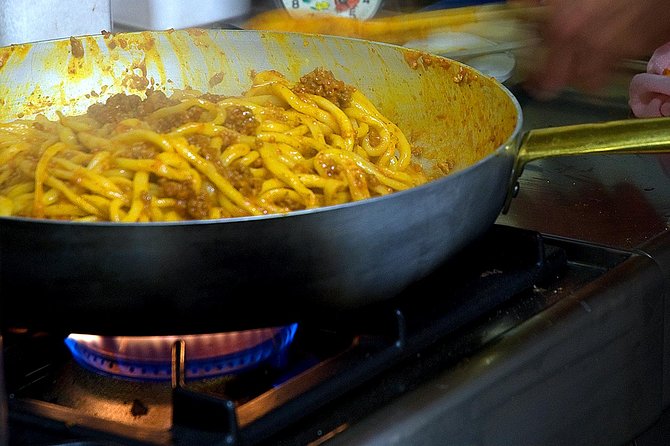
Pappardelle is another major course, served with the family’s traditional sauce. This is likely the most appealing part of the menu for anyone who wants to understand fresh pasta in a practical way.
The instruction includes specific kitchen skills such as slicing pappardelle, whisking eggs properly, and using knives with more control. These small details can change the finished dish, and they are the sort of tips that remain useful long after the class.
You leave with more than a plate of pasta. The aim is to give you enough confidence to prepare the dish again at home. That promise will matter most to you if you enjoy cooking for family and friends. If you rarely cook, the class can still be enjoyable, but the price makes more sense when you plan to use the techniques later.
Preparing Chianina beef with vegetables
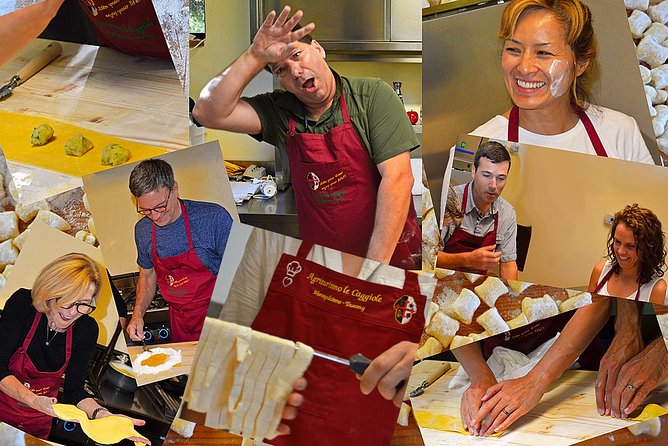
The main course features Chianina beef with vegetables. Chianina is a prized Tuscan cattle breed, so this course brings a clear regional identity to the menu.
The beef also adds a different kind of cooking lesson. Pasta work can be repetitive and tactile, while a meat course requires attention to preparation, timing, and balance with its vegetable accompaniment. Giacomo’s teaching style centers on making the dishes reproducible at home, so you can expect practical guidance rather than a purely ceremonial tasting.
Each savory course is paired with a selected local wine. This is a strong part of the experience for anyone who is curious about Tuscan food beyond the plate. You taste four wines during the class and learn the basic logic behind matching them to the menu.
The wine tasting is included in the price, but keep the timing in mind. Since the class begins at 3:00 pm and continues for about five hours, you should eat a good breakfast earlier in the day, as advised by the provider. You will be cooking, standing, tasting, and eating over a long afternoon and evening.
Finishing with family-recipe tiramisu
Dessert is tiramisu, made from the family’s own recipe. Unlike the other courses, dessert is not paired with a specific wine.
The final tasting takes place on the terrace, where you can relax with views of the surrounding countryside. After several hours on your feet, that change of pace is welcome. It also gives the meal a proper ending rather than sending you straight from the kitchen to the meeting point.
The terrace setting is one of the details that makes this more than a technical lesson. You get the practical kitchen work, the shared meal, and a quiet outdoor finish. The class does not promise a formal sightseeing program, so the property and the food provide most of the sense of place.
Is the $320.48 price good value?
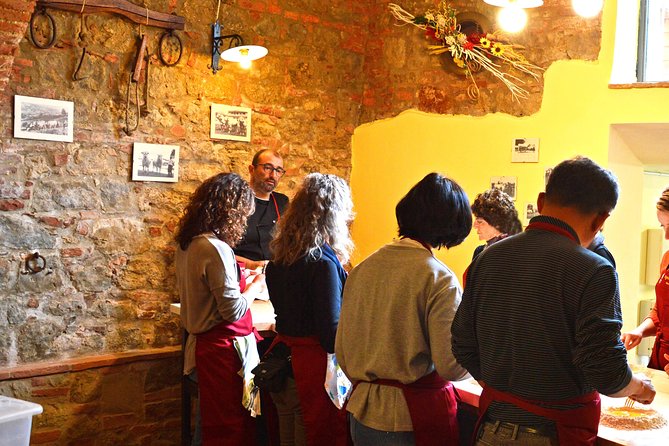
At $320.48 per person, this is a costly cooking class. It makes the most sense when you treat it as a half-day food experience that includes instruction, a five-course meal, four wine tastings, ingredients, kitchen equipment, aprons, and the setting.
You are also paying for a very small group, with no more than eight participants. That can improve the quality of instruction and make it easier to ask questions. The food and wine alone are not the whole value. The useful comparison is the cost of a long cooking lesson, a full meal, and a guided wine pairing combined.
The price will feel justified if you want to take the techniques home. Several dishes are designed for repeat cooking, and the focus on ingredient selection, pasta, sauces, meat, and pairing gives the class a broad scope.
It is less attractive if your main goal is a quick tasting or a short pasta workshop. You are paying for the full menu and the time required to prepare it. People who prefer a lighter, more informal activity may find the structure too demanding for the price.
The teaching style and atmosphere
Giacomo is described as an exacting teacher. He wants participants to produce dishes they can make again at home, and that means he corrects technique, enforces timing, and takes hygiene seriously.
The class can still feel warm and personal. Giacomo and Cristiana welcome people into their family setting, and their daughter may also be part of the household atmosphere. The strongest experiences come when you are ready to take part, listen, and enjoy working with the group.
You should also be comfortable with direct instruction. One account of the class found the teacher’s manner strict and the technical level challenging. That is useful information, not a reason to dismiss the experience. It tells you that the class is better for someone who welcomes correction than for someone seeking a completely unstructured social event.
The large table and shared meal help soften the formal teaching. By the time you sit down, you have worked through the menu together. That shared effort can make lunch feel more personal than a standard restaurant meal.
What to bring and what to arrange first
Wear comfortable clothes and shoes. You will remain standing during the preparations, so this is not the time for stiff shoes or clothing that makes kitchen work awkward.
For hygiene reasons, you cannot wear rings, large bracelets, or artificial nails during preparation. Plan for that in advance rather than discovering it at the door.
Tell the provider about food allergies or intolerances before completing the booking. The menu may be adjusted if possible, but changes requested after booking cannot be considered.
The provider supplies aprons, kitchen tools, and all ingredients. Pencil and note paper are available on request. Video and other recordings are not allowed during preparation, so bring a willingness to pay attention and remember the techniques without filming them.
Cancellation is free up to 24 hours before the 3:00 pm start time. Cancellations or changes made later are not refunded or accepted. The class also requires a minimum number of participants, and if that minimum is not met, you will be offered another date or experience, or a full refund.
Who should book this class?
I would recommend it to a food-focused visitor who wants to learn several Tuscan dishes in one sitting. It suits home cooks, serious beginners, and anyone interested in taking fresh pasta and sauce techniques back to their own kitchen.
It is also a good fit if wine matters to you. The four pairings are not an extra add-on. They are built into the meal, with Giacomo explaining the connection between each wine and course.
Couples and small groups should enjoy the personal setting, while solo participants can join an existing small group after contacting the provider. The class can work for beginners, but beginners should be ready to stand, follow instructions, and accept corrections.
I would hesitate to recommend it if you want a short, loose, mostly social activity. The five-hour schedule, no-recording rule, hygiene requirements, and exacting teacher make this a focused experience. It is friendly, but it is not careless.
Should you book the Tuscan Cooking Class?
Book it if you want a full Tuscan menu, hands-on practice, local wine, and a family-run setting near Montepulciano. The strongest reasons are the broad range of dishes, the small group, the terrace finish, and the practical lessons you can use at home.
Think twice if the $320.48 price is beyond your budget or if you want a simple pasta lesson. The class asks for time, attention, punctuality, and a willingness to work under firm guidance.
For the right cook, this is a substantial food experience rather than a quick holiday activity. Arrive ready to learn, wear sensible shoes, report dietary needs early, and you will get the most from the five-course meal and the techniques behind it.
FAQ
Where does the cooking class take place?
The class takes place at Farmhouse Le Caggiole near Montepulciano, at Traversa di Montepulciano, 12, 53045 Montepulciano SI, Italy.
What time does the experience start?
The scheduled start time is 3:00 pm.
How long does the class last?
The experience lasts approximately five hours and ends back at the meeting point.
Is the class offered in English?
Yes. The cooking class is offered in English.
How many people can join the class?
The maximum group size is eight participants.
What food will I prepare?
The menu includes traditional bruschette, a typical Tuscan appetizer, gnocchi with a traditional sauce, pappardelle with the family’s traditional sauce, Chianina beef with vegetables, and tiramisu. The full menu involves seven preparations.
Are wine tastings included?
Yes. The price includes tastings of four selected local wines paired with the food. Dessert is not paired with wine.
Do I need to bring cooking equipment or ingredients?
No. Ingredients, aprons, and the needed kitchen tools are included. Pencil and note paper are available on request.
Can I cancel for a refund?
You can cancel at least 24 hours before the experience start time for a full refund. Cancellations or changes made less than 24 hours before the start are not accepted or refunded.
Just added in France
- Discovery of the Grands Sites de l’Hérault from Montpellier★ 5.0 · 77 reviews
- Private Discovery of Montpellier by Bike-Taxi★ 5.0 · 83 reviews
- Blind Test Room & karaoke Montpellier★ 5.0 · 48 reviews
- Legendary Montpellier, flexible legends and storytelling tour★ 5.0 · 54 reviews
- Wine Tour Ebike Experience★ 5.0 · 175 reviews
- Escape Game Session in Montpellier★ 5.0 · 33 reviews
- Tuscan Cooking Class -Traditional Pasta Menu★ 5.0 · 90 reviews
- Tasting Tour in One of The Most Beautiful Cellars in the World★ 5.0 · 278 reviews
Cooking Classes, compared.
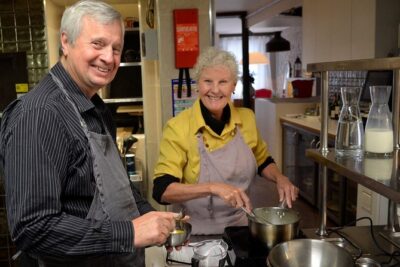
Paris Cooking Class and Lunch with Wine plus Market Visit Option
Read our review →
Paris Croissant Small-Group Baking Class with a Chef
Read our review →
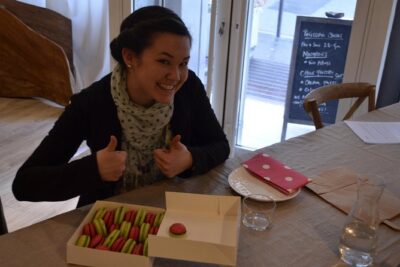
Paris Cooking Class: Learn How to Make Macarons
Read our review →
Toulouse Food & History Tour with a Chef (in English)
Read our review →
Paris Evening Cooking Class French Dinner and Market Visit Option
Read our review →
Browse the lists this tour appears in