
Reviewed · ORSAY MUSEUM TOURS
The Musée d’Orsay Guided Tour Orsay Museum Semi-Private 6ppl Max
The best thing about this Musée d’Orsay tour is its size. With no more than six people, you can hear the guide, ask questions, and stop for a closer look without being swallowed by a large crowd. Guides such as Liliya, Eduardo, Christophe, Ana, and Ivana have been praised for turning art history into clear stories rather than a string of dates and names.
I like the chronological approach, which shows how Realism led toward Impressionism and how later artists pushed those ideas in new directions. I also like the reserved museum entry, especially since the Orsay can feel confusing and crowded. The main drawback is the price, $144.21 per person, and the fact that the tour is not suitable for wheelchair users or people with walking disabilities.
Key points to know before booking
- Small-group format: The tour is advertised for a maximum of six people, giving you a better chance to ask questions and hear the guide clearly.
- A focused art route: Expect major works by Manet, Monet, Renoir, Degas, Van Gogh, and Millet, plus lesser-known pieces along the way.
- Reserved museum entry: Admission is included, though security checks and short lines can still occur.
- Flexible scheduling: Morning, afternoon, and evening options make it easier to fit the museum into a Paris sightseeing day.
- Strong family potential: Guides such as Lilly, Christophe, and Alexandra have kept children and teenagers involved.
- Allow about two and a half hours: The tour ends back at the Musée d’Orsay meeting point, with time for your own museum viewing only if the guide’s pace and schedule allow.
Why the Musée d’Orsay works so well with a guide
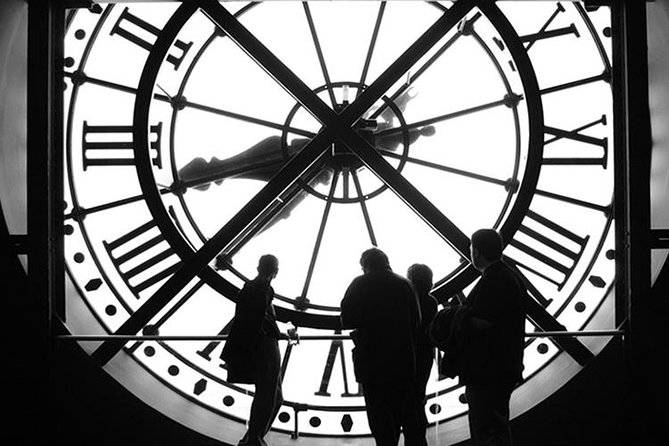
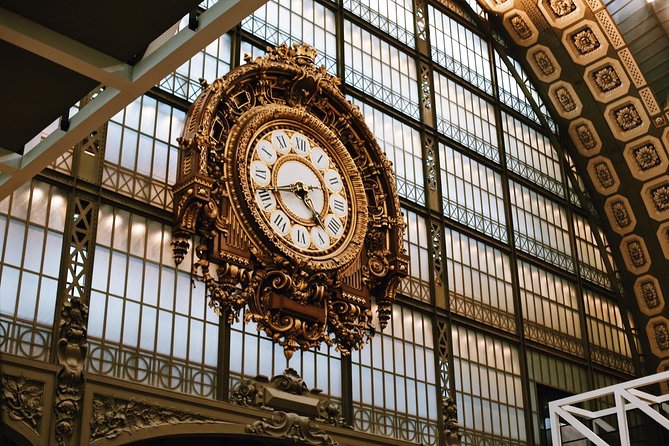
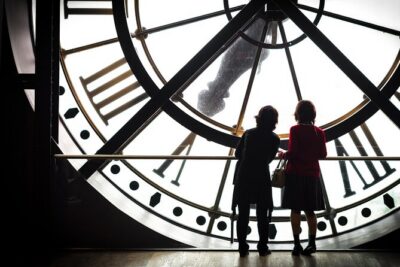
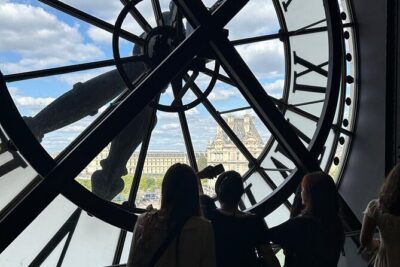
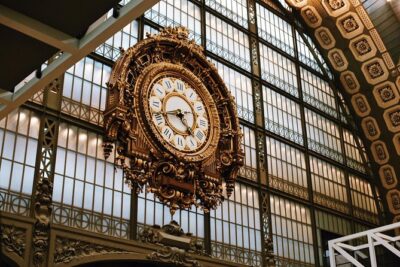
The Musée d’Orsay is housed in a former railway station, and the building is part of the experience. Its great clock, high central hall, and Beaux-Arts structure give the museum a sense of scale before you even begin looking closely at the paintings.
That scale can also be a problem. You can spend hours wandering from room to room and still miss the works that make the museum famous. A guide gives you a plan. Instead of trying to read every label, you follow the development of French painting through selected works and learn why the changes mattered.
I find this especially useful at the Orsay because Impressionism is often reduced to pretty colors and sunny outdoor scenes. The real story is more complicated. Artists were reacting against official academic rules, experimenting with modern life, changing brushwork, and testing new ways to show light and movement.
The tour is built around that story. You begin with artists who came before the Impressionists, then move through Manet, Monet, Renoir, Degas, and their circle. The route continues toward post-Impressionism, where Van Gogh shows how color and brushwork could become intensely personal.
More Orsay visits booked from Paris:
- Paris in a Day: Louvre or Orsay, Eiffel Tower, City Walk & Cruise
★ 5.0 · 1,956 reviews - Paris: Musée d’Orsay Entry Ticket and Seine River Cruise
★ 4.6 · 1,344 reviews - Paris: Musée d’Orsay Skip-the-Line Tour with Expert Guide
★ 4.5 · 1,145 reviews
Entering the former railway station
The experience begins at the Musée d’Orsay in Paris’s 7th arrondissement. You meet the guide at the museum, and the activity ends at the same location.
Reserved entry is included, which saves you from arranging a separate museum ticket. It does not mean you will necessarily walk straight through every security check. The museum can impose extra screening, and lines may still form during busy periods.
That distinction matters. Skip-the-line access usually means a faster, organized entry route, not a magic pass through a locked door. Bring patience for security, especially when the museum is crowded.
Large bags and suitcases are not allowed inside. Only a handbag or small, thin backpack is permitted through security. I would leave bulky luggage at your hotel rather than arrive hoping the museum will store it.
The tour lasts about two to two and a half hours. The advertised group limit is six people, though the booking information also contains a conflicting reference to eight people. If the exact group size matters to you, confirm it before paying. The central promise is a semi-private tour, not a large coach-style group.
Starting with Millet and the artists before Impressionism
A good guide will not rush straight to Monet. The tour begins by setting up the artistic world that the Impressionists challenged.
Jean-François Millet’s The Gleaners is an important stop. Its subject is simple: rural women collecting leftover grain from a field. But the painting gave serious attention to working people, a subject that had often been treated as less important than religious, mythological, or historical scenes.
This is the kind of context that makes a museum visit more useful. You are not just told what a painting depicts. You learn why its subject, size, style, or presentation could make people uncomfortable.
The guide also helps you see the museum as a timeline. Rather than treating every gallery as an isolated room, the tour connects the paintings. Academic traditions, Realism, early Impressionism, and later experiments begin to feel like parts of one argument.
The chronological structure is one of the strongest features of the experience. Ivana, for example, was praised for organizing the tour around the shift from Academic painting to Realism, Impressionism, Cubism, and Neo-Impressionism. That approach is useful if you are new to art history because it gives you a framework to remember after you leave.
Manet, scandal, and the break with convention
Édouard Manet’s Luncheon on the Grass is one of the museum’s essential stops. The painting caused a stir because of its subject and presentation. A nude woman sits among clothed men in a modern setting, looking directly toward the viewer rather than appearing as a distant figure from ancient mythology.
A guide can explain why this was not simply a matter of nudity. Manet challenged accepted ideas about finish, subject matter, and the polite distance expected in serious painting.
This is where a small group helps. You can ask why the painting seemed so provocative, how it differed from academic work, and what later artists took from Manet. In a large group, you may hear the basic facts and then be hurried away before the questions begin.
The tour’s English-speaking guides use stories, artist biographies, and small visual details to make these works easier to approach. Several guides, including Hugo, Beatrice, and Florent, were praised for telling the story of the movement in an engaging way. That matters if you do not normally spend much time in art museums.
More museums in Paris:
- Paris: Louvre Museum Timed-Entrance Ticket
★ 4.6 · 71,977 reviews - Louvre Museum Masterpieces Guided Tour with Access
★ 4.5 · 12,023 reviews - Paris: Louvre Museum Entry Ticket With Host and River Cruise
★ 4.6 · 9,926 reviews - Les Invalides: Napoleon’s Tomb & Army Museum Entry
★ 4.6 · 9,185 reviews
Monet, Renoir, and the color of modern life
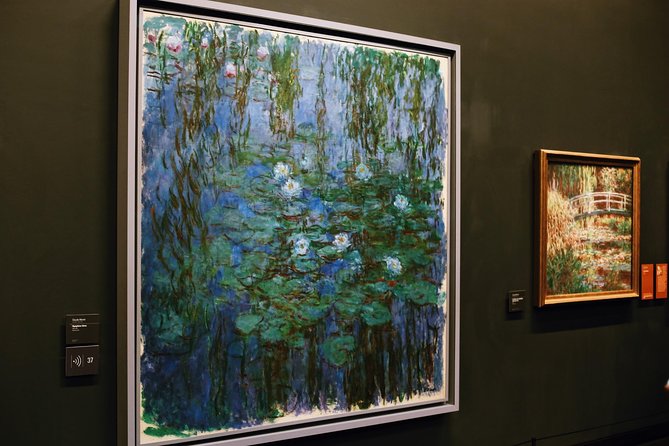
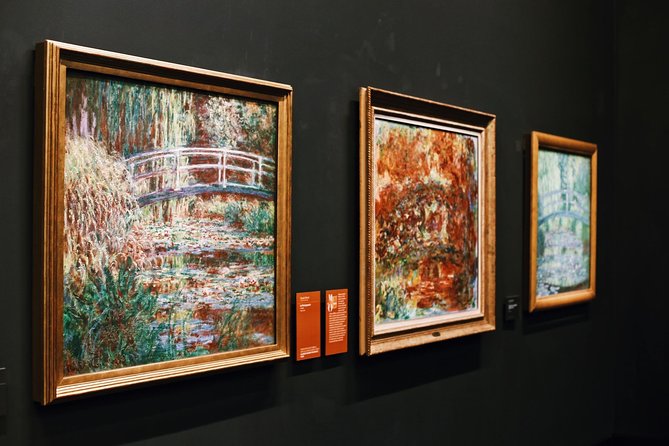
Monet’s Poppy Field and Water Lilies usually provide the most familiar Impressionist moments on the route. These paintings are not only about flowers or water. They show an interest in changing light, shifting color, and the impression of a scene rather than a precise, fixed record.
The guide may point out how your eye fills in forms from separate marks of paint. From a distance, the image holds together. Up close, you see the loose strokes and color choices that make the surface work.
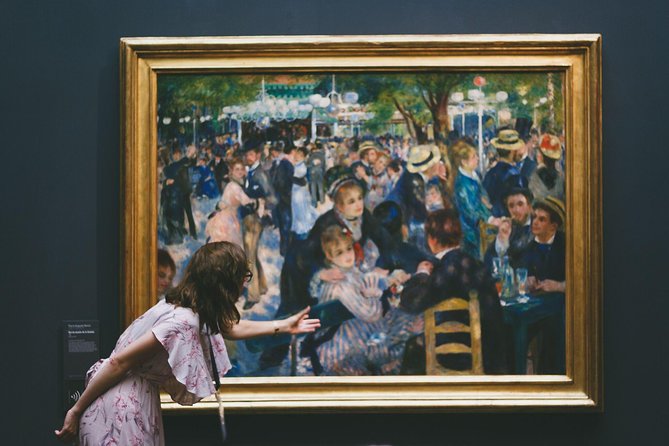
Renoir’s Dance at Le Moulin de la Galette brings a different kind of energy. It presents a crowded Paris leisure scene filled with movement, conversation, and changing light. The subject is ordinary modern life, not an ancient hero or royal event.
You can expect the guide to discuss technique as well as subject. Look for the way Renoir handles figures, shadows, and fragments of conversation suggested through gestures. The painting rewards both a quick impression and a slower look.
The exact works available can change. Paintings may be loaned to another museum or temporarily removed for conservation, so no individual masterpiece is guaranteed. The named works are the usual highlights, not a promise that every one will be on the wall during your visit.
Degas and the body in motion
Edgar Degas’s ballerinas add another angle to the Impressionist story. His dancers are not always posed in graceful, centered compositions. Instead, you may see awkward angles, cropped figures, and moments that feel caught rather than carefully arranged.
That sense of an instant is central to the movement. The guide can help you notice how composition creates the feeling that the scene continues beyond the frame.
Degas also helps broaden the tour beyond the easiest definition of Impressionism. The movement was not one fixed style, and its artists did not all paint the same subjects in the same way. Some focused on outdoor light, while others studied interiors, theaters, streets, or working bodies.
This is a useful point for first-time museum visitors. You do not need to decide if you like every painting. You only need to see the different questions each artist was asking.
Van Gogh and the move toward post-Impressionism
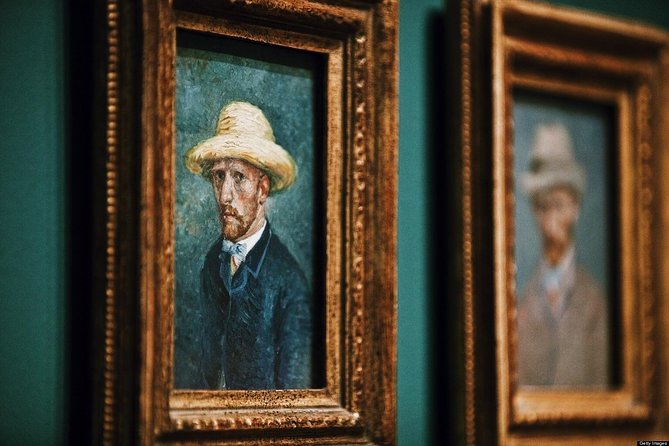
Vincent van Gogh’s Bedroom in Arles is another major stop. Its simplified forms, strong colors, and tilted perspective show how painting could move away from a literal record of a room.
The guide may explain how Van Gogh used color and brushwork to convey feeling rather than simply reproduce what the eye saw. That makes the work a good bridge from Impressionism to post-Impressionism.
This section can be especially rewarding because Van Gogh is familiar to almost everyone, yet his paintings are often treated as decoration. A strong explanation gives you tools for seeing the choices behind the famous style.
The tour does not end with the Impressionists as if the story stopped there. Instead, you see how later artists developed, stretched, or rejected their ideas. That broader route gives the museum a clearer purpose and helps you connect the Orsay’s collection to modern art.
What the guide adds to the visit
The guide is the main variable in any museum tour. The provider assigns different English-speaking guides, and the experience can feel different depending on the person leading it.
The strongest guide reports point to a few shared qualities: clear explanations, enthusiasm, good pacing, and a willingness to answer questions. Liliya was praised for bringing paintings to life through stories about artists, rivalries, and scandals. Eduardo was noted for explaining the timeline in a way that remained fun. Christophe was praised for keeping children involved and answering questions without making the group feel rushed.
Other guides mentioned by name include Kotryna, Daniel, Valerie, Achille, Zdravko, Nancy, Sunday, Alexandra, Ana, and Beatrice. The praise is not limited to art facts. Several guides were also appreciated for making the museum easy to navigate and adjusting their pace to the group.
That flexibility matters for families. A child or teenager may not care about a long explanation of technique, but a story about an artist’s choices or a painting’s scandal can hold attention. Lilly and Alexandra were specifically praised for keeping younger visitors engaged.
You should still be realistic. A two-and-a-half-hour museum tour cannot explain every artist or room. It gives you a guided route through the major themes, with selected details and time for questions. If you want to study one painter for an entire afternoon, you may prefer to explore alone after the tour.
Morning, afternoon, or evening timing
The tour is offered in morning, afternoon, and evening time slots. That makes it easier to fit into a Paris itinerary, but the choice affects the feel of your visit.
A morning tour is useful if you want the museum to anchor your day. You can continue into the nearby streets afterward, while the main ideas are still fresh.
An afternoon tour works well if you prefer a slower start. Just watch your schedule, since the museum visit itself takes roughly two and a half hours and you need to reach the meeting point on time.
The evening option can be a pleasant way to avoid giving up the middle of the day. Valerie was praised for leading an enjoyable evening visit and explaining art in plain, approachable language.
Crowds vary by day. One useful warning is Tuesday, when the Louvre is closed and the Orsay may receive extra pressure. If you can choose among dates, consider avoiding Tuesday for a quieter experience, though no day guarantees empty galleries.
Is $144.21 a fair price?
At $144.21 per person, this is not a bargain museum visit. You pay a premium for reserved entry, an English-speaking professional guide, and a small group capped at six.
The value depends on how you use the museum. If you already know the collection well and enjoy reading labels at your own pace, buying regular admission and exploring alone will cost less. If you are visiting Paris for the first time, have limited time, or feel uncertain about Impressionist art, the guidance can justify the extra cost.
For a family, the calculation is more personal. Four people pay a substantial total, but a focused guide may prevent a tiring, unfocused museum visit. The experience can also help children see the difference between famous paintings instead of simply walking past them.
The small group is the main reason to choose this tour over a cheaper large-group option. You can ask questions, hear the answer, and stay close to the artwork without straining to follow a guide across a crowded room.
Group discounts may be available, but the supplied details do not specify the discount amount. Check the final booking price before making your decision.
Practical details you should not overlook
You need to provide a mobile phone number with the country code. That allows the operator to contact you about meeting arrangements or changes.
The museum is near public transportation, and hotel pickup and drop-off are not included. Plan to use public transport, a taxi, or Uber, and allow extra time to find the entrance.
The tour requires at least two participants to run. If that minimum is not reached, you are offered an alternative or a full refund. On the other hand, one booking was still honored as a private visit when only one person had signed up, but you should not assume that outcome.
Wear comfortable clothing and shoes. The tour requires a moderate level of physical fitness and is not available to people with walking disabilities or those using a wheelchair.
Cancellation is free up to 24 hours before the start time. If you cancel later, the amount paid is not refunded. The museum can also close without warning, and if opening is delayed by more than an hour, an alternative may be offered, but a refund or discount is not guaranteed in that situation.
Who should book this Musée d’Orsay tour?
I would choose this tour if you want the famous works explained in context rather than viewed as isolated pictures. It suits first-time visitors, art enthusiasts who enjoy asking questions, and families who want help keeping children interested.
It is also a strong choice if you have only one Paris museum afternoon. The guide helps you spend your limited time on major works and gives you a basic map of the collection.
I would skip it if you prefer wandering alone, want to spend a full day with one artist, or are trying to keep museum costs low. The price is high for a two-and-a-half-hour visit, and the group-size information should be clarified before booking because the description refers both to six and eight people.
For most first visits, I think the small group and art-focused storytelling make the expense reasonable. Book it for a clear route, useful context, and the chance to ask questions. Just arrive ready for security, leave your large luggage behind, and remember that a famous painting may occasionally be away on loan.
FAQ
How long does the Musée d’Orsay guided tour last?
The tour lasts approximately two to two and a half hours, with the stated duration listed as two and a half hours.
What is included in the price?
The price includes the semi-private museum tour, a professional tour guide, all entrance fees, and reserved entry to the Musée d’Orsay.
Is the tour conducted in English?
Yes. The experience is offered in English.
How many people are in the group?
The tour is advertised as semi-private, with no more than six guests. The additional booking information also mentions a maximum of eight, so confirm the exact limit before booking if group size is important to you.
Where does the tour start and finish?
The tour starts at the Musée d’Orsay at 75007 Paris, France, and ends back at the meeting point.
Are hotel pickup and drop-off included?
No. Hotel transportation is not included. You are advised to use public transportation, a taxi, or Uber.
Can I bring a large suitcase into the museum?
No. Large bags and suitcases are not allowed inside. Only handbags or small, thin backpacks can pass through security.
Is the tour accessible to wheelchair users?
No. The tour is not available for people with walking disabilities or those using a wheelchair. A moderate level of physical fitness is required.
What is the cancellation policy?
You can cancel up to 24 hours before the experience starts for a full refund. Cancellations or changes made less than 24 hours before the start time are not accepted for a refund.
Just added in Paris
- Paris City Sightseeing Half Day Guided Segway Tour with a Local Guide★ 5.0 · 371 reviews
- Paris Create your Own Perfume Workshop with a Perfumer★ 4.5 · 275 reviews
- Paris: Oh My God She’s Parisian! English Comedy Show★ 4.7 · 257 reviews
- Paris: Create your Signature Scent Perfume Workshop★ 4.8 · 221 reviews
- Paris: Flea Market Insider’s Tour in Extra-Small Group★ 4.6 · 73 reviews
- Paris : Painting experience in an art cafe★ 4.6 · 204 reviews
- Paris: Vallée Village Outlet Shopping Day★ 4.3 · 362 reviews
- Paris night out : Comedy in English ‘How to Become a Parisian ?’★ 4.5 · 373 reviews
Orsay Museum Tours, compared.
Paris in a Day: Louvre or Orsay, Eiffel Tower, City Walk & Cruise
Read our review →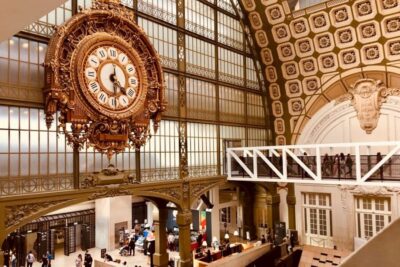
Musée d’Orsay Entry Ticket and Seine River Cruise
Read our review →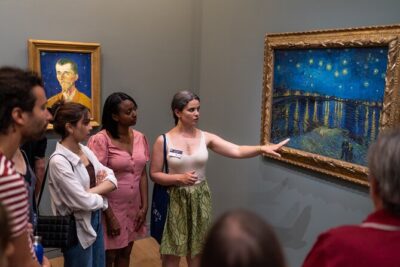
Musée d’Orsay Skip-the-Line Tour with Expert Guide
Read our review →
Louvre & Musée d’Orsay Guided Museum Tour Semi-Private 6ppl Max
Read our review →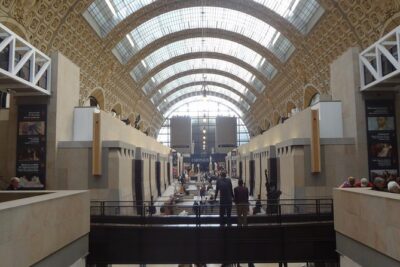
Orsay Museum – Exclusive Guided Tour (Reserved Entry Included)
Read our review →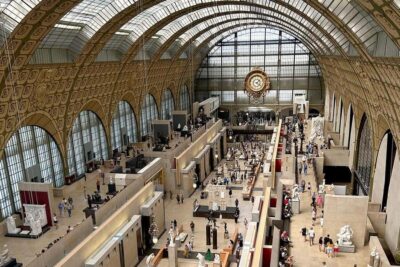
Orsay Museum and Rodin Museum Combo Entry Ticket
Read our review →Browse the lists this tour appears in