
Reviewed · MUSEUMS
Cave Museum Village Troglodyte of Rochemenier Admission Ticket
Rochemenier is not a castle or a polished open-air museum. It is a working village carved below ground, where old farms, rooms, and a chapel sit inside pale sandstone. I like the way the visit connects everyday objects to rural life, and I like that you can take your time rather than follow a fixed tour. The cool underground air is another plus in warm weather, though you will want a sweater.
I also like the fair price, about $10.26 per person, for a visit that can fill one to three hours. The main compromise is language: the self-guided leaflet comes in 18 languages, but the scheduled guided visit is in French only. If you need an English-speaking guide, this ticket does not provide one.
Key points before you go
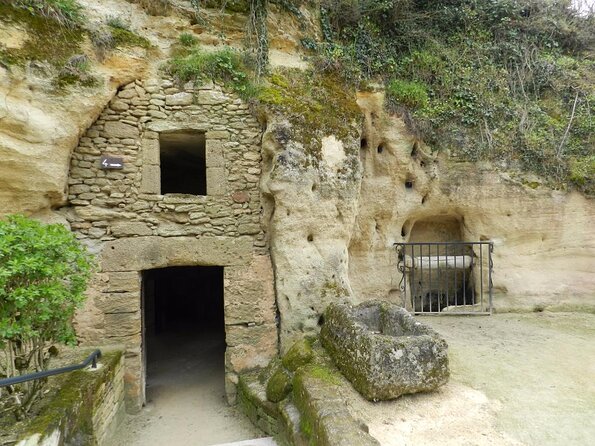
- 250 underground rooms: Rochemenier grew into a village of rooms cut from sandstone, spread across roughly 40 farms.
- Two preserved farms: The public visit focuses on dwellings abandoned around the start of the 20th century.
- Objects with a human scale: Furniture, tools, and photographs help explain how the last residents lived.
- Flexible timing: Plan for one to three hours, depending on how closely you read and examine everything.
- Leaflets in 18 languages: English is supported for the self-guided visit.
- French guided visits only: A guided visit may be offered at a specific time, but it is not conducted in English.
What makes Rochemenier different
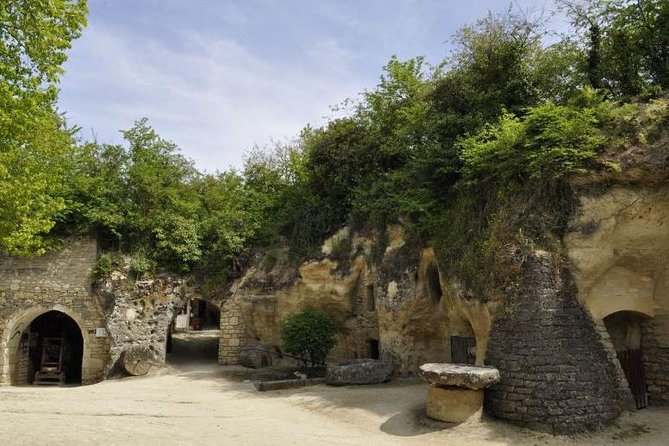
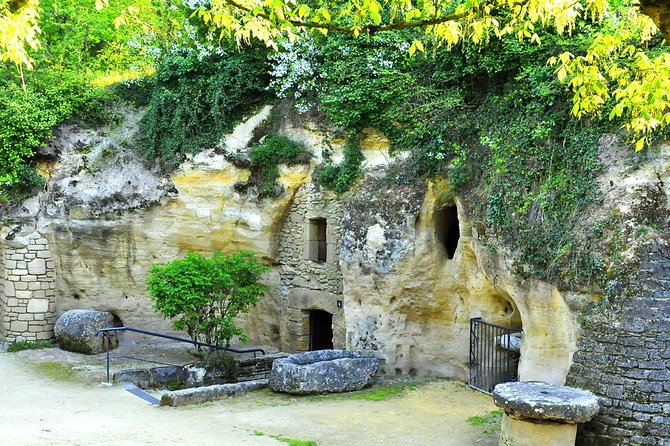
Rochemenier gives you a close look at rural life from below ground. The village contains about 250 underground rooms, excavated from the rock and arranged across around 40 farms. That scale matters. You are not looking at one isolated cave home. You are seeing part of a settlement that changed as its population grew.
The oldest known habitation apparently dates from the 13th century. The village continued to expand through the 19th century, with more rooms added as families and farms needed space. This slow growth makes the site especially useful for understanding how people adapted their homes to local materials and practical needs.
The rock itself is part of the story. Rochemenier was cut into sandstone containing sea shells. It is a calcareous sand, and local farmers used the material to help reduce acidity in the soil. That detail links the underground rooms to the fields above them. The site is not simply about unusual architecture. It shows how building, farming, and local geology worked together.
I find that connection more useful than a quick look at a cave followed by a few old labels. Here, the stone affected the shape of the homes, the homes supported farm life, and the excavated material had a use in agriculture.
More museums in France:
- Paris: Louvre Museum Timed-Entrance Ticket
★ 4.6 · 71,977 reviews - Louvre Museum Masterpieces Guided Tour with Access
★ 4.5 · 12,023 reviews - Paris: Louvre Museum Entry Ticket With Host and River Cruise
★ 4.6 · 9,926 reviews
Entering two abandoned farms
The visit centers on two farms that were abandoned around the beginning of the 20th century. They opened to the public in 1967, giving the museum a long record of preserving and explaining the site.
As you move through the farms, you see rooms cut into the rock rather than built in the usual way. The walls and ceilings make the construction method easy to understand. You can see that these spaces were shaped by work, family needs, and available material, not by a single grand design.
The preserved rooms also help you picture the rhythm of daily life. Furniture shows how people used the available space. Tools point to the work done on and around the farms. Photographs bring the last inhabitants into the story and help prevent the place from feeling like an empty archaeological shell.
This is the strongest part of the experience for me. Large historical sites can make rural life feel distant. Rochemenier works on a smaller scale. A chair, a farm tool, or a photograph can tell you more about an ordinary household than a long list of dates.
Do not expect every room to be filled with objects. The appeal comes from the relationship between the rooms and the things inside them. Look at how the furniture fits the carved spaces, and pay attention to the way the exhibits explain the lives of the final residents.
The village as a record of change
Rochemenier also tells a story about population growth. Rooms were added when the settlement needed more living and working space, so the village developed over many centuries rather than being created all at once.
That makes the visit a good choice if you enjoy seeing how a place changes over time. You can start with the early habitation dates, then consider how the site expanded through the 19th century. The result is a practical history of a community, not just a display of old stone.
The village name may be written as Rochemenier, while the attraction is also described as the Village Troglodytique de Rochemenier. You may see both forms when planning your visit. The important point is that the museum presents a specific rural settlement, not a general cave attraction.
The setting also gives you a useful reminder about comfort. Underground spaces remain fresh, even when the weather outside is warm. Bring a sweater. It is a simple tip, but it can make the difference between taking your time and hurrying through the rooms.
A self-guided visit that lets you set the pace
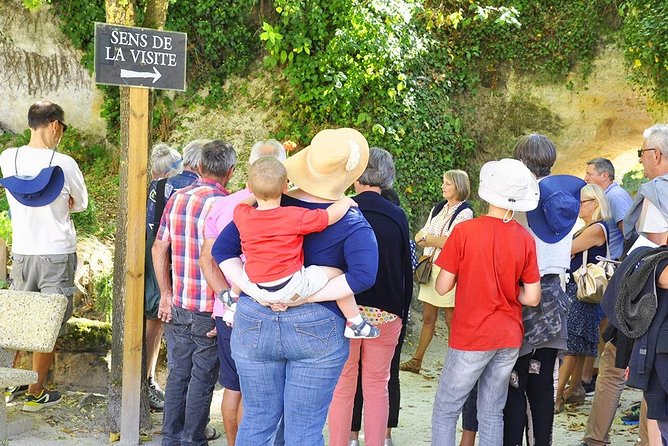
Your admission includes a self-guided visit and an explanatory leaflet in 18 languages. That arrangement suits people who like to stop when something catches their attention, move on when a room is clear, or adjust the length of the visit to fit the rest of the day.
You can spend close to an hour if you want a focused look. You can also stay for up to three hours if you read the explanations carefully and take time with the furniture, tools, photographs, and underground spaces. The advertised duration is one to three hours, so plan around that range rather than treating Rochemenier as a quick 20-minute stop.
An English leaflet makes the site manageable for English-speaking visitors. You will not have an English guide walking beside you, but you can still follow the story in your own language. Guided visits are available at specific times in French only, so check your expectations before choosing that format.
The self-guided setup is especially useful for families and mixed-age groups. Children can look at the unusual rooms and objects while adults take in the historical details. The visit is suitable for people of all ages, and most people can participate.
That said, the experience rewards curiosity more than speed. If you simply walk from room to room, you may miss the connection between the stone, the farms, and the residents. I would allow enough time to read the leaflet and look closely at the objects.
Same base, a different kind of day:
- Disneyland® Paris 1-Day Ticket
★ 4.6 · 49,412 reviews - Paris: Versailles Palace and Gardens Full Access Ticket
★ 4.6 · 41,579 reviews - Paris: Evening River Cruise with Music
★ 4.4 · 22,721 reviews - Paris: Eiffel Tower Entry Ticket with Optional Summit Access
★ 4.4 · 20,035 reviews
What the furniture and tools add
The museum’s furniture, tools, and photographs are not decoration added to fill empty rooms. They give the former homes a human scale.
Furniture helps you understand how the rooms worked as living spaces. Tools show the practical demands of farm life. Photographs provide a visual link to people who lived in the village, particularly its last inhabitants. Together, these items explain the difference between seeing an abandoned farm and understanding how it functioned.
The exhibits are also described as carefully presented and informative. That matters in a self-guided museum, where clear presentation carries much of the teaching. You are not relying on a long talk from a guide to connect every object to the wider story.
I would pay particular attention to the photographs. A carved room can feel remote and anonymous. A picture of the people who used it helps you imagine the village as a living community rather than a preserved curiosity.
The underground chapel and practical access
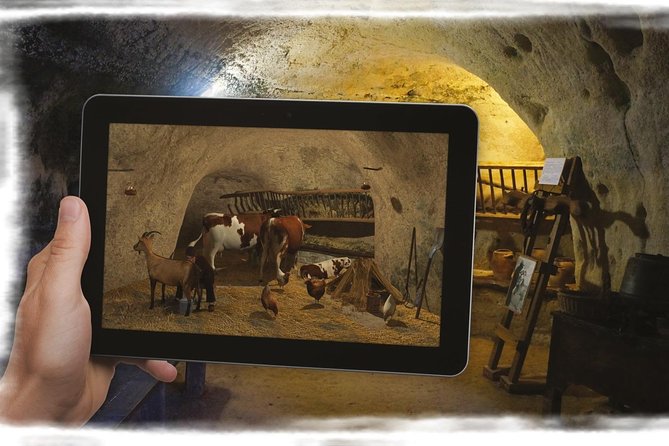
The underground chapel is part of the attraction, but it is the one area that strollers cannot access. If you are visiting with a young child, plan for that limitation. Stroller access is otherwise possible.
Service animals are allowed. Most people can take part, and the experience is intended to work for a broad range of ages. The available information does not provide further details about every surface or step, so anyone with specific mobility needs should confirm conditions before booking.
The underground setting is a major reason to visit, but it can also affect how comfortable you feel. Wear shoes and clothing suited to a historic site, and bring a sweater even if the day outside is hot. You will appreciate the cool air at first, but the temperature can feel chilly after a while.
How long should you allow?
For a fast visit, one hour may be enough to walk through the two farms and get the main idea. I would choose closer to two hours if you want to read the leaflet, study the objects, and think about how the rooms changed over the centuries.
Three hours makes sense for a slower visit or for a family moving at different speeds. The flexible format means you are not tied to a group schedule. You can pause, go back to an earlier room, or finish when the site has answered your questions.
The small maximum group size of 15 travelers is useful if you attend a scheduled visit, since it should keep the experience from feeling crowded. The main visit remains self-guided, so the group-size limit may matter less than it would on a bus tour.
Price and value at about $10.26
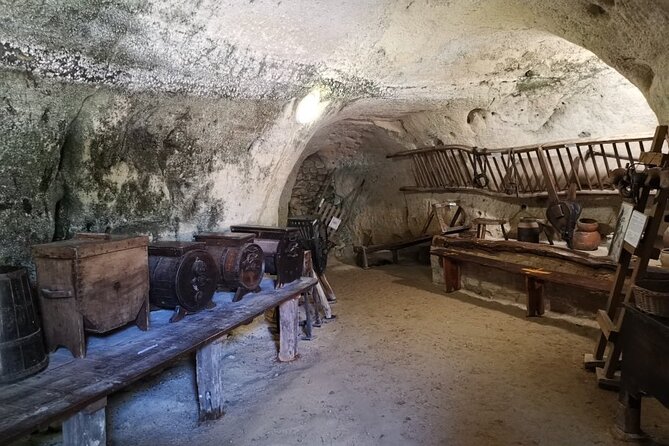
At about $10.26 per person, this is a reasonably priced cultural stop. The ticket includes admission to the Cave Museum and the self-guided visit, with explanatory material in 18 languages. Food and drinks are not included, but that is not a serious drawback for a museum of this size.
The value comes from the amount of context packed into a modest admission fee. You are seeing a settlement with about 250 underground rooms, two preserved farms, historical objects, photographs, and a chapel. You are also getting a place that explains local geology and farming, not just a visually unusual set of rooms.
The price works best if you already plan to be in the area and can give Rochemenier at least an hour. It is less useful if you are trying to squeeze in a five-minute photo stop. The museum needs a little time to make sense.
Free cancellation is available if you cancel at least 24 hours before the start time. Changes or cancellations made less than 24 hours before the start time are not accepted for a refund, and the cut-off uses local time.
Opening hours and seasonal planning
The museum is open Tuesday through Sunday from February 1 through April 15, 2026, from 10:00 a.m. to 5:00 p.m. It opens daily from April 16 through September 15, 2026, from 9:30 a.m. to 5:30 p.m.
From September 16 through November 20, 2026, it returns to Tuesday through Sunday hours, 10:00 a.m. to 5:00 p.m. These seasonal details matter if you are planning a Monday visit outside the main summer period. The museum is not listed as open every day in those periods.
A morning visit gives you more flexibility if you want to spend up to three hours inside. In summer, the longer opening day also gives you room to fit Rochemenier around other plans. Confirmation is received at the time of booking.
Who will enjoy this museum most?
I would recommend Rochemenier to you if you like local history, traditional homes, rural culture, or unusual architecture. It is also a good fit for families because the underground rooms provide something visual to explore, while the leaflet gives adults the historical framework.
It suits independent visitors better than people looking for a lively guided performance. You choose the pace, and you can focus on the rooms or the objects that interest you most. The lack of an English-speaking guide is the main consideration for visitors who prefer spoken explanations.
The experience also works well for people who want a compact cultural stop rather than a full-day attraction. One to three hours is enough to see the museum without taking over your schedule. At the same time, the site has enough detail to reward a slower visit.
Should you book the Rochemenier ticket?
Book it if you want a low-cost, flexible look at how rural families lived in underground farms. The two preserved farms, old furniture, tools, photographs, and shell-filled sandstone give the visit a clear sense of place. The clean presentation and informative material make the self-guided format easy to follow.
Think twice if you need an English-speaking guide or dislike cool underground spaces. You will receive an English leaflet, but scheduled guided visits are in French only. Bring a sweater, allow at least an hour, and choose this museum for its everyday history rather than a large spectacle.
With a 4.4 rating from 143 reviews and 90 percent of visitors recommending it, Rochemenier is a sensible addition to a France itinerary when you are in the area. Its best quality is simple: it shows the real working spaces of a rural community, not just a grand monument.
FAQ
How much does admission to Rochemenier cost?
The admission price is $10.26 per person. It includes entry to the Cave Museum and the self-guided visit.
How long does the visit take?
The visit takes approximately one to three hours. You can set your own pace during the self-guided tour.
Is the tour available in English?
An explanatory leaflet is available in 18 languages, including English. Guided visits are offered at specific times in French only, and an English guided visit is not included.
What will I see inside the museum?
You will see part of Rochemenier’s underground village, including two former farms, furniture, tools, photographs, and an underground chapel. The village contains about 250 underground rooms spread across around 40 farms.
Can I bring a stroller?
Strollers are permitted in the museum, but the underground chapel is not accessible to strollers.
Are service animals allowed?
Yes, service animals are allowed.
When is the museum open in 2026?
From February 1 through April 15, and from September 16 through November 20, the museum is open Tuesday through Sunday from 10:00 a.m. to 5:00 p.m. From April 16 through September 15, it is open daily from 9:30 a.m. to 5:30 p.m.
Just added in France
- Private French Pastry Class in Marseille★ 5.0 · 90 reviews
- Picturesque Luberon – From MARSEILLE★ 5.0 · 36 reviews
- Provence : Aix en Provence, Cassis and Marseille Private Tour★ 4.5 · 53 reviews
- Marseille Walking food and culture tour 3 hour Private tour★ 4.0 · 36 reviews
- Market & Perched Villages of the Luberon Day Trip from Marseille★ 5.0 · 85 reviews
- Marseille Guided Tour for 2.5 Hours with a Bilingual Local Guide★ 5.0 · 36 reviews
- Marseille Guided Tour for 4 Hours with a Bilingual Local Guide★ 5.0 · 105 reviews
- Private Full Day Wine Tour in Provence From Marseille cruise port★ 5.0 · 32 reviews
Museums, compared.
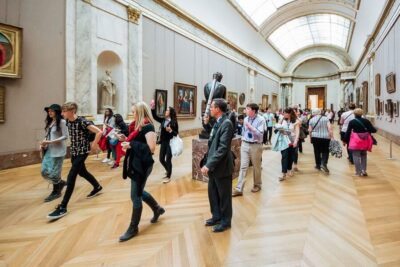

Louvre Museum Masterpieces Guided Tour with Access
Read our review →
Louvre Museum Entry Ticket With Host and River Cruise
Read our review →
Les Invalides: Napoleon’s Tomb & Army Museum Entry
Read our review →
Louvre Museum – Exclusive Guided Tour (Entry Included)
Read our review →
Louvre Museum Hosted Entry and Mona Lisa Audioguide
Read our review →
Louvre Museum Tour Mona Lisa & Iconic Masterpieces
Read our review →
Browse the lists this tour appears in