
Reviewed · WINE TOURS
Chardonnay Masterclass – Wine tasting in Dijon
The clever part of this Dijon tasting is its range. In about 45 minutes, you move from village-level Burgundy to more prestigious bottles, including Premier Cru and Grand Cru examples in some sessions. That gives you a useful look at how Burgundy’s classifications and vineyard sites affect price, status, and style.
I like the small maximum of six people, which should make it easier to ask questions than in a large cellar presentation. I also like the clear teaching focus: you are not simply handed four glasses and left to guess. The session covers grape varieties, vineyard classifications, Burgundy’s Climats, and the history behind the wines.
The main drawback is the short format. This is an introduction, not a long tasting workshop, and one glass may provide only a small taste. If you want a detailed comparison of every Burgundy subregion, or a long lesson in aroma identification, you may find the session too brief.
Key points to know before booking
- Four Burgundy wines in 45 minutes: The tasting moves from village wine toward Premier Cru and Grand Cru territory.
- A lesson in Burgundy’s system: You learn how village, Premier Cru, and Grand Cru classifications fit together.
- A very small group: The experience accepts no more than six people.
- Central Dijon meeting point: You start and finish at Les Clos Vivants, Maître Caviste, at 1 Rue Musette.
- Professional instruction: Adrien Tirelli and Mattéo are among the team members connected with these masterclasses.
- Strong overall satisfaction: The experience is rated 4.9 out of 5, with 98 percent recommending it.
Starting at Les Clos Vivants on Rue Musette
The experience begins at Les Clos Vivants, Maître Caviste, at 1 Rue Musette in Dijon. You do not head out to a vineyard or travel by minibus. This is a town-based tasting inside or at the wine shop, and you return to the same meeting point when the session ends.
That setup works well if you are spending a few days in Dijon and want to fit a wine lesson into a sightseeing day. The start time is 4:00 pm, so you can visit the city earlier and use the tasting as an afternoon or early evening activity.
You should arrive with the meeting point and start time in mind. The experience is short, and a late arrival could matter more here than on a flexible all-day outing. Confirmation is provided when you book, and the activity is available with a mobile ticket.
The setting also gives the session a practical edge. You are learning in a wine shop rather than in a formal lecture hall. That makes it easier to connect the lesson with the bottles you may want to buy later, although the provided details do not promise that a purchase is included or required.
More wine tours in Dijon:
- Dijon: La Cave du Palais Burgundy Wine Tasting Experience
★ 4.8 · 400 reviews - Small-Group Full-Day Tour of Côte de Nuits, Côte de Beaune Vineyards and Beaune Historical District
★ 5.0 · 364 reviews - Pinot Noir Masterclass – Wine tasting in Dijon
★ 5.0 · 147 reviews
The four-wine progression, from village to Grand Cru
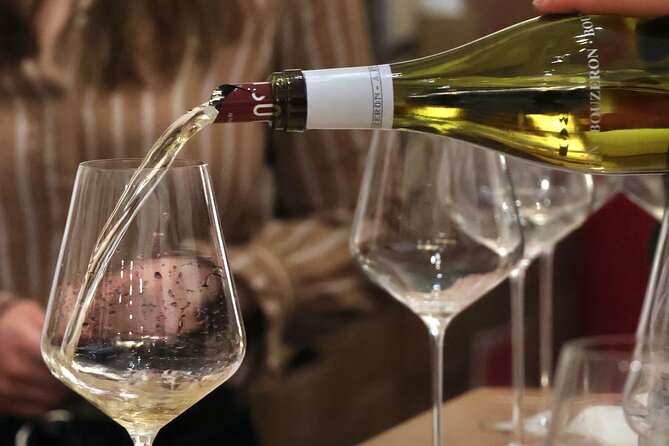
The central feature is a tasting of four Burgundy wines. The selection is designed to show the Burgundy ladder, beginning with village-level wine and moving toward more prestigious appellations.
This structure matters because Burgundy can seem confusing at first. The region is not organized mainly around a single famous estate or a broad brand name. Instead, the vineyard location and its classification play a major role in what appears on the label and what you pay for the bottle.
A village wine gives you a starting point. From there, the move toward Premier Cru and Grand Cru helps show how Burgundy ranks its vineyard sites. You are not just comparing four unrelated Chardonnays. You are being given a framework for understanding why two wines made from the same grape can have very different reputations and prices.
The tasting may include a Premier Cru and a Grand Cru, according to the experience details provided by the operator. That is a particularly useful feature for someone who would not normally buy bottles at those prices. You get a small taste of wines that can be difficult to sample casually.
Still, keep your expectations realistic. Four small pours cannot explain every village, producer, vintage, and soil type in Burgundy. The tasting gives you a map, not the whole territory. You leave with a better way to read labels and ask questions, but continued tasting will still be needed to work out what you personally prefer.
What the Chardonnay lesson actually teaches
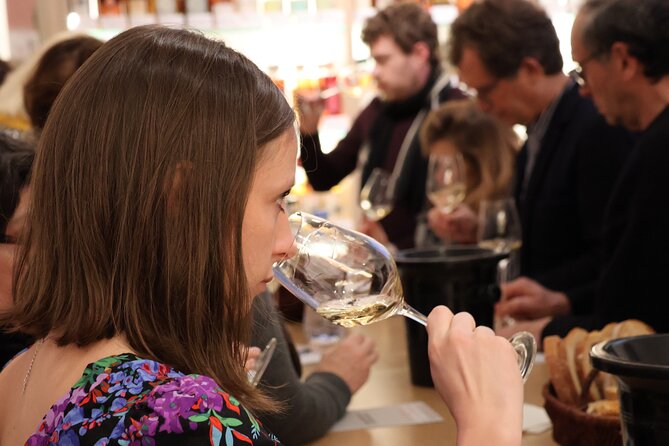
The focus is Burgundy wine, with particular attention to Chardonnay. The session explains the grape variety, vineyard classification, the history of the region, and the Climats of Burgundy.
The word Climats is important here. In Burgundy, it refers to precisely defined vineyard plots with their own names and characteristics. These places are central to understanding why Burgundy wine is so tied to location. The Climats of the Burgundy vineyard are recognized as a World Heritage Site, and the guide uses that idea to explain the region’s identity.
You should expect the teaching to be more useful for beginners than for someone already fluent in Burgundy’s appellations. The session is built to give you the basics needed to understand and appreciate the region. The guide explains how to taste, but the approach does not force one official list of aromas onto each wine.
That is a sensible method for a first class. Wine descriptions can become distracting when they turn into a test of whether you can detect a particular fruit or spice. Here, you are encouraged to notice your own reactions. The drawback is that someone hoping for a very specific sensory breakdown may want more time spent comparing aromas and flavors.
The guide’s job is to give you context, then help you taste with more purpose. You can ask how a village wine differs from a Grand Cru, how the classification system works, and why the vineyard site matters. The value comes from connecting the glass to the place.
Adrien Tirelli, Mattéo, and the teaching style
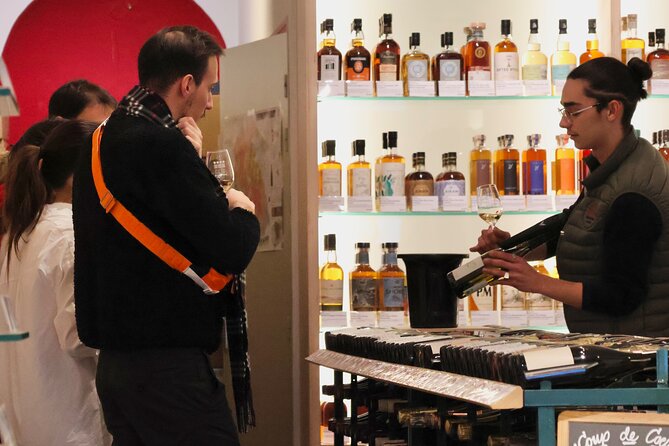
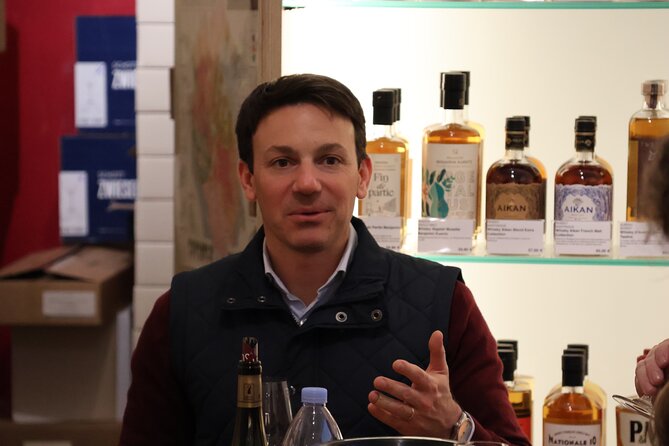
The experience is led by a professional member of the team. Adrien Tirelli is identified as a maître caviste and an ambassador for the Climats of the Burgundy vineyard. Mattéo is also associated with the masterclass and is described as energetic and enthusiastic in his presentation.
That matters because a short class needs a guide who can keep the explanation moving. In 45 minutes, there is no room for a long pause between each subject. A lively presenter can make the shift from grape varieties to classification to tasting feel connected rather than like a list of facts.
The teaching style also appears flexible. One session was conducted bilingually to accommodate an English speaker and two French speakers. English is the stated language offered for booking, but this example suggests that the team may try to accommodate more than one language when the group calls for it. You should not treat bilingual delivery as guaranteed, but it shows a willingness to adapt.
The class seems welcoming to people who arrive with little wine experience. You do not need to know the difference between a village appellation and a Grand Cru before you sit down. The point is to give you the vocabulary and basic structure you need to begin.
At the same time, experienced Burgundy drinkers may find the introduction familiar. The appeal for them is likely the chance to taste a Premier Cru or Grand Cru in a compact setting, rather than a major discovery of advanced wine theory.
More food and drink in Dijon:
- Dijon: Cheese and Burgundy Wine Tasting Workshop
★ 4.8 · 122 reviews - Small group Burgundy tour of Beaune with Wine Tasting from Dijon
★ 4.5 · 85 reviews - Historic Center of Dijon : Discovery Tasting Wine Burgundy
★ 4.5 · 40 reviews - 🍷 Masterclass Pinot Noir – Wine tasting in Dijon 🇫🇷
★ 4.5 · 35 reviews
Why the small group changes the experience
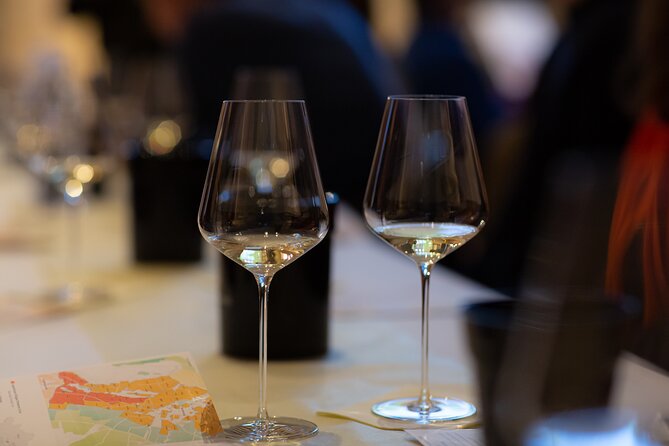
The maximum group size is six people. That is one of the strongest practical features of this booking.
A small group can make a wine class feel less like a presentation and more like a conversation. You have a better chance to ask about a label, a classification, or the way a wine tastes without waiting through a long line of questions. The guide can also respond to the group’s level instead of delivering exactly the same lecture to a packed room.
The small size does not guarantee a private class. You may still share the session with other people, and the experience can be shaped by the questions they ask. But six is small enough to keep the room manageable.
It also helps if you are nervous about wine tasting. A large group can make beginners feel that everyone else knows more. Here, the format is better suited to asking simple questions, including how to taste and how to describe what you like.
The tradeoff is that the session is not designed as a long social event. It is a focused tasting with a set length. If you want a leisurely afternoon with many bottles, food pairings, and extended conversation, you should choose a larger wine program instead.
Is $42.33 a fair price?
At $42.33 per person, the value depends on what you want from the hour. You are paying for four Burgundy wines, professional instruction, and access to a classification that can be expensive to explore on your own.
The strongest value comes if the selection includes Premier Cru and Grand Cru wines. Buying those bottles independently could cost far more than the tasting fee, and you would not automatically receive a structured explanation of how the wines fit into Burgundy’s system.
The price is less attractive if you are mainly looking for a large amount of wine. This is not a meal, and lunch is not included. It is also not a full-day vineyard excursion. The session lasts about 45 minutes, so part of what you pay for is the guide’s ability to make those few pours useful.
I would consider it good value for a first visit to Burgundy, especially if you want a quick foundation before visiting wine villages or shopping for bottles. It is also a practical choice for a short stay in Dijon, since there is no transport time outside the city.
If you already have strong knowledge of Burgundy and want detailed producer comparisons, the price may feel less convincing. You may prefer a longer tasting with more wines and more time devoted to specific villages.
The main limitation: a short tasting can only go so far
The most useful criticism to keep in mind is that this can feel more like a lesson with wine than a full tasting session. You receive four Burgundy wines, but the pours may be modest. That is normal for a class, yet it matters if you are expecting generous glasses.
The experience places more weight on regional understanding than on formal flavor analysis. You learn how the area and classifications work, while the guide leaves room for your own interpretation of aromas and taste. That is friendly for beginners, but it may disappoint you if you want a precise, technical comparison of each glass.
You may also wish for a more specific focus within Burgundy. One participant particularly wanted more information about Chablis and a Chablis wine. The selection instead broadened the lesson beyond that single area. This is a useful reminder that the masterclass is about Burgundy Chardonnay as a whole, not a dedicated Chablis tasting.
For most people, that broader approach is a strength. Burgundy is easier to understand when you first see the classification system and regional structure. But if you already know that Chablis is your main interest, check the exact wine selection before booking.
Who should book this Dijon wine class?
I would recommend it to you if you are new to Burgundy wine, want an introduction in English, and have limited time in Dijon. The 4:00 pm start works well around a day in the city, and the return to the same central meeting point keeps the plan simple.
It also suits curious drinkers who want to understand labels rather than simply collect tasting notes. If you often look at a Burgundy bottle and cannot tell what the village name, Premier Cru status, or Grand Cru label means, this class addresses that problem directly.
It is a good fit for couples and small groups who prefer personal instruction. The six-person limit should give you room to ask questions, and the professional guides bring a clear connection to Burgundy’s Climats and wine culture.
I would be more cautious about booking if you want a vineyard visit, lunch, a long tasting, or a broad selection of grape varieties. This is a compact Chardonnay-focused session in Dijon. Pinot Noir is not the subject here, although the team also offers a separate session on that grape.
Free cancellation is available if you cancel at least 24 hours before the 4:00 pm start time. Changes or cancellations inside that window are not accepted for a refund. The experience also requires a minimum number of participants, so if the provider cancels for that reason, you are offered another date or experience, or a full refund.
The final call
Book the Chardonnay Masterclass if you want a fast, well-structured introduction to Burgundy’s wine system, especially the difference between village, Premier Cru, and Grand Cru bottles. The small group, central Dijon location, and possible access to higher-level wines make the $42.33 fee reasonable.
Skip it if you want a full vineyard day, a meal, or a long technical tasting. For a first step into Burgundy wine, though, this is a focused way to learn what you are drinking and what to look for next.
FAQ
Where does the Chardonnay Masterclass take place?
It starts and ends at Les Clos Vivants, Maître Caviste, 1 Rue Musette, 21000 Dijon, France.
What time does the experience start?
The scheduled start time is 4:00 pm.
How long does the masterclass last?
It lasts approximately 45 minutes.
How many wines are included?
Four Burgundy wines are included in the tasting.
Does the tasting include Grand Cru wine?
The tasting covers Burgundy wines from village level to Grand Cru, and the experience details state that the selection can include Premier Cru and Grand Cru wines.
Is the masterclass offered in English?
Yes. English is one of the offered languages.
How many people can join?
The activity has a maximum of six participants.
Is lunch included?
No. Lunch is not included.
Is a mobile ticket available?
Yes. The experience provides a mobile ticket.
Can I cancel for a full refund?
Yes, if you cancel at least 24 hours before the experience start time. Cancellations or changes made less than 24 hours in advance are not refunded or accepted.
Just added in Dijon
- Cheese and Wine Pairing 1-Hour Session in Dijon★ 5.0 · 34 reviews
- Half Day Tour of the Cote de Nuits Vineyards from Dijon★ 5.0 · 108 reviews
- Small group Burgundy tour of Beaune with Wine Tasting from Dijon★ 4.5 · 85 reviews
- From Dijon: Full day the most of Burgundy with lunch★ 5.0 · 40 reviews
- 🍷 Masterclass Pinot Noir – Wine tasting in Dijon 🇫🇷★ 4.5 · 35 reviews
- Historic Center of Dijon : Discovery Tasting Wine Burgundy★ 4.5 · 40 reviews
- Dijon: Cheese and Burgundy Wine Tasting Workshop★ 4.8 · 122 reviews
- Dijon: Half-Day Guided Gourmet Bike Tour★ 4.3 · 33 reviews
Wine Tours, compared.
Authentic Parisian Gourmet Food Tour with 10 Local Dishes & Wines
Read our review →
Loire Valley Castles Day Trip from Paris with Complementary Wine
Read our review →
River Garonne Cruise with Glass of Wine and Canelé
Read our review →
Montmartre Hill French Gourmet Food and Wine Tasting Walking Tour
Read our review →
Montmartre Cheese, Wine & Pastry Guided Walking Tour
Read our review →
Loire Valley Castles Day Trip With Wine Tasting
Read our review →
Afternoon Saint-Emilion Wine Tasting & snack
Read our review →Browse the lists this tour appears in