
Reviewed · WINE TOURS
Dijon: La Cave du Palais Burgundy Wine Tasting Experience
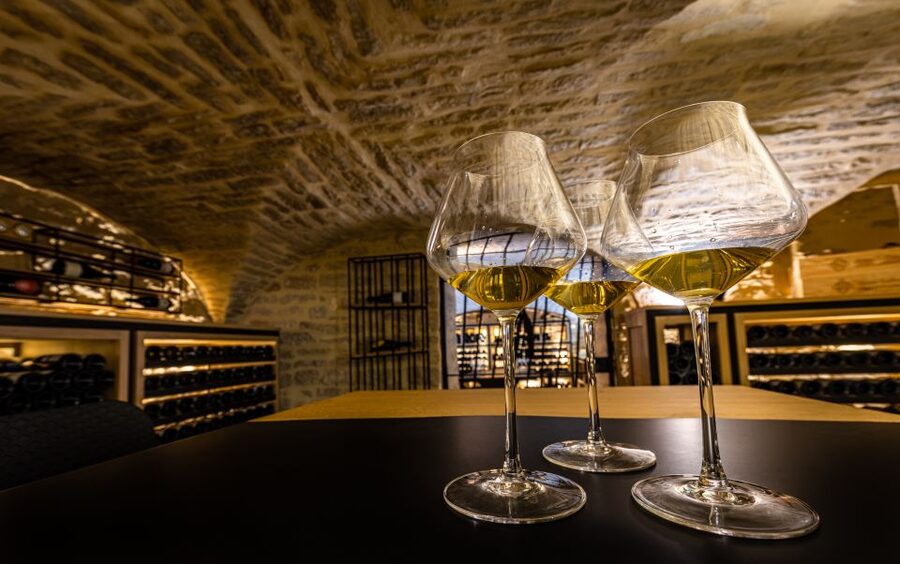
La Cave du Palais puts Burgundy’s wine story underground, in an old vaulted cellar beneath a hotel in central Dijon. Over 90 minutes, you taste six wines while your guide explains why a vineyard’s soil, slope, location, and vintage can matter as much as the grape itself.
I like the small groups, capped at eight, and the way the tasting moves from regional bottles toward Grand Cru examples. I also like the setting: you are five minutes from Place de la République, with no need for a car or a full day among the vineyards.
The main consideration is that this is a tasting and lesson, not a vineyard visit. You will not walk through the vines or visit individual domaines, and the six pours may leave serious wine fans wanting extra tastings, which are not included.
Key points at a glance
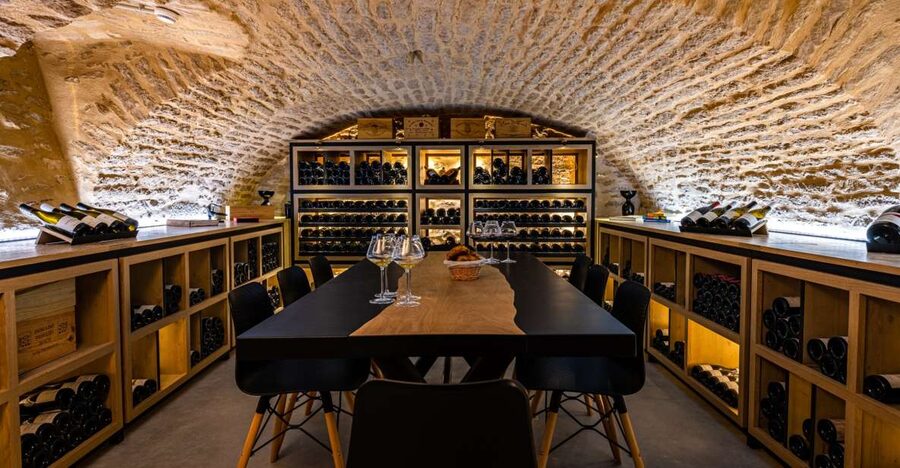
- A historic cellar in central Dijon: La Cave du Palais is located within the Hotel du Palais, about five minutes on foot from Place de la République.
- Six wines across Burgundy’s ladder: Expect bottles ranging from regional appellations to the highly prized Grand Cru level.
- A lesson in Burgundy’s climates: The guide explains how place, soil, exposure, and vintage shape the wine in your glass.
- A genuinely small group: The experience is limited to eight people, allowing time for questions and conversation.
- French and English guidance: Hosts have led sessions in both languages, and some guides have also spoken Spanish.
- A useful substitute for a vineyard day: You can learn a great deal about Burgundy in 90 minutes without arranging transport into the countryside.
Entering La Cave du Palais in central Dijon
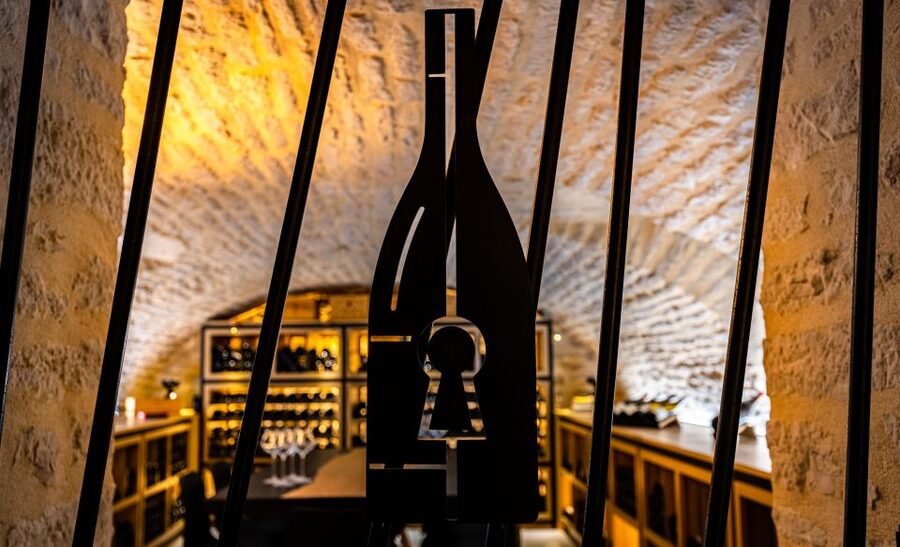
The first pleasure is practical. You can reach La Cave du Palais on foot from central Dijon, so this fits neatly into a city break. The cellar is inside the Hotel du Palais, roughly five minutes from Place de la République. You do not need a rental car, taxi, or half-day excursion just to begin learning about Burgundy wine.
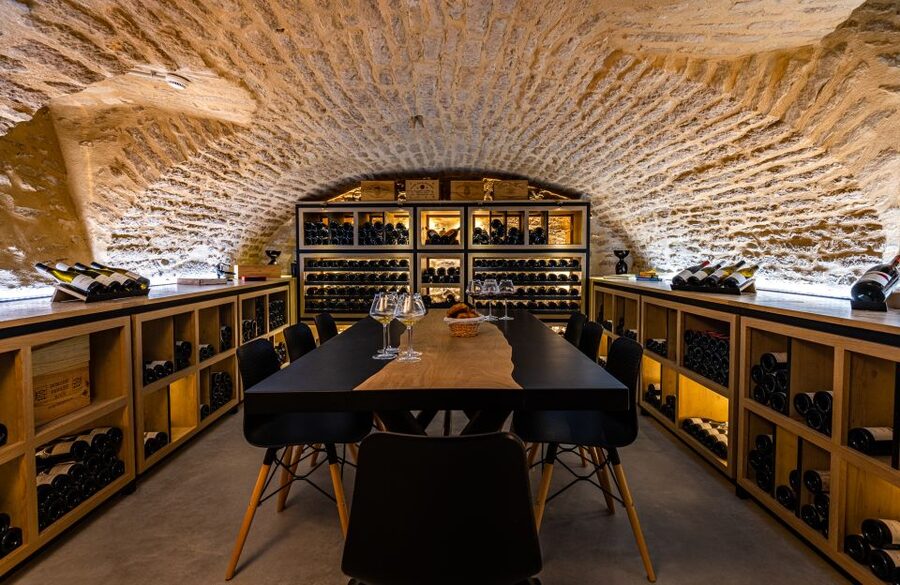
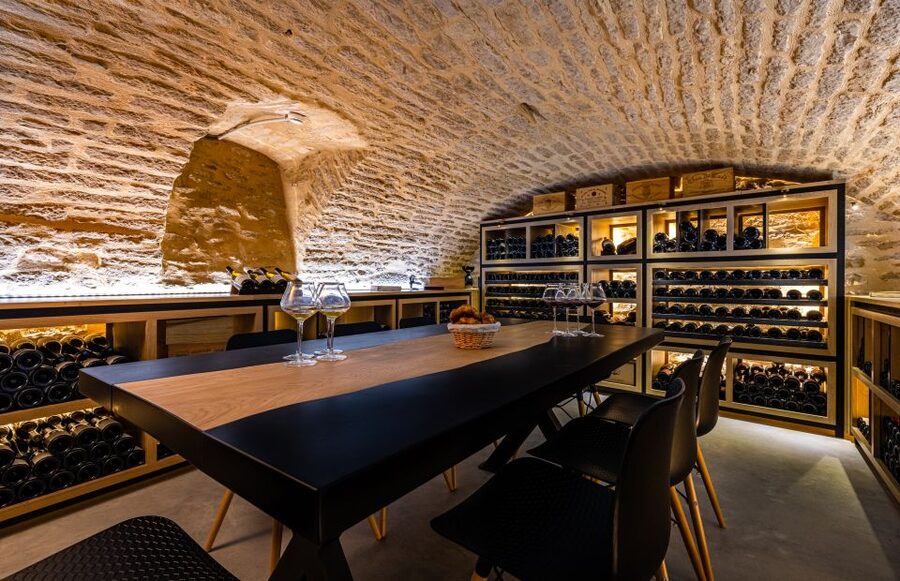
The setting does much of the work. This is an old vaulted cellar, presented as a cozy tasting room rather than a large commercial venue. The stone surroundings give the session a sense of place, and the underground room feels right for a subject built around storage, age, and patience.
I would book this early in your Dijon stay if you can. A wine tasting gives you useful vocabulary for the rest of your time in Burgundy. Afterward, you will have a better idea of what to look for in a wine shop, restaurant, or bottle list.
The cellar is not simply decoration. It helps make the difference between a standard bar tasting and a cultural activity. You are sitting in a space tied to the old wine traditions of the city, while the guide connects that setting to the vineyards beyond Dijon.
More wine tours in France:
- Authentic Parisian Gourmet Food Tour with 10 Local Dishes & Wines
★ 5.0 · 4,754 reviews - Loire Valley Castles Day Trip from Paris with Complementary Wine
★ 4.5 · 3,907 reviews - Bordeaux: Cité du Vin Entry Ticket and Wine Tasting
★ 4.6 · 3,885 reviews
How the 90-minute tasting unfolds
The format is focused. In 90 minutes, you taste six Burgundy wines while listening to live commentary and asking questions. The guide leads the group rather than leaving you with a flight of glasses and a printed explanation.
The exact order of the wines can vary, but the supplied details indicate a broad selection from regional appellations through Grand Cru. One session included three red and three white wines, which gives you a useful sense of Burgundy’s range. The point is not just to decide which glass you like best. It is to notice how classification and place affect the style.
You may begin with a regional wine, then move toward bottles tied to a more specific village, vineyard, or higher appellation. This progression matters because Burgundy’s naming system can seem fussy until you taste the differences side by side. A bottle identified by a broad regional name covers a larger area. A more specific appellation points to a narrower place and a more defined growing tradition.
At the Grand Cru end, you are tasting the highest level in Burgundy’s classification system. That does not mean every person will prefer the most expensive or prestigious wine. It does give you a useful reference point, especially if you are trying to understand why certain labels command so much attention.
The tasting is interactive. Guides such as Antoine, Leo, Robin, Prune, Rafael, and Sebastian have led sessions noted for answering questions, explaining terms clearly, and adjusting the discussion to the group. The host for your date may be different, but the format is designed for conversation rather than a fixed speech.
Burgundy’s climates, soils, and vintages
The key lesson is the importance of climates. In Burgundy, this word does not simply mean weather. It refers to specific vineyard sites and the character associated with those places. The guide uses the wines to show how location can affect taste.
You learn why two bottles made from the same general grape family can feel different. Soil, geography, exposure, and the boundaries of a vineyard all enter the discussion. One session focused on how changes in soil and geography contribute to the quality of the grapes. That is the kind of detail that makes the tasting useful even if you know little about French wine.
Vintage is another important piece. The year on the label tells you about the growing conditions and helps explain why one bottle may taste fresher, fuller, more structured, or more mature than another. The guide connects the year of production to the qualities in the glass, rather than treating vintage as a number to memorize.
This is where a guided tasting earns its price. Without explanation, Burgundy labels can feel like a code. With a patient host, you begin to see the pattern: the name tells you something about place, the vintage tells you something about the year, and the taste gives you a chance to test those ideas.
You do not need a trained palate. The sessions are described as relaxed and informal, with room for basic questions as well as more technical ones. That balance suits beginners, while the regional comparisons and classification system give experienced wine drinkers something to consider.
Six glasses, from regional wine to Grand Cru
The six pours are the heart of the experience, and the selection is meant to show range rather than serve six versions of the same bottle. Burgundy is often associated with Pinot Noir and Chardonnay, but the tasting gives you a chance to compare different expressions of the region’s red and white wines.
A broad regional wine is useful because it provides a starting point. It shows what Burgundy can offer before you narrow the focus to a village, vineyard, or top classification. As you move through the tasting, the labels become part of the lesson.
The value here is comparison. One glass alone may be pleasant, but six wines presented in a guided sequence help you notice contrasts in aroma, weight, freshness, texture, and finish. You can ask why one bottle seems more layered or restrained, and the host can connect the answer to the site and vintage.
The tasting is generous enough to feel like an event, according to the supplied descriptions. Still, remember that this is not an unlimited wine session. Extra tastings are not included, so the six selections need to be enough for you.
Some people may want to buy a bottle afterward. That is possible, but there is no stated obligation to purchase. If you find a wine you like, take a photo of the bottle or write down the full name and appellation. One of the practical strengths of a guided tasting is that you leave with information you can use later, not just a pleasant memory of a glass.
More food and drink in France:
- Paris: Seine Cruise & Crepe Tasting near the Eiffel Tower
★ 4.4 · 11,231 reviews - Normandy D-Day Small-Group Day Trip with Omaha Beach, Cemetery & Cider Tasting
★ 5.0 · 2,786 reviews - Paris: Illuminated Evening River Cruise & Waffle Tasting
★ 4.1 · 2,697 reviews - Montmartre Hill French Gourmet Food and Wine Tasting Walking Tour
★ 5.0 · 2,588 reviews
Why the small group makes a difference
The group limit is eight people, and that is a real advantage. Wine questions are often specific: Why does this bottle taste lighter? What does this appellation mean? Is the difference coming from the grape, the soil, or the age? In a large room, those questions can get lost.
With a small group, the guide can slow down when people need more explanation and move on when the point is clear. Some sessions have had only two or five participants, creating room for a more personal exchange. That also allows the group’s own conversation to become part of the experience.
The tone is not presented as stiff or academic. The best sessions balance technical information with humor and everyday examples. You can learn the classification system without feeling as if you have enrolled in a wine course.
The group may include French and English speakers together. The hosts have led bilingual sessions, and the English has been described as strong. One guide has also handled English, French, and Spanish in the same experience. Still, language ability can vary by date, so confirm your preferred language when booking.
Is $64 good value?
At $64 per person, this is not a casual glass of wine. You are paying for six tastings, a 90-minute guided lesson, a central location, and access to a historic cellar. The value depends on what you want from your Dijon visit.
I consider it fair value for someone who wants an introduction to Burgundy without organizing a day in the countryside. A vineyard excursion usually takes more time and requires transport. Here, you can walk from central Dijon, taste wines from several levels of the regional system, and ask questions directly.
The price is especially reasonable if you are new to Burgundy and expect to buy wine during your trip. Understanding appellations can help you make smarter choices at a restaurant or shop. You may also find a bottle you want to take home, though that purchase is separate.
For an experienced Burgundy collector, the value is less certain. Six wines may not be enough, and the city cellar cannot replace visiting producers or seeing the vineyards. You are buying access to a clear introduction, not a private cellar tour or a full-day estate visit.
The high overall rating of 4.8 from about 400 reviews fits the experience’s strongest features: the setting, the small group, the guide’s ability to explain wine, and the breadth of the tasting. I would still judge the price against your interests. If you mainly want to drink without discussion, a bar may cost less. If you want to understand what you are drinking, this is a stronger use of an afternoon.
Who should book this Dijon wine experience?
I would recommend it to first-time visitors who want Burgundy explained in plain language. It is also a good choice for couples, solo visitors, and small groups who prefer a personal session over a crowded tasting room.
It suits people with limited time. If you cannot fit a full vineyard day into your schedule, 90 minutes gives you a useful introduction without taking over your day. It also works well on your first evening or as a midday break between Dijon’s city sights.
Food and wine enthusiasts should enjoy the regional focus, especially if you are curious about how French appellations work. The guide’s discussion of terroir, ownership, and regional classification gives you more than a simple list of tasting notes.
I would not choose it for children or anyone under 18. Participation is restricted to adults, and it is not suitable for pregnant women. Pets are not allowed, and the activity is not suitable for wheelchair users, so check that the cellar setup works for you before booking.
Practical details before you reserve
The experience lasts 90 minutes, and the meeting point is La Cave du Palais at the Hotel du Palais. Allow a few minutes to find the entrance, especially if you are coming from another part of the old city.
Guidance is available in French and English. The host may be Antoine, Leo, Robin, Prune, Rafael, Sebastian, or another member of the team, depending on the date. These guides have been described as friendly, entertaining, and patient with questions, but a particular guide cannot be promised.
You must be over 18. Six tastings and live commentary are included. Extra pours are not included, and any bottle purchases cost more.
The booking terms are useful for a changing itinerary: you can cancel up to 24 hours ahead for a full refund, and the reserve-now, pay-later option lets you hold a place without paying immediately. Check the available start times because the 90-minute session is not an all-day activity.
Should you book La Cave du Palais?
Book it if you want Burgundy wine explained through comparison, in a historic cellar and within easy walking distance of central Dijon. The six-wine progression, small group, and focus on climates and appellations make this more useful than an unstructured tasting.
Skip it if you want a vineyard walk, a producer visit, or a full countryside excursion. For everyone else, especially first-time Burgundy drinkers, $64 buys a compact lesson that can improve the rest of your trip. I would book it early, ask questions freely, and keep a photo of any bottle you hope to find again.
FAQ
Where does the wine tasting take place?
It takes place at La Cave du Palais, located in the Hotel du Palais in central Dijon. The cellar is about a five-minute walk from Place de la République.
How long does the experience last?
The tasting lasts 90 minutes.
How many wines are included?
Six wine tastings are included. The selection can range from regional appellations to Grand Cru wines.
Are extra tastings included?
No. Extra tastings are not included in the stated price.
Is the tasting available in English?
Yes. The experience is offered in French and English. Guides have also handled mixed-language groups, and at least one session included English, French, and Spanish.
How large is the group?
The experience is limited to eight participants. Some sessions may be smaller.
Do I need to be over 18?
Yes. You must be over 18 to take part in the wine tasting.
Can I cancel my booking?
You can cancel up to 24 hours in advance for a full refund. A reserve-now, pay-later option is also available.
Just added in France
- From Beaune: Full-Day Bicycle and Wine Tour in Burgundy★ 4.9 · 95 reviews
- From Lyon: Golden Stones Beaujolais Wine Tasting Tour★ 4.7 · 387 reviews
- From Marseille: Provence Sightseeing Tour and Wine Tasting★ 4.7 · 195 reviews
- Montpellier: Pic Saint-Loup Wine Tour★ 4.9 · 243 reviews
- From Strasbourg: Medieval Villages & Wine Tasting Day Trip★ 4.8 · 329 reviews
- Marseille: Tailored Wine Tasting Experience in Top Wine Shop★ 5.0 · 106 reviews
- Montpellier Wine and Oyster Tour★ 4.9 · 72 reviews
- Taste Wine in Lyon: Burgundy, Beaujolais, Rhône, and more★ 5.0 · 211 reviews
Wine Tours, compared.
Authentic Parisian Gourmet Food Tour with 10 Local Dishes & Wines
Read our review →
Loire Valley Castles Day Trip from Paris with Complementary Wine
Read our review →
River Garonne Cruise with Glass of Wine and Canelé
Read our review →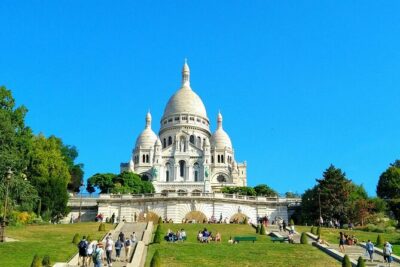
Montmartre Hill French Gourmet Food and Wine Tasting Walking Tour
Read our review →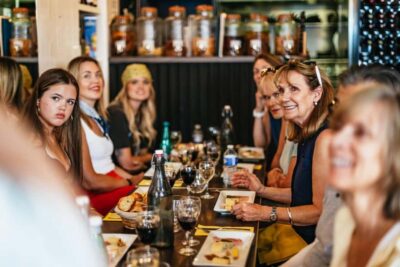
Montmartre Cheese, Wine & Pastry Guided Walking Tour
Read our review →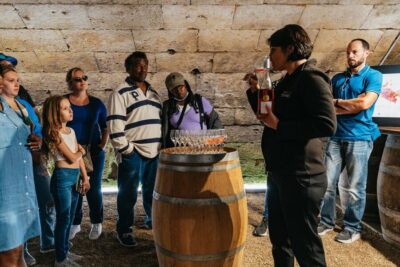
Loire Valley Castles Day Trip With Wine Tasting
Read our review →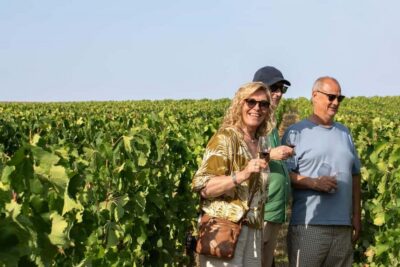
Afternoon Saint-Emilion Wine Tasting & snack
Read our review →Browse the lists this tour appears in