
Reviewed · WINE TOURS
Introduction to Bordeaux wines paired with cheeses & charcuterie
Bordeaux wine can feel like a code, with unfamiliar names, Left Bank and Right Bank labels, and bottles priced far beyond your comfort zone. This one-hour workshop gives you a useful key: three wines, a clear tasting method, and a local host who explains the basics without assuming you already speak wine.
I like the small-group setting, capped at 12 people, and the smart progression from white wine to two reds from Bordeaux’s major areas. I also like that cheese, charcuterie, bread, and water are included, so the $35.09 price covers more than a few small pours.
The main point to consider is time. One hour goes quickly, and the session can feel rushed when another group is due in. English is offered, but confirm your session language carefully, since at least one English-filtered booking was conducted mainly in French.
Key points to know before booking
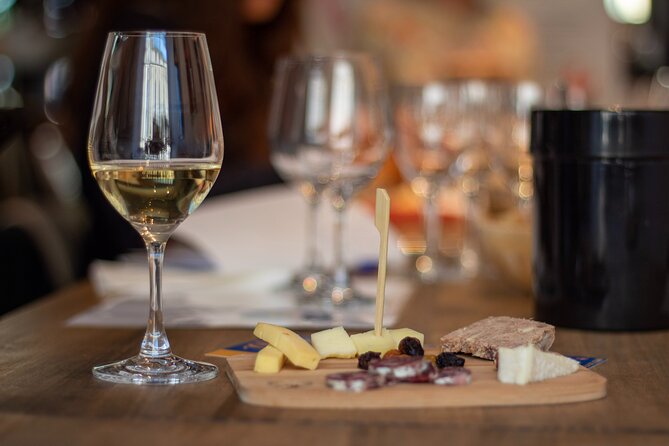
- Three wines with a purpose: You taste a white wine first, then compare a Left Bank red with a Right Bank red, including one Bordeaux Grand Cru.
- A practical first lesson: The host teaches a standard tasting method, plus the basics of terroir, grape varieties, and appellations.
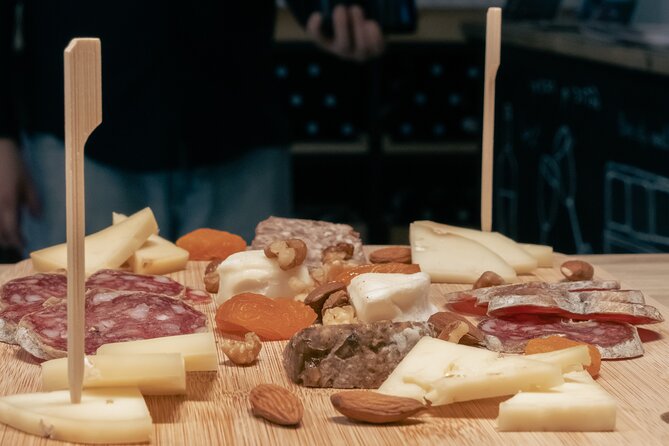
- Food is included: Local cheeses, cold cuts, and fresh baguette accompany the wine at no extra charge.
- Central Bordeaux address: The workshop begins and ends at 2ter Rue Mably, two steps from the Grand Théâtre.
- Good value for a short stop: At $35.09, this is a compact way to get oriented before visiting wine shops or vineyards.
- Language needs attention: The activity is offered in English, but ask for confirmation if an English session matters to you.
A useful first lesson near the Grand Théâtre
The location is one of the activity’s best features. You meet at 2ter Rue Mably, in central Bordeaux, close to the Grand Théâtre. That makes this easy to fit between sightseeing, dinner, or an afternoon walk through the historic center.
You do not need to arrange a car or leave the city. The meeting point is near public transportation, and the experience returns to the same address. Start time is 2:30 pm, which gives you a practical afternoon option after a morning of museums or city wandering.
The room is small and personal rather than grand or formal. That matters here. Wine can be hard to discuss in a crowded tasting hall, while a compact room lets you ask questions and hear the explanation. The tradeoff is comfort. One especially hot afternoon felt warm despite fans, so the room may not be ideal in extreme weather.
The activity is described as a meeting point between a wine bar and an introductory oenology class. That is a good description of the tone. You get instruction, but not a stiff lecture. You also get food and conversation, so the hour feels social as well as educational.
More wine tours in Bordeaux:
- Bordeaux: Cité du Vin Entry Ticket and Wine Tasting
★ 4.6 · 3,885 reviews - Bordeaux: River Garonne Cruise with Glass of Wine and Canelé
★ 4.5 · 3,630 reviews - From Bordeaux: Afternoon Saint-Emilion Wine Tasting & snack
★ 4.8 · 1,581 reviews
How the three-wine tasting unfolds
The tasting begins with a glass of white wine. This is not just a warm-up pour. It gives the host a chance to teach the basic tasting sequence, using a method recognized across the wine trade.
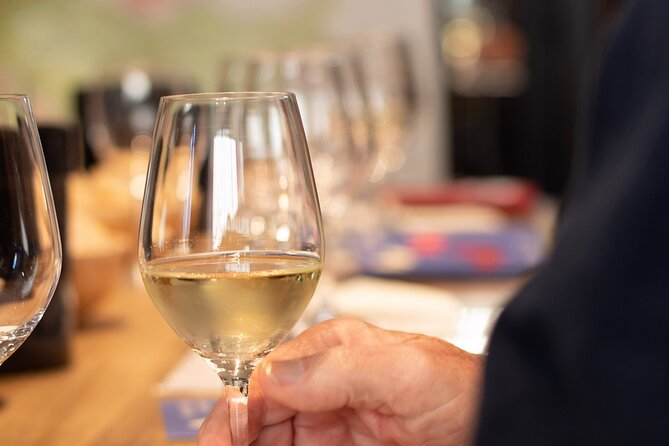
You will be guided through the usual steps of looking, smelling, and tasting. The value is not in memorizing fancy terms. It is in learning how to pause and notice what is in the glass. After this first lesson, you can use the same approach at a restaurant or wine shop.
The white wine also helps reset your expectations. Bordeaux is famous for red wine, but beginning with white wine keeps the lesson from becoming a narrow tour of heavy reds. It gives you a first example before the host turns to the regional comparison that forms the heart of the session.
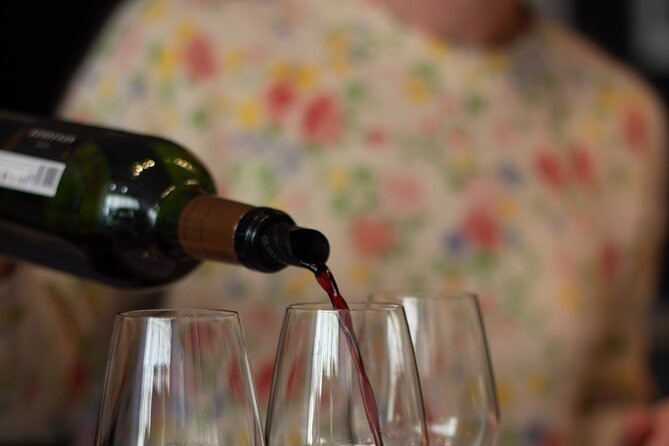
The final two wines are reds, one from the Left Bank and one from the Right Bank. One is a Bordeaux Grand Cru. This side-by-side tasting is the most useful part of the hour because it links what is in your glass to where the wine comes from.
You will hear about the Médoc on the Left Bank and the Libournais on the Right Bank. The point is not to leave with a complete map of every Bordeaux estate. The point is to understand that Bordeaux is not one single style, and that a bottle’s place within the region tells you something important about its character and production.
For a first visit to Bordeaux, that distinction is practical. Wine labels often emphasize the appellation and estate rather than a grape variety in the way many New World wines do. Learning the vocabulary of Bordeaux appellations makes those labels less intimidating.
The host also introduces grape varieties and terroir. Terroir is a broad term, but here it is used in the useful sense: the relationship between soil, climate, place, and winemaking tradition. You will not become a sommelier in an hour, but you should leave with a better idea of why two wines from the same general region can taste different.
Cheese, charcuterie, and the limits of the pairing
The food board includes local cheeses and charcuterie, with fresh baguette available. Water is also included. This is enough to make the tasting feel like a proper afternoon stop rather than three isolated sips.
The food serves two purposes. First, it gives you something to eat while drinking wine. Second, it introduces a simple lesson in food and wine pairing. You can notice how salt, fat, creaminess, and texture affect the wine in your mouth.
Keep your expectations sensible. The board is a snack, not a full meal. If you arrive hungry, eat beforehand or plan dinner later. The included food is a welcome part of the price, but it is not intended to replace lunch.
The pairings may not be presented as a formal cheese-by-cheese or meat-by-meat match. The food is served alongside the tasting, and the discussion focuses on broad pairing principles. If you want a highly structured pairing course, this may feel light. If you want good local snacks while learning the basics, it works well.
Food allergies can be accommodated in at least some cases, but you should raise the issue ahead of time. Do not wait until the board appears. The available information confirms that one food allergy was handled, but it does not promise that every request can be met.
The host makes the difference
Wine instruction succeeds or fails on the person leading it. The strongest part of this experience is the host’s ability to explain technical ideas in plain language and keep the room open to questions.
Several hosts have led these sessions. Antoine has been praised for making the class amusing, interactive, and useful for people with very different levels of wine experience. Toku, also written as Toco in some accounts, is noted for answering questions, sharing ideas for local outings, and giving the group a strong introduction to Bordeaux’s regions.
Anna has led an informal tasting that included sensory challenges. Vincent has hosted a relaxed private tasting. These details suggest that the exact personality and pace depend on the scheduled host, but the common thread is an approachable teaching style.
You should feel free to ask basic questions. The class is designed for beginners, and no prior wine knowledge is required. At the same time, someone who already knows a little about wine can still benefit from the regional comparison and the chance to ask about Bordeaux labels.
The atmosphere is friendly rather than ceremonious. That is good news if the words tannin, appellation, and terroir usually make you nervous. It is less ideal if you want a formal, highly technical lecture with extensive note-taking.
Printed information sheets are included, which gives you something to refer to after the tasting. This matters because wine terminology disappears quickly when you hear it only once. A short handout can help you remember the difference between the two main areas and the tasting steps.
Other cheese and charcuterie tastings around Bordeaux:
- Professional – Bordeaux Wine and Cheese Tasting with a walking tour
★ 5.0 · 218 reviews - Tasting of 6 Bordeaux wines and pairing charcuterie & cheese
★ 5.0 · 199 reviews - Bordeaux: Wine Masterclass with Cheese and Charcuterie Board
★ 4.9 · 184 reviews - Bordeaux Wines Masterclass paired with cheeses & charcuterie
★ 5.0 · 110 reviews
Why the Left Bank and Right Bank comparison matters
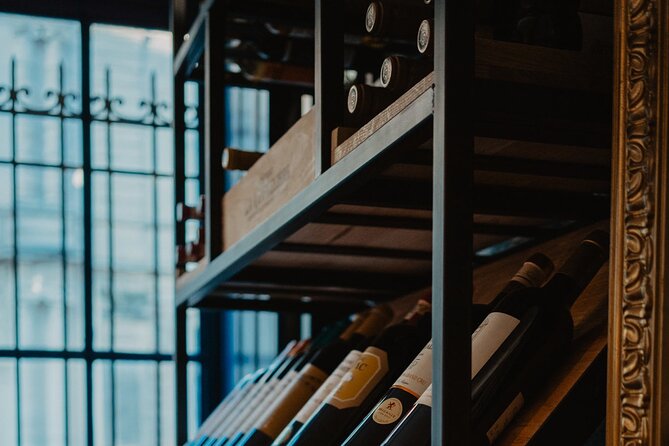
Bordeaux is easier to understand when you stop treating it as one large wine region. The Left Bank and Right Bank are shorthand for different areas around the rivers near the city, and they are central to the way Bordeaux wine is discussed.
This tasting uses one red from each side. That does not provide a complete survey, but it gives you a direct comparison. Instead of hearing a list of appellations, you taste two examples and connect the lesson to your own senses.
The Left Bank example comes from the Médoc area, while the Right Bank wine represents the Libournais. One of the reds is a Grand Cru, which adds a chance to taste a more prestigious Bordeaux wine within the same educational format.
Do not expect the host to turn this into a full vineyard tour. You will not be driven through the countryside or shown individual châteaux. The value is orientation. If you plan to visit wine country later, this short lesson can help you understand what you are seeing and tasting.
It is also useful before buying a bottle in Bordeaux. The session will not tell you which wine you personally must like, but it can make your choice less random. You will have heard how the region is organized and practiced a method for judging what is in the glass.
What $35.09 buys you
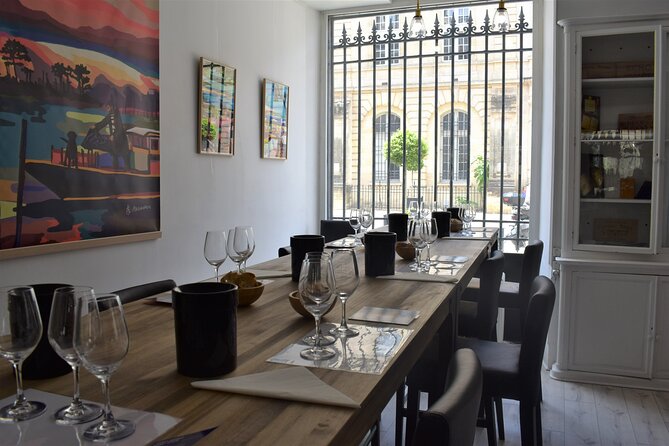
At $35.09 per person, the price is reasonable for Bordeaux, especially because it includes three wine tastings, a cheese and charcuterie board, baguette, water, printed material, and an expert-led class.
The strongest value comes from the combination of instruction and tasting. You are not simply paying for wine samples. You are paying for context, which is often what makes a tasting useful after you leave the room.
The small-group maximum of 12 also helps the price feel fair. A host can respond to questions and adapt the explanation to beginners or more experienced participants. The format is described as a private tasting, though the maximum group size means you should not assume you will always have the host entirely to yourself.
There are limits. The session lasts about one hour, although some descriptions place the experience closer to an hour and a half. Plan around approximately one hour, but allow a little flexibility if discussion runs over. One account found the class rushed because another group was expected soon, so this is not the place for a leisurely evening tasting.
Personal expenses are not included. That mainly matters if you decide to buy bottles afterward. Some people have returned for more wine or purchased bottles after the class, but those purchases are separate from the activity price.
English, group size, and practical comfort
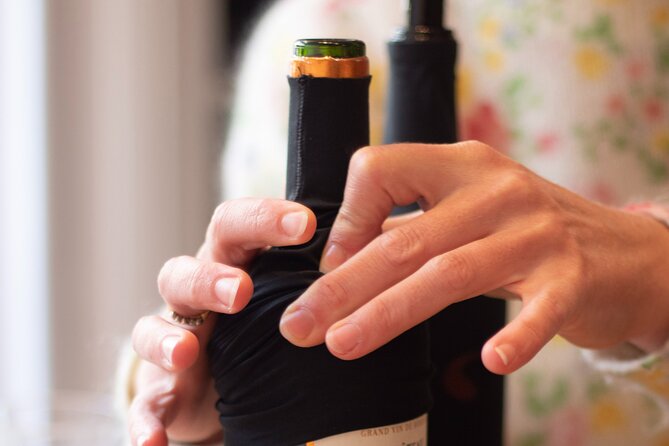
English is listed as an available language, and several sessions have been conducted successfully in English. Still, language deserves a quick check before you book. One participant selected the English filter but found the session was mainly in French, with some English help and a translation app filling the gaps.
That does not mean every session has a language problem. It does mean you should confirm the language when English instruction is essential. A French-accented guide may also speak quickly, which can make technical terms harder to catch.
The group limit is 12 people. That is small enough for interaction but not necessarily a one-on-one lesson. If you value individual attention, book with the understanding that the private format may still include other people.
The activity allows service animals and is near public transportation. The available details do not describe every accessibility feature of the room, so anyone with mobility needs should contact the provider before booking.
The session begins and ends at the meeting point. That simplicity is useful after a glass of wine. You do not need to find a separate ending location or coordinate a ride from a distant vineyard.
Who should book this Bordeaux wine class?
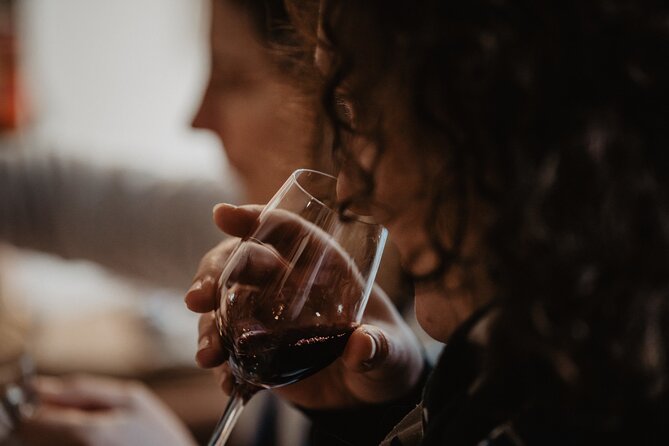
I would choose this experience for a first-time Bordeaux visitor with limited time. It gives you the regional vocabulary and tasting habits you need without taking half a day away from the city.
It is also a good fit if you feel uncertain in French wine shops. The lesson on appellations, grape varieties, and the two main Bordeaux areas can make a bottle label easier to approach. You may not leave able to identify every vintage, but you should feel less dependent on guesswork.
Couples and small groups of friends will likely enjoy the social side. The cheese, charcuterie, and bread make it easy to talk while the host teaches. Solo visitors can also benefit from the compact group, especially if they want an organized activity in the afternoon.
Wine enthusiasts should treat it as a refresher rather than a specialist seminar. The Grand Cru tasting and regional comparison add interest, but the course is built around basic notions. You will not get a full study of vintages, estates, soil types, or cellar practice in one hour.
Families with children may want to think carefully because this is an adult wine tasting, and the supplied information does not describe a child-focused format. Anyone seeking a vineyard visit, extensive food pairing, or a full meal should choose a longer activity instead.
Cancellation and booking advice
You can cancel for a full refund up to 24 hours before the local start time. Changes or cancellations made inside that window are not accepted and are not refunded.
The activity requires good weather. If the provider cancels because of poor weather, you will be offered another date or a full refund. Since the tasting takes place in the city, check the details of any weather-related notice before setting out.
Confirmation is provided at booking. Because the experience is often booked around 15 days ahead, reserve early if the 2:30 pm time is important to your schedule.
Should you book it?
Book this class if you want a short, affordable introduction to Bordeaux wine with real tasting practice and local food. The three-glass structure is well chosen, the Left Bank and Right Bank comparison gives the lesson a clear purpose, and the hosts generally make the subject friendly rather than intimidating.
Skip it if you want a countryside château visit, a full meal, or a long technical seminar. Also check the session language if you do not speak French, and allow for the possibility that the hour may feel brisk.
For most first-time visitors, this is a sensible way to get your bearings before buying wine or heading into Bordeaux’s vineyards. The 4.9 rating from 175 reviews and 98 percent recommendation fit the experience’s main strengths: clear teaching, good food, pleasant hosts, and a useful amount of Bordeaux knowledge packed into a short city-center stop.
FAQ
Where does the Bordeaux wine tasting begin?
The experience begins at 2ter Rue Mably, 33000 Bordeaux, France, near the Grand Théâtre.
What time does the activity start?
The listed start time is 2:30 pm.
How long does the wine tasting last?
The duration is approximately one hour. Some descriptions and experiences have run closer to an hour and a half, so allow a little extra time.
How many wines will I taste?
You will taste three wines: one white wine, one red from the Left Bank, and one red from the Right Bank. One of the red wines is a Bordeaux Grand Cru.
Is food included?
Yes. The experience includes a board of local cheeses and cold cuts, fresh baguette, and water.
Do I need previous wine experience?
No. The host introduces basic ideas such as terroir, grape varieties, appellations, and the standard steps of wine tasting. The explanation can be adapted for beginners or people with more wine experience.
Is the activity offered in English?
English is listed as an available language. Because at least one session was conducted mainly in French despite an English selection, confirm the language before booking if this is important to you.
What is the maximum group size?
The activity accepts a maximum of 12 people.
Can I cancel for a refund?
You can cancel up to 24 hours before the start time for a full refund. Cancellations or changes made less than 24 hours before the start are not accepted and are not refunded.
Just added in Bordeaux
- Au Cœur du Château – VSOP D’USSÉ & XO BARON OTARD★ 4.5 · 108 reviews
- Discover Braastad Cognac★ 5.0 · 52 reviews
- retro road trip/ Méhari, 2CV & Burton in Rochefort, La Rochelle★ 5.0 · 28 reviews
- Saint Emilion Full Day Wine and Bike Tour★ 5.0 · 167 reviews
- Virtual Room Bordeaux – 1st team virtual reality experience★ 5.0 · 47 reviews
- Private Bordeaux History Tour with a glass of Bordeaux wine.★ 5.0 · 28 reviews
- Luxurious full day Bordeaux wine tour in a Tesla★ 4.5 · 31 reviews
- Wine Masterclass & Cheese Tasting Workshop in Bordeaux★ 5.0 · 29 reviews
Wine Tours, compared.
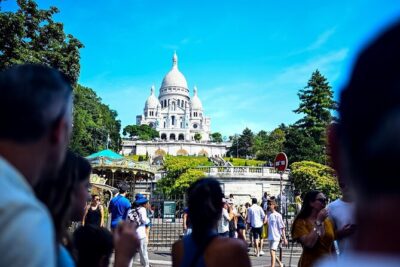
Authentic Parisian Gourmet Food Tour with 10 Local Dishes & Wines
Read our review →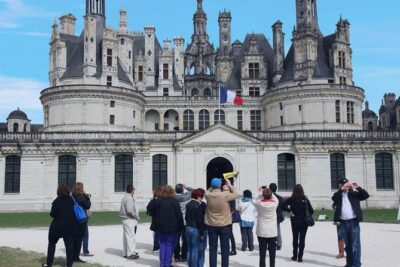
Loire Valley Castles Day Trip from Paris with Complementary Wine
Read our review →
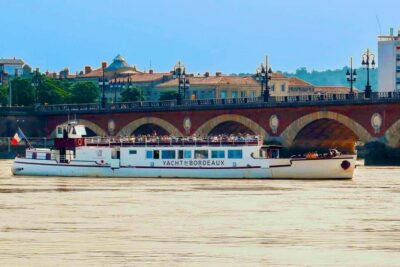
River Garonne Cruise with Glass of Wine and Canelé
Read our review →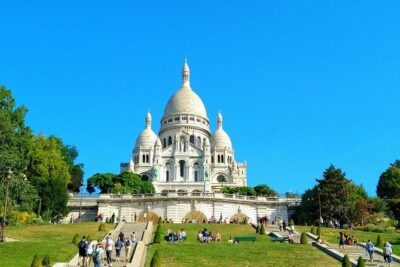
Montmartre Hill French Gourmet Food and Wine Tasting Walking Tour
Read our review →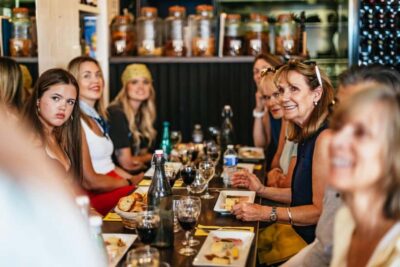
Montmartre Cheese, Wine & Pastry Guided Walking Tour
Read our review →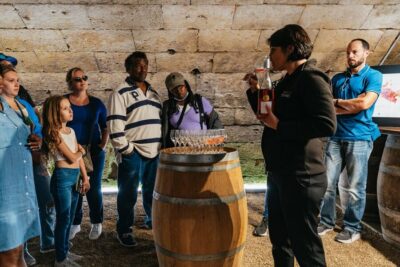
Loire Valley Castles Day Trip With Wine Tasting
Read our review →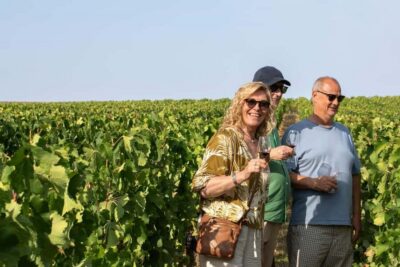
Afternoon Saint-Emilion Wine Tasting & snack
Read our review →Browse the lists this tour appears in