
Reviewed · MUSEUMS
Paris: Orangerie Museum Skip-the-Line Entry and Guided Tour
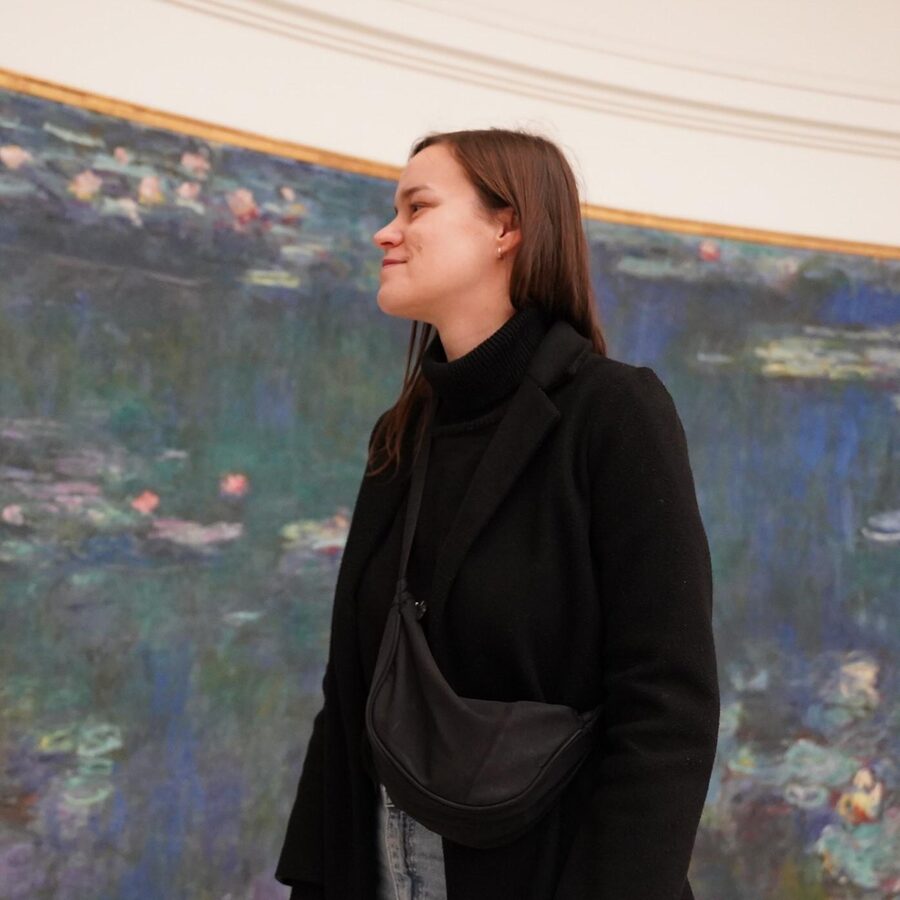
Monet’s enormous water lilies are the heart of this two-hour visit. In the Orangerie’s famous oval rooms, the paintings wrap around you, turning a museum stop into a quiet encounter with light, water, and color. The tour then traces how French painting changed from Renoir and Cézanne to Matisse, Picasso, Modigliani, and Utrillo.
I like the small group size of up to eight and the way an art historian can connect the paintings to the artists’ lives and the times they lived in. I also like the easy approach through the Tuileries Gardens. The main drawback is the price, $128 per person, and the tour may move quickly for anyone who wants to study every canvas at length.
Key points
- Monet’s oval rooms: See the large water lily panels in their permanent home at the Orangerie.
- A clear story of modern art: Follow the shift from Impressionism to later experiments in color, portraiture, and form.
- Small groups capped at eight: A guide can answer questions without the feel of a large museum crowd.
- A useful Tuileries walk: Reach the museum through one of central Paris’s most scenic formal gardens.
- Guides with different strengths: Hugo, Malaika, Barbara, Sunday, Belen, and Lily have all led engaging, well-informed tours.
- Two hours with skip-the-line entry: The format suits first-time visitors who want context without giving up a full day.
Monet’s water lilies in the oval rooms
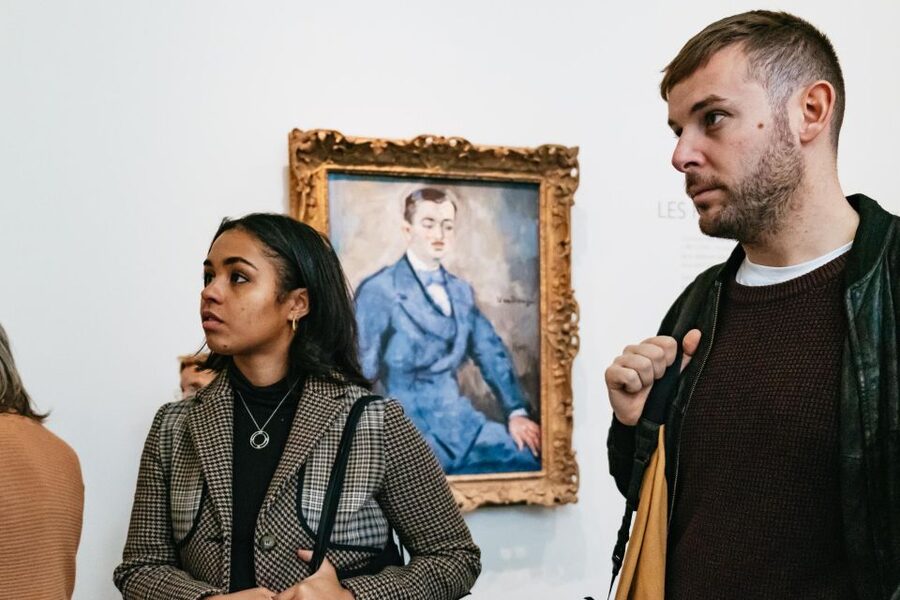
The Orangerie is not a huge museum, and that is part of its appeal. You can see important works without needing an entire afternoon, yet the collection covers a major turning point in European art.
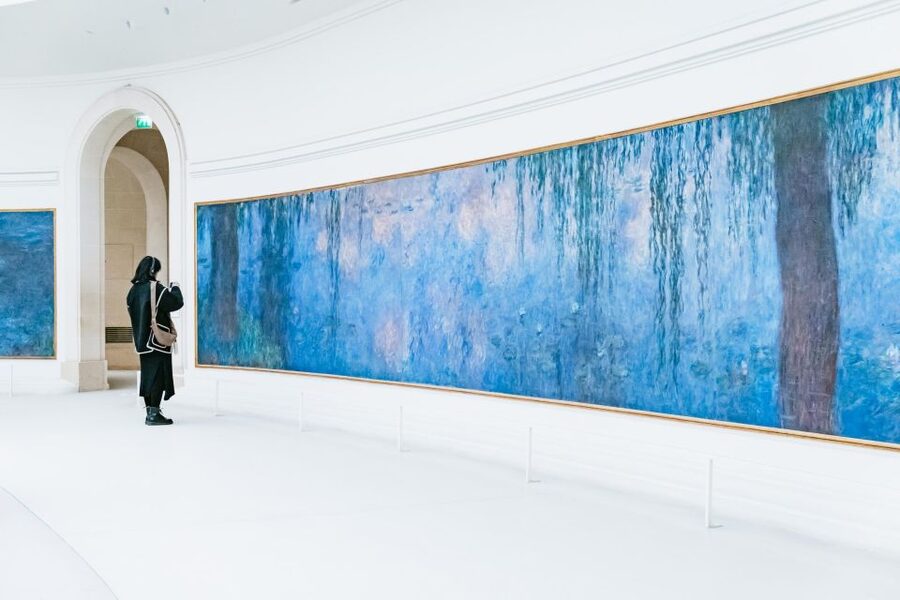
The first major stop is Monet’s water lily cycle. These large panels were designed to be seen together, not as isolated pictures in a crowded gallery. Their broad surfaces show water, reflections, plants, and shifting light rather than a traditional scene with a clear horizon.
I find the scale important. In a book or on a phone, Monet’s paintings can look like pleasant studies of a pond. In the oval rooms, they take up your field of vision. The soft brushwork and nearly floating forms ask you to slow down and look for small changes in color.
Your guide may ask you to compare the paintings, notice how the light changes, or consider why Monet moved away from sharply defined objects. That kind of direction helps if you are new to Impressionism. You still have time to look on your own, but you are less likely to walk past the paintings after a quick glance.
The rooms also have rules about quiet and speaking. That can limit how much your guide can talk in certain areas, but it protects the calm quality of the space. Expect a quieter presentation here than in a typical museum gallery.
More museums in Paris:
- Paris: Louvre Museum Timed-Entrance Ticket
★ 4.6 · 71,977 reviews - Louvre Museum Masterpieces Guided Tour with Access
★ 4.5 · 12,023 reviews - Paris: Louvre Museum Entry Ticket With Host and River Cruise
★ 4.6 · 9,926 reviews
From the Tuileries Gardens to the former royal orangery
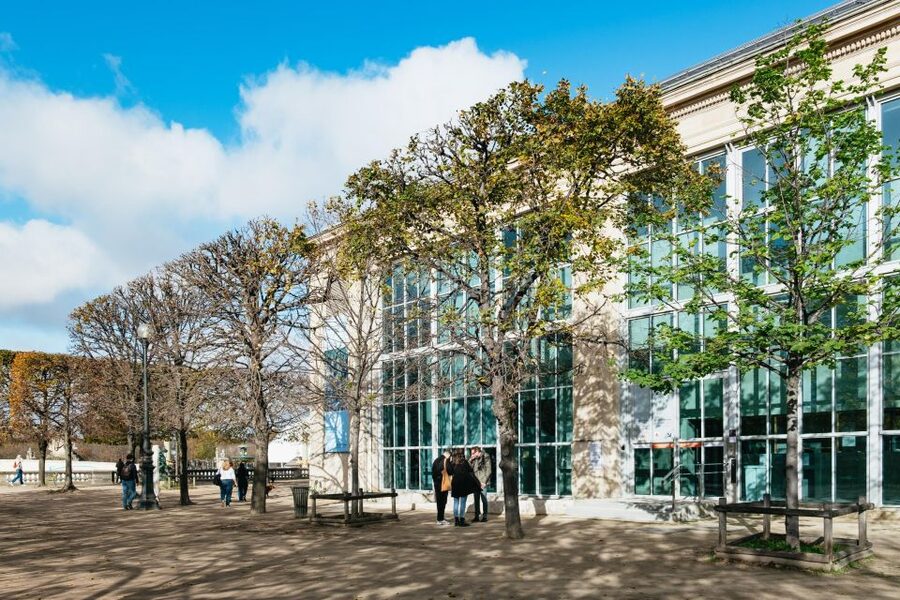
The meeting point can vary with the option you choose, so check your booking details before setting out. The route to the museum includes a walk through the Tuileries Gardens, which gives the visit a pleasant beginning rather than sending you straight from a Metro entrance into a security line.
The building itself was once used by the royal household to shelter orange trees during winter. That past gives the museum a useful sense of place. You are not entering a purpose-built modern art box. You are visiting a former orangery that now houses one of Paris’s most important collections of modern French painting.
I like this short garden approach because it gives you a moment to arrive. The formal paths and open spaces also make a good buffer between the noise of central Paris and the quiet oval rooms. Still, the tour runs rain or shine, so bring clothing suited to the forecast. There is a moderate amount of walking, including the route to and through the museum.
Do not bring luggage or large bags. You should also carry a passport or other identification, as required for the activity.
How the two-hour art story unfolds
After Monet, the guide turns the museum visit into a short history of changing ideas. The point is not simply to identify famous names. It is to show how one generation challenged the methods of the generation before it.
Renoir helps place Impressionism in context. His delicate brushwork and attention to everyday beauty show the movement’s interest in quick impressions, natural light, and scenes that did not always look polished or formal. A guide can help you see how this approach differed from the academic style favored by established institutions.
Cézanne brings another shift. His still lifes of fruit and flowers may seem quiet, but they raise questions about structure, shape, and the act of seeing. You may leave with a better sense of why later painters treated Cézanne as a bridge to modern art. His work does not simply record a bowl or a table. It examines how those forms are built on the canvas.
Matisse offers a different kind of break from realism. His portraits use color and pattern in ways that can feel bold, decorative, or deliberately unlike ordinary observation. I would pay attention here to how the guide explains the emotional effect of color, not just the subject of each portrait.
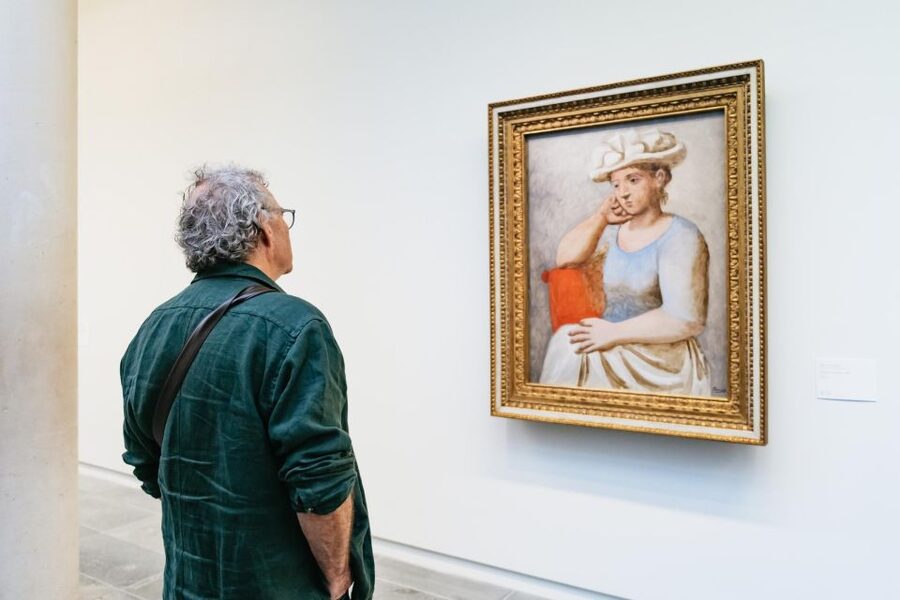
The collection also includes Picasso’s changing treatments of nude models. These works are useful for seeing how one artist could move through different styles and ways of constructing the human body. Rather than presenting Picasso as a single familiar look, the tour places his work within an ongoing process of testing and revision.
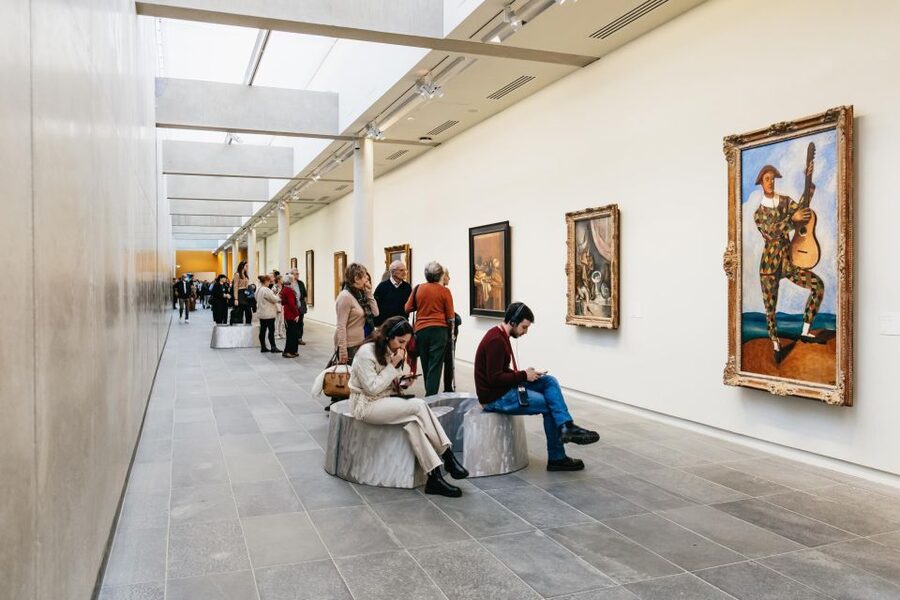
Modigliani and Utrillo add further changes in mood and technique. Their paintings help show that modern art did not develop in one straight line. Several approaches existed at once, from expressive portraits to views shaped by simplified forms and distinctive brushwork.
This sequence is one of the tour’s strongest features. If you visit alone, you can enjoy the pictures but miss connections between them. A good guide gives you a framework for understanding why these works share a museum and why they do not all look alike.
What the guides add to the paintings
The quality of this experience depends heavily on the person leading it. The strongest guide reports describe clear explanations, thoughtful answers, and an ability to connect art with the artists’ circumstances.
Hugo has been especially praised for combining art history with stories about artists, patrons, and the social conditions of their time. His approach includes music during the Monet section, with Clair de lune used while visitors look at the water lilies. That is a carefully chosen touch, although some people may prefer silence while studying the paintings.
Malaika suits visitors who want a more personal conversation. Her approach is described as attentive and responsive, which matters in a small or private group where your questions can shape the pace.
Barbara has worked especially well with younger visitors. If you are bringing a child, her approach with a nine-year-old offers a useful model: she connects the paintings to the artists’ lives and invites the child into the picture instead of giving a string of technical facts.
Sunday is another guide to consider if you enjoy art paired with social history. Her approach links the museum’s works to the way people thought about art at the time, making the visit about cultural change as well as brushwork.
Belen and Lily are also described as bringing strong command of the collection and clear explanations. Guide assignments can vary, so you should not book on the assumption that a particular person will lead your tour. The names are useful mainly because they show the range of presentation styles available.
Same base, a different kind of day:
- Disneyland® Paris 1-Day Ticket
★ 4.6 · 49,412 reviews - Paris: Versailles Palace and Gardens Full Access Ticket
★ 4.6 · 41,579 reviews - Paris: Evening River Cruise with Music
★ 4.4 · 22,721 reviews - Paris: Eiffel Tower Entry Ticket with Optional Summit Access
★ 4.4 · 20,035 reviews
Skip-the-line entry and group size
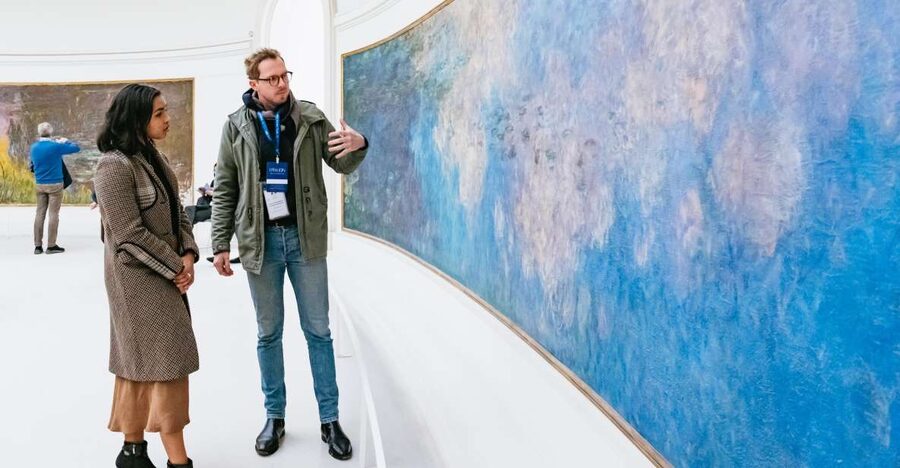
The skip-the-line ticket is most useful when the museum is busy. It removes the need to spend part of your limited Paris day waiting outside, though it does not turn the museum into a private space. You will still follow museum entry rules and any security procedures in place.
The maximum group size is eight people per guide. That is a meaningful limit. In a large group, questions often get lost and the guide has to speak to the back row. Here, you can usually hear the explanation clearly and ask about a painting without interrupting a long lecture.
Private and small-group options are available. A private format costs more in many tour settings, but the supplied price is listed as $128 per person and may vary by option or availability. Check the exact choice before paying, especially if you are comparing a private tour with the semi-private version.
The semi-private tour needs at least two participants to operate. If that minimum is not reached, an alternative date or a full refund is offered. That is worth knowing if you are building a tightly timed museum day.
Is $128 a fair price?
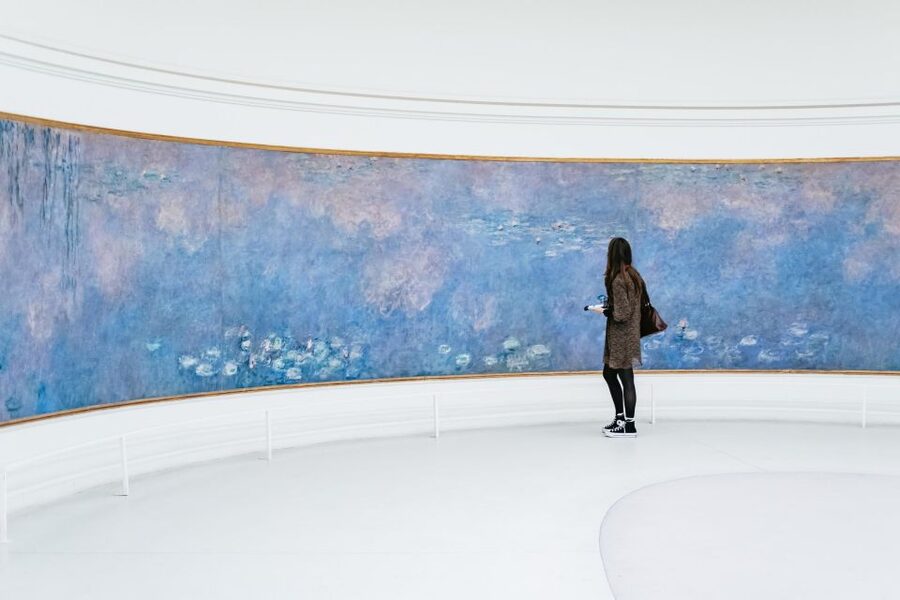
At $128 per person, this is not a budget museum entry. The value rests in three things: the included entrance fee, the skip-the-line access, and the guide’s ability to make the collection intelligible in two hours.
If you already know Impressionist and modern art well, you may find the cost hard to justify. You could prefer a self-guided visit, especially if your main goal is to sit quietly with Monet and spend as long as you like in the galleries.
For a first visit, the calculation is different. The Orangerie’s collection is compact, but its ideas are not always easy to follow without context. A guide can explain why Cézanne matters, how Matisse used color, and how Picasso changed his treatment of the body. That can save you from seeing a series of famous names without understanding their connections.
I see the tour as better value for visitors with limited museum time, art lovers who want a specialist’s explanation, and families who need help keeping a child engaged. It is less attractive for anyone seeking a slow, silent, low-cost museum morning.
Practical limits you should plan around
The tour lasts two hours, with starting times dependent on availability. That makes it easy to fit into a larger Paris itinerary, but do not assume you can arrive late and catch up. The meeting point may differ by booking option, so allow enough time to find the guide near the Tuileries.
The route includes a moderate amount of walking. The semi-private tour is not suitable for people with mobility impairments, and you should contact the provider about specific mobility needs before booking.
The museum can close rooms or alter access without much warning. If opening is delayed by more than an hour, an alternative is provided, but refunds or discounts are not available in those circumstances. Temporary exhibitions are not included, so the tour focuses on the permanent collection.
Tours are offered in English, French, Russian, Italian, Spanish, and German. Language availability depends on the option and starting time you select.
Free cancellation is available up to 24 hours before the tour for a full refund. You can also reserve now and pay later, which helps if your Paris schedule is still shifting.
Who should book this Orangerie tour?
I would choose this experience if you want Monet to be more than a quick photograph and you would like a clear explanation of the art that follows. The guide gives the collection a beginning, middle, and end, while the small group keeps the visit personal.
It also suits families. Barbara’s success with a nine-year-old shows how the right guide can turn portraits and landscapes into stories about people, choices, and changing ideas. Ask about family needs when booking, since the assigned guide is not guaranteed.
Art specialists may prefer to visit independently. The Orangerie is small enough to manage on your own, and a self-guided visit lets you linger in the oval rooms without keeping pace with a group.
FAQ
How long is the Orangerie Museum tour?
The tour lasts two hours. Starting times vary, so check availability for the date you want.
What does the tour include?
It includes skip-the-line entrance to the Orangerie Museum, the museum admission fee, an art historian guide, and the guided museum visit.
Is this a private tour?
Private and small-group options are available. The small-group format has a maximum of eight people per guide.
Which languages are available?
The live tour guide may be available in English, French, Russian, Italian, Spanish, or German, depending on the selected option.
Does the tour include Monet’s water lilies?
Yes. The visit includes Monet’s famous water lily paintings in the museum’s oval rooms.
Does the price include temporary exhibitions?
No. Temporary exhibitions are not included in the activity.
Is hotel pickup included?
No. Hotel pickup and drop-off are not included. The tour begins and ends at the stated meeting point.
Can I cancel the booking?
You can cancel up to 24 hours in advance for a full refund. Reserve now and pay later is also available.
Is the tour suitable for people with mobility impairments?
The semi-private tour involves a moderate amount of walking and is not suitable for people with mobility impairments. Contact the activity provider about your specific needs before booking.
Should you book it?
Book this tour if you want a focused, guided introduction to Monet and the painters who pushed French art into modern territory. The oval water lily rooms, small group size, and strong art-history emphasis make the $128 cost easier to justify for a first visit.
Skip it if you want the lowest-cost entry or plan to spend a long, unhurried morning studying each work alone. For most first-time visitors with only a few hours, though, the guide’s connections between Monet, Renoir, Cézanne, Matisse, and Picasso can make the Orangerie far more rewarding than a quick walk through famous paintings.
Just added in Paris
- Private Transfers in Paris★ 5.0 · 75 reviews
- Disneyland® Paris 1 Day Ticket with Transport from Paris★ 3.5 · 302 reviews
- Personalized Transport service from Disneyland to Paris★ 5.0 · 63 reviews
- CDG – Euro Disney – CDG Two Way Private Shuttle Transfer★ 5.0 · 233 reviews
- Monet’s Gardens & House-Private Giverny Tour From Paris★ 4.5 · 137 reviews
- Giverny Monet House and Gardens Skip the line Walking tour★ 4.0 · 217 reviews
- Guided tour Monet’s house and gardens/small group★ 4.5 · 68 reviews
- Monet’s House and Garden & Giverny Village★ 4.5 · 39 reviews
Museums, compared.
Louvre Museum Masterpieces Guided Tour with Access
Read our review →
Louvre Museum Entry Ticket With Host and River Cruise
Read our review →
Les Invalides: Napoleon’s Tomb & Army Museum Entry
Read our review →
Louvre Museum – Exclusive Guided Tour (Entry Included)
Read our review →
Louvre Museum Hosted Entry and Mona Lisa Audioguide
Read our review →
Louvre Museum Tour Mona Lisa & Iconic Masterpieces
Read our review →
Browse the lists this tour appears in