
Reviewed · WALKING TOURS
Strasbourg : European District Walking Tour
Strasbourg’s European District tells a powerful story: a city once caught between France and Germany became a working symbol of cooperation. This 90-minute walk brings that story to the streets, from the Council of Europe and European Court of Human Rights to the modern Wacken district.
I like the small groups of no more than six, which leave room for questions and personal advice. I also like the contrast between new bike paths and institutional buildings and the unusual Art Nouveau homes near the Orangerie. The main limitation is simple: you see the European Parliament from outside, then finish near its entrance, but entry is not part of the tour.
- A compact look at European power: Learn what the Council of Europe, European Court of Human Rights, and European Parliament each do.
- A small-group format: With up to six participants, the guide can answer questions and adjust the pace.
- Strasbourg beyond the old center: Walk through the modern Wacken district and along the Ill River.
- Art Nouveau surprises: See distinctive houses around the Orangerie area near the European District.
- Guides with local personality: Nicolas and Remy have led this walk, with Nicolas noted for clear explanations, humor, and useful restaurant tips.
- A useful Parliament add-on: The walk ends near the Parliament entrance, so you can visit it independently afterward when open.
Why Strasbourg’s European District Matters
Many visitors come to Strasbourg for the cathedral, timber-framed streets, and canals. Those sights deserve their time, but the European District explains why this city carries such political weight.
For centuries, France and Germany struggled over Alsace and Strasbourg. The city’s position near the border made it a symbol of conflict. After the disasters of the 20th century, it became a fitting home for institutions built around cooperation, human rights, and shared political work.
The guide uses the walk to connect those broad events with the buildings in front of you. That makes the subject easier to follow than a museum display alone. You are not only hearing about the European Union in the abstract. You are standing beside the institutions that helped shape modern Europe.
I especially like this focus for anyone who wants more than a postcard view of Strasbourg. The tour gives you a clearer sense of how the city fits into European politics, while still keeping the walk practical and easy to follow.
Starting at the Agora, Council of Europe
The meeting point is the Agora, Conseil de l’Europe. Look for a guide wearing a black T-shirt with the orange Bretzel&Fun logo. The guide may be Nicolas or Remy, depending on the departure.
This is a useful starting point because the Council of Europe is one of the main institutions explained during the walk. The guide also covers the European Court of Human Rights and helps you understand how its work differs from the European Union institutions nearby.
That distinction matters. The Council of Europe is not the same thing as the European Union, and the European Court of Human Rights is not the European Union’s court. A good explanation here prevents the common mistake of treating every European building as part of one single organization.
The small group size improves this opening section. With a maximum of six people, you can ask for clarification without holding up a large crowd. The available languages are English and French, so choose the language that lets you ask the most questions.
Bring a passport or identity card. The tour takes place rain or shine, so a weather check before leaving your hotel is sensible. Wear shoes suited to a 90-minute walk, although the experience is not designed for people with mobility impairments.
More walking tours in Strasbourg:
- Strasbourg: Walking Tour with a Local Guide
★ 4.3 · 607 reviews - Strasbourg: Walking Tour with Local Guide
★ 5.0 · 598 reviews - Strasbourg: Guided Historical Neighborhoods Walking Tour
★ 4.9 · 275 reviews
The Council of Europe and the European Court of Human Rights
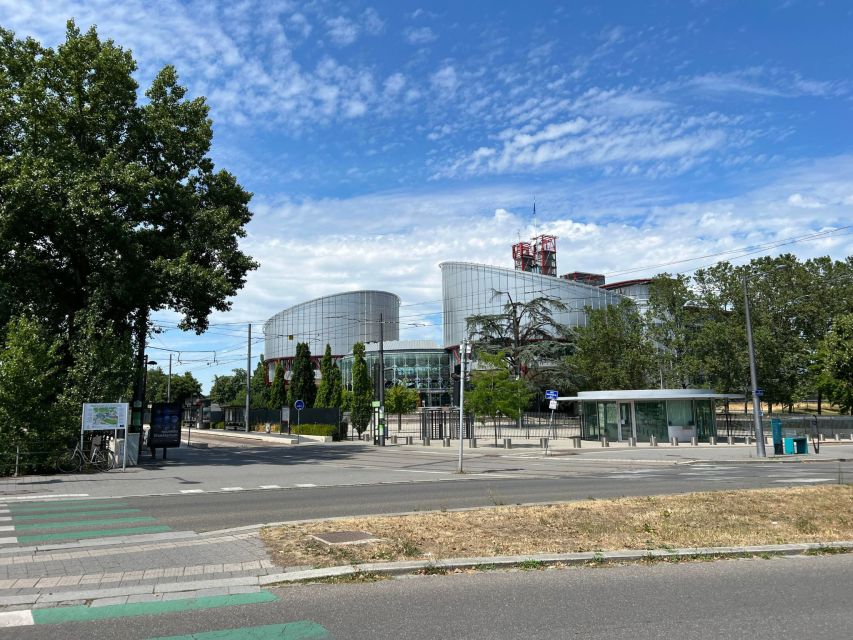
The walk pauses near the Council of Europe and the European Court of Human Rights. You will not be entering these institutions, but the outside views provide a clear setting for the guide’s explanations.
The Council of Europe is connected with cooperation among European countries and the protection of rights. The European Court of Human Rights deals with cases involving the European Convention on Human Rights. The tour explains the particular role of each institution rather than simply pointing to the buildings and moving on.
This is the most useful section for anyone who wants political context without signing up for a long academic lecture. The guide links the organizations to Strasbourg’s past, then explains why the city became associated with European cooperation.
The walk also leaves space for lighter moments. Nicolas has been praised for mixing serious historical points with funny anecdotes, and for keeping the subject enjoyable even for a teenage participant. That balance is important. European institutions can sound dry when presented as a list of names and dates. Stories and local observations make the material easier to remember.
Do not expect an inside tour of government offices. Security rules, working schedules, and access limits mean that this is an outdoor orientation walk. If you want interiors, exhibitions, or a formal institutional visit, you will need to arrange those separately.
Art Nouveau Houses Near the Orangerie
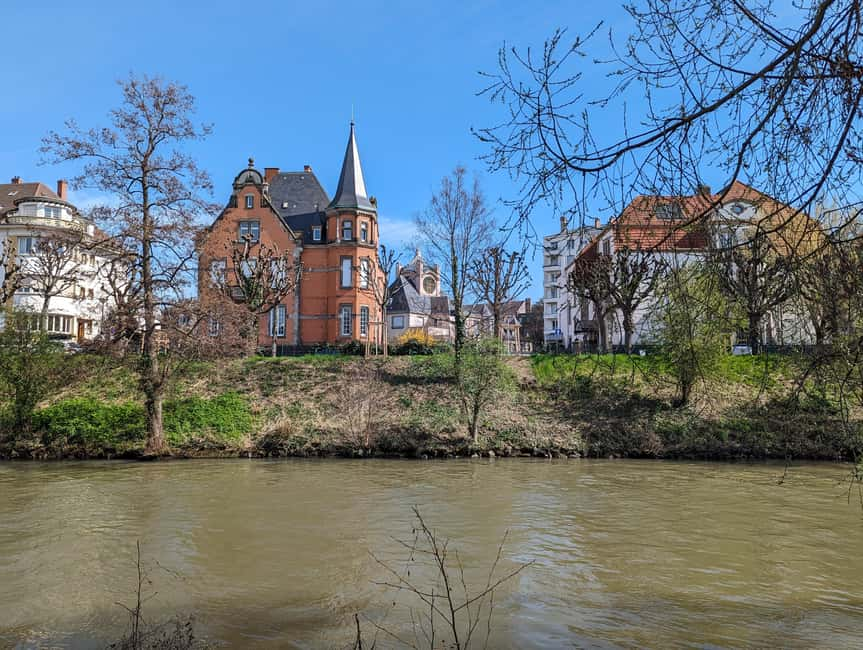
One of the walk’s more unexpected changes of mood comes near the Orangerie District. Close to the European buildings, the guide points out well-known Art Nouveau houses and other unusual residences.
This gives the route more variety than a purely political tour. You move from public institutions and European history to private architecture, where details in the façades and unusual designs become the focus. It is a reminder that the district is not only a collection of offices.
I like this part because it adds a local layer to the tour. The European District can seem formal from a distance, but these houses make it feel more like a lived-in Strasbourg neighborhood. They also offer good photo opportunities, one of the practical benefits included in the walk.
The information provided does not promise entry into any house, so plan to admire the architecture from the street. The appeal is in the contrast and the guide’s explanation, not in an interior visit.
Walking Beside the Ill River Into Wacken
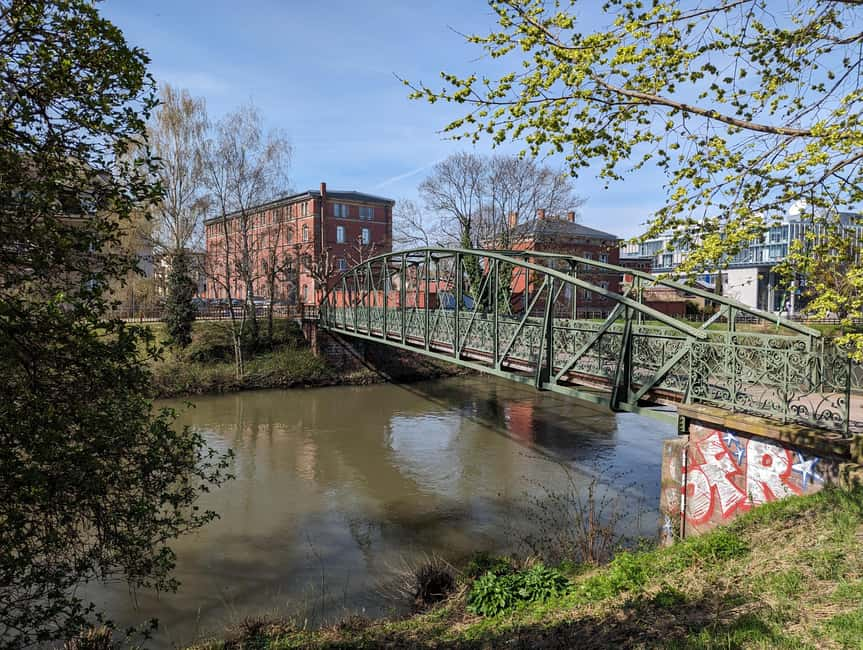
The route continues toward the Ill River and the Wacken district. This is the modern side of Strasbourg, with new buildings, cycle paths, and ongoing growth.
Wacken helps you see a city changing in real time. Its newer architecture and transport-friendly design feel different from the historic center, but the two areas belong to the same Strasbourg. The river adds a pleasant outdoor setting as the tour moves toward the Parliament area.
This part is less about famous monuments and more about how the city functions. You get a look at a district shaped by business, institutions, housing, cycling, and public space. For a first visit, that wider view can be useful. It shows you that Strasbourg is not frozen in its past.
The route also creates a natural break from the heavier political material. A walk beside the Ill gives the guide room to explain the district without keeping every moment focused on institutional terminology.
Because the tour is only 90 minutes, do not expect a full exploration of Wacken. You get an introduction, not an exhaustive neighborhood tour. The compact length is helpful if you have a busy day, but it also means the guide must keep moving.
Same base, a different kind of day:
- Strasbourg: Euro Guided Tour by Segway
★ 4.7 · 808 reviews - Colmar, Medieval Village & Castle Small Group from Strasbourg
★ 5.0 · 769 reviews - 2-Hour Strasbourg Euro Tour by Segway
★ 5.0 · 642 reviews - From Strasbourg: Best Of Alsace Historical Day Trip
★ 4.7 · 633 reviews
Finishing Near the European Parliament
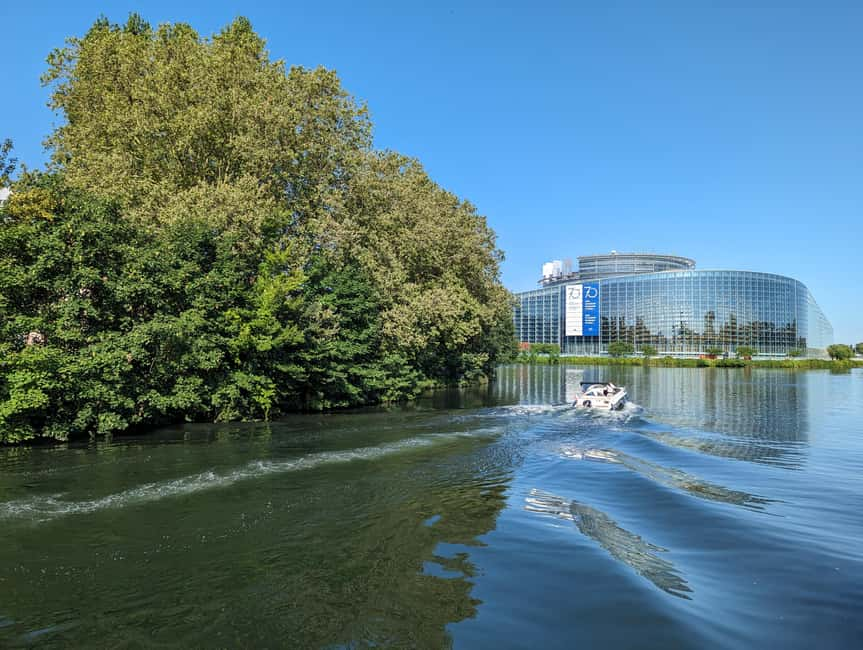
The final part focuses on the European Parliament, where elected deputies from EU member countries vote on European laws. The guide explains how the institution works and points out the building from outside.
This is an important distinction when booking. The tour is not a Parliament ticket, and you will not enter the building with the group. The walk ends close to the entrance, however, so you can continue on your own and visit when access is available. Entry to the Parliament is free, but the walking tour does not include it.
That arrangement can work well if you want both experiences. Take the guided walk first, then go inside independently afterward. One recent booking combined the two in that order, which is a sensible way to get the political background before seeing the Parliament for yourself.
Allow time for the separate visit if it matters to you. The tour itself lasts 90 minutes, and the guide cannot promise how long an independent Parliament visit will take or whether access will suit your schedule. Treat the outside stop as the end of the tour, with the interior visit as an optional extra.
What the Small Group Adds
A group capped at six is one of the strongest features here. You are not trying to hear a guide over a large crowd, and questions can shape the conversation.
The format is especially useful for the European institutions, where you may want to pause over a name or ask how two organizations differ. It also helps during the Art Nouveau and Wacken sections, where a private guide can point out details that would be easy to miss while walking alone.
The guides bring different personalities. Nicolas has been described as friendly, clear in English, funny, and generous with local suggestions, including advice about where to eat. Remy has also led the tour and is known for giving friendly, engaging explanations and taking time with questions.
Do not read that as a guarantee that every departure will have the same guide or exactly the same style. It does show the kind of experience to expect: a personal walking tour rather than a scripted procession.
Is $35 a Fair Price?
At $35 per person, this is not the cheapest way to walk through Strasbourg. You can reach the European District on your own and read about the buildings for free. The value comes from having the history, institutional distinctions, architecture, and city planning explained during one organized route.
The price looks fair if you are curious about the European Union but do not want a long museum visit or a full-day excursion. You are paying for a local guide, a small group, and a structured 90-minute introduction. The added advice for the rest of your stay also matters, particularly early in a Strasbourg visit.
The value is weaker if you only want to see the Parliament interior. Since admission is not included, you would need to arrange that separately. It is also not the right choice if you want a deep architectural tour, a visit inside several institutions, or a leisurely day in Wacken.
I would place it in the good-value category for a first visit, especially when the group remains small. It works best as a focused introduction rather than a complete political or architectural study.
Who Should Book This Walk?
I would recommend it to you if you enjoy understanding how a place works. The tour suits adults interested in European politics, families with older children, and anyone who wants to connect Strasbourg’s Franco-German past with its present role.
It can also work well for teenagers. The explanations are supported by stories, jokes, buildings, and movement through several neighborhoods, rather than by a long indoor talk. Nicolas’s approach has proved especially effective for keeping younger participants involved.
You should think twice if walking in poor weather is difficult. The tour runs rain or shine, and it is not suitable for people with mobility impairments. The route includes outdoor walking, city streets, river paths, and time spent viewing buildings from outside.
This is also not the best fit if your main goal is the historic center. The cathedral and old town are not the focus. Book it because you want the European Quarter, Orangerie architecture, and Wacken, not because you expect another medieval Strasbourg walk.
Practical Details Before You Go
The tour lasts 90 minutes and is offered in English or French. Starting times vary, so check availability for your chosen date.
Look for the black Bretzel&Fun shirt with the orange logo at the Agora, Conseil de l’Europe. Bring a passport or identity card, and remember that explosives, weapons, and sharp objects are not allowed.
The booking allows cancellation up to 24 hours before the activity for a full refund. You can also reserve now and pay later, which helps if your Strasbourg plans are still moving around.
Plan your day so the Parliament stop works for you. Since you finish near the entrance, you may want to visit independently afterward, but the walking tour does not include admission or an escorted interior visit.
Should You Book the European District Walking Tour?
Book it if you want a clear, personal introduction to Strasbourg’s role in Europe. The small group, local guides, political context, Art Nouveau houses, river walk, and modern Wacken setting give you more range than a simple building tour.
Skip it if you need indoor access to the European Parliament, have difficulty walking outdoors, or want to spend your limited time in the old town. For everyone else, $35 buys a useful 90-minute orientation, especially when you pair the walk with an independent Parliament visit afterward.
FAQ
How long is the Strasbourg European District Walking Tour?
The tour lasts 90 minutes.
How much does the tour cost?
The price is $35 per person.
What languages are available?
The tour is offered in English and French.
How many people can join the group?
The group is limited to six participants.
Where does the tour meet?
The meeting point is the Agora, Conseil de l’Europe building.
How will I recognize the guide?
The guide will wear a black T-shirt with an orange Bretzel&Fun logo.
Does the tour enter the European Parliament?
No. The tour includes an outside visit only and finishes close to the Parliament entrance. You can visit the Parliament independently, and entry is free.
What should I bring?
Bring a passport or identity card.
Does the tour operate in bad weather?
Yes. The tour takes place rain or shine.
Just added in Strasbourg
- Strasbourg: Private custom tour with a local guide★ 4.6 · 120 reviews
- Strasbourg : Street-Art Tour★ 5.0 · 37 reviews
- Strasbourg: 1.5-Hour Guided Segway Tour★ 4.8 · 383 reviews
- Strasbourg: Private Walking Tour of the Historical Center★ 4.2 · 107 reviews
- Strasbourg: 2-Hour Gourmet Walking Tour★ 4.1 · 39 reviews
- Strasbourg: 90-Minute Sightseeing Tour by Pedicab★ 4.9 · 85 reviews
- Strasbourg: Guided Walking Tour★ 4.7 · 127 reviews
- Strasbourg: Historic Center Walking Tour★ 4.7 · 88 reviews
Walking Tours, compared.

Paris Top Sights Half Day Walking Tour with a Fun Guide
Read our review →
Montmartre Hidden Gems and Scenic Highlights Walking Tour
Read our review →
Montmartre Hill French Gourmet Food and Wine Tasting Walking Tour
Read our review →
Paris Île de la Cité and Notre-Dame Walking Tour With Crypt
Read our review →
Montmartre Cheese, Wine & Pastry Guided Walking Tour
Read our review →
Paris in a Day: Louvre or Orsay, Eiffel Tower, City Walk & Cruise
Read our review →
Montmartre Highlights Walking Tour with a Local Guide
Read our review →
Browse the lists this tour appears in