
Reviewed · FOOD TOURS
Strasbourg: Traditional Food Walking Tour with Tastings
Strasbourg’s food story is best understood one bite at a time, and this three-and-a-half-hour walking tour gives you a hearty introduction. You move from Place d’Austerlitz through the old town and into Petite France, stopping at local shops, cafés, and restaurants for bretzels, cured meats, cheese, choucroute, drinks, and sweets.
I like the generous portions and the way the tour connects food with Strasbourg’s streets and past. I also like the small group size, capped at 12, and guides such as Raphael, JP, Loubna, and Christine, who bring plenty of local detail. The main drawback is simple: the meal can be so large that you may not finish everything, and the $116 price feels high if you only want small samples.
Key points to know
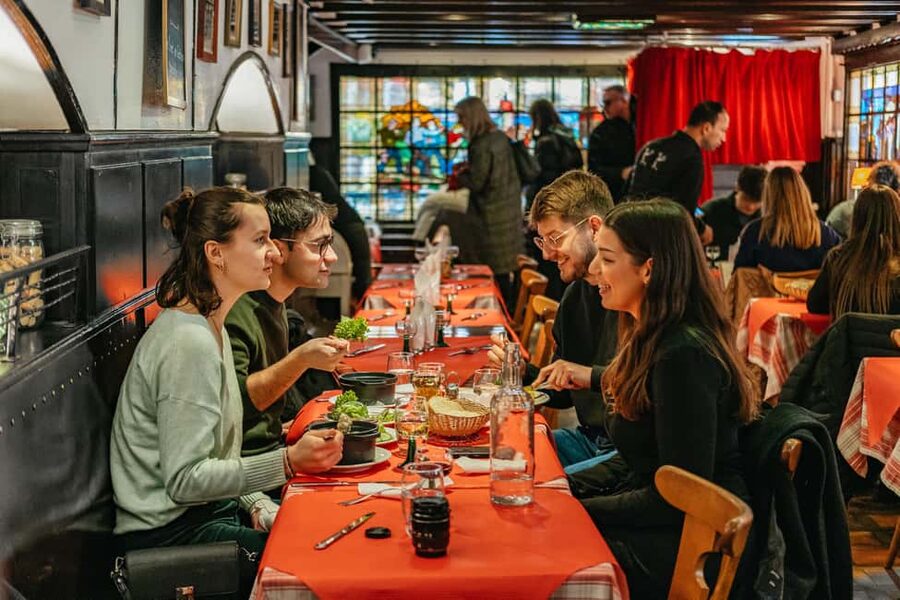
- Four or more tasting stops: You receive at least one serving at each stop, including a proper restaurant meal rather than only nibbles.
- A full Alsatian menu: Expect possible tastings of bretzels, charcuterie, cheese, choucroute garnie, gingerbread, Kugelhopf, or tarte flambée.
- Drinks included: Water and at least one alcoholic drink are part of the experience, with wine and beer possible during the food stops.
- A city walk with purpose: The route links Place d’Austerlitz, Rue des Grandes Arcades, and Petite France with food and local stories.
- Small groups help: The maximum is 12 people, and some departures may be much smaller, even becoming a private tour.
- Come hungry: Several people needed to leave food unfinished, especially at the lunch stop.
Strasbourg through bretzels, cheese, and sauerkraut
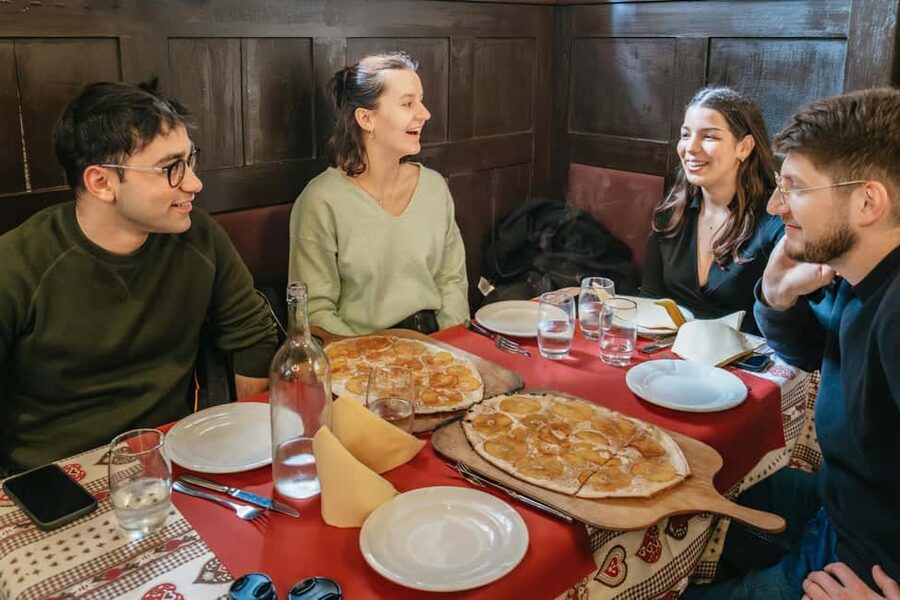
Alsace sits at a cultural crossroads, and its food reflects that position. Strasbourg’s cooking combines French technique with Germanic comfort food: sausages, sauerkraut, soft pretzels, cream, cured meat, local cheese, and sturdy baked goods.
This tour does not treat those foods as isolated samples. Your guide explains how they fit into local life while leading you through the center of town. That matters because a plate of choucroute is more interesting when you understand why it became such a regional symbol, and a small piece of gingerbread feels more memorable when you know it belongs to a long Alsatian baking tradition.
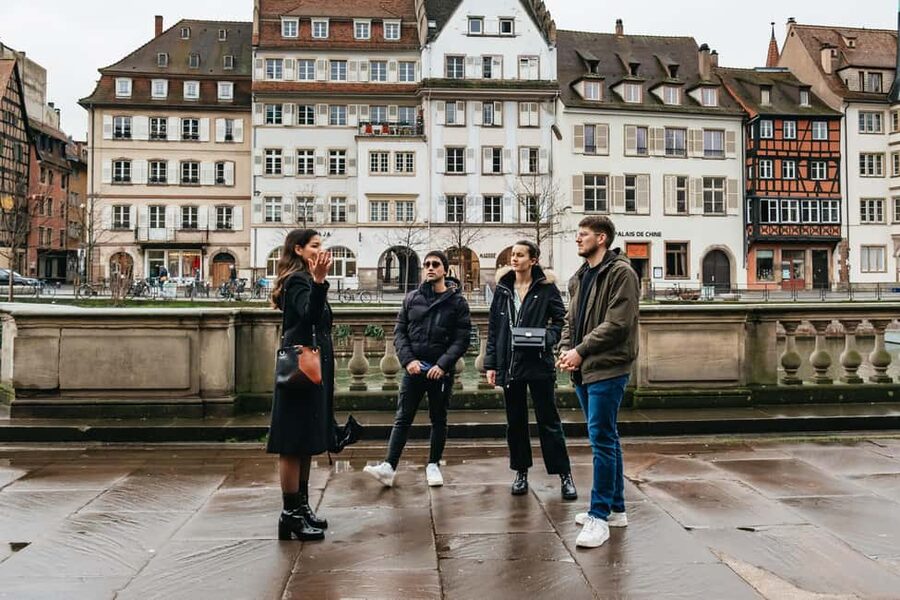
The route begins at Place d’Austerlitz, in front of the miniature of Strasbourg. From there, the group works toward the cathedral area, Rue des Grandes Arcades, and Petite France. The walking is described as easy and mostly flat, with stops spread through the old town rather than a long march between distant neighborhoods.
You should still wear comfortable shoes. This is a walking tour on city streets, and you will be on your feet for about 210 minutes. It is not designed for people with mobility impairments.
More walking tours in Strasbourg:
- Strasbourg: Walking Tour with a Local Guide
★ 4.3 · 607 reviews - Strasbourg: Walking Tour with Local Guide
★ 5.0 · 598 reviews - Strasbourg: Guided Historical Neighborhoods Walking Tour
★ 4.9 · 275 reviews
The first tastings near the cathedral
One early stop can include a cheese shop, where you taste local cheese alongside soft bretzels and a selection of charcuterie. This is a useful opening because it introduces several basic Alsatian flavors at once: salty cured meat, tangy or creamy cheese, and the chewy, lightly salted pretzel that appears across the region.
The food is not served as a tiny decorative bite. Portions are often substantial. One guide even advised the group not to eat too much sausage at the first stop, since there was still a full meal ahead. Take that advice seriously, especially on a morning departure.
The itinerary includes Fortwenger Strasbourg Cathedrale, a notable stop for Alsatian sweets. You may taste gingerbread, known locally as pain d’épices, or another traditional item such as Kugelhopf. Seasonal availability can change the exact selection, so do not book this expecting one fixed pastry menu.
Fortwenger also gives the tour a good change of pace. After cured meat and cheese, a spiced or sweet baked item helps reset your palate. In some cases, the bakery visit is mainly for collecting the treats rather than watching a formal demonstration. If you want a hands-on baking lesson, this is not that kind of stop.
A serious lunch of choucroute garnie
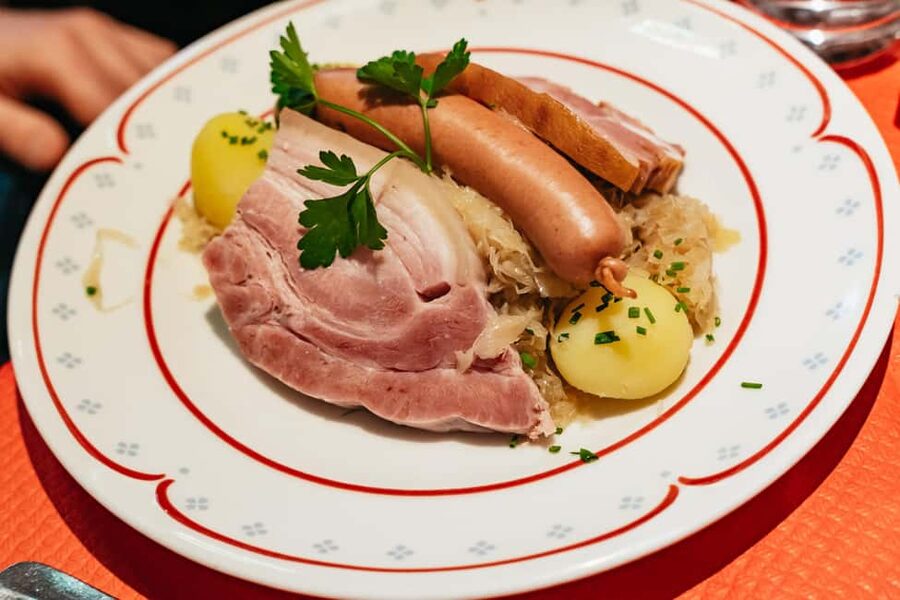
The most filling part of the experience is usually the restaurant stop. Choucroute garnie, a regional classic of sauerkraut and smoked sausages, may be served as the main savory dish. It is hearty, salty, and far more substantial than a tasting plate.
This is where the tour earns part of its price. You are not simply being led to a shop for a cracker and a quick explanation. You sit down for a proper serving, and an alcoholic drink may accompany the meal. Some departures include beer, some wine, and the selection can change.
The size of the serving is also the tour’s clearest weakness. Several people found the meal too large to finish. One departure included either sauerkraut with a generous amount of meat or a large bowl of pasta with a strong cheese sauce. That variety shows that the exact menu depends on the partner restaurant and the day, but the general rule remains: this is lunch, not a sampler.
I would skip breakfast before a morning tour and keep your evening meal light if you choose an afternoon departure. The guide can explain the dish and its place in Alsatian cooking, but no explanation makes an oversized lunch easier after a full breakfast.
A smaller tapas-style selection might allow more variety, but it would also change the character of the tour. The current format gives you a real taste of how filling regional food can be.
Wine, beer, and the Alsatian table
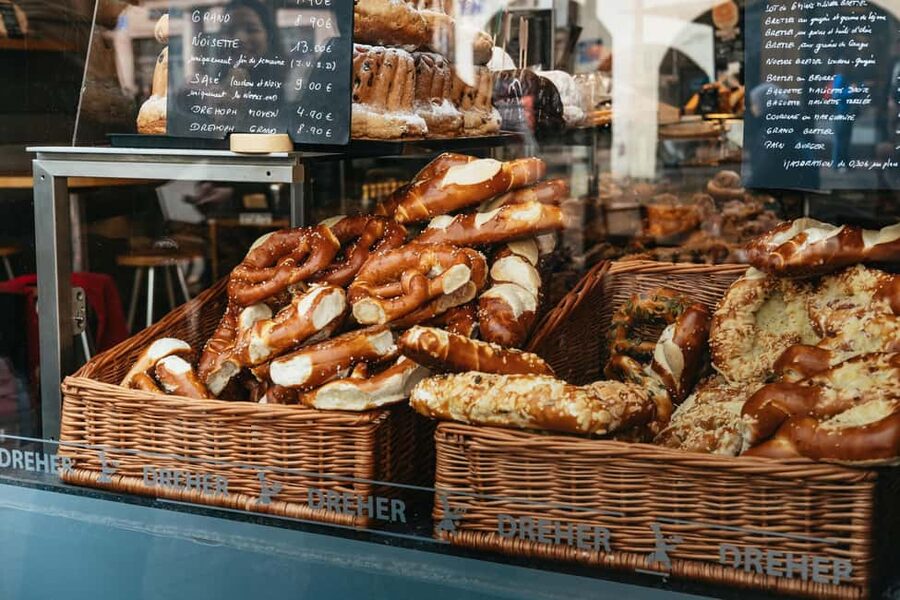
At least one alcoholic drink is included, along with water. Depending on the route and available partners, you may try local Alsatian wine and beer during the early tastings or lunch.
The wine portion is useful even if you are not a serious wine drinker. Alsace is known for its vineyards, and your guide can explain why wine plays such a visible role in the region’s food culture. Keep in mind that wine preferences are personal, and the selected bottle may not suit every palate. One departure included a beer that pleased the group more than the wine.
This is not a dedicated wine tour. You should expect a tasting connected to the meal, not a long lesson on grape varieties or cellar technique. That balance works well for most people because the focus stays on Strasbourg as a city of food rather than on one drink.
The drink inclusion also improves the value at the $116 price, particularly when paired with the full lunch and several other servings. If you do not drink alcohol, water is included, but the price is harder to justify because part of the package is built around a shared drink experience.
More food tours in Strasbourg:
- Strasbourg Food Tour – A Taste of Tradition by Do Eat Better
★ 5.0 · 614 reviews - Bateaux Parisiens Seine River Gourmet Dinner & Sightseeing Cruise
★ 4.5 · 6,930 reviews - Paris : 3-Course Gourmet Dinner Cruise on Seine River
★ 4.3 · 5,205 reviews - Authentic Parisian Gourmet Food Tour with 10 Local Dishes & Wines
★ 5.0 · 4,754 reviews
Rue des Grandes Arcades and the city between stops
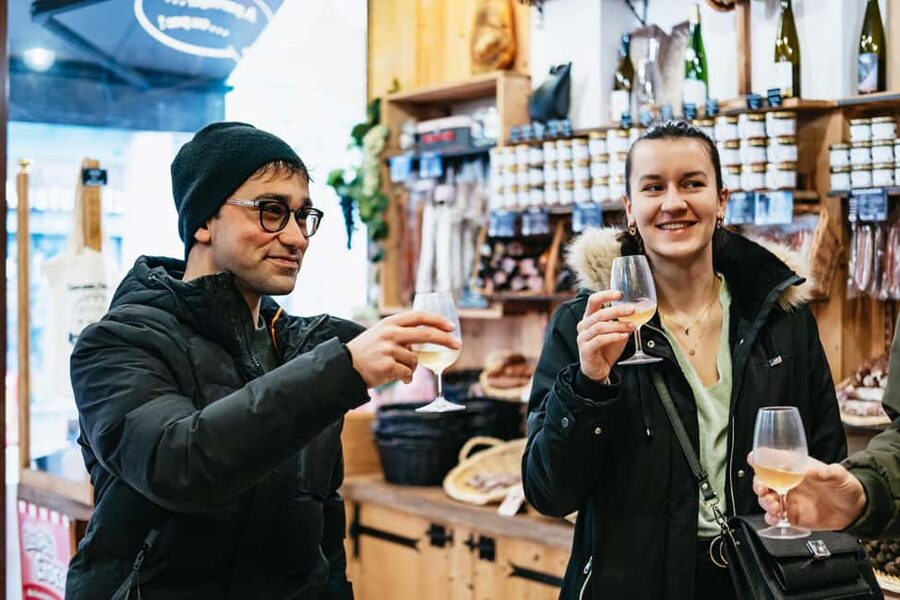
The route through Rue des Grandes Arcades lets you see Strasbourg while moving from one food stop to another. This is one of the tour’s stronger features. You are not parked in one restaurant for three hours, and the food gives a clear purpose to the city walk.
Guides such as JP, Raphael, Loubna, Nahama, and Christine have been praised for mixing local stories with practical food advice. The best version of this experience is not a lecture. It is a conversation while walking, with explanations of what you are seeing and why certain dishes matter.
The guide may also point out useful places for later meals, drinks, or food shopping. Raphael, for example, has offered recommendations for other restaurants and bars, while another guide allowed time at stops to consider buying products to take away.
The route is not built around lengthy sightseeing at every landmark. You will see key parts of the center, but the food remains the main event. If your priority is a detailed cathedral tour or an extensive history lesson, book a dedicated sightseeing walk instead. If you want a tasty orientation to Strasbourg, this format works better.
Petite France as the final setting
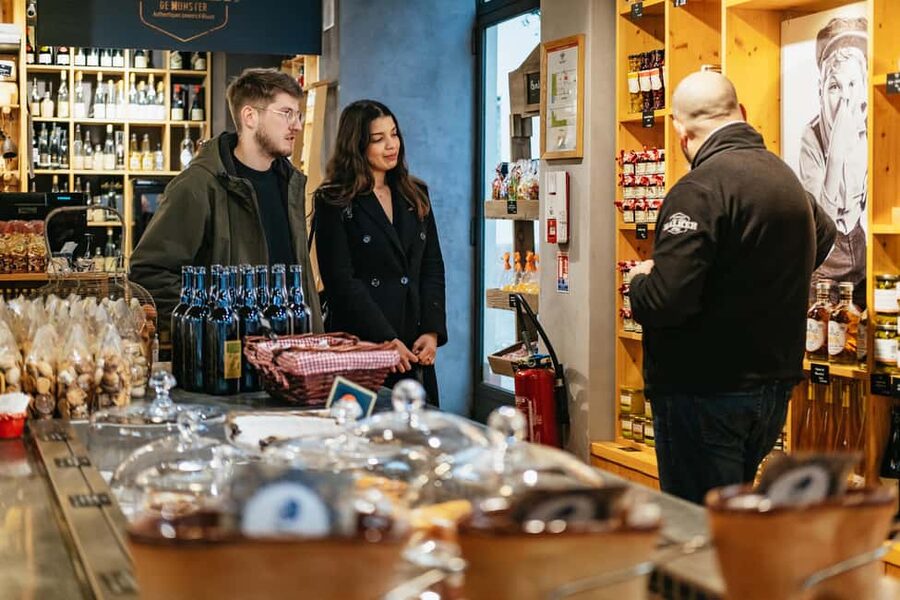
The tour finishes in Petite France, one of Strasbourg’s most recognizable areas. This gives the outing a pleasing shape: you begin near Place d’Austerlitz, cross the central old town, and end among the canals, old buildings, and narrow streets of Petite France.
The final tasting may be sweet, with gingerbread, Kugelhopf, or another seasonal dessert. Tarte flambée can also appear, although it is savory rather than a dessert. The menu is flexible, so think in terms of regional specialties rather than a guaranteed checklist.
Petite France is also a practical ending point. You can continue exploring on foot, look for a drink, or return to a shop introduced during the tour. Since hotel pickup and drop-off are not included, plan your own route back from Petite France.
What the group size changes
The tour requires at least two people and accepts a maximum of 12. That is a useful size for food stops, where a larger crowd can slow service and make it hard to hear.
A small departure can feel almost private. One couple ended up with a private experience and found that the guide could take time with both food and local history. At the other end, a full group still offers a chance to meet people from different places, which can make the shared meal more social.
The guide may speak both English and French during the tour. English and French are the listed languages, but you should be comfortable with some switching if both language groups are present. Guides have included Raphael, JP, Loubna, Christine, Nahama, Sabria, Naha, and others, so the tone can vary slightly from one departure to another.
The strongest pattern is clear: the guide shapes the experience. A good guide turns the walk into a friendly lesson in local food, answers questions, and adjusts the pace. One note found the tour slightly slow at times, while others liked the relaxed pace. If you prefer a fast route with little sitting, this may feel leisurely.
Is $116 a fair price?
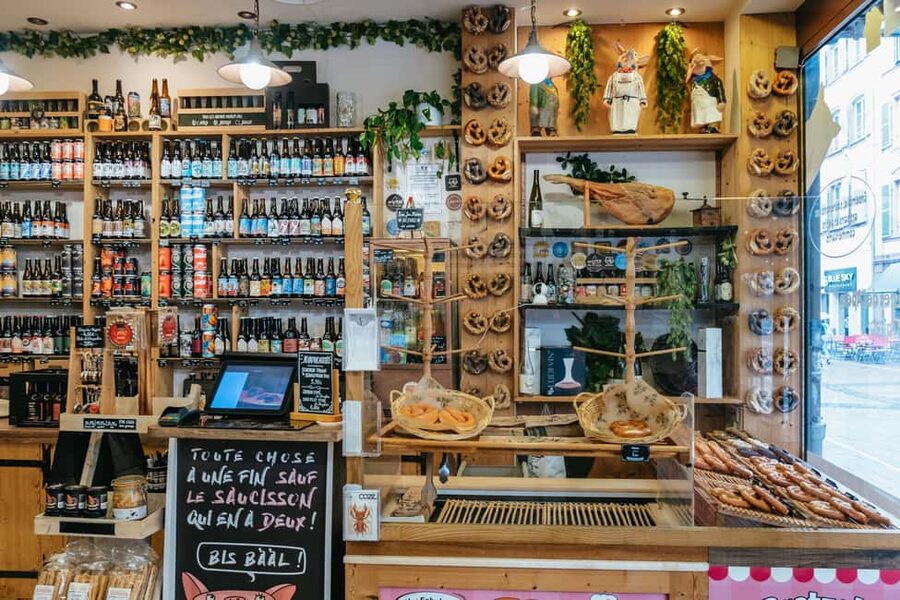
At $116 per person, this is not a bargain snack crawl. It becomes better value when you count the four or more stops, the substantial lunch, the included alcoholic drink, water, and 210 minutes of guiding.
The portion sizes are a major part of the calculation. You are likely paying for a full meal and several additional servings, not four tiny tastings. If you would otherwise buy lunch, a pastry, cheese, charcuterie, and drinks during your day in Strasbourg, the total could approach the tour price.
Still, value depends on what you want. If you eat lightly, avoid alcohol, or prefer to choose every dish yourself, $116 may feel steep. If you want a single booking that handles the food choices, explains what you are eating, and gives you a useful walk through central Strasbourg, the price is easier to defend.
The flexible cancellation policy helps with planning: you can cancel up to 24 hours ahead for a full refund, and the reserve-now, pay-later option keeps you from paying immediately. The minimum group requirement means a departure can be rescheduled if too few people book.
Who should book this food walk?
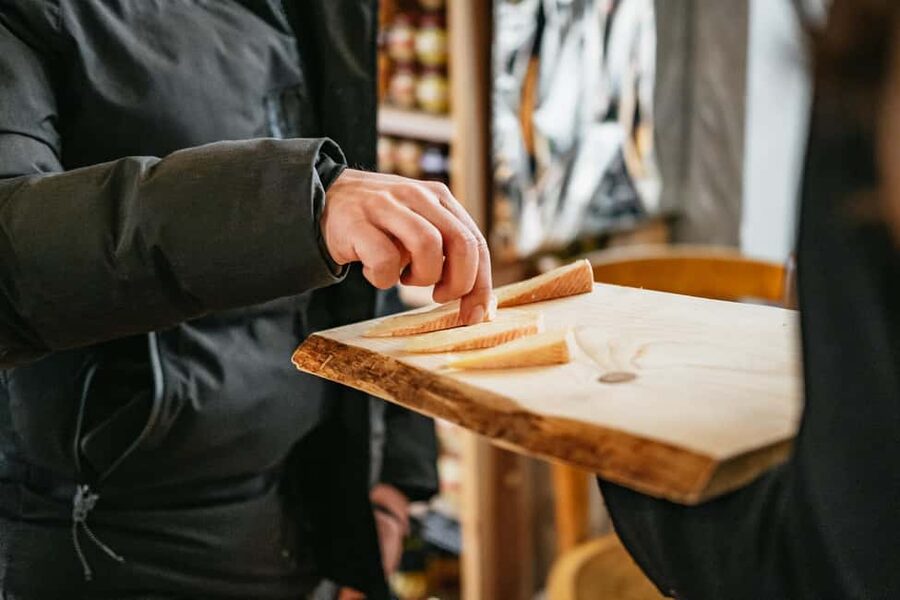
I would choose this tour for a first visit to Strasbourg, especially if you want a practical introduction to Alsatian cooking without researching restaurants in advance. It also suits solo visitors, since the small-group format gives you company without requiring you to arrange a private guide.
Families can enjoy it too, and guides have handled children well. The main family issue is the amount of food. Younger children or selective eaters may not want large servings of sauerkraut, sausage, strong cheese, or rich pasta.
It works for food-focused couples, friends, and anyone who likes learning through eating. It is less suitable for people with limited mobility, strict dietary needs not addressed in the available information, or a strong preference for small, delicate samples.
Come hungry, wear comfortable shoes, and arrive early enough to find the meeting point. The Place d’Austerlitz meeting spot is in front of the miniature of Strasbourg, but directions have confused some people, so allow extra time and do not rely only on a generic map pin.
Should you book it?
Book this tour if you want a filling introduction to Strasbourg’s food and old town in one outing. The generous servings, included drink, small groups, and strong guide lineup make it more than a simple snack walk.
Skip it if you want a low-cost tasting route, a formal cooking class, or a carefully fixed menu. For everyone else, the best advice is plain: do not eat beforehand, expect the dishes to change with the season, and leave room for both choucroute and dessert.
FAQ
Where does the Strasbourg food tour begin?
The tour begins at Place d’Austerlitz, in front of the miniature of Strasbourg.
Where does the tour finish?
It finishes in Petite France, Strasbourg.
How long does the experience last?
The walking tour lasts 210 minutes, or three and a half hours.
How many food stops are included?
At least four food stops are included, with at least one serving at each stop.
What food might be included?
Possible tastings include bretzels, charcuterie, local cheese, choucroute garnie, Alsatian gingerbread, Kugelhopf, and tarte flambée. The selection can change with the season and partner availability.
Are drinks included?
Yes. Water and at least one alcoholic drink are included. The alcoholic drink may be local wine or beer.
What languages are available?
The tour is offered in English and French. The guide may use both languages during the experience.
Is the tour suitable for people with mobility impairments?
No. The experience is listed as unsuitable for people with mobility impairments. Comfortable shoes are recommended, and pets and large bags are not allowed.
More food and drink in Strasbourg
- From Strasbourg: Medieval Villages & Wine Tasting Day Trip
★ 4.8 · 329 reviews - Alsace Wine Route Small Group Half-Day Tour with Tasting from Strasbourg
★ 4.5 · 291 reviews - Alsace Wine Route Wineries & Tasting Small Group Guided Tour from Strasbourg
★ 5.0 · 229 reviews - Paris: Seine Cruise & Crepe Tasting near the Eiffel Tower
★ 4.4 · 11,231 reviews
Just added in Strasbourg
- Alsace Half-Day Wine Tour from Strasbourg★ 4.8 · 346 reviews
- From Strasbourg: Medieval Villages & Wine Tasting Day Trip★ 4.8 · 329 reviews
- Alsace Wine Route Small Group Half-Day Tour with Tasting from Strasbourg★ 4.5 · 291 reviews
- Alsace Wine Route Wineries & Tasting Small Group Guided Tour from Strasbourg★ 5.0 · 229 reviews
- Strasbourg: Guided Historical Neighborhoods Walking Tour★ 4.9 · 275 reviews
- From Strasbourg: Best Of Alsace Historical Day Trip★ 4.7 · 633 reviews
- Strasbourg: Guided Bike Tour with a Local Guide★ 4.8 · 573 reviews
- Strasbourg: Walking Tour with a Local Guide★ 4.3 · 607 reviews
Food Tours, compared.
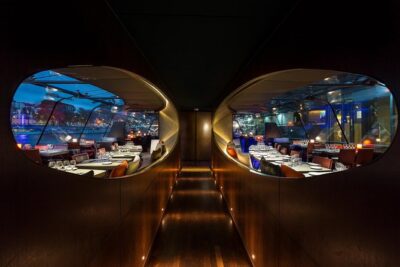
Bateaux Parisiens Seine River Gourmet Dinner & Sightseeing Cruise
Read our review →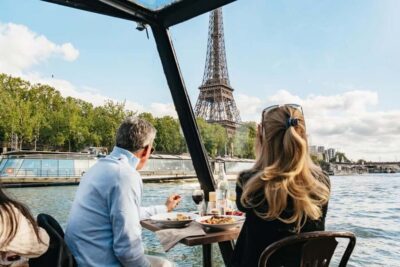
3-Course Gourmet Dinner Cruise on Seine River
Read our review →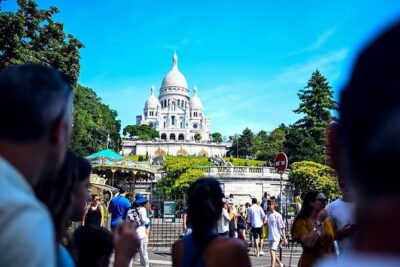
Authentic Parisian Gourmet Food Tour with 10 Local Dishes & Wines
Read our review →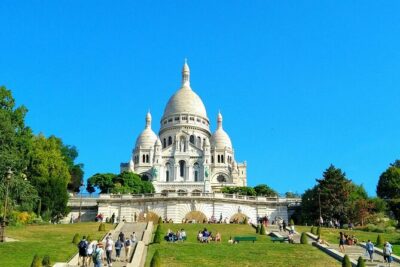
Montmartre Hill French Gourmet Food and Wine Tasting Walking Tour
Read our review →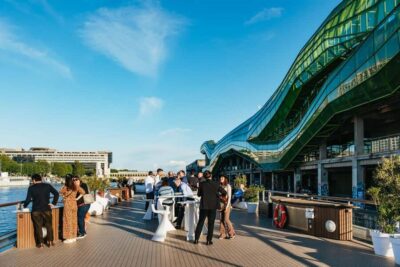
Gourmet Dinner Cruise on Seine River with Live Music
Read our review →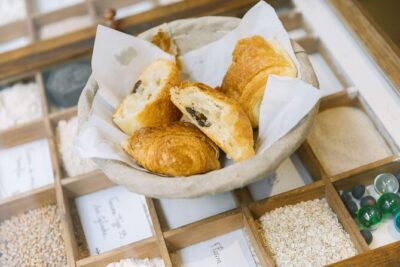
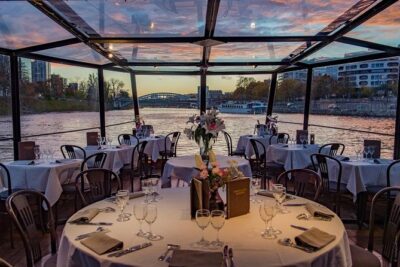
Paris 3-Courses Gourmet Dinner Seine River Cruise with Champagne
Read our review →
Paris Gourmet Dinner Seine River Cruise with Singer and DJ Set
Read our review →Browse the lists this tour appears in