
Reviewed · WINE TOURS
Tasting of 6 Bordeaux wines and pairing charcuterie & cheese
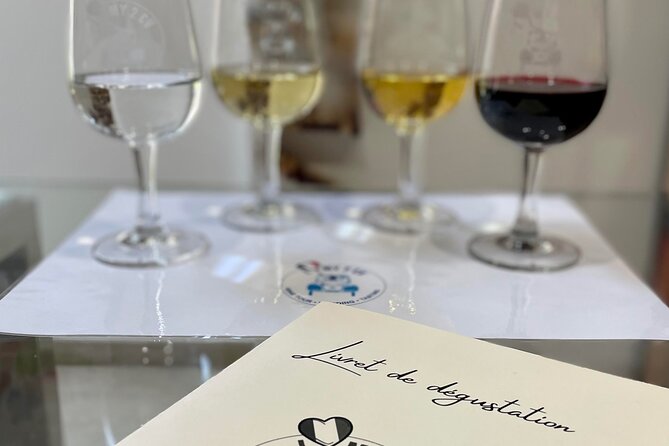
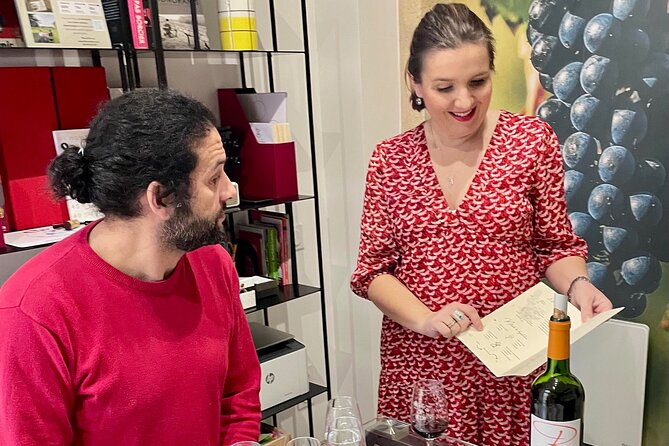
Bordeaux wine can seem like a code of château names, French labels, grape blends, and riverbank geography. This tasting makes the subject friendlier. In about 75 minutes, Mathilde or Cécilia guides you through Bordeaux’s left-bank and right-bank wines, with six pours, aroma exercises, and a simple food pairing.
I like the small group, limited to six people, and the mix of Grand Cru Classé bottles with wines from family estates practicing organic farming. I also like the practical focus: you receive a tasting booklet, and the wines are available to buy if one suits your taste. The main drawback is that the charcuterie and cheese are tasting portions, not a full meal, and the short session can feel rushed if the group needs both French and English explanations.
Key points to know
- Six Bordeaux wines: Expect a mystery wine, dry whites, red blends, left-bank and right-bank examples, and a sweet wine, though the exact lineup can vary.
- Mathilde and Cécilia lead the tasting: Both are trained at the University of Wine and explain the subject in clear English.
- Small-group setting: The maximum is six people, allowing room for questions and personal advice.
- Aroma and label practice: You learn how to smell wine, read French labels, understand blends, and connect wine style with soil and place.
- Charcuterie and cheese pairing: The food shows how wine changes with food, but portions are modest and dietary needs should be stated clearly.
- Easy central meeting point: The tasting starts and ends at 25 Avenue Thiers in Bordeaux, with public transport nearby.
Why this tasting works for first-time Bordeaux wine drinkers
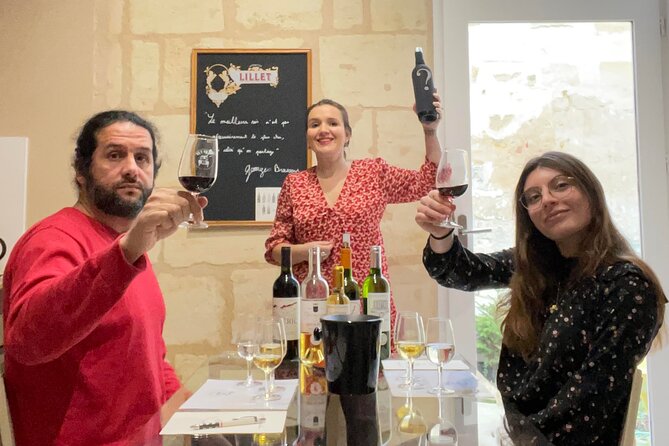
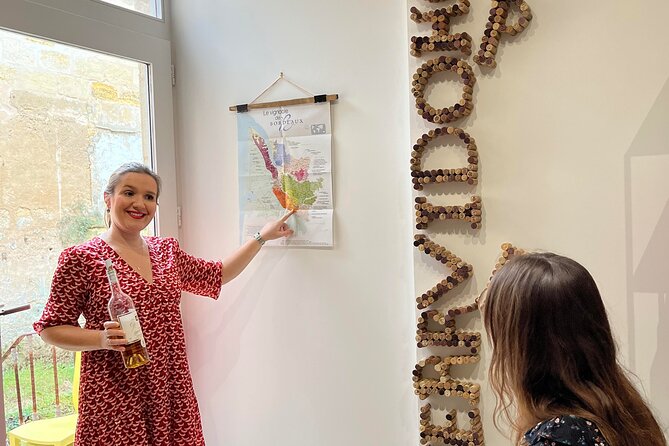
Bordeaux is not one single wine style. The Garonne and Dordogne rivers divide the region into areas commonly called the Left Bank and Right Bank, and the grape blends, soils, and wine character can change from one side to the other.
You do not need to arrive knowing the difference. The tasting introduces the idea through the glass. You compare dry white wines from both sides, then move into red wines and blends. This gives you a useful framework for choosing wine in a restaurant or shop later in your trip.
The session also covers appellations, terroir, grape varieties, classifications, and the way Bordeaux producers blend grapes. That matters because a Bordeaux label often emphasizes the estate or appellation rather than spelling out the grapes in large print.
I especially like the use of a mystery wine. It shifts your attention away from the label and toward aroma, texture, and taste. You first form your own impression, then use the explanation to understand what you noticed.
More wine tours in Bordeaux:
- Bordeaux: Cité du Vin Entry Ticket and Wine Tasting
★ 4.6 · 3,885 reviews - Bordeaux: River Garonne Cruise with Glass of Wine and Canelé
★ 4.5 · 3,630 reviews - From Bordeaux: Afternoon Saint-Emilion Wine Tasting & snack
★ 4.8 · 1,581 reviews
Meeting Mathilde or Cécilia at Avenue Thiers
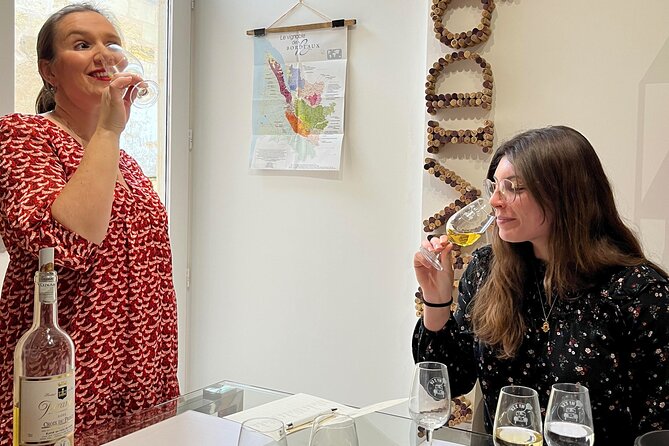
The meeting point is 25 Avenue Thiers, 33100 Bordeaux. The experience finishes at the same address, so you do not need to arrange a separate pickup or work out a return route.
The setting changes with the season. You might taste in a private courtyard, a cellar, or a furnished room. That gives the session a more personal feel than a large commercial tasting room, though the exact atmosphere cannot be guaranteed when you book.
Mathilde and Cécilia are trained at the University of Wine. Their role is more than pouring glasses. They explain how Bordeaux’s soil, grape choices, blending traditions, and classification system shape what you taste.
Cécilia is also associated with vineyard tours in a Citroën 2CV, so you can ask about extending your Bordeaux wine plans if you return. Mathilde is described as especially helpful for people choosing a bottle to take home. Both guides use English for this experience.
The group limit of six is important. It gives you a better chance to ask why one wine feels fuller, fruitier, or more structured than another. It also means the experience may feel quite intimate, which suits people who like discussion but may be less comfortable if they prefer to sit quietly and simply taste.
The tasting sequence: from mystery pour to Bordeaux sweet wine
The stated program includes six glasses of wine and describes a broad sequence:
- One mystery wine
- Two dry white wines, including Left Bank and Right Bank examples
- Red wines showing blends and different bank styles
- One sweet wine
The written description appears to count more categories than the stated total of six glasses, and the precise selection can change. Past tasting combinations have included two whites, two reds, a rosé, and a Sauternes-style sweet wine. It is sensible to treat the lineup as a guided selection rather than a fixed menu.
The first wine helps you focus on your senses before you get caught up in names and classifications. You may be asked to notice fruit, floral, spice, or other aromas. The point is not to guess perfectly. It is to learn that tasting involves smell, texture, balance, and finish, not just the question of whether you like the wine.
The dry whites provide a useful contrast. Bordeaux is best known for red wine, but its white wines can be an eye-opening part of the region. Comparing the two bank styles helps you see why geography matters, even when both wines are served in the same room.
The red section brings in blends. Bordeaux red wine is traditionally built from several grape varieties, and the blend can change the wine’s body, fruit, tannin, and aging character. You learn to think beyond a single grape name.
The sweet wine gives the tasting a different ending. It shows how sweetness, acidity, aroma, and food work together. If you have only tasted dry wines before, this final glass can be a useful change of pace.
Learning to smell wine without taking it too seriously
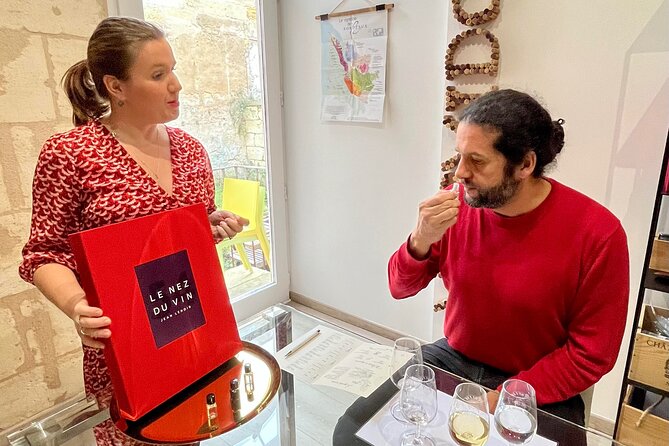
The aroma exercises are one of the strongest parts of the session. You may be invited to smell separate aromas before trying to find related notes in the wine.
This is helpful because many people assume wine tasting requires an unusually sensitive nose or a large vocabulary. It does not. The exercise gives you a starting point and makes the process less intimidating.
I like the way this approach turns tasting into observation rather than a test. You can describe a wine as fruity, earthy, floral, spicy, dry, soft, or full-bodied without pretending to be an expert. The guide then adds the technical language when it helps.
The session also explains how to read French labels. That is practical information you can use immediately in Bordeaux. You learn to look for the appellation, estate, classification, and other clues that tell you where the wine comes from and what kind of style to expect.
Other cheese and charcuterie tastings around Bordeaux:
- Professional – Bordeaux Wine and Cheese Tasting with a walking tour
★ 5.0 · 218 reviews - Bordeaux: Wine Masterclass with Cheese and Charcuterie Board
★ 4.9 · 184 reviews - Introduction to Bordeaux wines paired with cheeses & charcuterie
★ 5.0 · 175 reviews - Bordeaux Wines Masterclass paired with cheeses & charcuterie
★ 5.0 · 110 reviews
Left Bank, Right Bank, and why the distinction matters
The Left Bank and Right Bank labels are not just tourist shorthand. They help explain Bordeaux’s different winemaking traditions.
The Left Bank is commonly associated with blends where Cabernet Sauvignon plays a major role. The Right Bank is often associated with Merlot-led blends. The exact bottle in your glass can vary, but tasting examples from both sides lets you notice differences in fruit, structure, and texture.
The guide connects these differences with soil and growing conditions. That is where the idea of terroir becomes useful rather than abstract. You begin to see that wine style is shaped by more than the grape variety. Place, climate, soil, blending, and winemaking all matter.
This part of the tasting is particularly useful if you plan to visit vineyards later. It gives you a map for understanding names such as Médoc, Saint-Émilion, Pomerol, Graves, or Sauternes, even if every appellation is not covered in detail during the short session.
Charcuterie, cheese, and the limits of the pairing
Food is included, with charcuterie and cheese used to show how a wine behaves alongside something salty, creamy, fatty, or savory. The portions are designed as tasting accompaniments, not lunch.
This distinction matters. Some people have received a high-quality board with enough food to make the pairing feel complete. Others found the portions small, with only a few pieces of meat and two cheeses. You should book this as a wine class with snacks, not as a meal.
The food pairing is still valuable because it gives you a direct comparison. A wine that seems sharp on its own can feel softer with cheese. A bold red may work better with charcuterie than with a delicate food. These simple tests can help you make better choices at Bordeaux restaurants.
Vegetarian requirements need careful attention. The experience description focuses on meat and cheese, and one past booking had meat served despite a vegetarian request. If you do not eat meat, contact the provider before the session and confirm what can be prepared.
A picnic lunch with local products is not included, but it may be available by reservation. Ask about this separately rather than assuming the standard tasting includes enough food for lunch.
How much value do you get for $54.44?
At $54.44 per person, this is not the cheapest way to drink Bordeaux wine. You are paying for six selected pours, instruction, a small food pairing, a booklet, and a very small group rather than just for the liquid in the glass.
The value improves if you are new to French wine. A bottle bought at random can cost nearly as much as the session, and you may not know what you are tasting or why you like it. Here, you can compare several styles before choosing a bottle, and the wines tasted are available for purchase.
The tasting also saves time. A vineyard visit requires transport and usually a larger time commitment. This session gives you a working introduction in 75 minutes, right in Bordeaux. If your schedule is tight, that is a real advantage.
The value is less clear if you already know Bordeaux well or mainly want generous pours and a full spread of food. The experience is structured as an introduction and lesson, not a long evening of drinking. One hour and 15 minutes can pass quickly, especially when explanations are given in more than one language.
Timing matters if you are coming from a cruise ship
The location is in Bordeaux, and public transport is nearby. That makes it reasonably practical for a city visit, but you still need to check your own route and return time.
The scheduled hour can be a problem for ship passengers arriving by train or shuttle. A delayed connection or a long ride from the port may leave little margin. One late-arriving group had to compress the tasting into roughly 40 minutes before catching its return transport.
An earlier 11:30 am tasting is available, which may work better for a day visit from a ship. Do not assume the provider can move a scheduled session at short notice. Build in extra time, especially if you need to return to a ship or catch a particular train.
The standard activity starts and ends at the same meeting point. That makes the transport plan simpler, but you remain responsible for getting there on time.
Who will enjoy this Bordeaux wine experience?
I would choose this tasting if you want a clear introduction to Bordeaux without spending a full day in the vineyards. It is also a good fit if you are unsure which Bordeaux wines you like and want to compare styles before buying.
It suits solo visitors and couples particularly well because the small group encourages conversation. It also works for friends who want an activity that is social but still educational.
You will get the most from it if you are willing to smell, taste, ask questions, and compare. The session is not designed for people who want to silently sample a long list of wines.
The tasting is less suitable if you need a substantial meal, expect a separate food match for every glass, or have a tight connection immediately afterward. It is also worth confirming dietary requests before booking.
Free cancellation is available if you cancel at least 24 hours before the start time. Changes or cancellations inside that window are not accepted for a refund.
Should you book the six-wine tasting?
Book it if you want a compact, friendly way to understand Bordeaux wine before exploring restaurants, wine shops, or vineyards. The small group, aroma practice, Left Bank and Right Bank comparisons, and advice from Mathilde or Cécilia give the $54.44 price a fair value.
Skip it if your main goal is a large cheese-and-charcuterie meal or an extended winery visit. For most first-time Bordeaux wine drinkers, though, this is a sensible first step. Check the start time, confirm the exact wine lineup, and state dietary needs clearly before you go.
FAQ
Where does the Bordeaux wine tasting start?
It starts at 25 Avenue Thiers, 33100 Bordeaux, France.
Where does the experience end?
It ends back at the same meeting point at 25 Avenue Thiers.
How long does the tasting last?
The tasting lasts approximately one hour and 15 minutes.
How many wines are included?
Six glasses of wine are included. The selection is described as including a mystery wine, dry whites, red wines, and a sweet wine.
What types of Bordeaux wine will I taste?
The program includes dry white wines from the Left Bank and Right Bank, red wines showing blends and bank styles, and one sweet wine. The exact selection may vary.
Is the tasting offered in English?
Yes. The experience is offered in English.
Who leads the tasting?
The tasting is guided by Mathilde or Cécilia, who are trained at the University of Wine.
Is food included?
Yes. A food and wine pairing with charcuterie and cheese is included, but it is served in tasting portions rather than as a full meal.
Is a tasting booklet included?
Yes. Each participant receives a tasting booklet to continue practicing at home.
Can I cancel for a full refund?
Yes, if you cancel at least 24 hours before the experience start time. Cancellations or changes made less than 24 hours before the start time are not accepted for a refund.
More food and drink in Bordeaux
- Medoc or Saint Emilion Wine Tasting and Chateau from Bordeaux
★ 5.0 · 1,415 reviews - Saint-Émilion: Grand Cru Classé Winery Visit and Tasting
★ 4.6 · 1,118 reviews - Saint Emilion Half-Day Trip with Wine Tasting & Winery Visit from Bordeaux
★ 4.5 · 1,034 reviews - From Bordeaux: Half-Day Saint-Émilion Tour and Wine Tasting
★ 4.6 · 657 reviews
Just added in Bordeaux
- Au Cœur du Château – VSOP D’USSÉ & XO BARON OTARD★ 4.5 · 108 reviews
- Discover Braastad Cognac★ 5.0 · 52 reviews
- retro road trip/ Méhari, 2CV & Burton in Rochefort, La Rochelle★ 5.0 · 28 reviews
- Saint Emilion Full Day Wine and Bike Tour★ 5.0 · 167 reviews
- Virtual Room Bordeaux – 1st team virtual reality experience★ 5.0 · 47 reviews
- Private Bordeaux History Tour with a glass of Bordeaux wine.★ 5.0 · 28 reviews
- Luxurious full day Bordeaux wine tour in a Tesla★ 4.5 · 31 reviews
- Wine Masterclass & Cheese Tasting Workshop in Bordeaux★ 5.0 · 29 reviews
Wine Tours, compared.
Authentic Parisian Gourmet Food Tour with 10 Local Dishes & Wines
Read our review →
Loire Valley Castles Day Trip from Paris with Complementary Wine
Read our review →
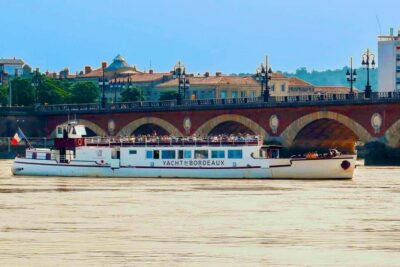
River Garonne Cruise with Glass of Wine and Canelé
Read our review →
Montmartre Hill French Gourmet Food and Wine Tasting Walking Tour
Read our review →
Montmartre Cheese, Wine & Pastry Guided Walking Tour
Read our review →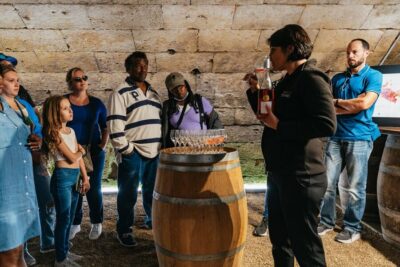
Loire Valley Castles Day Trip With Wine Tasting
Read our review →
Afternoon Saint-Emilion Wine Tasting & snack
Read our review →Browse the lists this tour appears in