
Reviewed · WINE TOURS
Alsace Wine Route Wineries & Tasting Small Group Guided Tour from Strasbourg
The best part of this day is the mix of Alsatian wine and storybook villages. You are not simply driven from one tasting room to another. The route links vineyard country at the foot of the Vosges Mountains with places such as Mittelbergheim, Dambach-la-Ville, Ribeauvillé, and Riquewihr, giving you a feel for how wine shapes daily life here.
I like the small maximum group of eight, which makes conversation with the guide easy, and I like that the three wineries are often different: a family cellar, a modern producer, and a more established estate may all appear in one day. The main drawback is that village stops can change with traffic, winery schedules, and the season. Riquewihr is part of the stated area, but you may pass through without getting a proper walk there.
Key points before you book
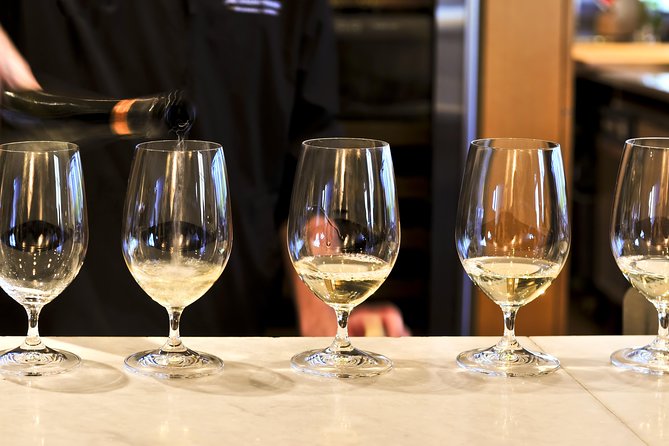
- Three winery visits: Taste several Alsatian whites, often including Riesling, Sylvaner, Pinot Blanc, Gewürztraminer, Muscat, and Pinot Gris.
- A full day from Strasbourg: The tour runs about eight hours, beginning at 9 a.m. and returning to the same meeting point.
- Small-group transport: An air-conditioned minivan carries no more than eight people, with an English-speaking driver-guide.
- Beautiful village stops: Mittelbergheim, Dambach-la-Ville, Ribeauvillé, Riquewihr, and sometimes Bergheim may feature in the day.
- Lunch is your responsibility: Food is not included, and wine tastings in France commonly come without snacks.
- Best for adults: Children under 18 are not permitted, and at least two adults are needed for the tour to run.
Why the Alsace Wine Route makes a fine day trip
The Alsace Wine Route runs for about 170 kilometers along the eastern foot of the Vosges Mountains. It passes hundreds of vineyards, but the appeal is not just the scale of the wine country. This is a part of France where Germanic and French influences meet in village names, architecture, food, and grape varieties.
From Strasbourg, the route gives you a useful change of pace. The city is easy to explore on foot, but its narrow lanes and cathedral views do not explain much about the countryside that supplies many of the wines on restaurant menus. This tour takes care of the driving and connects several wine areas in one day.
I especially like the range of wines included. Alsace is best known for white wine, and the tastings introduce you to more than just the familiar Riesling. You may sample Sylvaner, Pinot Blanc, Gewürztraminer, Muscat, and Pinot Gris, depending on the producers selected that day.
The tour also gives you a look at grand cru territory. The term refers to recognized vineyard sites, not simply a fancy label. Around Mittelbergheim, the grand cru sites include Kastelberg, Zotzenberg, and Wiebelsberg. Around Ribeauvillé and Riquewihr, you may hear about Kirchberg, Osterberg, Geisberg, Schoenenbourg, and Sporen.
More wine tours in Strasbourg:
- Alsace Half-Day Wine Tour from Strasbourg
★ 4.8 · 346 reviews - From Strasbourg: Medieval Villages & Wine Tasting Day Trip
★ 4.8 · 329 reviews - Alsace Wine Route Small Group Half-Day Tour with Tasting from Strasbourg
★ 4.5 · 291 reviews
Leaving Strasbourg in a minivan
The meeting point is at 17 Place de la Cathédrale, in the center of Strasbourg. You meet the guide at 9 a.m., then travel in an air-conditioned minivan toward the wine route.
The small vehicle matters. With a maximum of eight people, the day feels more personal than a large coach excursion. You can ask about grape varieties, villages, local customs, or the practical business of shipping wine home. Guides such as Pauline, Laurence, Jérôme, Maxim, Amélie, Florence, and Letícia have all led this experience, and their individual personalities can shape the day.
Several guides receive especially strong praise for explaining both the wine and the region. Laurence is noted for adjusting the tasting choices to suit the group. Pauline is praised for her hospitality and village suggestions. Jérôme is particularly good for travelers who want more background on grapes, soil, vineyard sites, and local families. Maxim is described as helpful with both wine and Alsatian culture.
Of course, the guide assigned to your date cannot be promised. The useful point is that this tour depends heavily on the guide, and the company has a group of guides who bring different strengths. A good guide can turn a cellar visit into a lesson rather than a series of pours.
Mittelbergheim and its Riesling country
The first wine area is Mittelbergheim, a village associated with three grand cru sites: Kastelberg, Zotzenberg, and Wiebelsberg. The area is especially linked with Riesling, a grape often associated with Germany but deeply established in Alsace as well.
The first tasting generally includes Riesling, Sylvaner, and Pinot Blanc. That makes this opening stop useful for comparison. Riesling tends to show bright acidity and mineral character, while Sylvaner is often lighter and more restrained. Pinot Blanc can offer a softer, rounder style.
This is also a good place to begin thinking about the effect of soil and climate. Your guide can explain how Alsace’s position between the Vosges and the Rhine plain creates a relatively dry wine-growing zone. The exact character of each wine still depends on the producer, vineyard, vintage, and cellar choices.
Do not expect a formal museum-style presentation at every stop. The strength of this tour is its contact with working wineries, and that can mean a polished tasting room at one stop and a much simpler family cellar at another. If you want only grand estates with elaborate visitor centers, this may feel uneven. If you want to see how different producers actually work, the variety is useful.
Dambach-la-Ville and the family-cellar feel
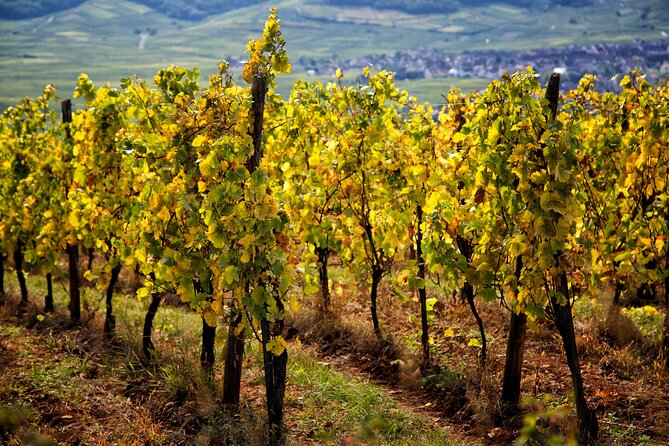
The next stop is Dambach-la-Ville, one of Alsace’s major wine villages. It produces more wine than any other village in the region and is associated with the Frankstein grand cru.
Here, the tasting takes place in a traditional caveau, or wine cellar. You may learn how soil, sun, and local weather affect Riesling and Gewürztraminer. Alsace Gewürztraminer is one of the region’s most distinctive wines, often aromatic and fuller than the sharper white styles served earlier.
This visit can be one of the most authentic parts of the day, but it is also where expectations matter. A small family producer may not have a polished tasting room. One past tour experience included a very basic cellar that was uncomfortably cold, with little atmosphere. That kind of stop can feel disappointing if you expect a stylish wine bar.
On the other hand, several people find the family-run wineries the most memorable because the tasting is closer to the people who make the wine. You may hear about a family’s history, production methods, and grape choices directly from the producer. The portions are often generous, but pace yourself. Three winery visits can add up quickly.
Same base, a different kind of day:
- Strasbourg: Euro Guided Tour by Segway
★ 4.7 · 808 reviews - Colmar, Medieval Village & Castle Small Group from Strasbourg
★ 5.0 · 769 reviews - 2-Hour Strasbourg Euro Tour by Segway
★ 5.0 · 642 reviews - From Strasbourg: Best Of Alsace Historical Day Trip
★ 4.7 · 633 reviews
Lunch in an Alsace village
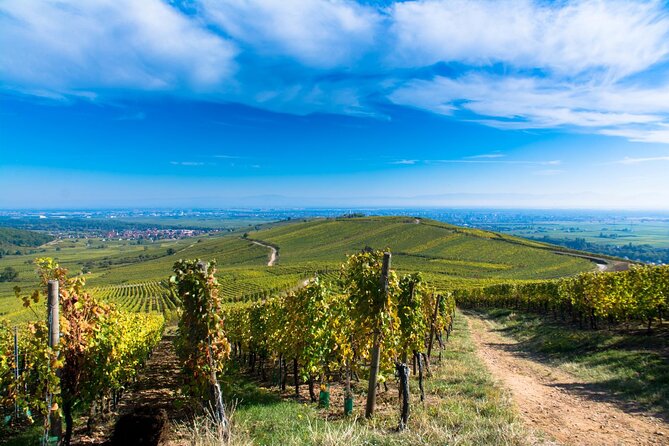
Lunch is not included, so you will need to pay for your own meal. The guide usually leaves time in a village for lunch and a short walk, and guides may suggest restaurants or local dishes.
This is one area where planning helps. Opening hours can be limited, particularly outside the busiest season. A village may look ready for lunch, yet only a few places may be serving. Ask the guide early where to eat, and do not count on a snack at the wineries.
The company specifically warns that French wine tastings usually do not include food. That is intentional. Producers often avoid snacks that could alter the taste of the wine. Have a solid breakfast, and use lunch as more than an afterthought.
The village stop also gives you a break from tasting. You can stretch your legs, see a few lanes, and absorb the setting without trying to drink and learn continuously. Some groups stop in Bergheim, a charming village known for its beauty, while other schedules may use another town.
Ribeauvillé and Riquewihr after lunch
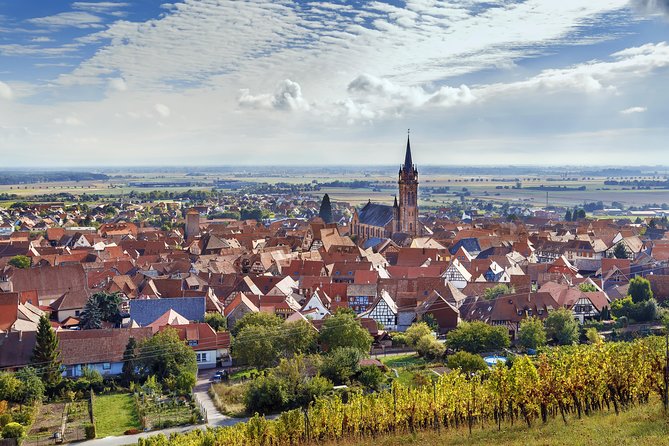
The afternoon focuses on the Ribeauvillé and Riquewihr wine area. Five grand cru sites are associated with this stretch: Kirchberg, Osterberg, Geisberg, Schoenenbourg, and Sporen.
Riesling remains important here, but you may also taste Muscat, Gewürztraminer, and Pinot Gris. This is a good point in the day to compare how different winemakers handle the same grape. One producer might favor a crisp, dry style, while another may produce something more aromatic or rounded.
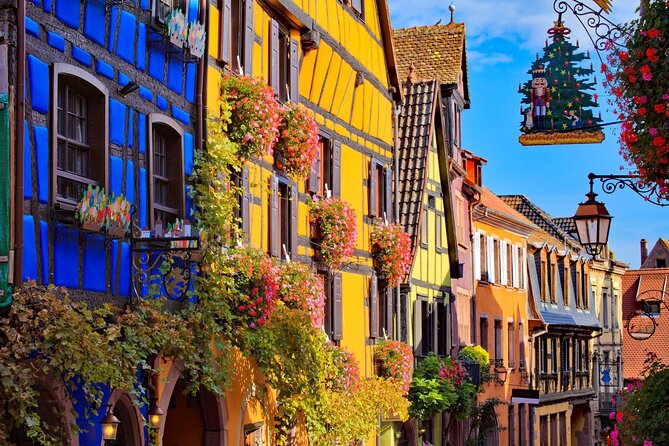
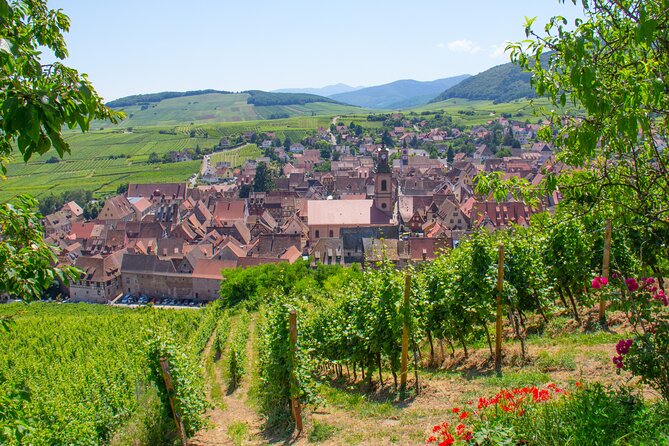
Ribeauvillé and Riquewihr are among the prettiest villages on the route. Their narrow streets and traditional buildings make them excellent places for a short walk between cellar visits. Riquewihr is particularly popular and is often the place people most want to see.
There is an important practical catch. The exact village time is not guaranteed. Traffic, road access, winery location, and seasonal events can change the plan. During the Christmas market period, road closures and congestion can make it difficult or impossible to enter Riquewihr properly. The route may include the area without providing the leisurely village visit you imagined.
For that reason, do not book this tour as your only chance to explore Riquewihr. Think of the villages as part of a flexible wine day, not as fixed sightseeing appointments.
Meeting old Alsace wine families
The later tastings may introduce you to long-established names such as Hugel and Trimbach, families that have been making wine in Alsace for generations. The point is not only brand recognition. These names help explain how wine production in the region moved from small local work into a respected export business while retaining strong family ties.
You may also visit smaller producers. The contrast is worthwhile. A well-established house may present a more organized explanation of its wines, while a small family cellar can feel more direct and personal. The itinerary is designed to show different approaches rather than promise three identical tasting rooms.
The final tasting has not been equally strong on every departure. One experience included a producer who seemed less engaged, leaving the guide to explain most of the wines. That is a reminder that a tour cannot control every host’s energy on a particular day.
Still, the guide can make a major difference. A strong guide fills in gaps, explains what you are tasting, and helps you compare the wines instead of simply moving the group along. Ask questions. This is not a silent tasting flight.
What $260.12 really buys you
At $260.12 per person, this is not a cheap way to drink wine. You are paying for three tastings, a full day of transport, a small group, and a guide who handles the route and driving.
The price makes more sense if you value convenience. Reaching several villages and wineries independently would require a car, careful timing, designated driving, and advance coordination with producers. The minivan removes that work, and you can taste without worrying about the return drive to Strasbourg.
Value depends on what you want. If your goal is to buy a large quantity of highly selected, rare wine, a private specialist tour may offer a more focused experience. If your goal is to understand Alsace, see several villages, and sample a broad range of local whites in one day, this tour offers a practical package.
The experience is also stronger for people who enjoy variety. You might visit a modern biodynamic producer, a mid-sized estate, and a small family winery in the same day. That may feel less polished than three luxury estates, but it gives you a better sense of how varied Alsace wine production can be.
Some people buy bottles during the day and arrange shipping home. That can be worthwhile, but shipping costs and arrangements are personal expenses, not part of the tour price.
Who should book this tour
I would choose this tour if you are staying in Strasbourg, want to see the countryside without renting a car, and enjoy learning as you taste. It suits adults who want a full day with a mix of wine, scenery, village walks, and regional history.
It is also a good choice if you are new to Alsatian wine. The selection of grapes gives you a useful introduction, and the guide can explain the differences in plain terms. Wine enthusiasts will appreciate the grand cru references and the chance to compare producers, though serious collectors may want a more specialized private visit.
This is less suitable if you need a fixed sightseeing schedule. You may not receive a long stop in every village named in the route, and Riquewihr access can be limited during the Christmas season. It is also not suitable for children under 18, pets, or anyone hoping for included food.
The tour requires at least two adults to operate and may be canceled for poor weather or if the minimum is not reached. If that happens, a different date or a full refund is offered. Otherwise, the booking is non-refundable, so choose your date carefully.
Should you book the Alsace Wine Route tour?
Book it if you want an easy, social day that combines three wine tastings with Alsace’s prettiest villages. The strongest parts are the small group, the capable guides, the range of producers, and the chance to taste beyond basic Riesling.
Go in with realistic expectations. The wineries may range from polished to plain, lunch is on your own, and the village schedule can shift. If you accept that flexibility, this is a well-rounded introduction to Alsace wine country and a sensible use of one day outside Strasbourg.
FAQ
Where does the tour begin?
It begins at 17 Place de la Cathédrale, 67082 Strasbourg, France, at 9 a.m.
Where does the tour end?
The tour returns to the same meeting point in Strasbourg. During the Christmas period, the return point may be just outside the Grande-Île district, with the exact address arranged with the guide.
How long does the experience last?
The tour lasts approximately eight hours.
How many people can join the tour?
The tour has a maximum of eight travelers and requires at least two adults to operate.
Is the tour offered in English?
Yes. Transport is provided with an English-speaking qualified driver-guide.
How many wineries will I visit?
You will visit three wineries and receive three wine tastings.
Which wines might I taste?
The tour may include Riesling, Sylvaner, Pinot Blanc, Gewürztraminer, Muscat, and Pinot Gris. The exact wines depend on the wineries visited.
Is lunch included?
No. Food and drinks are not included unless specifically stated. You should eat breakfast or lunch beforehand because tastings generally do not include snacks.
Are children and pets allowed?
No. This is an adult-only tour, children under 18 are not permitted, and pets are not allowed.
More food and drink in Strasbourg
- Strasbourg Food Tour – A Taste of Tradition by Do Eat Better
★ 5.0 · 614 reviews - Strasbourg: Traditional Food Walking Tour with Tastings
★ 4.8 · 219 reviews - Paris: Seine Cruise & Crepe Tasting near the Eiffel Tower
★ 4.4 · 11,231 reviews - Authentic Parisian Gourmet Food Tour with 10 Local Dishes & Wines
★ 5.0 · 4,754 reviews
Just added in Strasbourg
- Alsace Wine Route Small Group Half-Day Tour with Tasting from Strasbourg★ 4.5 · 291 reviews
- Alsace Half-Day Wine Tour from Strasbourg★ 4.8 · 346 reviews
- From Strasbourg: Medieval Villages & Wine Tasting Day Trip★ 4.8 · 329 reviews
- Strasbourg: Guided Historical Neighborhoods Walking Tour★ 4.9 · 275 reviews
- Strasbourg: Traditional Food Walking Tour with Tastings★ 4.8 · 219 reviews
- Strasbourg: Walking Tour with a Local Guide★ 4.3 · 607 reviews
- Strasbourg: Walking Tour with Local Guide★ 5.0 · 598 reviews
- Strasbourg Food Tour – A Taste of Tradition by Do Eat Better★ 5.0 · 614 reviews
Wine Tours, compared.
Authentic Parisian Gourmet Food Tour with 10 Local Dishes & Wines
Read our review →
Loire Valley Castles Day Trip from Paris with Complementary Wine
Read our review →
River Garonne Cruise with Glass of Wine and Canelé
Read our review →
Montmartre Hill French Gourmet Food and Wine Tasting Walking Tour
Read our review →
Montmartre Cheese, Wine & Pastry Guided Walking Tour
Read our review →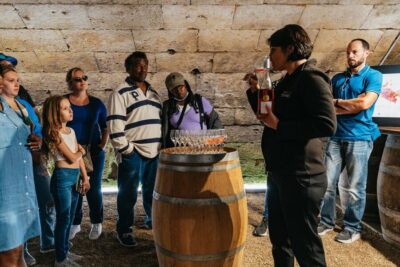
Loire Valley Castles Day Trip With Wine Tasting
Read our review →
Afternoon Saint-Emilion Wine Tasting & snack
Read our review →Browse the lists this tour appears in