
Reviewed · WALKING TOURS
Strasbourg: Guided Historical Neighborhoods Walking Tour
Strasbourg’s story makes the most sense when you walk it in layers, from the grand German-built Neustadt to the medieval lanes of Petite France and the soaring Notre Dame Cathedral. This 150-minute tour gives you that broad sweep without burying you in dates.
I like the small group, limited to 10 people, and the guide’s lively style. Davide, often identified as David, is praised for clear storytelling, humor, and practical tips on coffee, restaurants, bars, and places to see later. The main drawback is simple: you will be outside for the full walk, and cold, heat, or rain can affect the experience.
Key things to know before you book
- The route covers Strasbourg’s main historic areas: You walk from Place de la République through Neustadt, Place Broglie, Place Kléber, Grand’Rue, Petite France, and the cathedral quarter.
- The guide is the main attraction: Davide uses anecdotes and humor to explain Strasbourg’s complicated French and German past.
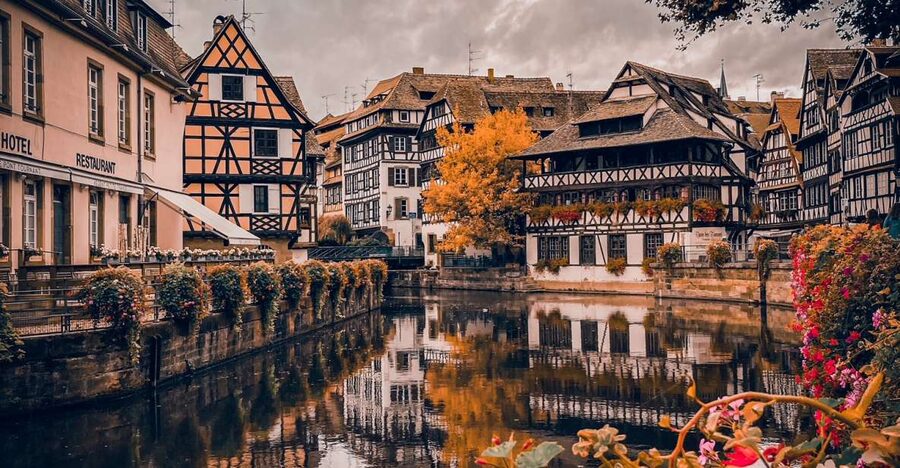
- Petite France gets a proper look: Expect original half-timbered homes, canalside scenery, and an explanation of how the neighborhood got its name.
- The group stays small: A maximum of 10 people makes it easier to hear, ask questions, and move through narrow streets.
- The cathedral is viewed from outside: The tour ends at Place de la Cathédrale, but admission to Notre Dame Cathedral is not included.
- Good shoes matter: This is a long city walk, with no transport between stops. Weather-appropriate clothing is essential.
Starting at Place de la République
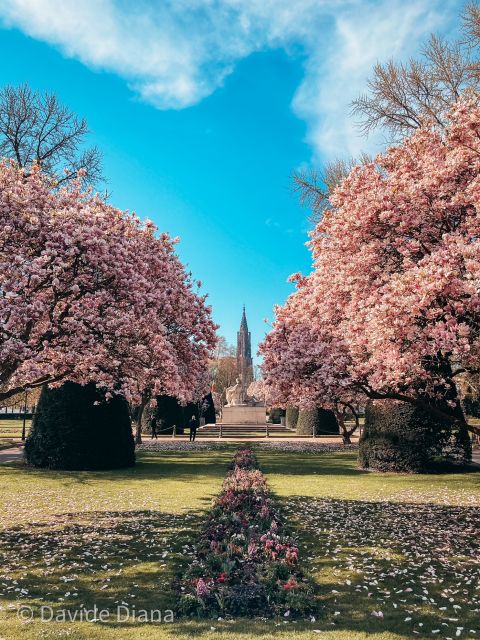
Your meeting point is in the center of Place de la République, in front of the war memorial. That detail matters because the square is large, and meeting in the middle is easier than hunting around its edges.
The tour opens in the Neustadt district, the part of Strasbourg shaped during the period of German rule. The square and surrounding buildings offer an early lesson in the city’s changing identity. Strasbourg has spent centuries at the meeting point of French and German politics, language, architecture, and culture, and the guide uses the opening section to set up that story.
You spend about 30 minutes walking and listening in Neustadt. This is a good start because you are not rushed straight toward the postcard streets. Instead, you see how the city expanded beyond its older medieval center and begin to understand why Strasbourg looks different from many other French cities.
I would pay close attention here, even if your main interest is Petite France or the cathedral. The Neustadt section gives those later stops more meaning. It also helps explain why Strasbourg’s past cannot be reduced to a single national identity.
More walking tours in Strasbourg:
- Strasbourg: Walking Tour with a Local Guide
★ 4.3 · 607 reviews - Strasbourg: Walking Tour with Local Guide
★ 5.0 · 598 reviews - Strasbourg: Traditional Food Walking Tour with Tastings
★ 4.8 · 219 reviews
Place Broglie and the city’s public spaces
The next stop is Place Broglie, where you have about 10 minutes to look around and hear more about the square. It is a short visit, but it breaks up the first walking section and keeps the route moving at a comfortable pace.
The tour’s attention to squares is one of its strengths. Strasbourg’s public spaces are not just open areas between buildings. They show how the city has presented power, civic life, memory, and celebration over time.
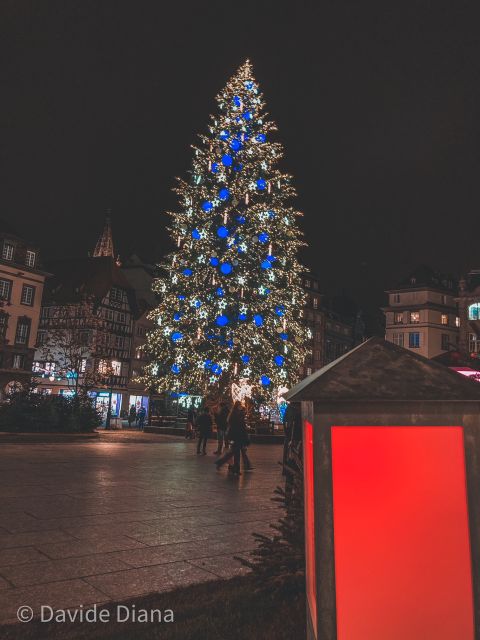
If you are visiting during the Christmas season, the guide connects Place Kléber with Strasbourg’s famous Christmas tree and winter market. That seasonal angle gives the city’s holiday reputation some context instead of treating the market as a standalone attraction.
The market itself is not the focus of the tour, and you should not book this walk expecting a dedicated Christmas market visit. The value is in learning how Place Kléber functions as one of the city’s key gathering places, then returning later on your own with a better sense of what you are seeing.
Place Kléber, Grand’Rue, and the center of Strasbourg
Place Kléber receives about 20 minutes of guided attention. This is Strasbourg’s most important central square on the route, and it is a natural point for the guide to connect the city’s history with present-day life.
Davide’s style appears to be energetic rather than lecture-like. He is known for telling historical stories in a logical order, adding funny details without making serious subjects feel trivial. That balance matters in Strasbourg, where war, borders, political control, and cultural change are central to the story.
From Place Kléber, the walk continues along Grand’Rue for roughly 10 minutes. This section links the larger square with the older parts of town. You are still learning the city’s layout, but the route gradually shifts from broad civic spaces to more intimate streets.
I like this structure because it helps you get your bearings. After the tour, you can more easily return to the cathedral, Petite France, or the central shopping streets without treating the old town as one confusing maze.
The guide also offers suggestions for the rest of your visit. Food recommendations come up often, including advice on coffee, restaurants, and bars away from the most obvious tourist spots. These tips can be especially useful if you have only a short stay and want to choose dinner with more confidence.
Petite France and its half-timbered houses
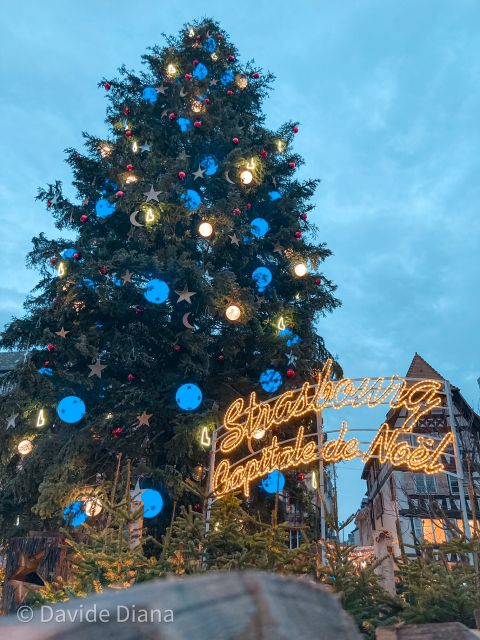
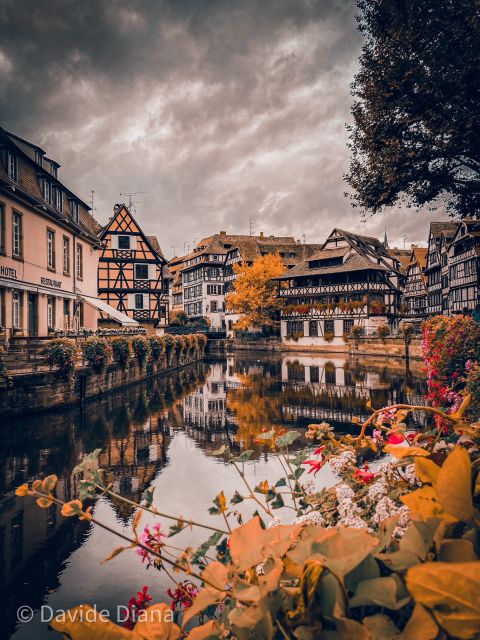
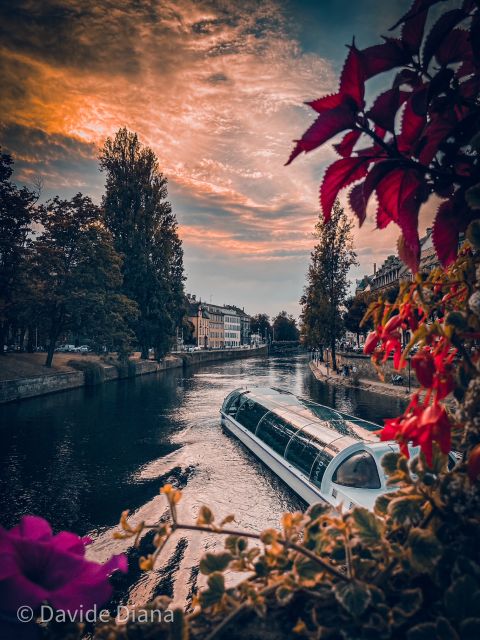
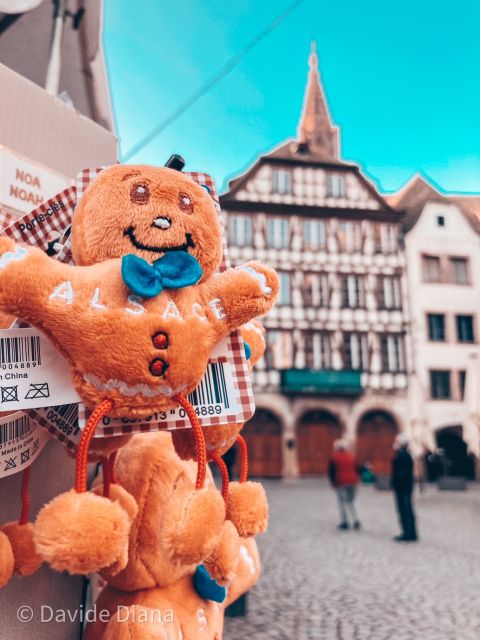
Petite France receives around 30 minutes, including a photo stop and guided sightseeing. This is likely the most visually appealing part of the walk, with original half-timbered homes and the old quarter’s distinctive streets and waterways.
The guide explains where the name Petite France came from and how the area changed over the centuries. That is more useful than simply pausing for photographs. You learn that the quarter is not just a pretty collection of façades, but a place shaped by work, daily life, and the city’s long development.
The half-timbered houses are the sort of detail that is easy to admire without really seeing. A guide can point out features you might otherwise pass without noticing, while also explaining why this quarter feels so different from Neustadt.
The route does not turn Petite France into a long architectural seminar. You get a focused introduction, time for photographs, and enough direction to return later if you want a slower look. I would use this stop as a preview, then come back independently when the streets are quieter or the light is better.
A small break may be included along the way. Several people appreciated having a chance to rest at a café or restaurant, use a bathroom, and talk with the guide. This is not presented as a full meal stop, so you should still plan your own food around the tour.
Same base, a different kind of day:
- Strasbourg: Euro Guided Tour by Segway
★ 4.7 · 808 reviews - Colmar, Medieval Village & Castle Small Group from Strasbourg
★ 5.0 · 769 reviews - 2-Hour Strasbourg Euro Tour by Segway
★ 5.0 · 642 reviews - From Strasbourg: Best Of Alsace Historical Day Trip
★ 4.7 · 633 reviews
Finishing at Notre Dame Cathedral
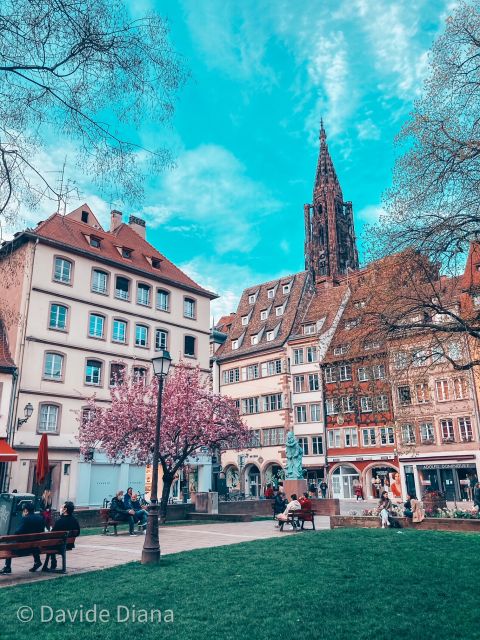
The final major stop is Strasbourg’s Notre Dame Cathedral, with about 20 minutes for a guided look and photographs. The tour ends at Place de la Cathédrale, giving you a useful central location from which to continue exploring.
The cathedral’s Rayonnant Gothic architecture is one of the tour’s headline sights. The guide shares stories about this landmark and places it within Strasbourg’s wider past. You get the outside view and historical context, but cathedral entrance is not included.
That distinction is important. If you want to see the interior, you will need to do that separately after the walk. The tour’s ending is convenient for this because you are already standing in the cathedral square, but the timing and any entry arrangements are your responsibility.
I also like ending here rather than beginning at the cathedral. By this point, you have seen several different parts of Strasbourg and can better understand why the cathedral dominates the old center. The final stop feels like a conclusion to the route rather than an isolated monument visit.
How the guide shapes the experience
The route is useful, but the guide makes the real difference. The most consistent praise goes to Davide, also called David in several descriptions. He is described as animated, funny, passionate, and easy to follow, with a talent for explaining complicated history in plain language.
He also seems comfortable adjusting his delivery to the group. On hot days, breaks helped keep the walk manageable. On cold mornings, one point of criticism was that more walking and less standing might have made the weather easier to handle. That is a fair practical concern: a walking tour can feel very different in January than in July.
The group size helps. With no more than 10 participants, you are less likely to lose the guide in a crowded square, and questions are easier to ask. A small group also makes it simpler to move along narrow streets and stay together.
The tour is offered in English and Italian. If you need another language, this is not the right choice. The guide’s humor and anecdotes are a major part of the experience, so being comfortable in the tour language matters.
Is $35 good value?
At $35 per person, this is reasonably priced for a two-and-a-half-hour guided walk with a maximum group of 10. You are paying for a local guide, a carefully connected route, and the time saved by not having to work out the city’s history on your own.
The value is strongest if this is your first visit to Strasbourg. You see the major historic areas in one sitting, learn how they connect, and receive suggestions for the rest of your stay. That can save you from spending your first day wandering without a plan.
The price is less attractive if you only want photographs or if you already know Strasbourg well. The tour does not include cathedral admission, food, or other entrance fees. You are also covering a lot of ground at a steady pace rather than spending a long time inside any one site.
For a short city break, I think the cost is justified. It gives you a useful orientation and historical framework, then leaves you free to revisit the places that interest you most.
Comfort, pacing, and practical details
Wear comfortable shoes. The route lasts 150 minutes and includes several neighborhoods, squares, and connecting streets. Even though the walking pace is generally manageable, this is not a seated sightseeing experience.
Dress for the forecast. Cold weather can make stops feel long, while strong sun or rain can affect your attention. The guide has included breaks on difficult hot days, but you should still bring suitable clothing and plan accordingly.
The tour is wheelchair accessible. The information provided does not give detailed route conditions for every street or surface, so if you have specific mobility needs, confirm the practical details before booking.
The activity is listed as not suitable for pregnant women. Take that restriction seriously when deciding if this route fits your needs.
You can cancel up to 24 hours in advance for a full refund, and the reserve-now, pay-later option keeps your plans flexible. Those policies are helpful if your Strasbourg schedule depends on train times or changing weather.
Who should take this walk?
I would recommend it to first-time visitors, history fans, and anyone who wants a clear introduction before exploring alone. It also suits people who enjoy a guide with personality rather than a dry list of dates.
Families may enjoy the humor and shorter explanations, though young children still need to manage a long outdoor walk. The route is also a good choice for solo visitors because the small group provides company without the feel of a large coach excursion.
You should think twice if you dislike walking, need long indoor breaks, or want extensive time inside the cathedral. This tour is about Strasbourg as a city, not about one monument in depth.
It is also worth booking early if you particularly want a small group. The maximum is 10 people, which is a meaningful advantage in crowded historic streets.
Should you book the Strasbourg historical neighborhoods tour?
Book it if you want to understand how Neustadt, Petite France, Place Kléber, and the cathedral fit together. The route covers the essential historic center, while Davide’s humor, personal recommendations, and clear explanations keep the walk from feeling like a textbook.
Skip it if you already know Strasbourg well or prefer to explore at your own speed. You will not enter the cathedral, and weather can shape the experience.
For most first-time visitors, I would take this early in the stay. Use the guide’s restaurant and sightseeing suggestions afterward, then return to Petite France or the cathedral for a slower look. At $35, the tour offers a practical introduction and a friendly human voice for a city whose history is far more complicated than its postcard beauty suggests.
FAQ
Where does the tour begin?
The meeting point is in the center of Place de la République, in front of the war memorial.
Where does the tour end?
The tour ends at Place de la Cathédrale, beside Strasbourg’s Notre Dame Cathedral.
How long does the walking tour last?
The tour lasts 150 minutes, or two and a half hours.
Is entry to Notre Dame Cathedral included?
No. The tour includes an outside visit and guided explanation, but cathedral entrance fees are not included.
What languages are available?
The tour is offered in English and Italian.
How large is the group?
The tour is a small-group experience limited to 10 participants.
More history tours in Strasbourg
- Paris: Louvre Museum Entry with History of Mona Lisa
★ 3.9 · 2,823 reviews - Paris: Dark History and Ghostly Guided Walking Tour
★ 4.7 · 1,000 reviews - Vieux Lyon Cultural & Historical Walking Guided Tour (English)
★ 5.0 · 942 reviews - Bordeaux: Historic Center & Chartrons District Bike Tour
★ 4.8 · 709 reviews
Just added in Strasbourg
- Alsace Half-Day Wine Tour from Strasbourg★ 4.8 · 346 reviews
- From Strasbourg: Medieval Villages & Wine Tasting Day Trip★ 4.8 · 329 reviews
- Alsace Wine Route Small Group Half-Day Tour with Tasting from Strasbourg★ 4.5 · 291 reviews
- Alsace Wine Route Wineries & Tasting Small Group Guided Tour from Strasbourg★ 5.0 · 229 reviews
- Strasbourg: Traditional Food Walking Tour with Tastings★ 4.8 · 219 reviews
- From Strasbourg: Best Of Alsace Historical Day Trip★ 4.7 · 633 reviews
- Strasbourg: Guided Bike Tour with a Local Guide★ 4.8 · 573 reviews
- Strasbourg: Walking Tour with a Local Guide★ 4.3 · 607 reviews
Walking Tours, compared.
Paris Top Sights Half Day Walking Tour with a Fun Guide
Read our review →
Montmartre Hidden Gems and Scenic Highlights Walking Tour
Read our review →
Montmartre Hill French Gourmet Food and Wine Tasting Walking Tour
Read our review →
Paris Île de la Cité and Notre-Dame Walking Tour With Crypt
Read our review →
Montmartre Cheese, Wine & Pastry Guided Walking Tour
Read our review →
Paris in a Day: Louvre or Orsay, Eiffel Tower, City Walk & Cruise
Read our review →
Montmartre Highlights Walking Tour with a Local Guide
Read our review →
Browse the lists this tour appears in